KEYS | Nord Stream Pipelines and Critical Infrastructure Security
This article was translated automatically and may contain differences from the original. For reference, read the original.
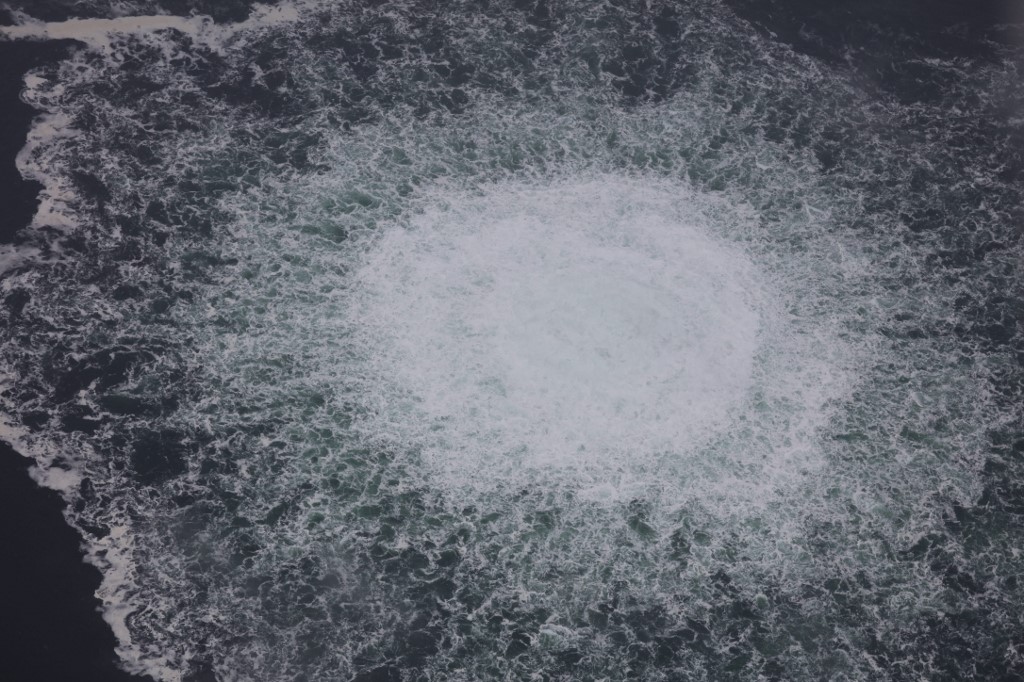
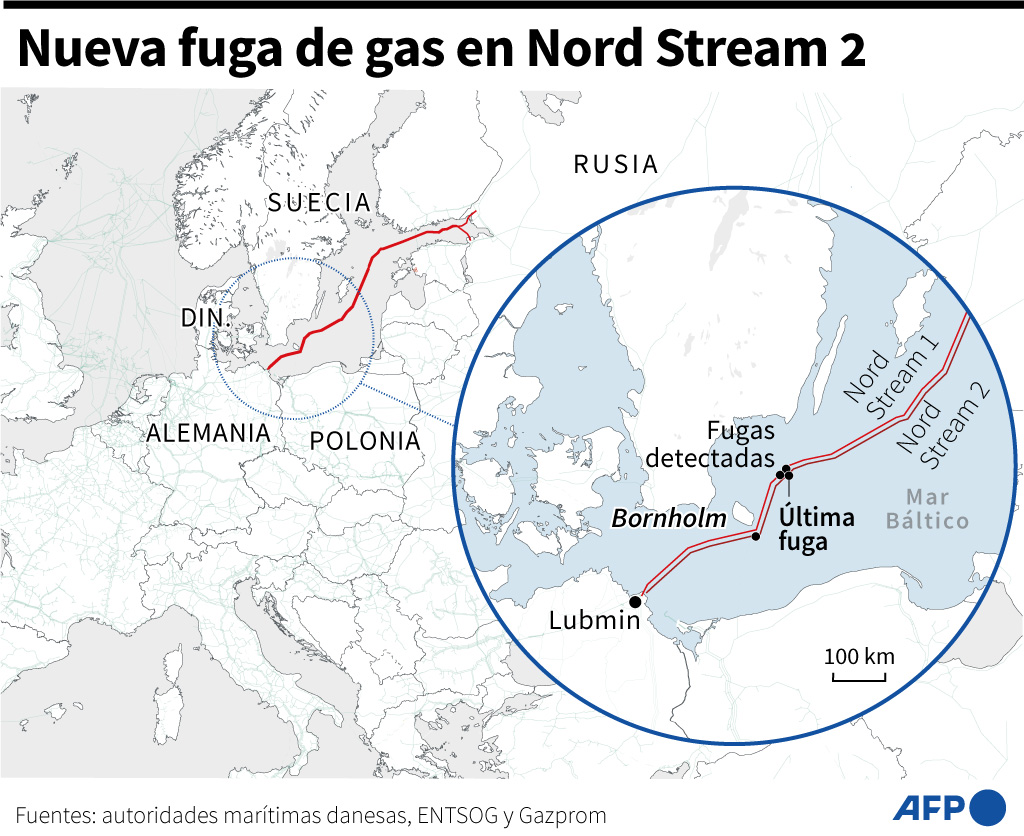
Authorities in Germany, Denmark, and Sweden are investigating the leaks affecting the Nord Stream 1 and 2 pipelines this week as possible “sabotages,” which occurred after explosions and pressure drops were detected in the pipes transporting Russian gas to European countries.
The European Union (EU) and the North Atlantic Treaty Organization (NATO) have stated that the incidents appear to be the result of “deliberate and irresponsible acts of sabotage” without yet assigning blame, and have promised strong responses. Below is a brief analysis from AthenaLab.
ICRITICAL INFRASTRUCTURE
The EU relies on Russia for about 40% of its natural gas, part of which was transported through the affected pipelines. At the time of the explosions, Nord Stream 1 was not transporting fuel (due to a failure at a plant reported by Russia), and Nord Stream 2 had never begun operations due to Germany’s reprisals against Moscow following the invasion of Ukraine.
However, there was gas in the pipes, which would explain the release of methane into the atmosphere. While the origin of the incidents is investigated, the pipelines are filling with brackish water, leading German authorities to doubt whether they can be used in the future.
The United States, in particular, has consistently warned its European allies about the risks of increasing dependence on Russian gas through the construction of Nord Stream 2, as in the event of a crisis, a supply cut would become a tool of pressure, as has now occurred.
Norway has reinforced the protection of its critical infrastructure with military means, as gas is exported to Poland via the Baltic Pipe. Meanwhile, countries with interests in the Baltic have deployed ships to monitor the area.
ENERGY
Energy security is not the same for all countries. For developed economies, it implies the availability of sufficient resources at affordable prices, that is, “supply security”; net exporters, on the other hand, expect “demand security” for their products. For developing countries, it all depends on price stability and guaranteed access to supply sources. While energy integration is desirable in terms of cost-benefit, it always carries the risk of creating complex dependencies.
BALTIC SEA
This inland sea, covering about 377,000 km2 and with an average depth of about 55 meters, connects to the Atlantic. It is bordered by nine EU countries and Russia. The fact that Finland and Sweden have decided to join NATO will essentially turn it into a “lake” of the Atlantic Alliance, much to the Kremlin’s concern.
Its generally shallow depth has not only facilitated the installation of the pipelines that cross it but also makes them easily accessible to submarines, divers, drones, or probes launched from ships.
In fact, some of the leaks occurred at a depth of about 70 meters. Additionally, and here is an interesting fact, they are outside the 12 nautical miles or territorial seas of Denmark and Sweden, which means those countries do not consider the “sabotages” as acts of war.
SEABED
Maritime security typically manifests in three dimensions: the interstate dimension, where competition, crises, and war occur; the maritime terrorism dimension of non-state actors; and the blue crimes dimension of non-state actors, such as pirates, smugglers, polluters, and illegal fishermen.
In today’s world, maritime security relates not only to the surface but also to the seabed, where energy pipelines and fiber optic cables are deployed, as well as mineral and biological resources. Hence, the growing importance of controlling continental shelves and the underwater capabilities of countries, which include everything from submarines to tactical divers and drones.
?WHO IS RESPONSIBLE?
If the hypothesis regarding the sabotages is confirmed, the response everyone wants to know points to the perpetrators, as attacking the pipelines “clearly does not benefit anyone,” as stated by U.S. Secretary of State Antony Blinken upon learning of the news. Just as European countries see a disruption in a route for Russian gas supply, especially now as winter approaches, Moscow wants to convene a meeting of the United Nations Security Council to discuss what happened, as it affects one of its main export products and source of foreign currency. In any case, the sabotages mark a dangerous turning point in an increasingly unstable world.
CONCLUSIONS
- Sabotages against critical infrastructure, in a world where economies are interdependent, have always posed a significant risk, but they could now become a concrete and more frequent threat. They cause great damage, require little preparation to carry out, and it is difficult to identify those responsible due to their extent and density.
- Countries must assess how they protect this type of infrastructure and the role of their military forces in securing supply lines or value chains that are key to their economies.
- Trade dependencies must also be evaluated from the perspective of national security. Turning such dependencies into a “weapon” is a possibility, as demonstrated by the sudden gas cuts from Russia to European countries supporting Ukraine.weaponisation[1]) is a possibility, as demonstrated by the sudden gas cuts from Russia to European countries supporting Ukraine.
- Seabeds must be included in maritime security strategies, as they contain energy pipelines, data transmission cables, and all kinds of resources. Navies, in particular, must have the capabilities to access underwater terrain to address potential threats.
AthenaLab Team
September 29, 2022
[1] Galleoti, M. (2022). The Weaponisation of Everything: A Field Guide to the New Way of War. Cornwall: Yale University Press.