KEY POINTS | Iran's Involvement in the Russo-Ukrainian War
This article was translated automatically and may contain differences from the original. For reference, read the original.
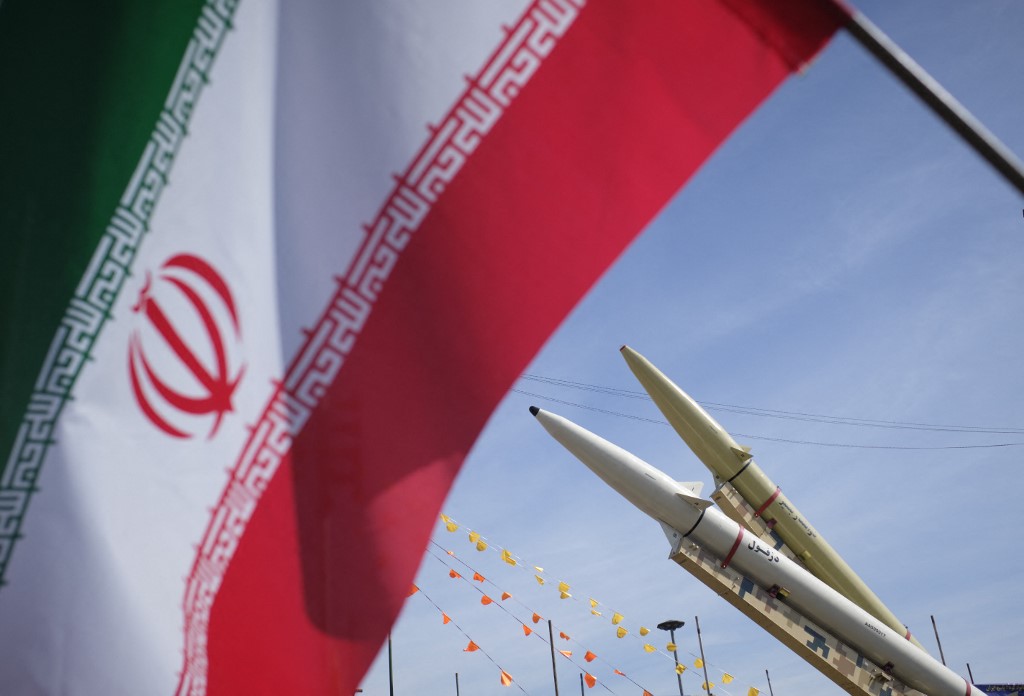
Reports of the use of Iranian weapons in the current conflict between Russia and Ukraine have sparked interest in this state, which is also experiencing difficult times regarding its internal stability. The Islamic Republic of Iran, known as Persia until the early 20th century, has a population of nearly 87 million, all of whom are Muslim, with a significant majority being Shia. Below are some relevant background details.
ARMED FORCES
According to the Military Balance 2018 published by the International Institute for Strategic Studies (IISS), Iran’s military power consists of its regular armed forces and the Islamic Revolutionary Guard Corps, the latter established in 1979 to protect the Islamic Revolution, totaling a force of 523,000 personnel. Its arsenal includes Western, Russian, and even Chinese weaponry, along with some domestically produced weapon systems. Notable areas of Iranian development include drones, missiles, fast attack boats, cyber capabilities, and its controversial nuclear program.
REGIONAL COMPETITION
The Middle East has been characterized for decades by instability and geopolitical competition, both from global and local powers. The Arab-Israeli conflict and the struggle for power in the Persian Gulf are examples of this. Whether due to political or religious differences—a Jewish state versus others led by Shia (Iran) and Sunni (Saudi Arabia) factions—the region struggles to overcome endemic insecurity. In this context, avoiding direct conflict, countries have utilized latent conflicts to confront each other. In Yemen, the Saudi kingdom and the United Arab Emirates lead a coalition to support the government, while Iran supports Houthi rebels. In Syria, Iran openly and directly supports the regime of Bashar Al-Assad, which is in constant conflict with Israel, deploying up to 3,000 troops for assistance and training of Syrian forces. Similarly, Iran is attributed with providing material and training support to terrorist groups such as Hamas and Hezbollah, which are in conflict with Israel.
CURRENT INTERNAL PROBLEMS
On September 16, 2022, Iranian young woman Mahsa Amini died in a hospital in Tehran after being detained by the ‘morality police’ for not wearing her hijab properly. Following the dissemination of this event, protests have not ceased in major cities, with no end in sight. As a result of the repression exercised by the Iranian government against the protesters, European countries imposed sanctions on authorities. Meanwhile, the Persian state accuses Western powers of being behind the protests. However, while these mass demonstrations are the largest recorded since 2019, it would currently be very difficult for these events to lead to a regime change, given the high level of control exercised by local security agencies.
SUPPORT FOR RUSSIA
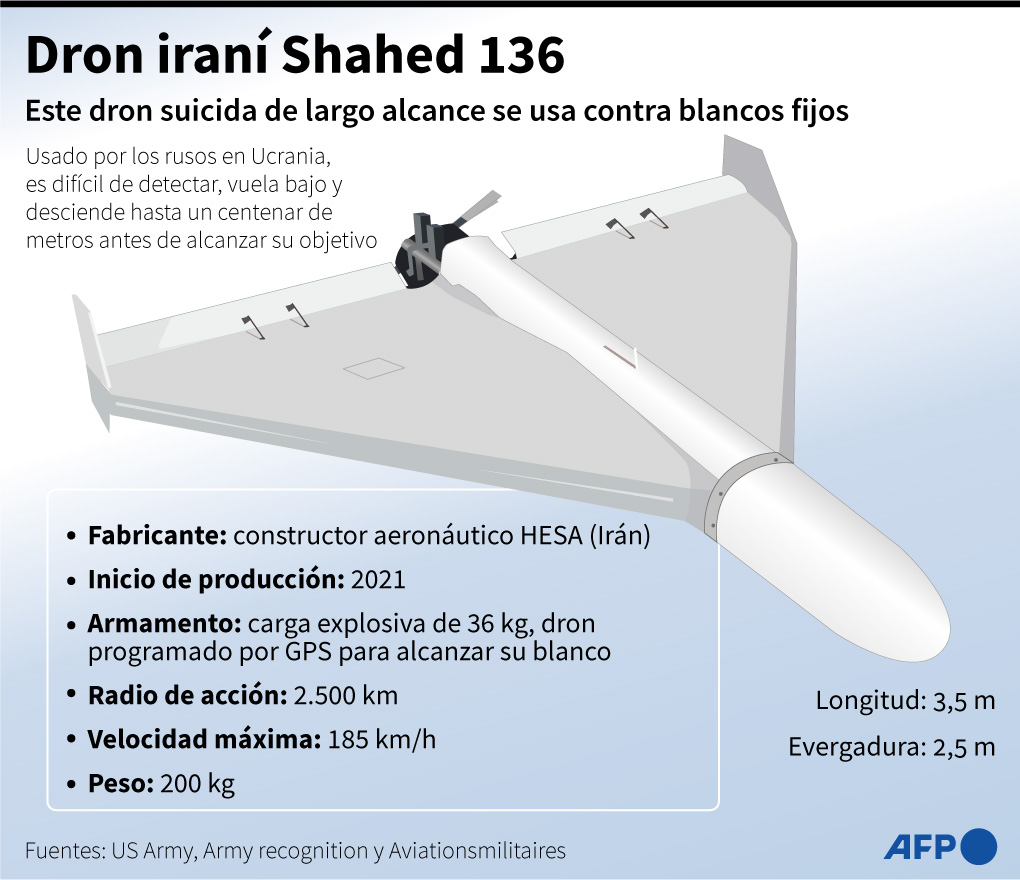
Iran and Russia have long-standing ties, not always easy. In this context, there have been reports of the use of Iranian weapons by Russia in its invasion of Ukraine. Primarily, evidence shows the massive use of ‘kamikaze’ drones Shahed-136 and Shahed-131, including the training of Russian pilots for these aircraft. Both Moscow and Tehran deny this. Additionally, there are indications of the purchase or transfer of Iranian short-range ballistic missiles, likely Fateh-110 (estimated range of 300 to 500 km) and Zolfaghar (estimated range of 700 km), to Russian forces. The relevance is that, despite being systems with less precision than other Russian models like the Iskander, the available inventory is significant and their cost is comparatively much lower, which would give Russia the capability to strike targets at long distances—much greater than what the U.S. HIMARS offer. This way, they can conserve budgets and stocks of more advanced missiles.
IMPACT ON THE WAR
While drones and missiles enhance the available Russian arsenal in the theater of operations, both in terms of the quality and quantity of the provided means, it is unlikely they will have a decisive impact on the battlefield. Their use has so far concentrated on attacking civilian infrastructure rather than purely military targets. Conversely, the impact is more due to the open political support for Russian President Vladimir Putin, in a scenario where he has few partners left. Another notable aspect is that the ongoing war serves as an excellent testing ground for these systems, which can be refined through experience, while also serving as a showcase for potential buyers, provided they are successful. On the other hand, these capabilities have pushed Ukraine to intensify its efforts to convince Western powers to provide more and better air defense systems.
IMPACT ON THE MIDDLE EAST
Iran’s involvement in the war has the potential to have effects on regional powers, most of which have largely remained on the sidelines of the conflict. Tehran’s direct participation could push states like Israel to provide more decisive and significant support to Ukraine, such as air defense systems like the ‘Iron Dome.’ On the other hand, the Saudi government has not exhibited a clear stance, supporting Ukraine on one hand, but aligning with Russia when defining oil production policies that favor Moscow on the other. In an environment where power distribution and relations are perceived as zero-sum, Iran’s gain in power would mean the relative loss of other powers in the Middle East, which is unlikely to be tolerated by its competitors.
IRANIAN NUCLEAR PROGRAM
In this review, it is impossible to overlook Iran’s nuclear aspirations. For decades, this state has pursued the development of a nuclear capability for military use, which has led to significant sanctions from the West and even made it a victim of a sophisticated cyberattack on its nuclear facilities, such as the one that occurred at the Natanz, with the cyber worm Stuxnet. Despite the restrictions and some commitments, various Western governments suggest that Iran has not abandoned this program, which could eventually receive support from Russia, given its enormous capabilities and the intersecting needs that arise. While it is assumed that Israel already possesses military nuclear capability, the mere existence of new nuclear weapons in the Persian Gulf would impact the fragile security situation in the region, potentially generating a dangerous security dilemma, involving other states in the race, such as Saudi Arabia and the United Arab Emirates, as well as Turkey, a bit further away.
CONCLUSIONS
- Iran has been a significant actor in the Middle East, maintaining a struggle for regional power that has affected stability. For various reasons, Iran maintains conflictual situations with Saudi Arabia, the United Arab Emirates, and Israel, to name the most relevant.
- Iran’s involvement as a supplier of military material in the war between Russia and Ukraine may pursue multiple objectives. First, to showcase its capabilities to its neighbors in the Middle East for deterrence purposes. Second, to assist a strategic partner like Russia, with which it shares a rejection of Western powers, presenting opportunities for both (weapons and nuclear energy). Third, to represent a confrontational response to the United States, a power that has been actively and materially supporting the Ukrainian cause and Israel.
- If the delivery of Iranian weapons to Russia is confirmed, a reaction from regional powers, particularly Israel, should be expected. Similarly, the attitude adopted by the Saudi regime regarding Russia within the framework of the Organization of the Petroleum Exporting Countries (OPEC) could undergo changes if ties are confirmed and strengthened over time.
- The impact of the weapon systems, while they will affect Ukrainian civil infrastructure, is estimated not to be decisive in the development of operations unless complemented by other platforms.
- The idea that Russia is receiving foreign weapon systems can have several interpretations. First, it indicates solidarity from a few remaining partners. Second, it may suggest that its stocks of more advanced systems are limited and its replacement capacity is affected by Western sanctions. Third, the war is expanding in scope, which could generate other unwanted sources of conflict.
- The risk posed by Iran gaining access to military nuclear capability would represent a serious setback for the United States and other Western powers. In addition to generating a significant strategic imbalance in the region, it could lead to a nuclear arms race in the area, and this pattern could spread to other more or less contiguous areas. In this regard, China has the potential to play an important role in limiting what Russia can do in this scenario.
Marcelo Masalleras
Researcher at AthenaLab
October 27, 2022