SEMINAR | The Relevance of Being a Maritime Power, AthenaLab Opens the Debate at Exponaval 2022
This article was translated automatically and may contain differences from the original. For reference, read the original.
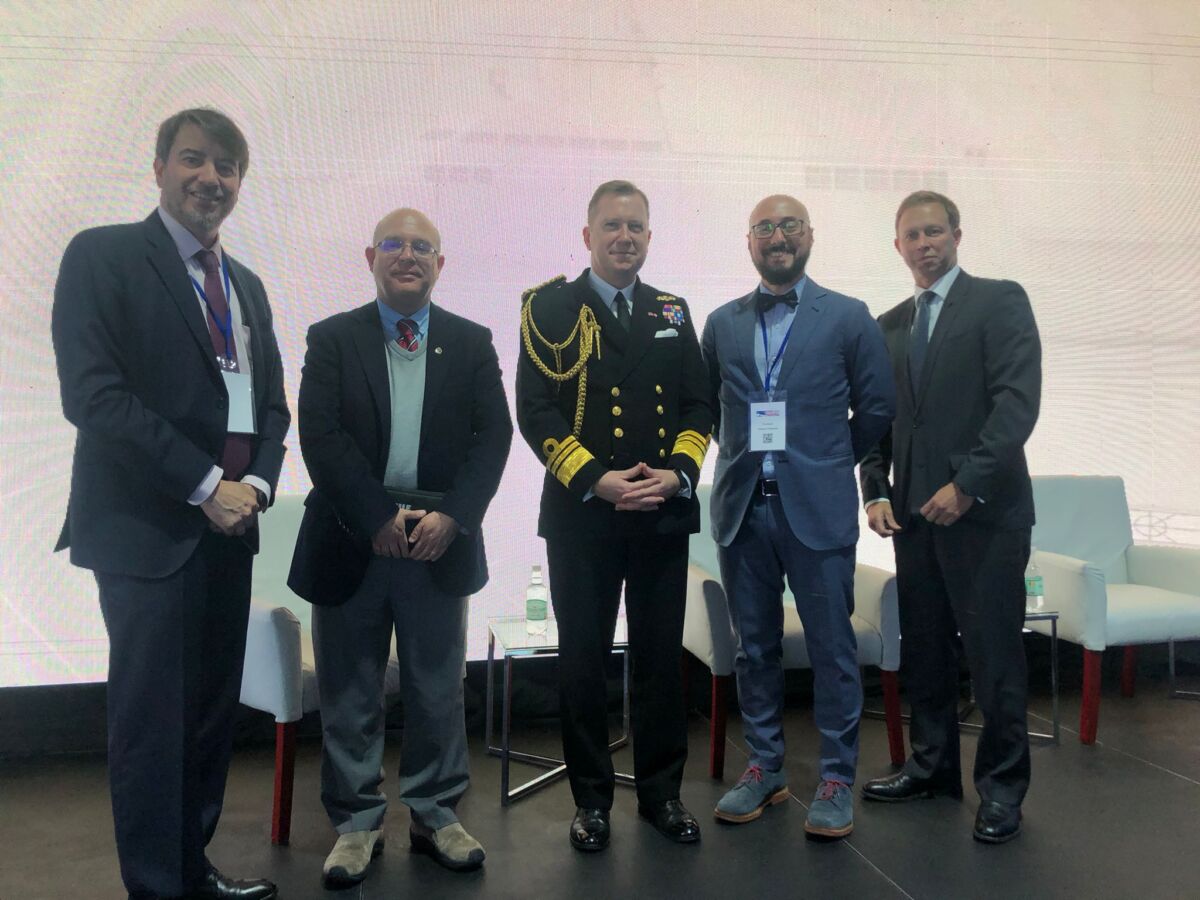
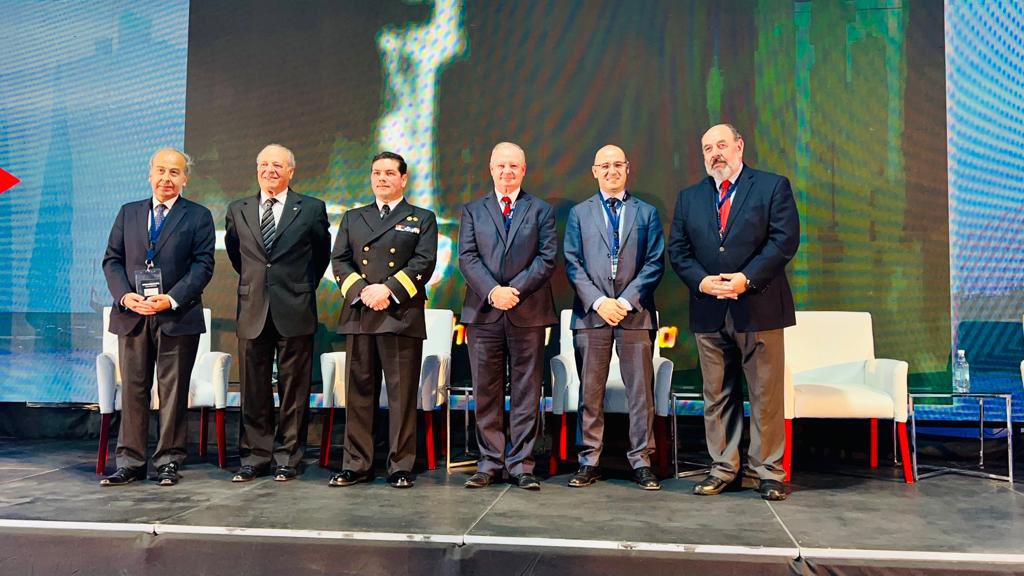
“The Relevance of Being a Maritime Power in the 21st Century” was the main topic addressed on the second day of the Exponaval fair, held in Valparaíso, where AthenaLab participates as an official sponsor.
The debate was opened by the former Chief of the Royal Australian Navy, retired Vice Admiral Michael Noonan, who stated that medium and small countries have a role to play in shaping the maritime environment, as three-quarters of the world’s population lives in these nations. Thus, not all cooperative relationships should necessarily be framed within the rivalry between the United States and China, he indicated.
Following the inaugural speech by the recently appointed senior fellow of AthenaLab, it was the turn of the Second Sea Lord of the Royal Navy, Vice Admiral Martin Connell.
In a panel moderated by the Executive Director of AthenaLab, Juan Pablo Toro, the senior officer argued that global security requires maritime security, and this has never been more important than today. Therefore, it is crucial to have alliances, as going it alone in the world is not an option, as demonstrated by the war in Ukraine.
In this regard, naval expert Alessio Patalano from King’s College London issued a warning that authoritarian regimes exploit the vulnerabilities of the maritime order to advance their national objectives, and therefore, it is necessary to strengthen collaboration among navies with shared values and interests.
He explained that the role of navies in peacetime is as important as their role in wartime, and this should not be underestimated, as there are a series of daily missions, whether maritime interdiction or humanitarian assistance, that reinforce good order at sea.
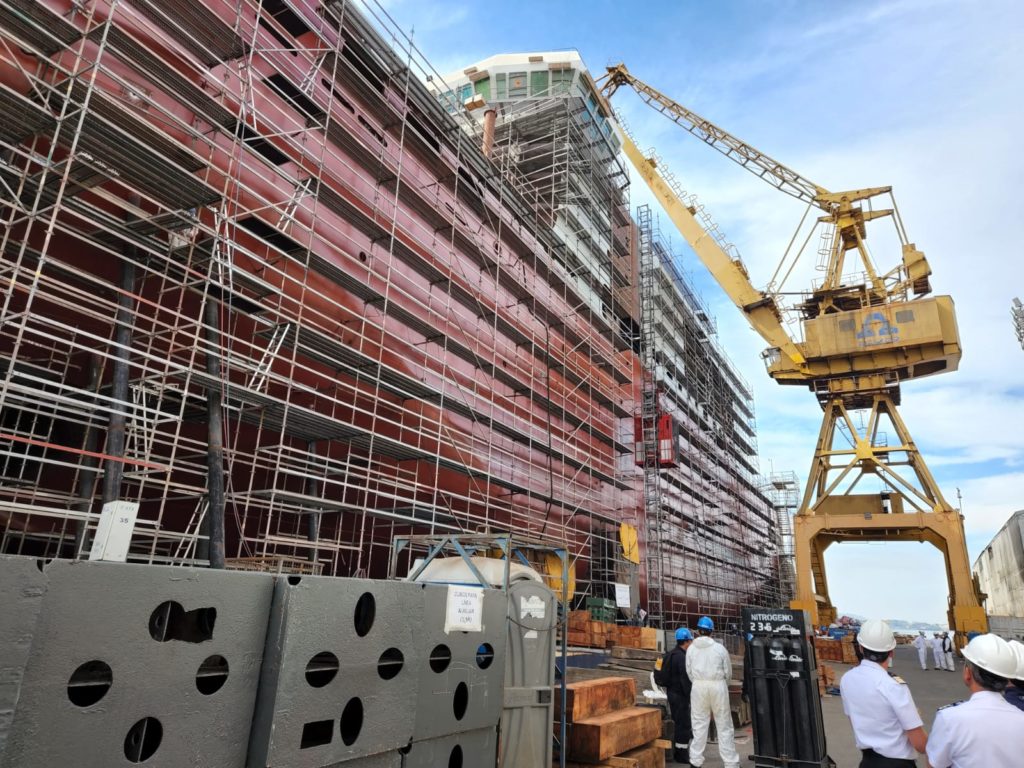
He also emphasized that the ships built by countries are more than just platforms, as they convey the image of a nation; for example, he stated that Chile’s new icebreaker demonstrates its Antarctic vocation and its decision to be a relevant actor on this continent.
Professor Fernando Wilson from the Naval War Academy highlighted that one of the keys to Chile’s maritime vision is that it is always dissatisfied and aspires for more.
In the afternoon, the panel “Chile and Its National Ocean Policy: Are We a Maritime Power?” was held, moderated by Ignacio Mardones, Head of Development and Strategy at AthenaLab.
The Director of Environment, Climate Change, and Oceans at the Chilean Ministry of Foreign Affairs, Julio Cordano, stated that Chile’s foreign policy regarding oceans focuses on environmental protection, sustainable development, and its proper social and cultural use.
Valparaíso, November 30, 2022