What is at stake for Latin American countries in supporting Russia or Ukraine, BBC Mundo consulted AthenaLab
This article was translated automatically and may contain differences from the original. For reference, read the original.
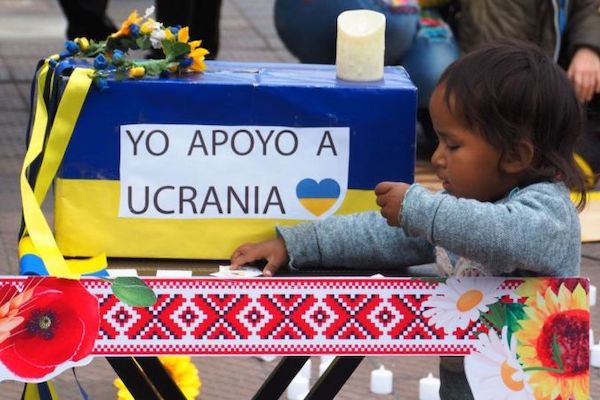
The Russian invasion of Ukraine has divided the geopolitical map of the world.
As if it were a game of chess, the two forces involved in the conflict are cautiously moving their pieces in order to gather as much support as possible.
In this complex equation, Latin America has not been the exception and has attracted the interest of both Moscow and Kandiv.
Ukrainian President Volodymyr Zelensky, has virtually met with some leaders from the region, including the Chilean leader, Gabriel Boric, with whom he discussed the possibility of achieving a “greater consolidation” of Latin American support for his country on March 21.
In that effort, this Tuesday the Ukrainian leader will speak before the Chilean Congress, marking his first address to a Latin American parliament.
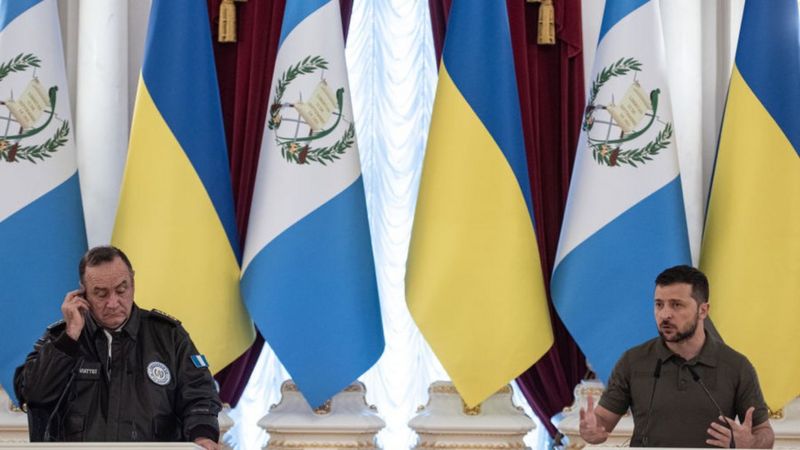
In July 2022, the only in-person meeting of Zelensky with a Latin American president took place in Kyiv when he met with his Guatemalan counterpart Alejandro Giammattei.
Vladimir Putin, for his part, has continued to strengthen ties with former allies, such as Venezuela, Nicaragua, or Cuba, and has launched a communication campaign in his favor through state media present in various countries in the region.
Despite these efforts, the support of the majority of Latin American nations for Russia or Ukraine has been, at best, ambiguous. In fact, experts in international relations have described it as “neutral,” recalling their long history of “non-alignment” in the conflicts of the great powers.
Still, it must be acknowledged that there have been some significant signals in favor of Kyiv.
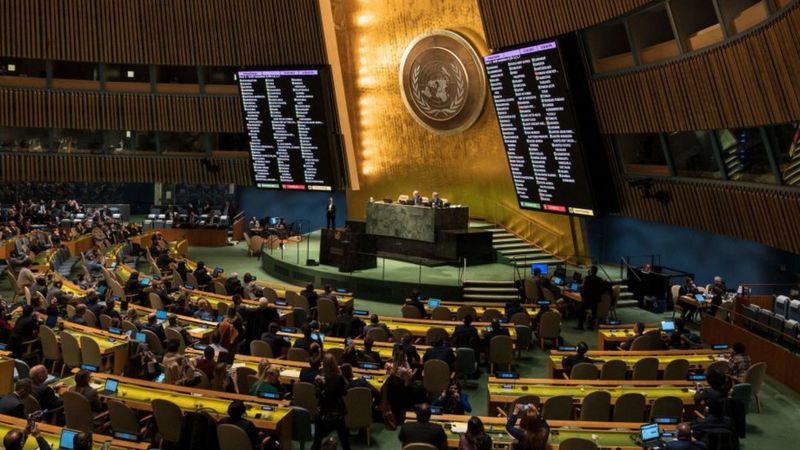
Last February, most of the region voted in favor of the resolution from the United Nations General Assembly calling for an end to hostilities and demanding that Russia “immediately, completely, and unconditionally withdraw its military forces from the territory of Ukraine.”
However, to date, no country in Latin America has gone beyond diplomatic statements.
An example of this is their refusal to send weapons to Ukraine, despite pressure from the United States and Germany. Even U.S. President Joe Biden, offered to replace the military equipment of Latin American countries (manufactured in Russia) with superior American-made arms.
But the proposal has not been successful.
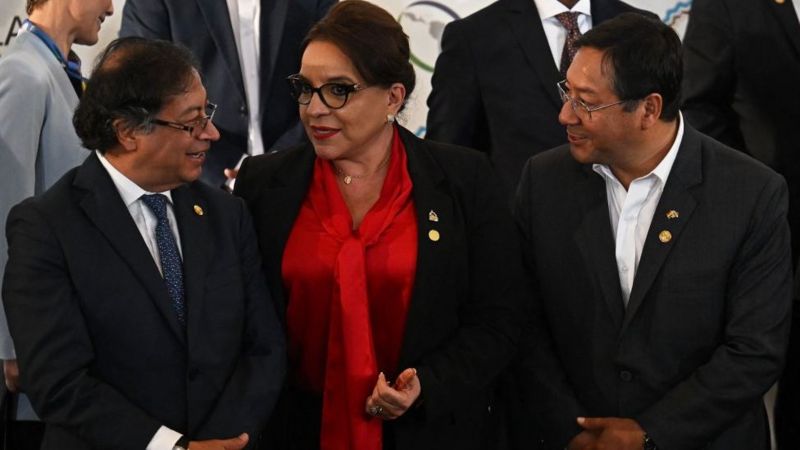
“Even if they end up as scrap in Colombia, we will not deliver Russian weapons to be taken to Ukraine to prolong a war,” responded Colombian President Gustavo Petro. “We are not on any side. We are for peace,” he added.
A similar response was given by other leaders, such as Brazil’s Luiz Inácio Lula da Silva, and Argentina’s Alberto Fernández, in a decision that has been interpreted by Moscow as a nod from the region to its country.
On the other hand, despite Zelensky’s call for Latin America to impose sanctions against Russia, the vast majority have not done so.
What lies behind this supposed “neutrality”? And what is at stake for various Latin American countries when it comes to supporting Russia or Ukraine in the conflict? Here we present 4 key elements that answer these questions.
Continue reading…
Fernanda Paúl
April 4, 2023
Source: BBC Mundo