ANALYSIS | The Strange World of Lula
This article was translated automatically and may contain differences from the original. For reference, read the original.
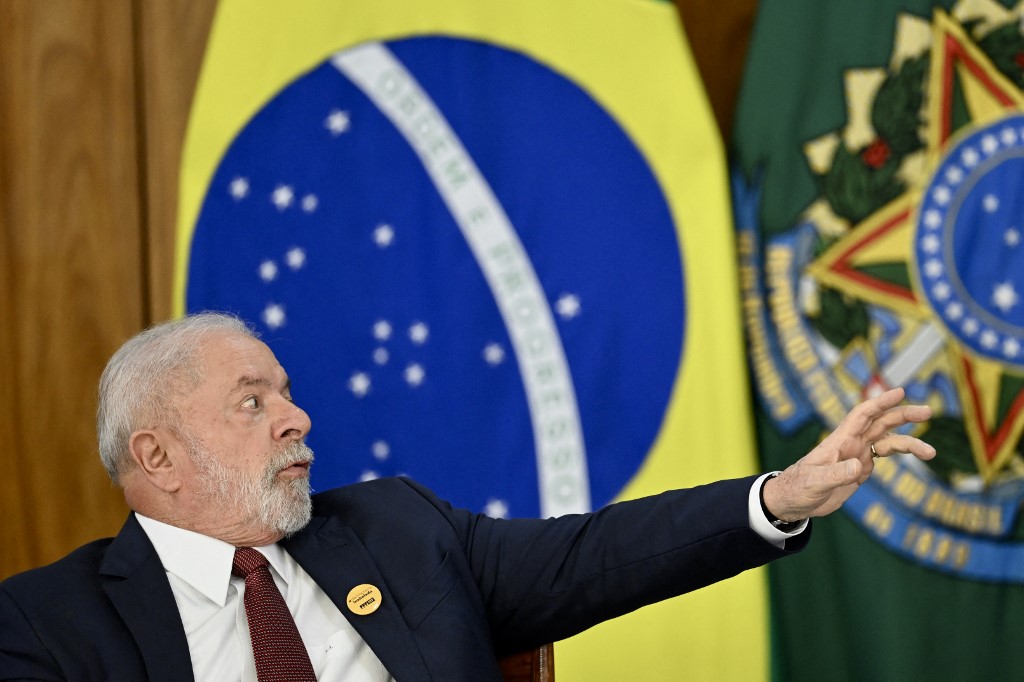
When Lula da Silva announced in his victory speech that Brazil was back, he was very serious. His country would reintegrate into all kinds of international organizations and would once again aspire to occupy a place in the multipolar world. However, it was difficult to foresee that the socialist leader would embrace the theses of authoritarian powers regarding the war in Ukraine.
His recent statements in China, identifying the United States as the instigator of the prolongation of the conflict, and the visit of Russian Foreign Minister Sergey Lavrov to Brasília have made it clear that he has a misguided understanding of Russia’s illegal and unprovoked invasion of Ukraine, where evidence of war crimes has even placed Vladimir Putin in the sights of the International Criminal Court.
Below is a brief analysis:
Non-alignment and propaganda. It is relatively easy to be seduced by non-alignment as a way to distance oneself from geopolitical dilemmas or diplomatic crises, but when there is such a clear transgression of international rules, which include respect for borders, the self-determination of peoples, and non-intervention in internal affairs, essentially not taking sides is doing a great favor to the aggressor.
Alongside his Chinese counterpart Xi Jinping, Lula stated over the weekend that it is necessary for “the United States to stop encouraging war” and for this North American country and Europe to “start talking about peace.” He reiterated that Ukraine shares responsibility for the conflict with Russia.
What Lula seems not to take into account is that if Russia stops its military campaign, the war ends. In contrast, Ukraine cannot cease defending its own territory. It is Kyiv that has requested military assistance, and the countries providing it are responding to that request.
Lula also advocated for “Brazil and China to partner to balance global geopolitics.” As the topic could not end there, it was then time to receive Sergey Lavrov, the Russian Foreign Minister.
After meeting with the Brazilian leader, Lavrov stated that “Brazil and Russia have a single vision” and that “Moscow wants to end the conflict as soon as possible. However, it wants it to be a lasting solution, not an immediate one.”
While Itamaraty has a tradition of neutrality, which in the case of the war in Ukraine has sought to emphasize by condemning the invasion of Ukraine at the United Nations while also refusing to provide ammunition, the president’s words and gestures would reveal that his desire to distance himself from the West may go too far.
One thing is to seek new economic governance and markets with its BRICS partners (Brazil, Russia, China, India, and South Africa) and to aim for a more representative Security Council, and another very different thing is to help undermine the rules-based world order.
As expected, the United States reacted by accusing him of repeating “Russian and Chinese propaganda,” while the European Union (EU) reminded him that Russia is solely responsible for launching a large-scale invasion.
In the West, many will begin to view Lula as an unreliable actor, despite his victory speech referring to the United States and the EU as “partners.” Just last month, he opened his ports to Iranian warships in another defiant gesture. Nevertheless, in the so-called Global South, the leader still enjoys some popularity.
Mediating role. Among the curious ideas that the Brazilian leader has put forward is the notion of creating a “G-20 for peace” to promote a negotiated solution to the conflict.
Ten years ago, during his second term, Lula, along with Turkey, attempted to mediate between the United States and Iran regarding the latter’s nuclear program. The idea did not gain traction.
Due to his recent statements, it is unlikely that Ukraine will accept Brazil as a valid mediator, as he shares the Russian narrative of the war, claiming that the expansion and approaches of the North Atlantic Treaty Organization toward the countries of the former Soviet sphere triggered Moscow’s visceral reaction.
A distant past. Little seems to remain of the union leader who built a political career fighting for democracy in Brazil. As Lula must know, unions are not well received in China; not to mention the treatment that Putin’s regime gives to opponents.
Thus, in the name of pragmatism and a multipolarity where everyone can do as they please, Lula has left behind his own history. After visiting him, Lavrov continued his tour to Cuba, Nicaragua, and Venezuela, three dictatorships in the region.
Diplomacy and limits. One of the innovations that Lula introduced into Brazil’s professional diplomacy was giving a leading role to the president in foreign relations.
Using his charisma and his story of overcoming, the leader traveled the world and charmed leaders of all stripes. While he was one of the few who could calm Venezuelan Hugo Chávez when he lashed out at Colombia, American Barack Obama once said, “I love this man” at a regional summit.
Now, in his eagerness to play in the big leagues, Lula has also exaggerated. Between 2003 and 2010, his government created 44 new embassies for Brazil, several of which later had to close due to costs.
Moreover, the scheme of using Brazilian construction companies to gain influence over Latin American governments by financing campaigns led to the massive corruption scandal of Odebrecht, which resulted in presidents and ministers being imprisoned throughout the region.
Conclusions. Lula is making a risky bet to distance himself from the West in search of a leading role for Brazil in a multipolar world, and he is doing so by embracing China and Russia as partners in this venture. While the pivot toward Beijing is understandable given its weight in the global economy, the gestures toward Moscow will only yield discredit when there is a war involved. And the reaction from the United States could manifest in ways we do not yet know.
While Chile and Brazil have a historical alignment of interests, it is true that President Gabriel Boric’s government has emphatically condemned Russian aggression and held a telematic conversation with Ukrainian President Volodymyr Zelensky. This reflects a very different reading of the conflict of our times.
This also impacts Chile’s return to the Union of South American Nations (Unasur), a creation of Lula in 2008 within a regionalism favorable to Brazil. If it was already a bad idea to return to this block captured by ideology, it is now even worse, because the larger country has a strange reading of the world, where invasions are not invasions and larger countries can attack smaller ones while sharing responsibilities.
Juan Pablo Toro V, Executive Director of AthenaLab
April 18, 2023