ARTICLE | Extracontinental Powers in Latin America
This article was translated automatically and may contain differences from the original. For reference, read the original.
- by Juan Pablo Toro
- Athenalab Voices
China, Russia, and Iran are showing renewed interest in Latin America. Countries in the region must carefully consider whether they wish to ally with those who promote a multipolarity devoid of values.
Recently, we have witnessed in Latin America and the Caribbean a renewed interest from extracontinental powers, which are those that, due to history, culture, or geographical position, do not have a direct connection to the region. This interest is no longer limited to trade and investment; it aims to use the region to gain greater geopolitical influence. In an era described as competitive or marked by systemic rivalry, where the relative value of each society, support, or alliance is increasing, China, Russia, and Iran— in this order— appear determined to improve their position in Latin America, whether to secure strategic resources or to exploit their traditional antagonism with the United States, the resident power.
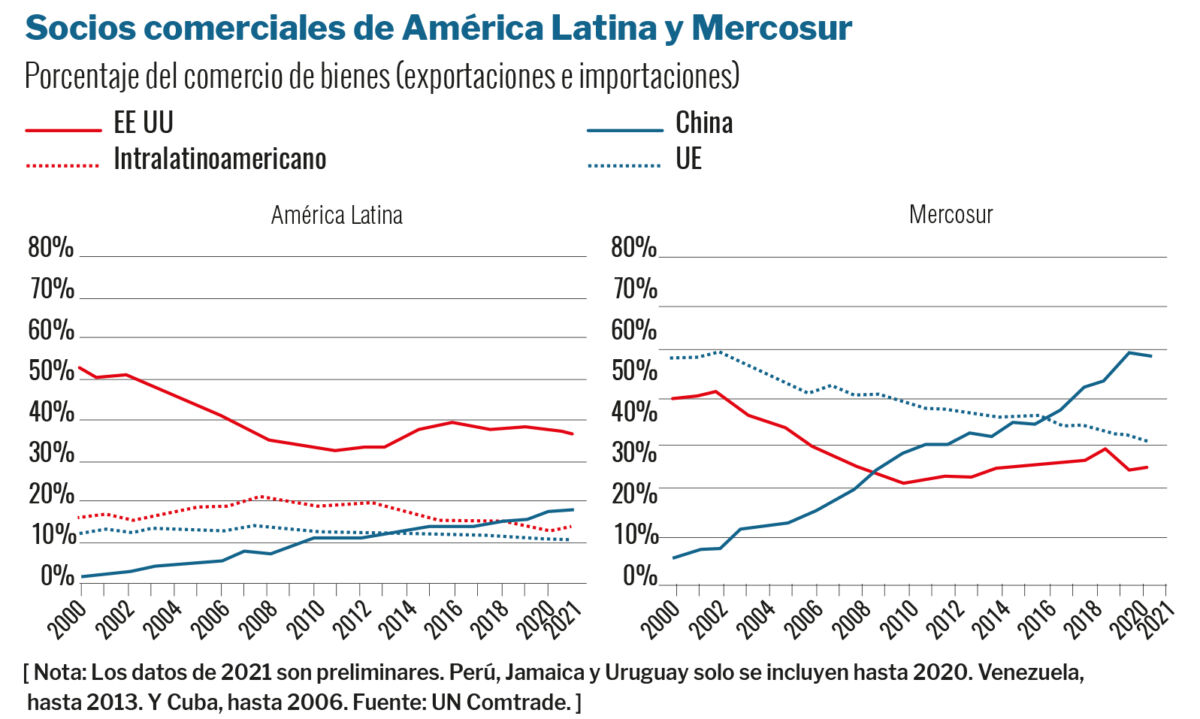
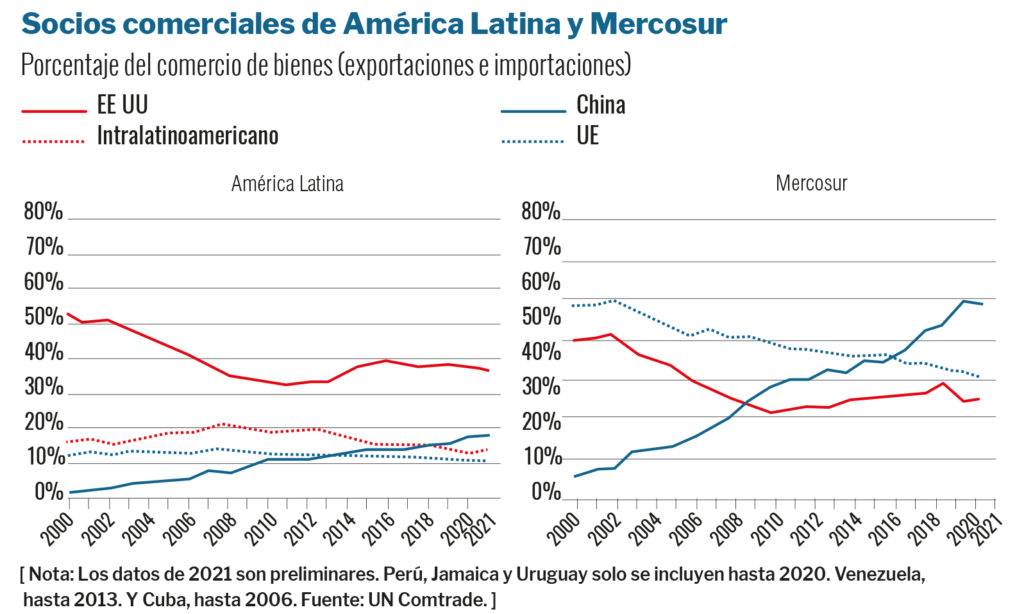
In the case of China, trade with the region has increased from $12 billion in 2000 to $445 billion in 2021, along with loans to countries from major Chinese state banks amounting to $139 billion between 2005 and 2021. The novelty now lies in the fact that this vast economic footprint is being transferred to the field of security.
On June 8, 2023, The Wall Street Journal reported that Beijing planned to open a base in Cuba to enhance its capability for collecting electronic signals from the U.S. After initial denials, Washington ultimately acknowledged that China has operated such espionage facilities in the region for years. The most well-known is located in Neuquén, Argentina, a base of the Chinese space program operated by its military, which allows for satellite tracking. Additionally, earlier this year, a surveillance balloon was detected over the skies of Colombia and Costa Rica.
Moreover, the construction or expansion of port facilities seems to be another area of significant interest, as it extends the so-called New Silk Road via maritime routes. Currently, the Chinese company Cosco is building a large maritime terminal in the Peruvian town of Chancay, 50 kilometers north of Lima. Furthermore, there is a clear intention from a Chinese company to improve the port of Ushuaia, Tierra del Fuego, an initiative that excites the local government, as it also includes the construction of a power generator and a petrochemical plant, but which is currently rejected elsewhere in the country. If realized, these facilities would also facilitate future Antarctic campaigns.
In addition, Argentina, Brazil, and Bolivia have reached agreements or are making significant strides to expedite transactions in local currencies for renminbi, which are thus becoming increasingly abundant in central banks. If this example is replicated and if the so-called swaps gain greater significance, they could contribute to weakening the dollar’s hegemony in the region. In Russia, Bangladesh, Saudi Arabia, Pakistan, Iraq, and Thailand, the renminbi is already used as an alternative currency to the dollar.
In Argentina, if the potential acquisition of JF-17 combat aircraft, produced between Pakistan and China, that the government of Alberto Fernández is considering materializes, it could be a significant move, as it would mark the first time Beijing successfully introduces weapons systems of this level in Latin America, in a country whose territorial claim over the Malvinas/Falkland Islands is uncomfortable for the United Kingdom. Until now, China has primarily sold or transferred police equipment, remote surveillance, training aircraft, weapons, and ammunition, but nothing comparable to this fourth-generation multirole fighter.
Additionally, Latin America has been the chosen battleground for China to wage its diplomatic war and diminish recognition of Taiwan. This year, Honduras was the last Latin American country to sever relations with the island, following the path of Nicaragua and the Dominican Republic. This issue was part of the recent presidential election campaign in Paraguay. Currently, the countries that still maintain relations with Taipei are Guatemala, Belize, and Haiti, in addition to the Caribbean islands of St. Kitts and Nevis, St. Lucia, and St. Vincent and the Grenadines.
“Latin America has been the chosen battleground for China to wage its diplomatic war and diminish recognition of Taiwan”
Russian presence has manifested with a less diverse but still significant agenda. Russian Foreign Minister Sergey Lavrov undertook a tour of four Latin American countries to exploit the absence of a unified stance on the Russian military invasion of Ukraine. Lavrov not only took the opportunity to visit his traditional allies—Cuba, Nicaragua, and Venezuela—but also made a stop in Brasília, aware of the weight of the South American giant and the unmistakable leadership aspirations of its president, Luiz Inácio Lula da Silva. To the surprise of his hosts, the guest asserted that Brazil and Russia shared a “unique vision” regarding the Ukrainian conflict. While the Brazilian government had to clarify Lavrov’s comments, there were precedents of Lula’s statements partially blaming Kyiv for the war being fought on its territory. At the same time, the veteran president has expressed his interest in promoting a negotiated resolution to the conflict, all within the framework of a strategy to promote the so-called “Global South,” which is even envisioned as being connected by a single currency.
Brazil’s unclear position on the Russian invasion of Ukraine has irritated the U.S., which accused Lula of echoing Russian propaganda and upsetting Ukrainian President Volodymyr Zelensky. This discord was evident at the G7 summit in Hiroshima, Japan, where both leaders avoided each other. Although Lula’s stance is far from being shared in the region, Moscow benefits from the dissent to demonstrate that the Global South is not digesting the Western interpretation of a distant conflict in the same way.
As is customary in the Russian script, a naval vessel from its navy was scheduled to dock in Cuba in the second week of July. As has occurred since 2008, whenever Moscow is involved in a crisis or conflict, it deploys military assets in the region, ships or bombers, to demonstrate a certain reach in the traditional U.S. sphere of influence.
Among the extracontinental powers, only Iran’s presence remains to be characterized. Its president, Ebrahim Raisi, also bet on the Caracas-Havana-Managua troika to strengthen ties through a regional tour and make it clear that, if his country intends to, it can venture into the Americas’ coasts. In fact, an Iranian flotilla, consisting of a frigate and a logistics support ship, traversed South American waters as part of a circumnavigation whose only manifest purpose was to carry its flag to the most remote corners. After passing through the Strait of Magellan and dismissing the crossing of the Panama Canal, the ships arrived at the port of Rio de Janeiro, as Brazil was apparently the only country that allowed them to dock. Once again, Lula played the independent card.
Divide and Conquer
All this renewed presence of extracontinental powers in Latin America raises questions about the ultimate purposes behind the recent maneuvers. In the case of China, it may relate more to a comprehensive positioning, a 360-degree approach, that is, not only economic in nature but extending to new areas of security and logistics, essential for gaining greater geopolitical traction. Certainly, this is a practice that has been seen previously in Africa and Southeast Asia.
Every critical moment or inflection point in the international system, such as the one we are experiencing after the Covid-19 pandemic and the Russian invasion of Ukraine, always opens windows for settling scores or recalibrating positions. Regarding Russia, the search for diplomatic oxygen is very clear, while Iran seeks to unsettle the U.S. by venturing into the American continent.
Does all this have a positive aspect for Latin America in concrete terms? Some argue that greater diversification of relations provides more security by reducing dependencies on a few traditional powers, namely Western ones, assuming that the shift is occurring in Asia. In an increasingly multipolar world, this idea makes some sense, especially as medium powers like Saudi Arabia, Brazil, India, Indonesia, South Africa, and Turkey begin to play a more decisive role in various international situations, from energy geopolitics to multilateralism among emerging nations. The détente between Riyadh and Tehran, facilitated by Beijing, would be an example of this.
This interpretation has also found intellectual justification in narratives of non-alignment or multi-alignment. These narratives, cloaked in pragmatism, would allow navigation in a contradictory world, turning a blind eye to the external behaviors of Russia, China, and Iran, regardless of whether they challenge international norms—such as territorial annexation through the use of force or restrictions on freedom of navigation, for example—or the autocratic behavior of their regimes when repressing popular pressures—such as the imprisonment of opponents and persecution of minorities, among others.
However, it is worth questioning what service these narratives provide to the weakening of the international rules-based order or to the democratic backsliding experienced worldwide, where Latin America is no exception. In the long run, the systematic violation of principles and values by revisionist governments undermines the institutional context necessary for the prosperity and freedom of open societies. Despots exploit divisions and amplify hesitant positions in democracies with autocratic tendencies.
“The systematic violation of principles and values by revisionist governments undermines the institutional context necessary for the prosperity and freedom of open societies”
It is true that Latin American states as a whole have not defined either the limits of their autonomy or the red lines of a “non-alignment.” Moreover, several countries are not even clear on how to promote and defend their national interests in a competitive era. It is also unlikely that they will do so, given the existing political fragmentation. But at the very least, they should ask themselves how they will contribute to building a new global order capable of providing sufficient stability and security, and with whom they will advance in this task. Will it be alongside countries aligned in values and interests, or with those powerful entities with which it is unwise to disagree for fear of reprisals?
The preference of the Russian and Iranian regimes for their counterparts in Cuba, Nicaragua, and Venezuela is anything but accidental. They share an antagonistic position toward the U.S. and a similar approach to exercising power internally. “The nations of Iran and Venezuela have shared enemies who do not wish for us to live independently,” explained the Iranian president in Caracas.
The Chinese case has its nuances. Its portfolio of relations with Latin American and Caribbean countries is diverse, and many rightly consider Beijing an indispensable factor for their growth… as long as its appetite for raw materials and infrastructure projects persists. This is not guaranteed due to the slowdown of the Chinese economy. However, comparative experience shows that economic relations with China cannot be separated from politics, as this country consciously conceives them that way. If the diplomatic behavior of a trading partner is perceived as antagonistic by Beijing, an economic response can be expected. In this sense, the new interest of the Asian country in security and logistics aspects in the region speaks volumes about links that could potentially have a greater impact.
In The Wall Street Journal, internationalist Walter Russell Mead acknowledged that “from Tijuana to Tierra del Fuego, U.S. interests are under threat as virtually every country in Latin America suffers from growing social, political, and economic discontent” and in light of the fact that “ties with China and Russia are growing.”
Europe: So Far, So Close
Just as with China, Russia, and Iran, there is also a noticeable coinciding interest from the European Union and the United Kingdom. But can or should European countries be considered extracontinental? This is a much more difficult question to answer, given the historical and cultural ties with Latin America and the Caribbean and the evidence that France, the Netherlands, and the United Kingdom have sovereign territories in these latitudes as part of their imperial legacy.
In his book The Clash of Civilizations, Samuel Huntington described Latin America and the Caribbean as a subsidiary of the West, even in its condition as a descendant of Europe. In what would be one of his most widely read works, Huntington argued that, although we are closely related, Latin Americans are divided over our belonging, or not, to the Western sphere. There is no doubt that we are highly “Euro-compatible,” to use a term that is increasingly heard in Brussels. In any case, if we adhere to stricter geography or the statements of high authorities, it is immediately evident that Latin America is regarded as a separate reality.
The EU has just launched a new agenda to strengthen ties with the region, supported by the visit made in June by European Commission President Ursula von der Leyen to Brazil, Argentina, Chile, and Mexico. With the aim of regaining lost ground—after neglecting the region for over a decade—and containing Chinese advances, von der Leyen announced funds amounting to €10 billion for investments in infrastructure and the pursuit of commitments to secure access to strategic materials—such as lithium and rare earths—while promising to finalize pending tasks. Among these is the renewal of partnership agreements with Chile and Mexico and the agreement with Mercosur. If this ambitious agenda is realized, which certainly includes aspects related to transnational security—such as cybersecurity—it would represent a significant advance for the EU and Latin America, under the understanding that they are “natural partners” with similar, though not necessarily identical, interests and values. Positions regarding Ukraine say it all.
“If the ambitious EU agenda is realized, it would represent a significant advance in its relations with Latin America, under the understanding that they are ‘natural partners,’ but not identical”
In the British case, Foreign Secretary James Cleverly delivered a message to Latin America and the Caribbean from Santiago, Chile, with content that is more rhetorical and less concrete than that of the EU. This also explains the reality of the region, which represents only 2% of the UK’s imports and 2.5% of its exports. London, however, celebrated the fact that it has recently joined the free trade agreement among 11 nations in the Asia-Pacific and the Americas, known as the CPTPP.
Given the shift in the international order, Latin American countries have a decisive role to play in reconfiguring that order and the multilateral system, so that it adapts to the 21st-century world. Cleverly stated that his goal as Foreign Secretary was to ensure that strategic thinking reflects this simple fact. Of course, in a post-Brexit era, the UK is more in need than ever of friends to bolster its status as a global power, and in the region, the bets on Brazil, Chile, Colombia, and Mexico are clearer than ever.
Nonetheless, the renewed interest of extracontinental powers to gain greater geopolitical traction should be viewed with caution by Latin American countries, as areas such as security and logistics are complex to manage due to their potential impacts. One should not be naive when buying into narratives. Strategic resources, such as lithium, rare earths, and others, generate great appetite, as they are necessary for decarbonizing economies. Many countries want them, but very few possess them.
Additionally, local actors with leadership ambitions may be courted by their counterparts in China, Russia, and Iran, who promote a multipolarity without values, where non-alignment offers a significant opportunity for revisionists to undermine the rules-based international order. Although not everyone will agree, the offers from the EU and the UK appear to be more comprehensive, have deeper foundations, and align with what Latin America should aspire to achieve in terms of development, adherence to international legality, and respect for democracy and human rights.
Borrowing analogies from football, we can say that in the current geopolitical competition, everything is fair game. But not all players are equal: as always, some will be more skilled by their own merits, while others will be more prone to committing fouls to prevail. Therefore, it matters greatly which players are assembled into teams, as this will largely determine the victories or potential defeats.
Source: Foreign Policy