Iranian drones and Danish F-16s? Changes in the neighboring skies
This article was translated automatically and may contain differences from the original. For reference, read the original.
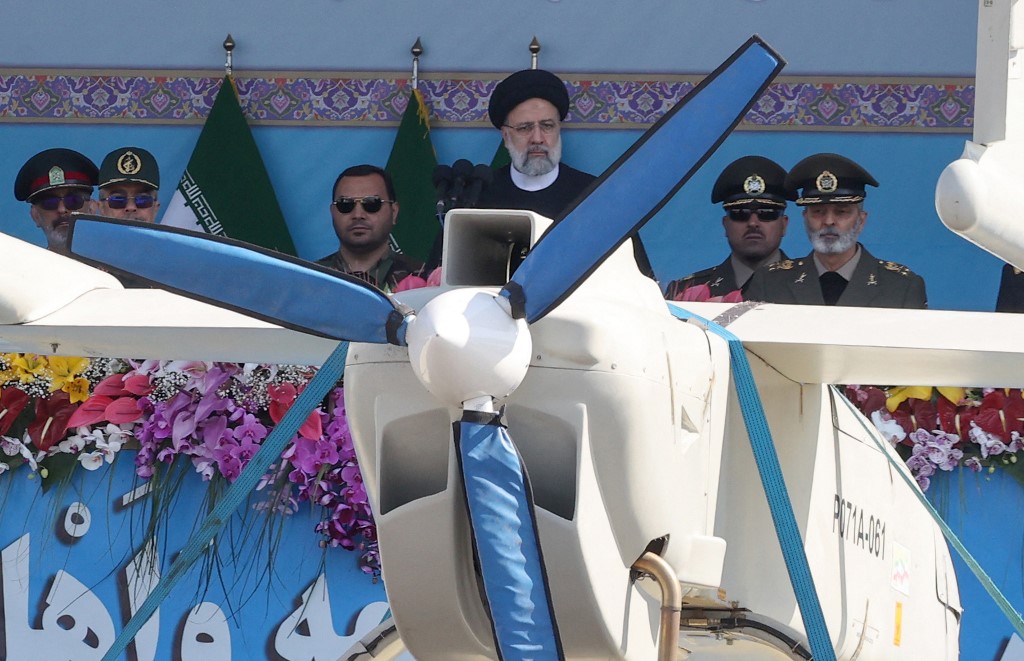
The skies of South America are quite active these days, with potential purchases by Argentina, Bolivia, and Peru of new aerial units, ranging from surveillance drones to combat aircraft.
The Bolivian government of Luis Arce had to partially disclose a confidential defense agreement signed with Iran on July 20, admitting that it plans to acquire Persian-made surveillance drones to better combat drug trafficking and smuggling at the borders.[1].
EYES IN THE SKY. The Bolivian Minister of Defense, Edmundo Novillo, after being questioned by Argentina and Chile, explained that there are “blind spots” for the surveillance radars already installed in his country. According to Novillo, so far this year, they have detected 479 irregular flights, which were not intercepted due to a lack of early detection equipment. In any case, the highland country has been operating tactical drones since at least 2015.
Then it was Peru’s turn. In her speech before Congress, coinciding with the country’s Independence Day, President Dina Boluarte announced on July 28 the acquisition of an airspace control and electronic warfare aircraft for the Air Force.[2]. This is intended to strengthen the fight against drug trafficking, illegal mining and logging, and smuggling, as well as to enhance the detection of vessels and aircraft entering its territory irregularly.
Peru and Bolivia are the second and third largest producers of cocaine in the world, respectively, and have employed their armed forces for decades in combating organized crime or terrorist groups. In this regard, an increase in surveillance against drug trafficking is good news, as long as it is carried out effectively. In both cases, the amounts of the operations, the number of units, and the models to be purchased have not been disclosed.
Moreover, illegal flights for drug transport have been a practice for decades in Latin America, involving everything from small planes to commercial cargo jets[3]. During the Covid-19 pandemic, drug flights likely increased to circumvent the closure of land borders.
FLYING AGAIN. Argentina’s situation is progressing along a different path. According to the correspondent for the newspaper La Nación in Washington, the government of President Joe Biden has sent two notifications to the United States Congress[4] regarding two proposals “for the transfer of defense equipment to Argentina, a sale operation of up to 38 F-16 combat aircraft currently held by Denmark, and another involving four P-3 maritime patrol aircraft from Norway; one of which has the capability to combat submarines.” La Nación reported on July 31 that it had access to the notes sent to the State Department. One operation involves “the transfer of F-16 combat aircraft from Denmark, with an approximate sale value of $338,695,634. These are the oldest models of the American fighter jet, in two transfers of up to six F-16s of the ‘Block 10’ version and up to 32 ‘Block 15’ aircraft.” The other proposed transaction with Norway “involves the transfer of three P3-C maritime patrol turboprop aircraft and one P3-C Orion for maritime patrol, reconnaissance, and anti-submarine combat, for a total value of $108,448,910.”
BETWEEN LONDON AND BEIJING
. The precarious state of the Argentine Air Force’s combat fleet, primarily composed of A-4 Skyhawks, is widely known, along with its desire to regain capabilities by acquiring new aircraft. Due to the United Kingdom’s ban on the transfer of weapons with British parts following the Falkland/Malvinas War (1982), Buenos Aires has had to explore alternatives, such as theChinese-Pakistani JF-17 jet and the Indian Tejas HAL fighter. Given its growing rapprochement with China in trade, investment, and financial transactions, the potential sale of JF-17s could be part of a larger package for Argentina’s struggling economy. Beijing would be presented with a tremendous opportunity to sell more modern and powerful military equipment to Latin America, where training aircraft, radars, and light armored transports have predominated until now. This growing proximity has raised alarms in Washington, which, through the U.S. Southern Command, expresses concern over China’s ambitions to invest in the southern country, including the possible expansion of the port of Ushuaia. The sale of F-16s could then be understood as an American attempt to regain ground within the Argentine armed forces, although, as far as is known, London has not yet relented.
It should also be noted that this information must be weighed against the immediate demand for F-16 fighters by Ukraine, which has repeatedly requested this type of aircraft from NATO member countries to continue its military efforts against Russia.
CLEARING DOUBTS.
Now, all these announcements occur at a time when Argentina is heavily indebted, Bolivia is facing a banking crisis, and Peru is seeking a political solution to the unpopular government of Boluarte. Certainly, this scenario adds a degree of uncertainty to the potential purchases, both due to the real payment capacity of these countries and the intentions of third parties in the transfers. In particular, the presence of Iran is concerning, given its potential disruptive support for militias considered terrorist in the past; hence Argentina’s legitimate concern, having suffered attacks in the 1990s.
In a recent survey published by AthenaLab, all neighboring countries identified drug trafficking as their main threat and expressed concern over the porosity of their borders. This certainly explains some purchases, and in the case of Argentina, the maritime reconnaissance aircraft that monitor foreign fishing fleets in the South Atlantic. Nevertheless, the total of all these potential acquisitions is far from matching the capabilities of the Chilean Air Force today, which is even preparing to modernize its F-16s, operates two E-2 Sentry early warning aircraft, and has Hermes 900 drones, all supported by a recent satellite system. However, it is worth following these developments, in case they continue to advance and eventually alter the aerial landscape of the four countries.
AthenaLab Team
July 31, 2023
[1]
Los Angeles Times (7/25/2023). “Bolivia confirms interest in Iranian drones to protect its borders”: https://www.latimes.com/espanol/internacional/articulo/2023-07-25/bolivia-confirma-interes-por-drones-iranies-para-proteger-sus-fronteras
[2] Infodefensa (7/28/2023). “Boluarte announces purchase of AEW&C aircraft and radar network for Peru”: https://www.infodefensa.com/texto-diario/mostrar/4388994/boluarte-anuncia-compra-avion-aew-c-red-radares-fuerzas-armadas-peru
[3] Verrier, M. (2020, May 1). The Invisible Air Force: The Increasing Threat of Drug Flights. (RUSI) Retrieved February 11, 2021, from Informer:
https://shoc.rusi.org/informer/invisible-air-force-increasing-threatdrug-flights [4] La Nación (7/31/2023). “Joe Biden requests authorization from Congress to proceed with a sale of F-16 combat aircraft to Argentina”: https://www.lanacion.com.ar/politica/joe-biden-pide-autorizacion-al-congreso-para-avanzar-con-una-venta-de-aviones-de-combate-f-16-a-la-nid31072023/