COLLABORATION | War in Ukraine and the Indo-Pacific, where do they connect?
This article was translated automatically and may contain differences from the original. For reference, read the original.
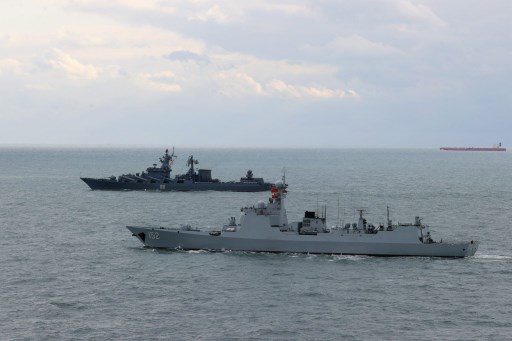
The Russian invasion of Ukraine in February 2022 marks an escalation of the Russo-Ukrainian war that began in 2014 with Russia’s occupation of Crimea and Donbas. This is the most significant conventional military operation since World War II, affecting strategic alignments, military doctrines, and supply chains. Additionally, it contributes to a growing bipolarization in the international system.
Countries and territories in the Indo-Pacific have shown diverse responses to the ongoing conflict. First, the United States has become the country that has supported Ukraine the most, providing financial and military aid. Directly, they offered over $76 billion, surpassing the aid provided to Israel in 1979, Pakistan in 1962, and Taiwan in 1960. Furthermore, Australia, Canada, Japan, New Zealand, Taiwan, Singapore, and South Korea expressed full support for Ukraine. Of the 47 countries that provided military support, 11 belong to the Indo-Pacific.
In Japan, the Russo-Ukrainian war has had a profound impact on its defense policy. The country decided to increase its military budget from 1% to 2% of GDP by 2027 to confront China and strengthen its counterattack capabilities. They are also considering expanding the list of countries that can receive Japanese weapons to assist nations facing military attacks. Lastly, there is an observed intensification of cooperation between Japan and NATO.
At the same time, major emerging powers in the region, such as China, India, and Indonesia, have opted for a more favorable position towards Russia.
The Chinese government has adopted a cautious stance in the conflict, not supporting the UN condemnation of the Russian invasion of Ukraine. A year after the invasion began, China published a “Peace Plan” that urged respect for the sovereignty of “all countries,” called for moving beyond the “Cold War mentality,” and for sitting down at the negotiation table. Additionally, the document advocated for the cessation of “unilateral sanctions” and did not reference the withdrawal of Russian troops from Ukraine, reaffirming China’s relationship with Russia as a partner in energy and arms, as well as to counteract U.S. power.
Regarding India, it has chosen not to condemn the Russian invasion and has rejected Western sanctions. Over the past year, it has increased its acquisition of Russian fuel by 22 times and has abstained from many UN votes. Prime Minister Narenda Modi has stated that India will support efforts to end the conflict. However, during his meeting with Vladimir Putin, he emphasized the “unbreakable” friendship between the two countries. The key question is how India, the world’s largest democracy, will balance its relationship with its former ally Russia and its new geopolitical partners such as the United States and Japan.
Speaking of the Southeast Asian position, with the exception of Singapore, most countries adopted a moderate response. Related to Indonesia, during the Shangri-La Dialogue, Defense Minister Prabowo Subianto proposed a peace plan to end the war in Ukraine, which includes the creation of a demilitarized zone and a UN referendum in what he termed “disputed territory.”
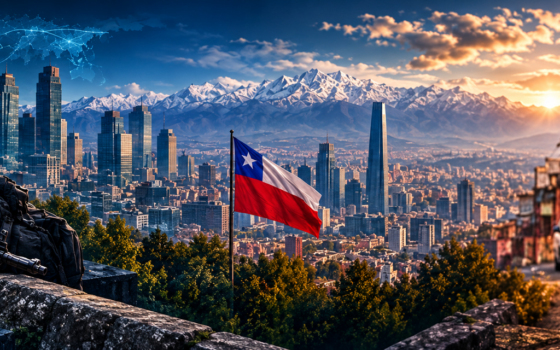
In the context of Latin American Pacific, Chile explicitly condemned the Russian invasion of Ukraine, and President Gabriel Boric described the war as “unacceptable” and an “unjust aggression,” which can be explained by the stability of the state system in the country. Chile and Mexico hosted Ukrainian President Volodymyr Zelensky virtually in their respective congresses. Likewise, Chile and Colombia committed to providing assistance in demining efforts.
Speaking of Colombia, a change in its diplomatic stance occurred in June of this year when President Gustavo Petro condemned Russia for the first time for an attack in Ukraine, following the bombing in Kramatorsk that affected three Colombian citizens.
Regarding Indo-Pacific security, significant concerns arise about the interconnection of tension points that could be affected by the situation in Ukraine. Among these, Taiwan, the Senkaku Islands, and the dispute in the South China Sea stand out.
At a higher level within the Chinese Party-State, statements linking the so-called “national unification” with Taiwan have been a fundamental part of the political discourse since the era of Deng Xiaoping. This approach sets a timeline for China’s incorporation of Taiwan, coinciding with the centenary of the People’s Republic in 2049.
Xi Jinping has ordered a modernization of China’s armed forces by 2035; moreover, Beijing boasts the largest navy in the world, with over 340 ships and a rapid deployment expeditionary fleet. In 2017, it established a permanent base in Djibouti and is exploring the possibility of additional locations, from the South Pacific to the east coast of Africa. This clearly evidences a military rise of China, which could have negative consequences in the future.
Regarding the dispute in the South China Sea, China has applied the same principle as Russia in Ukraine, known as the principle of “historical rights.” In 2009, China presented the “Nine-Dash Line Map,” in 2014 the “Ten-Dash Line Map,” and in 2023 the “Standard Map,” increasingly expanding the claimed territories. It is constructing artificial islands in that sea and promotes a strategy of salami slicing, which uses a series of incremental actions to gradually change the status quo in its favor. This represents a parallel between Ukraine and the South China Sea, challenging the world order based on international law.
Finally, there is a growing bipolarization of the world. Russia has reinforced alliances with China and North Korea. Recently, it has also attempted to present the Shanghai Cooperation Organization (SCO), which includes Russia, China, Central Asian countries, India, Pakistan, and, since 2023, Iran, as a counterpart to NATO. Moscow views the SCO as a core of an anti-Western bloc. China, Russia, and especially Iran face Western isolation and sanctions and seek to expand their group of countries by promoting, according to them, a “multipolar” world, that is, one with a less influential United States.
Another relevant alliance is the BRICS group led by China, in which Russia participates. More than 40 countries have expressed interest in joining this forum, according to the host country of the 2023 summit, South Africa. Six countries: Argentina, Egypt, Ethiopia, Iran, Saudi Arabia, and the United Arab Emirates, will join BRICS in 2024.
In conclusion, the war between Russia and Ukraine will have a profound and lasting impact on the region. Russia is strategically weakening, which could open the door to the strengthening of Chinese dominance in the region. Despite tensions between the United States and China, both are likely to seek to maintain a balance of power to avoid an escalation that could have serious regional and global consequences.
However, should hostilities break out, East Asia would be the region most vulnerable to the consequences. Historical experience has taught us that conflicts in one part of the world can trigger greater militarization globally.
The key to a stable future lies in forming a coalition of democratic countries that work together to neutralize the threats posed by Russia and China. Additionally, it is essential to maintain a world order based on rules and international norms that promote peace and stability in an increasingly complex geopolitical environment.
Violetta Udovik, PhD in History from Mechnikov National University of Odessa and Master’s in Law from the University of Tokyo
October 6, 2023
Photo: France Presse
*Presentation made at the seminar “Latin America Facing the Asia-Pacific/Indo-Pacific: Perspectives, Narratives, and Opportunities,” organized by AthenaLAB, CEIUC, and CEI-UCA
**
This article represents the author’s thoughts, not necessarily those of the institution.