COLLABORATION | Hamas Attacks Israel: Why Now, and What Comes Next?
This article was translated automatically and may contain differences from the original. For reference, read the original.
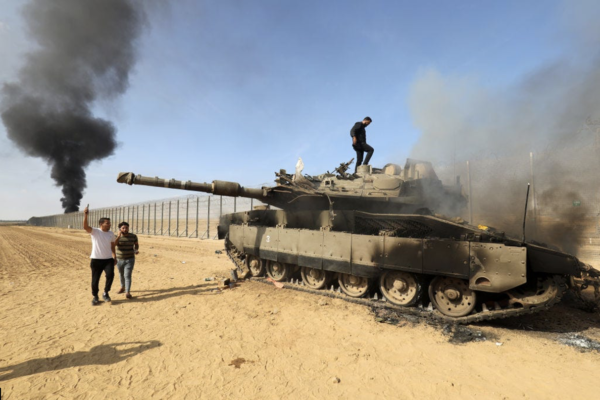
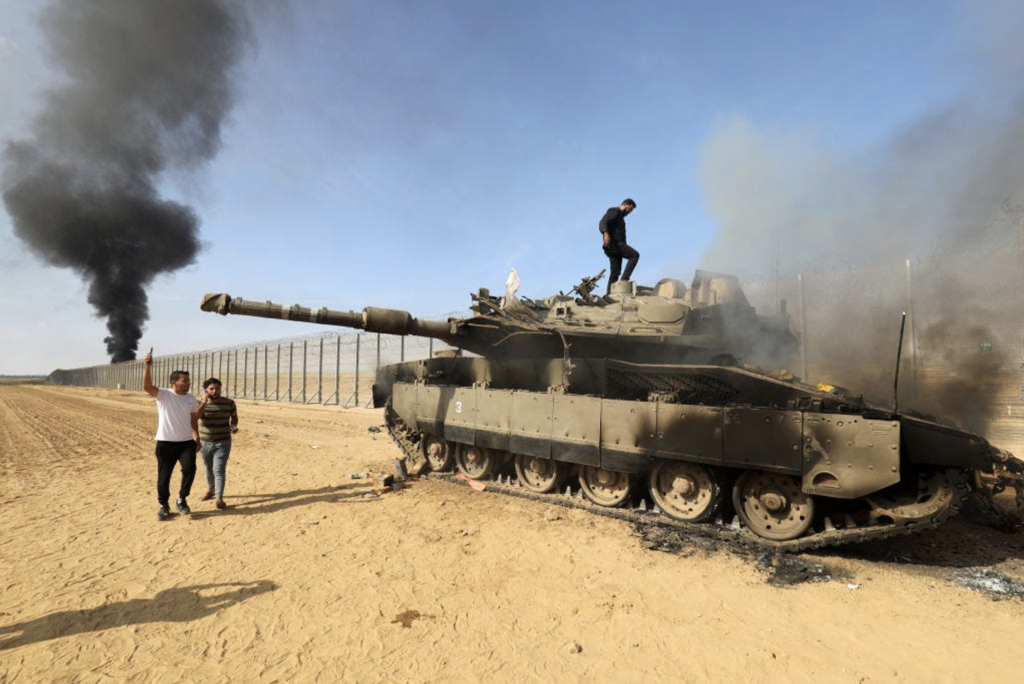
The terrifying attacks on Saturday against Israel required levels of planning, orchestration, and audacity that indicate they had been prepared for quite some time. It was not an angry and impulsive response to recent events, such as the entry of Israeli settlers into the Al Aqsa mosque, or the dialogue between Israel and Saudi Arabia, although these events were the latest in a series that convinced Hamas it was time to strike and shake Israel. The date of October 7, nearly fifty years after the last time Israel suffered a similar blow, has been resonating for some time. Hamas understands the symbolism.
The easy and obvious comparison between the two attacks is that once again Israel has been caught by surprise. The comparisons can go further. The Israelis ultimately won the Yom Kippur War of 1973 by defeating the Egyptian and Syrian armies, but they did not feel it as a victory. The human costs were high, and it was demonstrated that the country was still vulnerable, despite the stunning victories in the 1967 war. The Arab armies had been underestimated for their ineffectiveness: they now showed that with better weapons and tactics, they were still capable of inflicting severe blows on Israel, and that they could do so again. The Israeli public felt that if the danger had been better anticipated, all of this could have been avoided. The ruling government was ultimately punished at the polls for the error.
While I am always cautious when predicting the course of a war, we can be reasonably sure of one thing. The political backlash within Israel will be severe, and it will go beyond investigations into the intelligence failure. Not immediately, because the country will unite as the fighting continues and partisan differences are set aside. But once the dust has settled. This shift is already occurring as Prime Minister Benjamin Netanyahu offered opposition parties to join an emergency coalition, seeking the broadest possible support for the next steps. According to Yair Lapid, Netanyahu acknowledges that “with the current extremist and dysfunctional security cabinet, he cannot manage a war. Israel needs to be led by a professional, experienced, and responsible government.” The condition will be to remove the most controversial and disruptive members of his coalition, particularly Bezalel Smotrich and Security Minister Itamar Ben Gvir, an ultranationalist who has been dedicated to deteriorating relations with the Palestinians without preparing for the consequences.
The coalition’s policies on judicial reform have not only left Israeli society deeply divided (something Hamas must have been fully aware of), but also its active support for extremist groups causing problems in the West Bank and Jerusalem meant that the Israel Defense Forces (IDF) had to go protect them, to the detriment of other areas. This partly explains the empty guard posts and weak defense lines along the Gaza border, which hampered the ability to respond to the attacks.
The scale and nature of these attacks are more limited and terrorist than the crossing of the canal and armored assaults of 1973. Moreover, unlike in 1973 (when Israel could not focus on the Egyptian forces until it had dealt with the more immediate threat from Syria), Israel is currently fighting against a single enemy. It must be aware that this could change, either due to an increase in violence in the West Bank or by Hezbollah’s possible decision to join the war from Lebanon, with even more lethal consequences.
War and Diplomacy
There is another difference. The 1973 War was a prelude to diplomacy. Until then, all Arab governments had refused to accept Israel’s right to exist and rejected proposals for direct negotiations. Egyptian President Anwar Sadat wanted to change that. Capitalizing on the momentum that the successful early days of the war gave to his prestige, he entered a process that culminated in a peace treaty with Israel, shortly after which he was tragically assassinated. The current war was preceded by significant negotiations and advances in Arab-Israeli diplomatic relations, especially with Gulf states. The most recent effort began under the Trump administration, leading to the “Abraham Accords” (between Israel and the United Arab Emirates, Bahrain, Sudan, and Morocco), and has recently been advancing toward what Israelis see as the grand prize: the normalization of relations with Saudi Arabia. This has been progressing in recent days, with the United States attempting to negotiate an agreement (and getting the Saudis to help lower oil prices). Netanyahu told the UN in September that the two countries were at “the cusp” of an agreement. Saudi Crown Prince Mohammed Bin Salman also confirmed that “every day we are getting closer.”
The Palestinians have watched this with dismay, feeling that they are being abandoned by Arab governments eager to capitalize on Israel’s high-tech economy. In the past, it was considered a prerequisite for any Saudi advancement to have some kind of peace initiative. The Crown Prince continues to insist that the Palestinian issue has not been forgotten, but the Palestinians have few friends in the region, no matter how popular their cause is among ordinary people. The attacks were planned before the most recent stage of dialogue between Saudi Arabia and Israel. However, since this normalization process has been underway for some time, it is possible that one of the motives was to derail it.
So far, the Saudi response has been to call for an immediate cessation of the escalation of violence, and it has pointed out that it has repeatedly warned that Israel’s current occupation of Gaza would drive more violence. Its position remains that a “two-state solution” is the best option, and that is the opinion of the majority of the international community.
However, the last serious attempt at negotiations toward this goal occurred at the end of the Clinton administration in 2000. The failure of those talks, regarding the division of Jerusalem and the extent of the Palestinian right of return, was followed by the “Second Intifada,” which included bombings in Israeli cities. This had the effect of pushing Israel to the right and undermining its peace movement. There have been occasional attempts to reactivate the process, at least with Palestinian leaders in the West Bank, led by Mahmoud Abbas, whose health is in serious decline. At times, there has been cooperation between Israeli and Palestinian security forces to stabilize the situation. But relations, which were never good, have worsened further since the Israeli government backed the harder wing of the settlers. Hamas, which already controls its own territory, maintains its rejectionist stance, showing no interest in negotiation, even if offered.
Containing Hamas
Once the Second Intifada was defeated, then-Prime Minister Ariel Sharon took a bold step. He concluded that the best way to address the Gaza Strip was to withdraw all Israelis from their settlements, install a barrier, leave the Palestinians there undisturbed, and hope that this would be reciprocated. That did not happen. In 2006, Hamas won the elections in Gaza and soon consolidated its control over the territory, expelling the Fatah group led by Abbas. It viewed the territory as a base from which it could prepare for a final confrontation with Israel, and soon began to amass weapons, including rockets with Iranian assistance.
Whenever attacks have been launched from the area, Israel has struck back. These armed skirmishes reflected frustration over the conditions in which the population lived, and Hamas’s determination to show that they would not be intimidated. In response, Israel adopted the stance of not allowing itself to show any weakness. This involved a series of measures over the years, from assassinating Hamas leaders and bomb makers to directly attacking the camps of their fighters.
At times, this meant bringing the fight to Hamas strongholds in Gaza, but for more than a decade, whatever the provocation, the IDF has sought to avoid that. Once they find themselves in hostile territory, their troops become vulnerable to ambushes while trying to root out fighters who easily blend in with the local population. Experience warns that once entering these territories, except for a quick incursion with a specific objective, it can be very difficult to get back out, and it is unlikely to achieve significant objectives.
Therefore, Israel has increasingly opted to prioritize defensive and punitive measures. In 2014, in an effort to lift the aerial and maritime blockade of Gaza, Hamas launched rockets at Israel, while Israel demonstrated the quality of its intelligence by finding and destroying over 30 tunnels. These had been used for smuggling and as possible routes beneath the barrier, through which attacks could be launched against Israeli communities. Although Hamas fired thousands of rockets, its attacks were mitigated by the impressive air defense system “Iron Dome.”
Since then, Israel has considered that the combination of an improved barrier, air defenses, and precision air strikes to destroy Hamas’s resources in Gaza was sufficient to mitigate the threat, without the risks and distress of trying to occupy the territory. Meanwhile, Gaza has suffered a blockade (backed by Egypt) that restricts the import of all kinds of goods, including electronic and computer equipment that could be used to manufacture weapons, while also preventing people from leaving the territory.
Instead of “resolving” the Hamas problem, whether by military or political means, the only thing that could be done is to contain it. There were demonstrations and protests along the barrier, but nothing that seemed unmanageable. As noted by Seth Franzen,
Hamas appeared isolated in Gaza, unable even to obtain more funding from its usual sources, such as Qatar. With the increase in Israeli normalization agreements in the region, Hamas seemed to present an outdated ideology living in the past.
However, there were signs of rising tensions. The Palestinian Islamic Jihad (a significantly smaller movement than Hamas) launched a barrage of rockets in May, to which Israel responded with a targeted attack that killed three of its leaders. This time Hamas stepped back. Egypt and the UN managed a ceasefire. In July, Israeli forces entered Jenin in the West Bank, with the supposed aim of eliminating Palestinian militants. This included hundreds of ground troops and air strikes. Then, last month, there were clashes near the Gaza barrier, where Palestinians fought against Israeli forces. Last week, Israeli settlers entered the Al Aqsa complex in East Jerusalem, apparently aided by Israeli police, to commemorate the Sukkot holiday, provoking Arab anger. (It was a visit by Ariel Sharon to this mosque in 2000 that helped trigger the Second Intifada).
What Comes Next?
In a context of growing frustration and anger among Palestinians, containing the situation became a greater challenge. Hamas was looking for ways to breach Israel’s defenses. For a long time, it had used its rockets as a means to bring the war to Israel, but their impact was neutralized by the Iron Dome. On Saturday, it launched hundreds of rockets simultaneously, thus saturating and temporarily overwhelming the Iron Dome, with some rockets reaching targets deep within Israel. More seriously, it breached the barrier with excavators, flew over it with paragliders, and surrounded it by sea. Many of these advances were thwarted by Israel, but they were successful enough in the first wave to breach border posts, take hostages, and kill civilians at random when militants attacked them. Although operations within Israel should end soon, the killing of retirees and the desecration of corpses will increase pressure on the Israeli government to impose reprisals.
Israel is already inflicting damage on Hamas with airstrikes targeting its infrastructure. More significantly, Gaza is being deprived of much of its electricity and water supply, and its internet has been affected. IDF spokesperson Brigadier General Daniel Hagari, stated at a press conference that airstrikes “would significantly intensify and eliminate all of Hamas’s terrorist infrastructure, all the homes of terrorist commanders, and all symbols of Hamas’s government.” But in the end, these are just buildings, and new buildings can always be found – and indeed, new fighters and leaders.
Israel has also called up reservists and seems to be preparing to re-enter Gaza. The pressure to do so will be great, but there are also reasons to be cautious.
First, Hamas will be prepared. It will be a tough fight. Even a limited incursion could prove very costly.
Second, the IDF does not have the capacity or power to stay and take control of Gaza. It remains a territory of 2 million people, and as they have nowhere to go, they will have to stay, still furious.
Third, the greatest danger for Israel is that the conflict could expand territorially, requiring even more deployment of the IDF and the Iron Dome. The Lebanese group Hezbollah praised the operation and linked it to the attempts of Arab governments to improve relations with Israel. According to its leader Hassan Nasrallah,
“This sends a message to the Arab and Islamic world, and to the international community as a whole, especially to those seeking normalization with this enemy, that the Palestinian cause is eternal, that it will live until victory and liberation.”
I assume that if Hezbollah were part of the plan, they would have attacked simultaneously to maximize the impact. Iran supports both groups and will assess how much a broader war would complicate its own attempts to normalize relations with Gulf Arab countries. If the fighting drags on, and images of Israeli attacks on Gaza prevail, pressures will increase for Hezbollah to get involved. Hezbollah has already made a gesture by sending rockets and projectiles against three Israeli positions in the disputed Mount Dov region on the border with Lebanon. Israel responded with artillery and a drone strike. The same goes for the West Bank. Abbas has stated that Palestinians have the right to defend themselves, but there must be a risk, whether he wants it or not, of independent actions against Israeli settlers and, indeed, by settler groups against Palestinians.
Fourth, what about the fate of the 100 hostages taken by Hamas and the Islamic Jihad (which has also played an active role in the attacks)? There were few patterns in the hostage-taking (reports indicate that there are 15 Thais detained), and some appear to have been captured and held by Palestinian civilians. This issue will weigh heavily in Israeli calculations.
As for political objectives, the leader of Hamas’s military wing, Muhammad Deif, stated that the “operation” was launched so that “the enemy understands that the time for attacking without paying the consequences has ended.” It has also been said that it was ‘in defense of the Al Aqsa mosque.’ Netanyahu has described Israel’s objectives as follows:
“Our first objective is primarily to clear the territory of enemy forces that have entered, and restore security and calm in the settlements that have been attacked. The second objective, at the same time, is to impose a high price on the enemy, even in the Gaza Strip. The third objective is to fortify other areas, so that no one mistakenly joins this war.”
If Israel wants to contain the conflict, it needs to end it as soon as possible. For the same reason, it will be more useful for Hamas to extend its duration, stoking emotions throughout the region.
Israel, having concluded that it was secure because it had found ways to contain the Palestinians and then essentially ignore them, now discovers that it is not so easy. The international attention that these events have garnered, and the dangers of violence continuing, may encourage new diplomatic initiatives (the Security Council will meet, while the U.S. Secretary of State has been in contact with all stakeholders except Hamas), but with so much more at stake, it is not a propitious moment. Perhaps Israel’s new friends in the Gulf will find a way to move forward, as the Saudis have attempted in the past. Perhaps the shock of this latest round of confrontations will encourage the emergence of new ideas. History is not lacking in examples of attempts to alleviate the conflict, some of which achieved progress.
Local initiatives have a higher likelihood of success. It is hard to imagine how a military operation can safely free the hostages. The Wall Street Journal reports that Israel has already asked Egypt to mediate. Egypt participated in ongoing talks since May 2021 with Qatar and Hamas (in which Israel has also participated). The subject of these talks was to rebuild Gaza after previous fighting and ease the blockade in exchange for a ceasefire. According to Haaretz, they were interrupted a month ago, when instead of more aid, the Qatari representative in Gaza conveyed only Israel’s warnings against any escalation. These talks could be reactivated, even though a ceasefire now, with a lifting (at least partial) of the blockade, and without Hamas being weakened for the future, would be seen as a defeat for Israel. But if we look back to 1975, the long-term impact on Israel lies not only in how the fighting began but also in how it ended. Being caught by the first blow was a psychological victory for its adversary, and the effects were lasting.
Lawrence Freedman
October 8, 2023
[1] Article translated and reproduced with permission from its author and originally published in “Comment is Freed” https://samf.substack.com/p/hamas-attacks-israel?r=15i4j0&utm_campaign=post&utm_medium=web
[2] Sir Lawrence Freedman is Emeritus Professor of War Studies at King’s College London. He studied at the universities of Manchester, York, and Oxford. Before joining King’s, he held research positions at Nuffield College Oxford, the International Institute for Strategic Studies, and the Royal Institute of International Affairs. Elected a Fellow of the British Academy in 1995 and awarded the CBE (Commander of the British Empire) in 1996, he was appointed Official Historian of the Falklands Campaign in 1997. In 2003, he received the KCMG (Knight Commander of St. Michael and St. George). In June 2009, he was appointed a member of the official inquiry into Britain and the 2003 Iraq War. He has written on international history, strategic theory, and nuclear weapons issues, as well as commenting on current security issues. His recent books include Strategy: A History (2013), The Future of War: A History (2017), Ukraine and the Art of Strategy (2019), and, with Jeff Michaels, the fourth edition of The Evolution of Nuclear Strategy (2019). He is currently working on a book about Command Politics.
The opinions expressed in this article are those of the author and do not necessarily reflect the views of AthenaLab.