ANALYSIS | Air Defense and Missile Defense: How Israel Confronts Hamas
This article was translated automatically and may contain differences from the original. For reference, read the original.
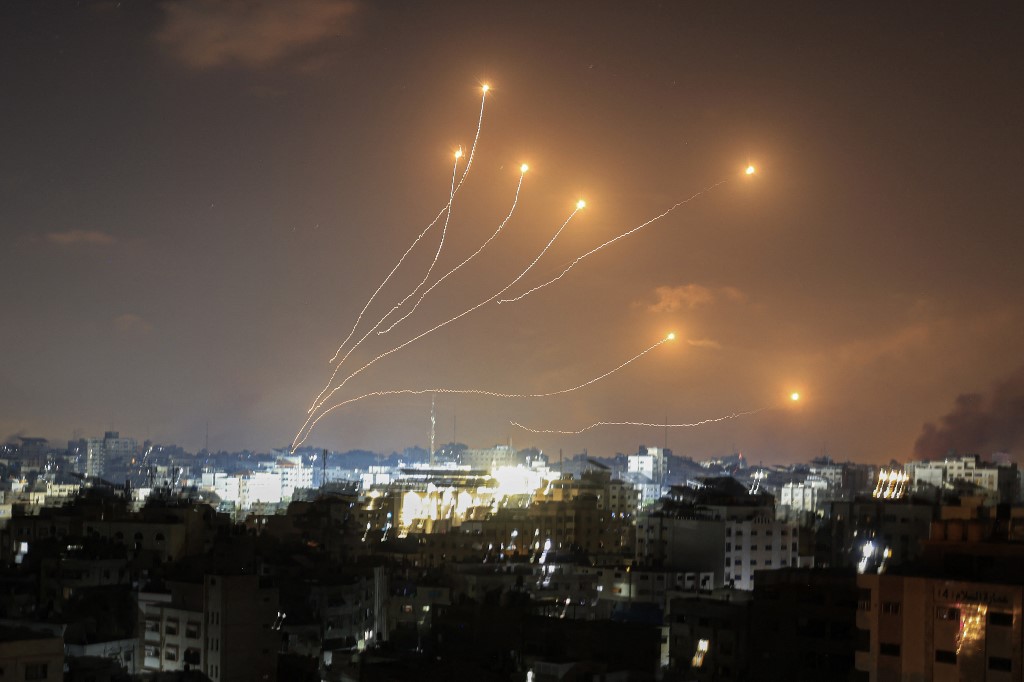
The Israeli air defense and missile defense system has been at the center of the current conflict between Hamas and Israel. It has become well-known for the high performance of one of its platforms, the Iron Dome, a tactical projectile interception system. Over the past 30 years, and in response to the evolution of emerging threats, Israel has had to implement various air defense measures, transforming this function into a complex multi-layered system designed to meet the unique security needs of the State. In general terms, any air defense system must include at least three elements: sensors, interceptors, and command and control units. The existing platforms are:
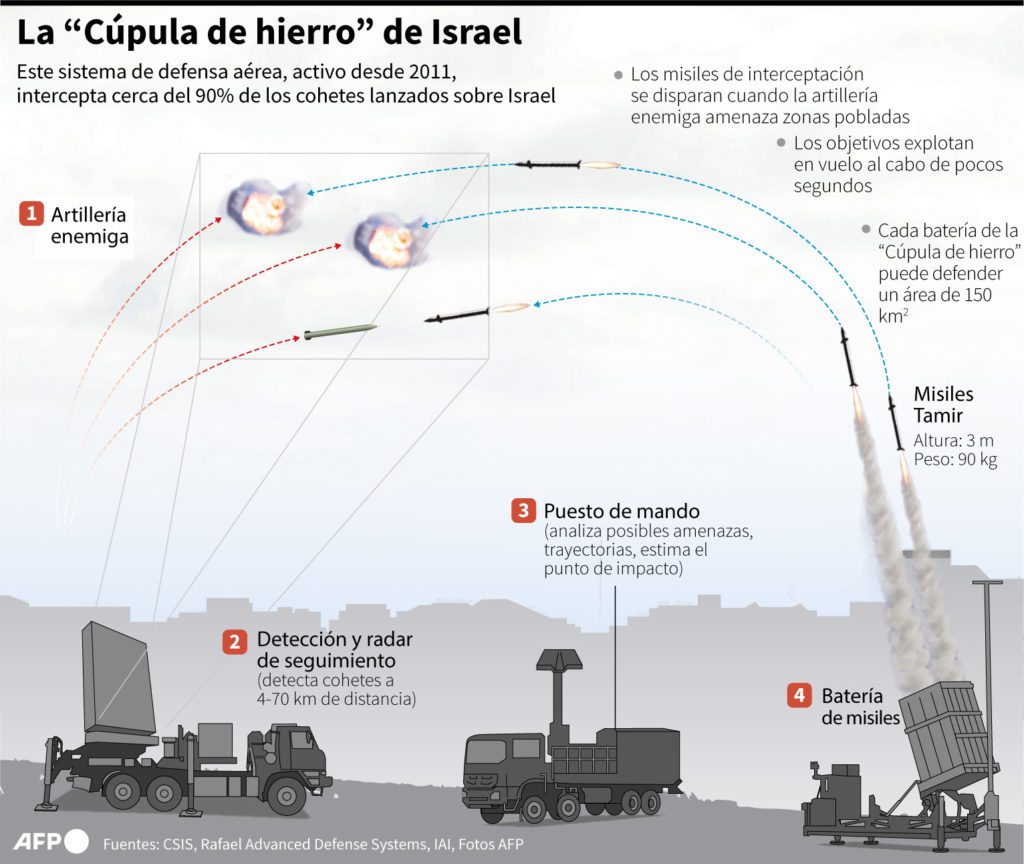
1. The Iron Dome
An air defense system designed to intercept and destroy rockets, missiles, and short-range artillery projectiles (4-70 km). It was developed by Rafael and Israel Aerospace Industries (IAI) starting in 2007 and has been continuously refined.
The system operates with a rocket and missile detection unit, which includes a command and control unit, as well as a battery housing the interceptor fire units, working together constantly. The detection unit consists of high-resolution ELTA radars, of the EL/M-2084 type, which operate both day and night, as well as in all weather conditions, reacting to multiple threats simultaneously. The missile battery consists of firing units of 20 projectiles, which are launched from containers moved by trucks. The missile fired is of the Tamir type, equipped with electro-optical sensors. It measures 3 m in length, weighs 90 kg, and has a diameter of 160 mm.
The system is activated when a projectile enters the protected area, being identified by the detection and tracking unit thanks to the aforementioned radar, particularly when it approaches populated Israeli areas or strategic centers. The fire control computer analyzes the threat and, based on the risk assessment, selects and fires one or more of its interceptor missiles.
In general, the system is highly mobile and can be deployed with great flexibility in different locations based on the threat. The Israel Defense Forces (IDF) attribute a high level of effectiveness to it. According to a report from Reuters, the air defense system has been promoted for South Korea and India. It is also mentioned that the United States has acquired two batteries.
2. David’s Sling
As an intermediate component of Israel’s air defense system, David’s Sling[1] (“David’s Sling”) or “Magic Wand” —according to the Hebrew designation— is intended for the interception of short-range ballistic missiles, large-caliber rockets, and cruise missiles, all at a distance between 40 and 300 km. The system was developed in conjunction with the United States and complements Iron Dome and Arrow.
It consists of three elements. First, a vertical fire unit that houses the Stunner interceptor missile. This unit is towed and can hold up to 12 missiles (all launch units are manufactured in the U.S.). The interceptor is a two-stage missile, 4.6 m long, capable of intercepting targets at altitudes of 15 km, reaching a speed of Mach 7.5. This missile, unlike the one used by Iron Dome, does not have an explosive warhead but neutralizes its target by striking it directly. The estimated production cost of each missile is $1 million.
Second, it has a multi-mission fire control radar ELM-2084, which can operate both as an air surveillance radar and as a fire control unit. It can track up to 1,100 targets at 474 km in its “surveillance” mode and up to 200 targets at a distance of 100 km in “fire control” mode. Third, the system includes a combat management station (command and control).
Israel began developing David’s Sling in 2006, signing a development agreement with the U.S. in 2008, contracting Rafael Advanced Defense Systems as the prime contractor, which in turn designated Raytheon Missiles and Defense to develop the interceptor and launch platform.
3. The Arrow System
The Arrow air defense system constitutes a theater-level defense against ballistic missiles, designed to be employed in multi-layered configurations. It was developed by the Israeli Air Force and the U.S. Aerospace Industries Division in the 1990s —operational since 2000— and has been conceived as a key component of Israel’s defense architecture, capable of operating in various modes: as “Standalone” or “Net-Centric,” protecting airspace from short, medium, and intermediate-range ballistic missiles, with conventional warheads or other weapons of mass destruction.
It is easily transportable, allowing for rapid deployment against mobile threats. It has full interoperability with systems in use by NATO and U.S. Defense via the Link 16 system. This system identifies not only the launch point of a rocket but also predicts the impact point of the projectile to be intercepted.
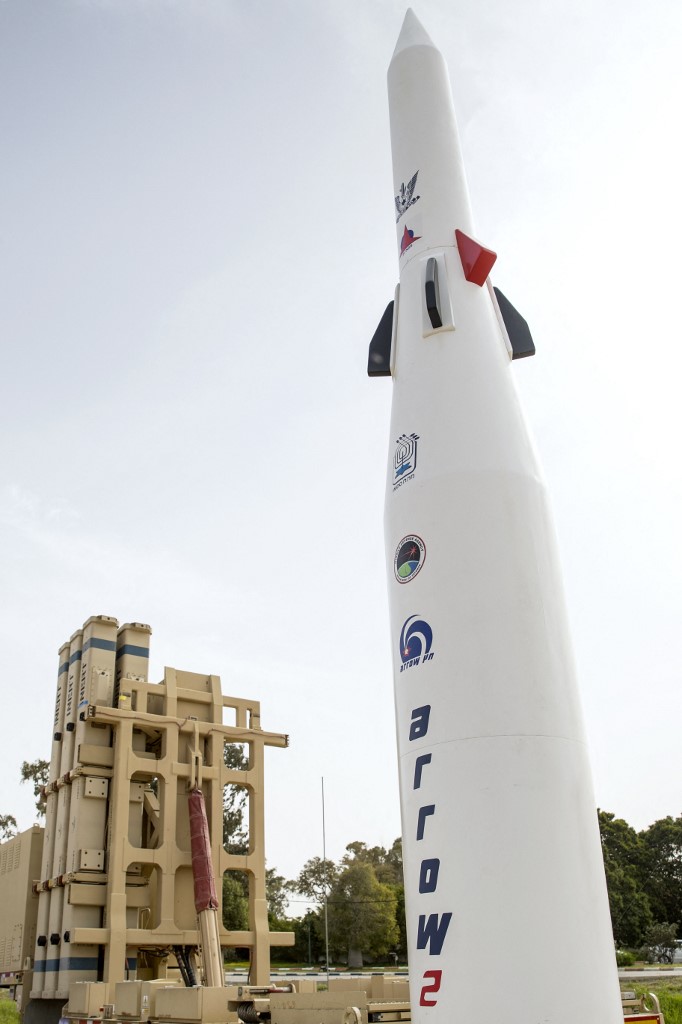
3.1 The Arrow 2 System
This type of platform was the first interceptor in the multi-layered defense system (operational since 2000). Its combat debut occurred on March 17, 2017, when it successfully intercepted a Syrian SA-5 missile, despite not being originally designed for anti-air combat missiles. It covers a wide area of theater operations, with interception capabilities both inside (endoatmospheric) and outside the atmosphere (exoatmospheric), with great efficiency and lethality. Its speed is supersonic, with a very short reaction time. It has a solid two-stage propulsion system. Additionally, it is equipped with electronic countermeasure sensors and a wide-area fragmentation explosive warhead. Its debut —in the current conflict— was on November 2, intercepting a missile launched from Yemen aimed at Israel[2]. Its dimensions are 6.95 m in length, 0.8 m in diameter, and it weighs 1,300 kg, being slightly larger than the Arrow 3 version.
3.2 The Arrow 3 System
This medium-range ballistic missile air defense system has been operational since 2017 and corresponds to a hypersonic interception system designed to operate primarily outside the atmosphere and very close to launch areas. It covers large areas of the theater of operations, with a range or flight distance of 2,400 km. It is fully compatible with the Arrow 2 system regarding components, launchers, sensors, and command and control systems. In the current conflict between Hamas and Israel, this weapon system successfully intercepted, on November 9, over the Red Sea, another missile fired by Houthi militants from Yemen towards Israel[3]. This event marks the first occasion on which a missile has been destroyed outside the atmosphere and, in turn, the first instance of warfare in the spatial dimension.
3.3 The Arrow 4 System
In 2021, Israel began developing the Arrow 4, a system that will replace Arrow 2 in the coming decades. This includes the incorporation of new interceptor missiles, with expanded exoatmospheric and endoatmospheric capabilities, drawing on experiences derived from the use of Arrow 2 and Arrow 3. Its development is led by the Israel Missile Defense Organization (IMDO) and the U.S. Missile Defense Agency (US MDA), with Israel Aerospace Industries (IAI) as the main contractor.[4]
Hamas Arsenal
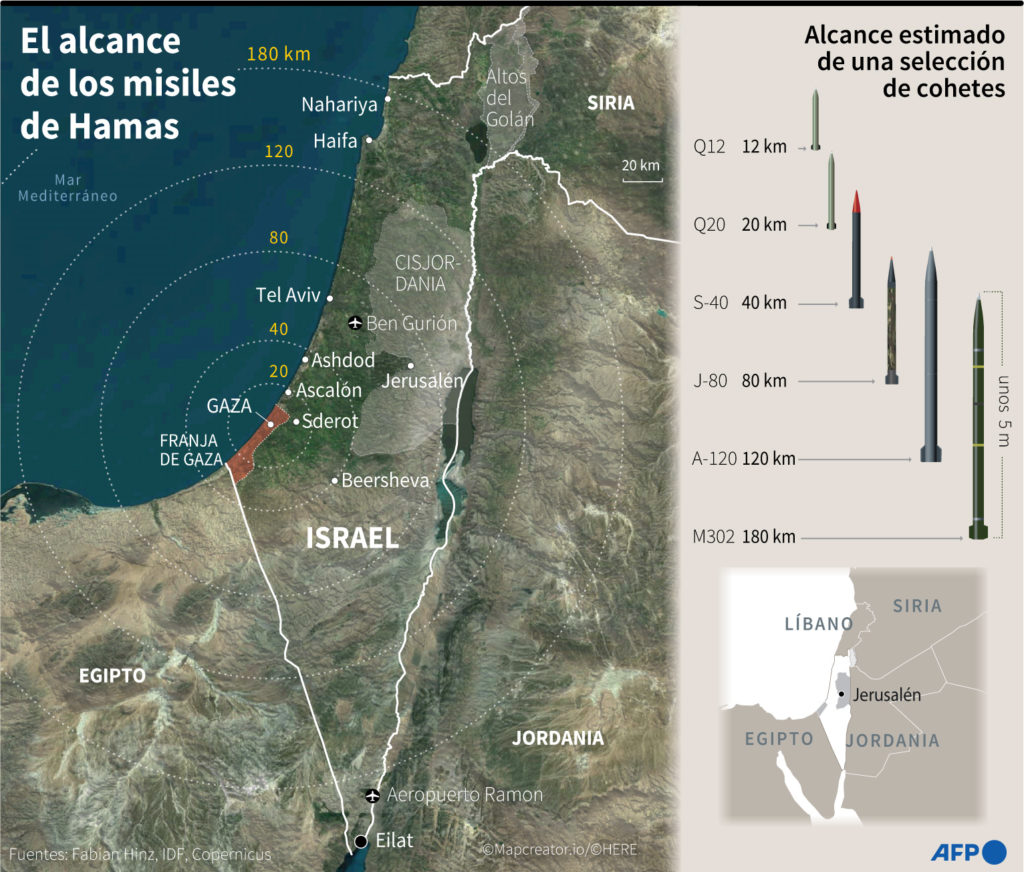
On the other hand, the previously defined system faces the challenge of various threats, such as Iran, Syria, Hezbollah, Houthi rebels, and, of course, Hamas. Regarding the latter group, it is estimated that they have accumulated about 30,000 projectiles, of which they fired around 3,000 on the day of the attack on Israel, October 7.
In an article published by the Wilson Center[5], it is described that the arsenal deployed by Hamas consists of both weapons imported from Syria and Iran and self-manufactured rockets. The text states that weapons imported from Iran have primarily been brought in through tunnels from Egypt and from Iraq and Syria. Although over time Hamas has significantly increased the range of its weapons —reaching up to 250 km— their reliability and accuracy are very low; however, their range allows them to reach virtually all of Israel.
Regarding self-manufactured rockets, Hamas has benefited from knowledge transfer from Iran, with the majority of rockets accumulated in Gaza being domestically produced. When characterizing weapons such as Qassam rockets, they can be described as a metal tube (with different diameters for different rockets) that houses the propellant material, which can include explosives made from agricultural fertilizers and sugar; stabilizing fins, usually four; a warhead filled with any type of high-power explosives that can be obtained, and a device that acts as a detonator or fuse[6].
Evidence shows that Hamas has progressively adapted to Israeli defense measures, incorporating new systems and procedures in its attacks. In this regard, improvements in launch platforms, as well as their dispersion, have allowed for greater survivability. Additionally, the mass use of rockets from various firing positions, which aim to overwhelm Israel’s missile defense systems by saturating their capabilities, further increases the accumulated experience.
Overall, Israel’s multi-layered air and missile defense system integrates different elements with varying capabilities and purposes, forming a robust system with a high level of effectiveness and proven efficiency in combat. The development of all systems responded to the strategic and security reality and also to the specific needs of the State of Israel, fostering innovation in its local defense industry, with the collaboration of the U.S.
John Griffiths Spielman and Marcelo Masalleras Viola
November 16, 2023
Photos: France Presse
[1] The information and background presented about this system were obtained from the “Missile Threat” platform of the Center for Strategic and International Studies. Available at: https://missilethreat.csis.org/defsys/davids-sling/
[2] https://breakingdefense.com/2023/10/in-first-israels-arrow-air-defense-system-intercepts-ballistic-missile-near-red-sea-idf/
[3] https://breakingdefense.com/2023/11/arrow-3-air-defense-system-notches-first-successful-intercept/
[4] https://www.iai.co.il/starting-development-of-arrow-4-interceptor
[5] https://www.wilsoncenter.org/article/irans-rockets-palestinian-groups
[6] Shapir, Yiftah S. “Hamas’ Weapons”. Strategic Assessment, Volume 11, No. 4 (February 2009): 52.