ANALYTICAL SUMMARY | Land Warfare Conference 2024: Europe's Future is at Stake in Ukraine
This article was translated automatically and may contain differences from the original. For reference, read the original.
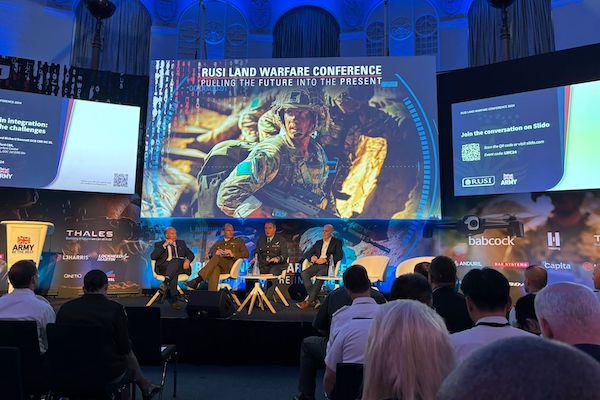
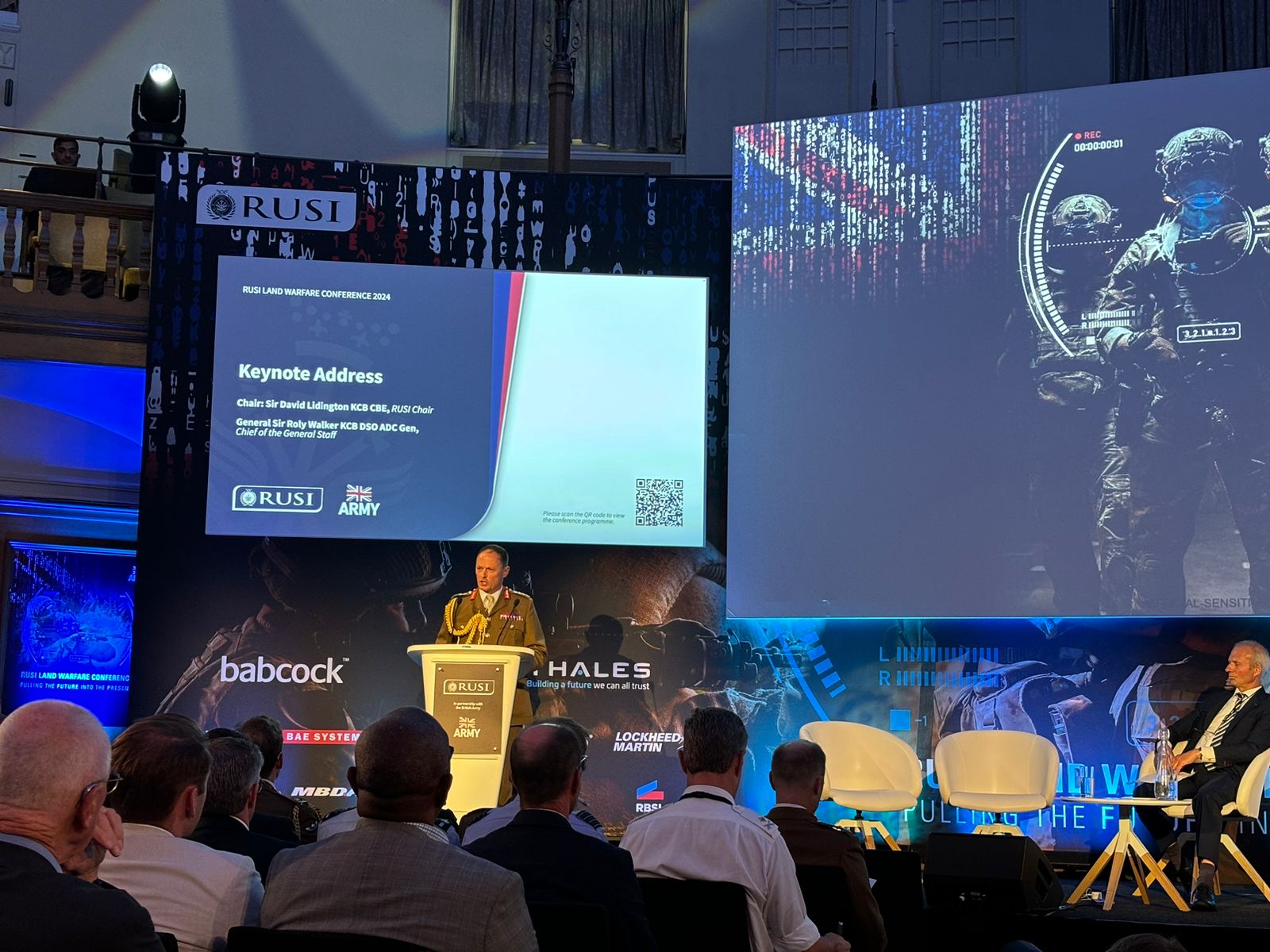
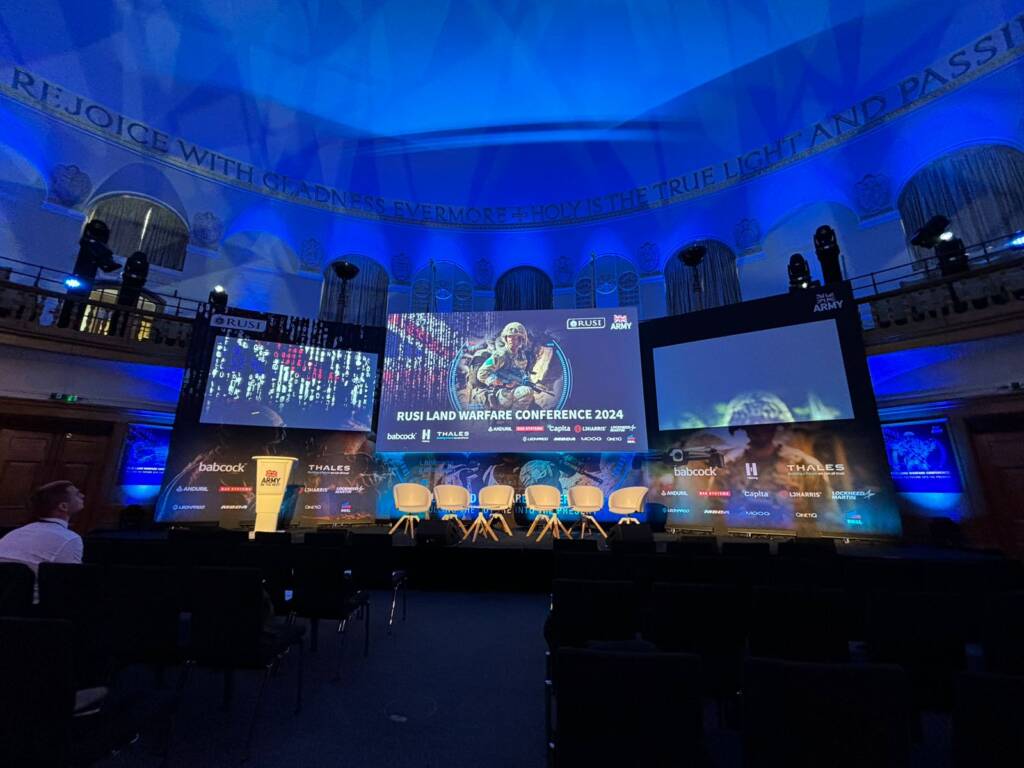
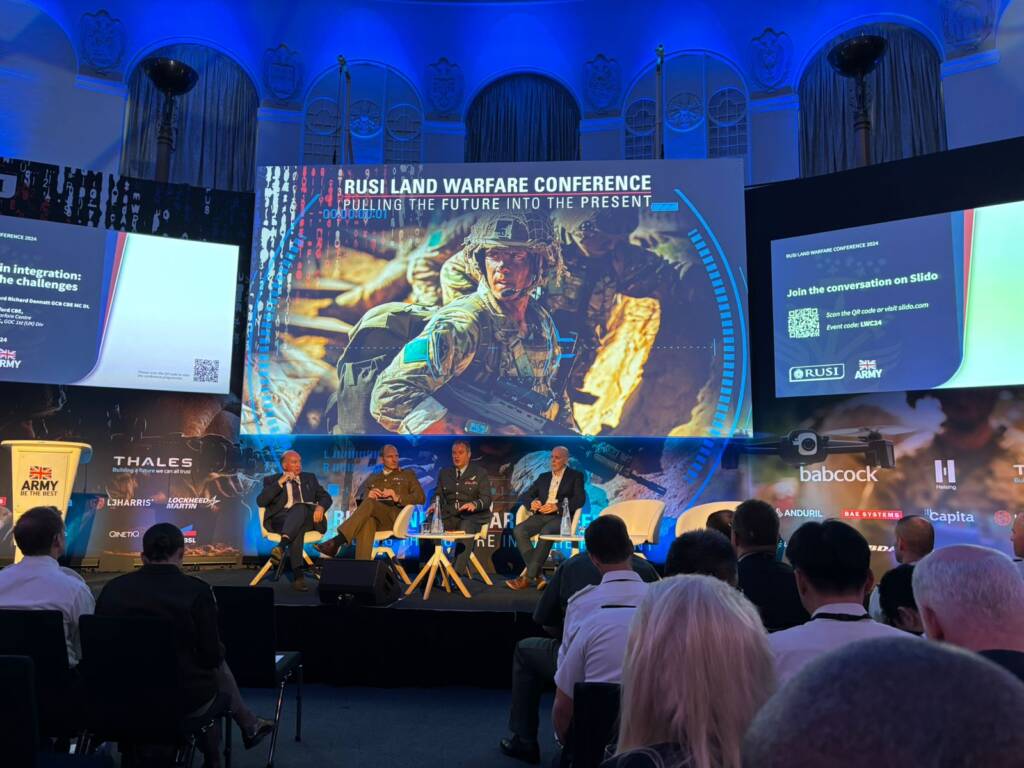
The war in Europe triggered by Russia’s invasion of Ukraine was the central focus of discussions and analyses during the various sessions of the recent edition of the “Land Warfare Conference,” organized by the Royal United Services Institute (RUSI) on July 22 and 23 in London.
The speakers included John Healey, the new Secretary of State for the Armed Forces of the United Kingdom; the former Commander-in-Chief of the Armed Forces of Ukraine and new Ambassador to the United Kingdom, General (Ret.) Valerii Zaluzhny; Admiral Tony Radakin, Chief of the Defence Staff; and General Roly Walker, Chief of the General Staff of the British Army. Additionally, the conference featured officials, members of the North Atlantic Treaty Organization (NATO), academics, and representatives from various think tanks and the defense industry.
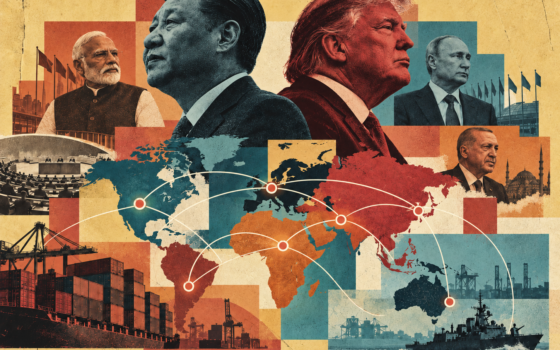
The initial assessment of the international context was concerning, as, in addition to the war unleashed by Russia, tensions in the Taiwan Strait, the Korean Peninsula, and the Middle East were highlighted, not to mention the complex political and security situation in Sub-Saharan Africa and Latin America. In this regard, a “axis” of states openly challenging the current international system was identified, leading to increased instability and conflict.
Despite the varied and in-depth discussions, four central ideas emerged during the conference:
- What happens in Ukraine, whether victory or defeat, will determine the strategic situation for Europe in the future.
- The war being waged by Ukraine provides significant battlefield experiences in operational, tactical, and technical domains that must continue to be studied and lead to changes at various levels and fields, necessitating that armed forces—especially those of NATO—adapt to the new reality and strategic context at a much faster pace than they typically do.
- A robust defense industrial base is crucial for the capacity of states and their armed forces in the development and outcome of the war.
- Recruitment, training, and retention of talent within defense organizations have become a matter of greater strategic importance for states, potentially generating a crisis across democracies.
For most attendees, the outcome of the current war in Ukraine will have clear and direct repercussions for the continent. The perception is that as long as Russian President Vladimir Putin achieves his objectives, he will extend his ambitions to other parts of Europe, more directly threatening members of the Atlantic Alliance—something that is already occurring—but through less direct means (cyberspace, disinformation campaigns, etc.), as Admiral Radakin pointed out.
During the conference, he mentioned the idea that Russia would need about five years to recover its lost operational capabilities and another five to implement the lessons learned during the war, thus becoming a true threat to Europe. Following this argument, the British authority recommended strengthening strategic capabilities (nuclear power), increasing operational capabilities of forces as part of NATO, and enhancing industrial potential for defense. All of this represents a challenge for local forces and the army, in particular. In the same vein, the idea of continuing to strengthen the Atlantic Alliance was a recurring theme. According to Radakin, the bloc is now stronger and superior to Russia, making collective defense the best strategic option for the region.
In the same line of thought, Secretary of State for Defence John Healey stated that the first and most imperative task of a government is to protect its citizens, and given the complex and serious security moment facing the United Kingdom, processes for modernization and completion of British defense capabilities must be accelerated, including those related to the defense industry. He also affirmed the determination of the United Kingdom and NATO partners to continue supporting Ukraine’s war effort.
A point of significant interest during the conference was the intervention of the former Chief of the Armed Forces of Ukraine. Now Ambassador Zaluzhny suggested that countries must “wake up” and envision how to protect their citizens from the various threats they face. He continued by indicating that one of the lessons from the current conflict affecting his country is that war must be avoided by all means; however, if it breaks out, states must be prepared to win, not only by employing military power, but also by preparing society itself, which is the most complex aspect. He added that since war is a political act, it will inevitably affect the politics of other countries, so democracies must observe the evolution of conflicts. He concluded by stating that the current war triggered by the large-scale Russian invasion should not be seen as the war of the future, but rather as a transition in the nature of warfare.
EVOLUTION OF THE BATTLEFIELD
The experiences being evidenced from war zones, whether obtained and shared by Ukrainian forces or derived from the analysis of events, have been and will continue to be an important source of learning that must feed adaptation processes. The development of new systems and the implementation of innovative improvements in existing systems and tactics are viable solutions for achieving comparative advantages in warfare. According to researcher Jack Watling from RUSI, the battlefield has changed significantly, particularly in terms of lethality and transparency, demanding greater lateral integration of systems and units, allowing for coordinated and efficient dispersion and concentration. From his perspective, critical capabilities include logistical sustainment in such an environment, air defense (density and layers), and infantry troops suited to the scenario and situation. Regarding the latter, despite the evolution of technology and procedures, infantry units will remain indispensable for the conquest and maintenance of geographical spaces. However, the expert stated that among the most important and significant areas, due to their current and future impact on operations, are the development and employment of autonomous systems, the dispersion of electronic warfare capabilities to lower levels, the use of artificial intelligence and quantum technology, and above all, firepower. The lethality of artillery systems, rockets, drones, among others, accounts for nearly 80% of Ukrainian casualties in the war, with increased range, precision, speed, and detection. Despite the importance of precision, the need to generate mass action continues to define lethality on the battlefield, given the limited availability and high cost of precision systems, which can also be affected by countermeasures, significantly reducing their accuracy.
During the conference, concepts such as lethality, adaptation, innovation, modernization, and integration were repeatedly addressed to confront the new characteristics of the battlefield. According to Yogue Pavel, rather than seeking a “kill chain,” there is a need to develop a “kill web,” reflecting the necessity for vertical and horizontal integration among systems, units, and domains. Similarly, regarding innovation, considering the time required to develop new weapon systems, the general suggestion was to improve the use of current systems through software or other complements that generate new capabilities, seizing opportunities and reducing costs.In particular, the Chief of the British Army proposed the concept of developing a fifth-generation land force, referring to the advancements, modernization, and changes in structure needed to adapt to new requirements. First, he defined the challenge of doubling the combat power of the institution within three years (by 2027) and tripling it before 2030. Certainly, he acknowledged that new weapon systems are required; however, they will not be available in the short term, necessitating a hybrid approach that combines improved current weapon systems with modern tools and software. Ultimately, the goal is to increase lethality, sustainability, and protection of the land force. It was recognized that no army—including the British, Russian, and Chinese—is truly prepared to face this type of warfare, both due to the needs for new technologies, tactics, doctrine, and procedures to minimize the impact of battlefield transparency, as well as the high levels of ammunition consumption and associated attrition.DEFENSE INDUSTRYAs a fundamental necessity for all of the above, the conference emphasized and justified the obligation to generate and maintain a sufficient defense industry to provide strategic independence and, if necessary, sustain operations, especially in situations of war between “peers,” where duration, wear, and consumption of material and ammunition are so high that it becomes prohibitive to face them without such capabilities. In this challenge, the public-private relationship is not only possible but essential for the development of complex projects, as is done in other areas of national activity. A long-term vision, with commitments, appropriate incentives, and a sense of reality, in which risks and failures are assumed, accepted, and shared as an inherent part of progress, are key elements for generating an adequate industrial base.Finally, an important topic addressed, related to availability, mobilization, efficiency, and resilience during a conflict, is the recruitment, training, and retention of personnel in the armed forces. On one hand, there is a crisis in recruitment systems. According to what was presented, the problem in the United Kingdom is not related to a lack of applicants for institutions, but rather with the ability to fill vacancies with individuals who meet the defined profiles. In this sense, the call is to assess the situation and the demographic and generational changes. On the other hand, as the establishment of complete cadres and the availability of reserves are direct responsibilities of the state, it is essential to have adequate training processes that ensure quality and those necessary to generate retention incentives, with the most important being those that ensure professional development and practice. Failing to address these elements will ultimately produce problems for state security, as replacing this personnel, in addition to being costly, is highly complex and slow, generating vulnerabilities that can be critically significant.
CHALLENGES FOR CHILE
In the context of transition in the international order, competition and confrontation among great powers tend to increase. In this scenario, as historian Niall Ferguson suggests, it seems we are more on the path to a Cold War 2.0 than to a Third World War. Given this, Chile must consider which international geopolitical axis it should approach—or potentially align with—the one of democratic countries or that determined by states such as China, Russia, Iran, and Venezuela.
The need to develop a defense industrial base is clear and responds to a state policy. In this sense, it should be the state itself, rather than the armed forces, that defines priority areas for development, focusing on minimum capabilities that provide strategic independence, accepting the economic cost but also the benefits of doing so. This not only grants the aforementioned freedom but also strengthens the country to face crisis situations, potentially generating jobs, innovation, and technology transfer.
Likewise, state-owned defense companies should focus on projects related to the manufacturing of drones (land, air, and maritime), logistical systems, anti-drone defense systems, software development, or other innovations that allow for better and more efficient use of currently employed weapon systems, among others. This work should not be done separately or in isolation, but rather requires collaboration with the private sector, considering the positive experiences observed elsewhere in the world.
Given the special circumstances arising from the war in Ukraine, Chile must establish the necessary links to directly access the experiences being presented in the current conflict. This should be done promptly, in an organized and sustained manner, to draw conclusions and experiences for its own forces and defense in general. From this, changes and updates can be introduced, not only in the doctrine or procedures for employing military units (land, maritime, air, and cyber) but also in areas such as logistics, capability development, innovation, and in preparing society to face a crisis of this magnitude.
- It is advisable to increase the use of simulation for training commanders and staff, but not by relying on complex and costly electronic or computerized systems, but rather through procedures such as simplified “war games” for all levels of command. For this purpose, it is feasible to utilize the creativity and innovative capacity of the personnel themselves and promote research and development at schools and academies that propose simple procedures, such as strategy games available on the market, but adapted to the needs of each force and level.
- Chile must continuously evaluate how it supports Ukraine. While the state and its authorities have been clear in condemning the large-scale invasion and the breach of international system rules, in addition to providing financial support, this seems limited for a country like ours. According to the fourth national survey by AthenaLab (2023), 9 out of 10 Chileans believe that Chile should support Ukraine. Of these, 35% think it should be diplomatic, which is currently happening; 5% through monetary donations; 43% believe it should do so by sending medical supplies and food; 9% opt for military means (4% lethal and 5% non-lethal); and only 9% suggest that we should not support. The needs of a country at war are nearly infinite and span all areas, so alternatives must be explored, such as means to support or repair the national electrical system (currently, 70% is affected by attacks); medical support, both for civilian infrastructure and for troop care; and support for demining vast areas of Ukrainian territory, much of it far from the front lines and near cities and towns, to name just three areas.
- Marcelo Masalleras, Senior Researcher at AthenaLab
- London, July 22 and 23, 2024.