COMMENTARY | Iran and Israel in a Dangerous Strategic Dialogue
This article was translated automatically and may contain differences from the original. For reference, read the original.
- by Marcelo Masalleras
- Noticias
AFP
In the early hours of Saturday, October 26, Israel attacked Iran in what is considered the latest chapter of their recent confrontation. The action from Tel Aviv had been anticipated for weeks, following the launch of over 180 ballistic missiles from Iranian territory towards Israel in early October. The following paragraphs provide an analytical review of this recent episode of confrontation, its potential effects, and what is expected in the medium and long term.
THE ATTACK
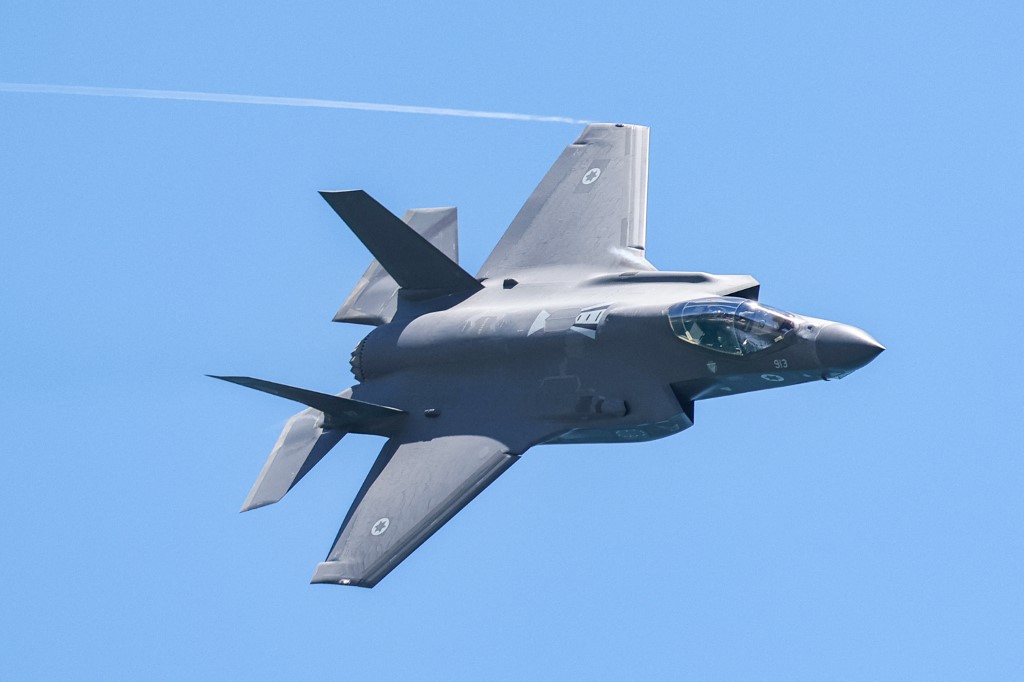
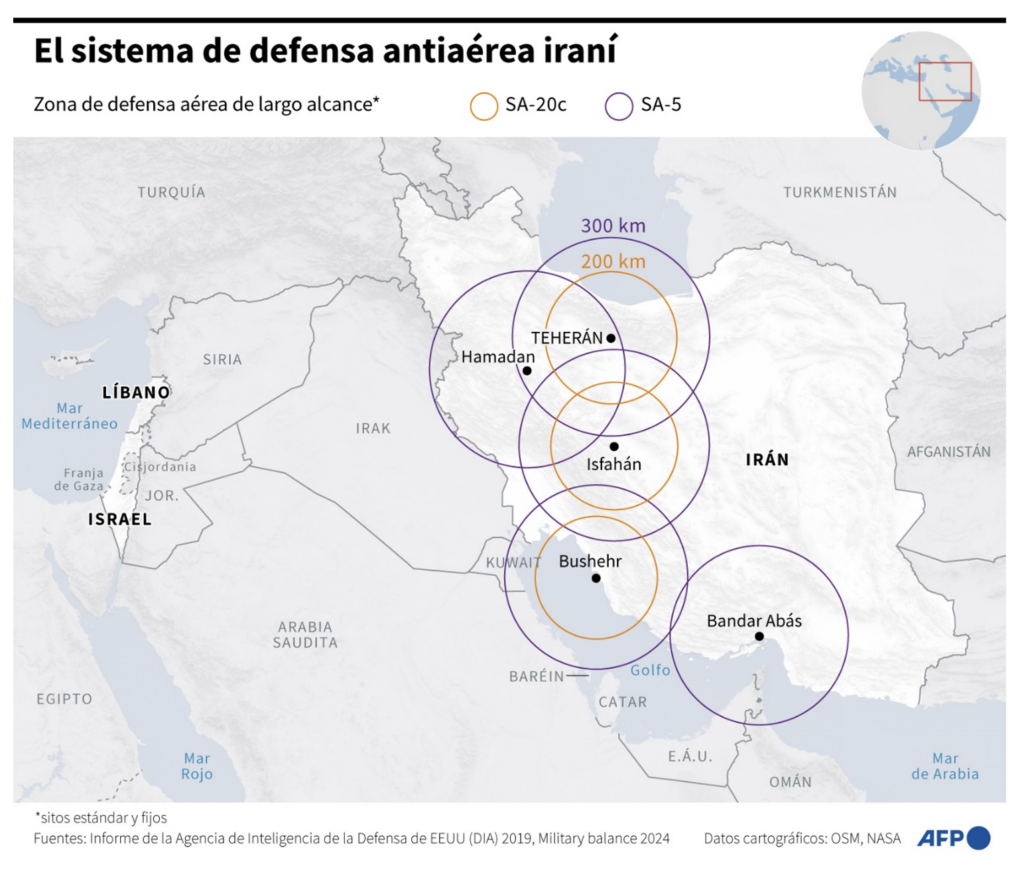
While the available information is limited, it can be stated that the action was executed by around 100 aircraft—both fighter jets and unmanned aerial vehicles (UAVs)—organized in three waves[1]. The first wave initially disabled radar systems based in Syria and Iraq to prevent detection of the maneuver. Subsequently, it aimed to neutralize Iranian air defense (radars, firing positions, command and control, etc.), particularly the Russian-origin S-300 platforms.
Having achieved this, the second and third waves targeted ground sites, focusing on more than 20 different locations, which are estimated to be facilities associated with missile and drone development and production, including the military complexes of Parchin and Khojir, with reports of four Iranian soldiers killed.
REACTION TO THE ATTACK
Israel explained that its actions are a “response to months of continuous attacks from the Iranian regime”[2], directly linking the offensive carried out by Tehran in early October to the attack of the previous weekend. In retaliation, Tehran warned of its right to defend itself without providing details. On the other hand, it has downplayed the damage and effect of the Israeli action.
The United States, Israel’s main ally, has reiterated its strong commitment to defend its interests and those of Israel, as well as other partners in the region, while calling for de-escalation of the conflict and considering the incidents of the current year as resolved. Other regional powers, such as Saudi Arabia, while condemning the attack on Iranian territory, express concern over the delicate strategic situation and the risk of the confrontation expanding in magnitude and scope.
POTENTIAL EFFECTS OF THE ATTACK
The specific damage to Iranian facilities is difficult to determine as Iran is not inclined to make this information public. However, given the knowledge of the affected targets, it is feasible to identify some effects in the short and medium term. First, it can be established that the Israeli response was well-calibrated and pragmatic. This is considering that it avoided—having demonstrated the military and intelligence capability to do so—attacking more significant targets for the Iranian regime, such as its leadership, economic and energy infrastructure, or those related to the nuclear program.
Second, degrading Iran’s air defense capabilities leaves it vulnerable to future Israeli incursions; that is, there is a clear warning message that will be weighed by Tehran. So far, Iran’s main air defense systems consist of S-300 batteries, which are not only expensive but also very difficult to replace, especially in a context where the supplier—Russia—has multiple needs and very limited manufacturing capabilities for components associated with this weapon system.
Third, while reiterating the message that Israel possesses the military capabilities and determination to attack Iranian territory whenever deemed necessary, the impact on missile development and production facilities will affect the supply chain of these vectors, particularly for replenishing its own stocks, continuing to supply allied militias (Hezbollah, Hamas, Houthi rebels, and groups in Syria and Iraq), but also for continuing to deliver such weapons to Moscow. It is true that in the long term, the effect is rather limited, as the infrastructure can be rebuilt, even relocated, following the learning and experience acquired by Tehran’s defense industry, but in the coming months, there will be an impact on the availability of these weapon systems.
WHAT TO EXPECT
Following the events, perhaps one of the most frequently asked questions is whether this event ends or triggers a new level in the confrontation between these two regional powers. While it is impossible to determine the future actions of both states, among various possibilities, it is feasible that the conflict may escalate, decrease, or persist with similar characteristics in the future. Regarding the first possibility, an escalation is considered less likely, as it does not serve the interests of either party directly involved. Neither Israel—currently engaged in military campaigns in Gaza and Lebanon—nor Iran—having demonstrated limited capabilities to affect Israel without their actions constituting an attack that triggers a larger-scale war—has incentives for the level and extent of the conflict to go beyond what has occurred so far.
The other countries in the region, particularly Saudi Arabia and the United Arab Emirates, have been clear that the conflict should be limited, seeing that their economic and geopolitical interests may be at risk. On the other hand, it is also not convenient for the United States for this to continue, as beyond the direct impact on the balance and interests in the region, both support for Israel and backing for the war effort in Ukraine have affected the stocks of American weapon depots, in some cases, significantly. This situation is concerning when considering the readiness and preparation of Washington’s armed forces when requiring their arsenal to face a larger crisis or conflict in East Asia. Air defense systems, particularly those for missile defense, are critical, and the levels of munition consumption over the past two years do not align with the capacity for replenishment, at least for now.
Perhaps the only actors benefiting from the escalation of the conflict are the groups supported by Iran itself, as both Hamas and Hezbollah are under siege by Israel, so the opening of a new front, one of significant magnitude, would distract most of the attention of Israeli media, temporarily alleviating their weakened strategic situation.
While it would seem logical for both states to seek to reduce conflict, there are also no significant incentives for the leaders of both countries to choose to back down. In particular, in both capitals, it serves to maintain the latent conflict and the sense of danger in order to sustain political cohesion and support for their governments. This is logical, but it is not estimated to be the most probable outcome.
Finally, the conflict could persist over time, with a similar dynamic, that is, with the action and reaction of both states, but all at a calculated and pragmatic level, which does not compel either of the two most committed actors to escalate. This allows for political objectives to remain on the table, sustaining operations for a longer time without leading to a large-scale confrontation. This, moreover, is advantageous to other actors like China, who see critical military elements for the United States being consumed, including missile defense systems, without getting involved in the slightest.
It is not possible to assert that this attack closes a chapter of the conflict—as the United States hopes—that it is merely part of a larger Israeli offensive that is yet to come, or that the Tehran regime will reduce the level of conflict in the region after accepting tolerable effects and losses. What is undeniable is that the Hebrew state is in a better strategic position, as it responded to the attack received, affected Iran’s missile production capacity, and reduced its air defense protection, all of which are significant factors in future actions. Therefore, this strategic dialogue is far from over.
Marcelo Masalleras, Senior Researcher at AthenaLab
October 30, 2024
[1] Ronen Bergman, “Here’s how the Israeli attack on Iran unfolded,” in New York Times. Available at: https://www.nytimes.com/live/2024/10/26/world/israel-iran-lebanon-gaza?utm_source=substack&utm_medium=email#heres-how-the-israeli-attack-on-iran-unfolded
[2] Rishi Iyengar, What Israel’s Attack on Iran Means for the Region.” Accessed October 30, 2024, available at: https://foreignpolicy.com/2024/10/26/israel-iran-strike-biden-harris-trump-netanyahu/