Experts assert that it is time to be concerned, at the seminar "Outlook 2025: China, the United States, and the Indo-Pacific" by AthenaLab
This article was translated automatically and may contain differences from the original. For reference, read the original.

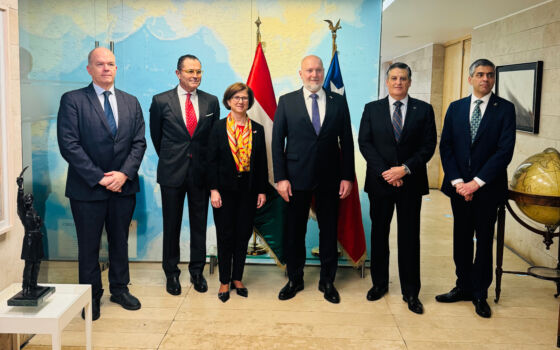
With a full house, AthenaLab held the seminar "Outlook 2025: China, the United States, and the Indo-Pacific" on January 6, featuring Georgetown University academic and former White House official Evan Medeiros, and Chatham House researcher Bill Hayton.
With a full house, AthenaLab held the seminar “Outlook 2025: China, the United States, and the Indo-Pacific” on January 6, featuring Georgetown University academic and former White House official Evan Medeiros, and Chatham House researcher Bill Hayton.
At the forum, Medeiros predicted that the relationship between the United States and China, following Donald Trump’s assumption of the presidency, will be marked by uncertainty and volatility, within a framework of long-term strategic competition where there are increasingly fewer common points.
First, because in his future administration, “hawks” of national security and protectionist economists, who are determined to confront Beijing, will coexist with sectors more inclined to negotiate with the Asian country led by Elon Musk. Second, it relates to the character of the future president and the cold “business relationship” he will have with his counterpart Xi Jinping, where both parties will ensure that any measure perceived as hostile is met with an equal response. Although he acknowledged that the Republican does not like wars, he will try to avoid a conflict over Taiwan.
In light of the increasing tension between the two powers, the editor of the book “Cold Rivals: The New Era of US-China Strategic Competition”, recommended that countries like Chile focus on diversification to reduce excessive dependencies and improve their resilience, that is, to strengthen their own capacities to withstand the pressures of the international environment.
Regarding the South China Sea, Hayton warned that “it is time to be concerned,” as there are many possibilities for “miscalculations” that could lead to open conflicts. The author of the book “The South China Sea: The Struggle for Power in Asia”, mentioned, as an example, the constant clashes between Chinese and Philippine vessels in disputed areas. He also warned that Beijing and Washington risk their “credibility” if a crisis erupts and they fail to prevent it from escalating.
January 7, 2024
AthenaLab Team
Image Gallery