LEGACY | The International Impact of Pope Francis: Incorporating Diversity
This article was translated automatically and may contain differences from the original. For reference, read the original.
- by Juan Pablo Toro
- Noticias
Undoubtedly, he was a pontiff from the periphery. Of Argentine origin, the appointment of a Latin American to the throne of St. Peter marked a significant novelty for an institution over 2,000 years old. Consequently, Francis took it upon himself to position issues such as migration and the environment, undertake trips to the Middle East and Asia, and create cardinals who better reflect the geographical diversity of the Catholic Church.
Perhaps a phrase that well summarizes his worldview is one he pronounced during a question-and-answer session at the General Congregation of the Jesuits: “Our image of globalization should not be the sphere, but the polyhedron. It expresses how unity is created while preserving the identity of peoples, individuals, and cultures.”[1]. In other words, Francis did not believe in the homogeneity of the world and acted accordingly based on that conviction. AthenaLab reviews the imprint of the Pope in the “polyhedral world,” an image he developed more deeply in the apostolic exhortation Evangelii Gaudium[2].
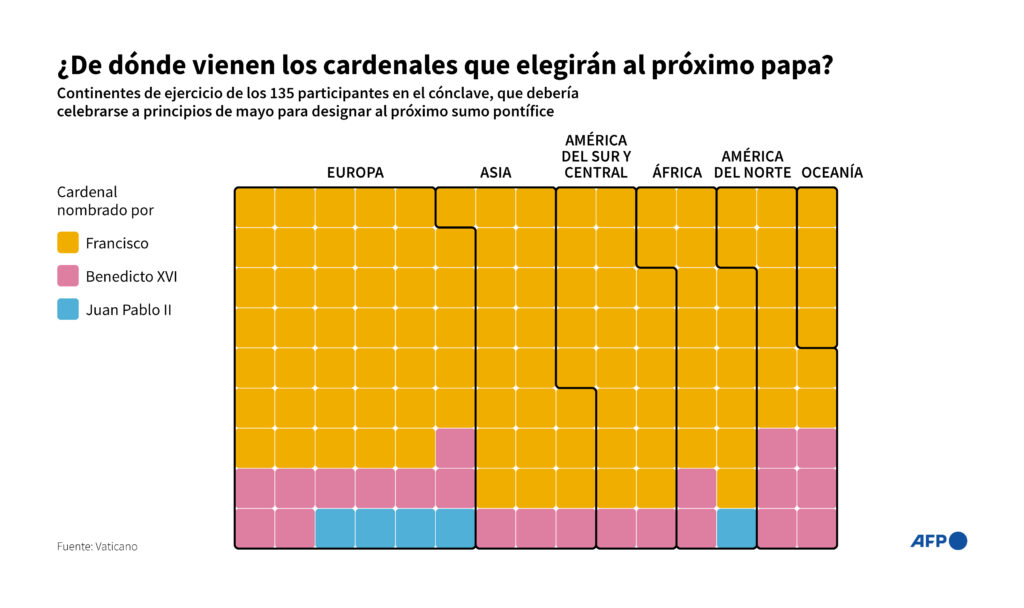
TRAVELS AND CARDINALS. Francis is credited with creating more than 160 cardinals during his pontificate from 2013 to 2025. While most were Europeans followed by Americans—continents where the most significant portion of Catholic faithful resides—30% of the cardinals appointed by the Pope came from Asia and Africa, from countries such as Ivory Coast, Burkina Faso, Ghana, the Philippines, South Korea, Vietnam, Thailand, Malaysia, the Democratic Republic of the Congo, Rwanda, Nigeria, East Timor, Tonga, and Singapore, to name a few. Today, more than 90 countries are represented. In fact, Francis has gone down in history as the pontiff who created the most non-European cardinals.
The broad geographical representation is now reflected in the composition of the electoral college that will choose the next Pope and also in the fact that among the “papabili” are cardinals from Guinea and Myanmar.
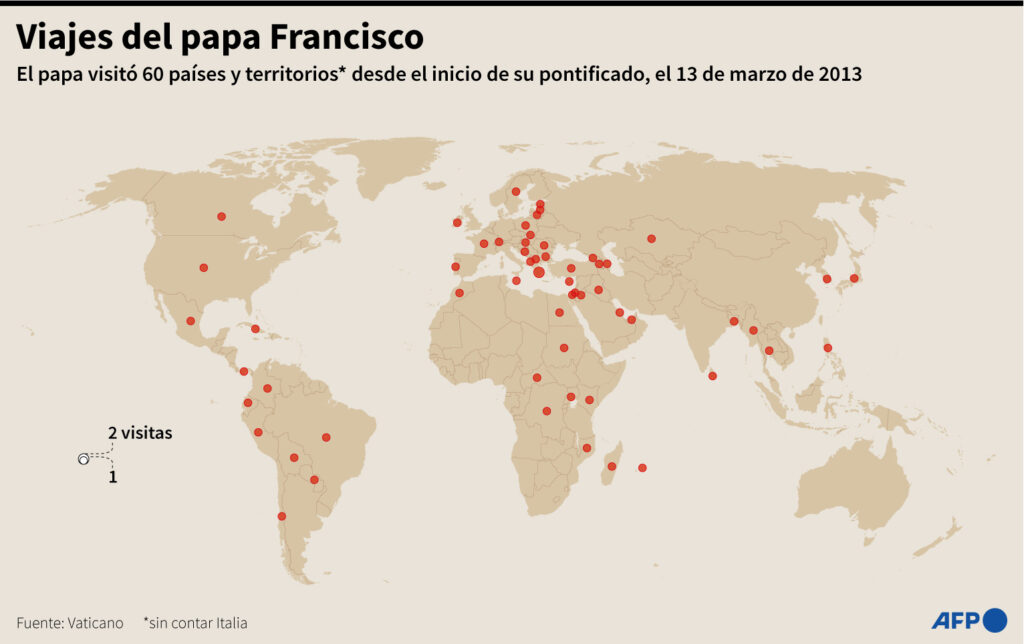
Although the continent where he made the most trips was Europe, 20 times—understandably due to its proximity to the Vatican—Asia follows with 14 visits. His longest journey took place from September 2 to 13, 2024, when he visited Indonesia, Papua New Guinea, East Timor, and Singapore. Behind this initiative seemed to be a conviction to engage with the Asian continent, the center of gravity of global affairs.
MEDIATION AND WARS. In his last message on Easter Sunday, Pope Francis denounced “the dramatic and undignified humanitarian crisis” in Gaza and called for a ceasefire, as the Palestinian-Israeli conflict was one of his constant concerns.
He also urged the world not to follow the path of war, at a time when open conflicts are present in Europe and the Middle East. “No peace is possible without true disarmament. The demand that each people has to prepare its own defense cannot turn into a general arms race,” stated the Catholic leader[3].
From a position of neutrality, the pontiff set “God’s diplomats” to work in seeking solutions to long-standing conflicts[4].
To support the peace process with the Revolutionary Armed Forces of Colombia (FARC), Francis brought together then-President Juan Manuel Santos and former President Álvaro Uribe in 2016, who were at odds over the former’s concessions to the guerrilla to lay down arms.
However, where centuries of Vatican diplomacy had its stellar moment during Francis’s pontificate was in the restoration of relations between the United States and Cuba, after half a century of rupture. The then-presidents Barack Obama and Raúl Castro acknowledged and thanked the Pope for his efforts in normalizing ties between Washington and Havana.
Despite criticism, the Pope renewed the agreement with the authorities of China, which establishes a joint process for selecting bishops, where the pontiff retains the final decision.
MIGRATIONS. When thousands of people cross the Mediterranean or the U.S.-Mexico border in search of a better life, the Pope vigorously defended migrants, confronting the great powers and xenophobic discourses that currently flood politics. “No one is illegal before God,” he said.
On the Mediterranean island of Lampedusa, where Africans arrive after crossing the sea, he denounced in 2013 the “globalization of indifference,” in the face of those who did not understand the tragedy of hundreds of thousands of people who venture to cross that sea to Europe, often dying in the attempt.
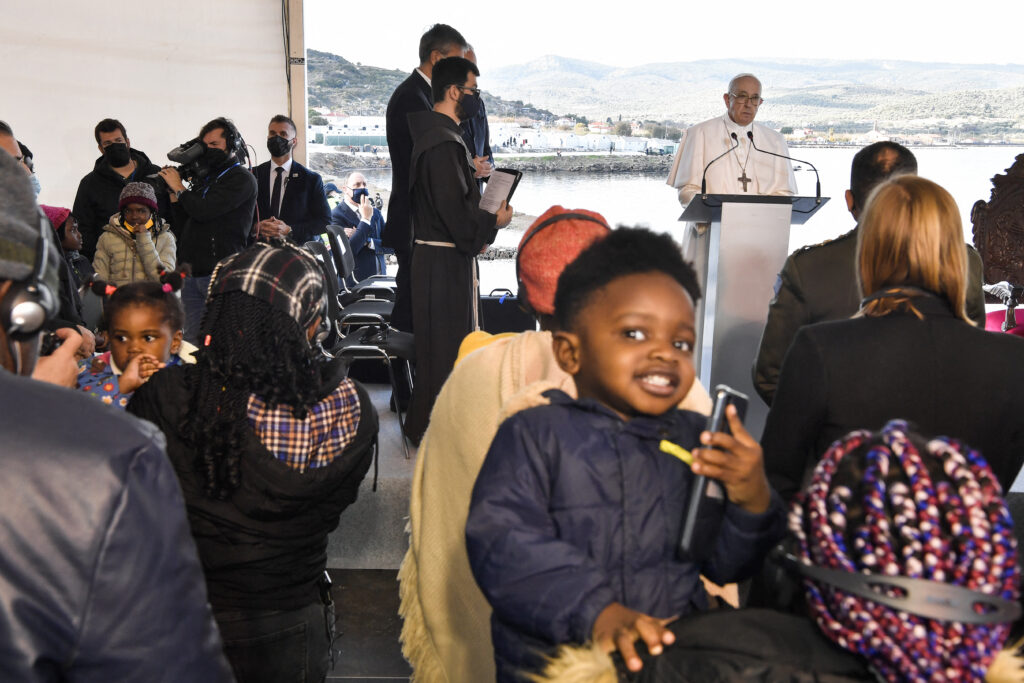
As the civil war in Syria intensified, from the island of Lesbos he brought three Syrian families to Italy on his plane in 2016. “It was a drop in the ocean, but the ocean will no longer be the same,” he stated at that time.
That same year, during a mass in El Paso, Texas, he called for building “bridges, not walls” in a message directed at President Donald Trump, who made the expansion of the border barrier with Mexico one of his promises, which he did not fulfill. The Pope also described deportations from U.S. soil as inhumane. “Whoever builds walls is not a Christian.” Now Trump will attend his funeral.
CLIMATE CHANGE. In choosing his name as Pope, Francis, Jorge Bergoglio made clear his interest in nature and its protection, as he was inspired by St. Francis of Assisi, the patron saint of animals. He was convinced that the world has turned into a large garbage dump, a situation that should not continue.
In his first encyclical, Laudato Si’, from 2015, he developed the idea of caring for the environment in depth, which he called the “common home.” He advocated for an “integral ecology,” where nature is not merely an object of exploitation for rampant consumption, and also clarified that humanity is not called to impose itself over all species.
“The climate is a common good, belonging to all and for all. At a global level, it is a complex system related to many essential conditions for human life. There is a very consistent scientific consensus indicating that we are facing a concerning warming of the climate system (…). Humanity is called to become aware of the need to make changes in lifestyles, production, and consumption to combat this warming or, at least, the human causes that produce or exacerbate it,” wrote Francis[5].
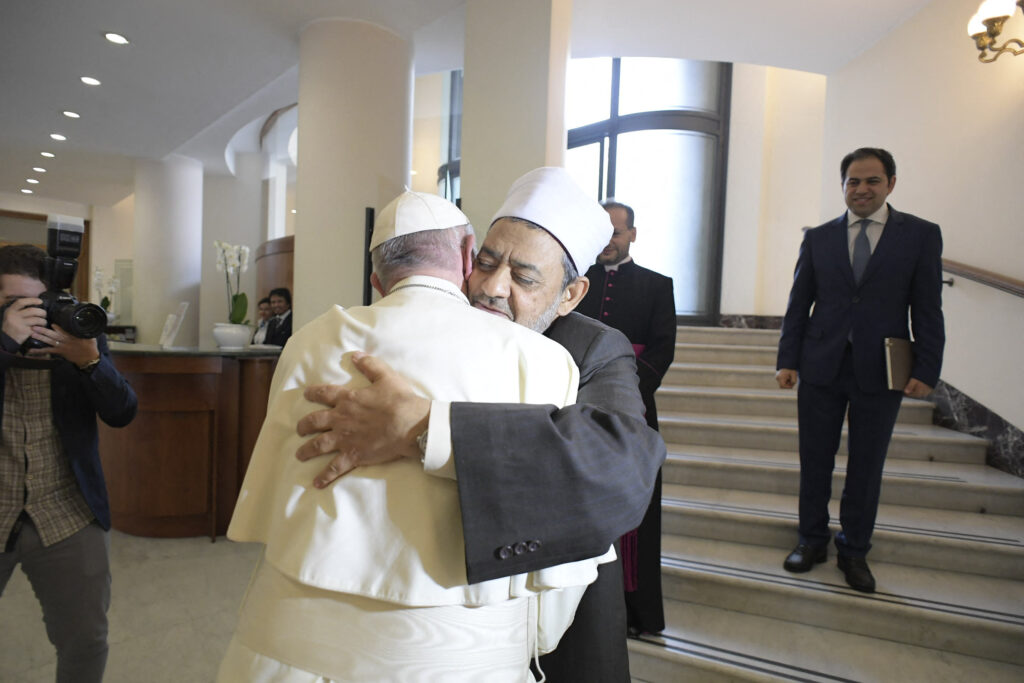
DIALOGUE BETWEEN RELIGIONS. In a decade when religious intolerance was expressed by the campaign of the Islamic State in the Middle East and Europe, Francis reached out to Sunni-majority countries, such as Egypt, Saudi Arabia, Morocco, and others, to demonstrate that religion and terrorism are very different things. In the United Arab Emirates, he even signed a Declaration for World Peace and Coexistence with the Grand Imam of al-Azhar, Ahmed al-Tayeb[6], in 2019.
Of course, a constant concern was the wars in the Middle East; thus, while visiting the Holy Land, he signed the first bilateral agreement between the Vatican and Palestine.
Earlier, in 2016, he had met with Patriarch Kirill of Moscow, primate of the Russian Orthodox Church, in a meeting in Havana, which also resulted in a joint declaration[7]. It was the first time a Pope and a Patriarch of Moscow had met since the Great Schism of 1054, which separated Catholics and Orthodox. However, Cirilo’s support for the Russian invasion of Ukraine may have distanced them.
CONCLUSION. Pope Francis left a Catholic Church with authorities that better represent its geographical diversity, thus diluting its marked Eurocentric character, which could have an effect on the selection of his successor.
He also led the institution he directed to position itself on issues whose importance and urgency in the world are fundamental: migration and climate change. He sought approaches in seemingly intractable conflicts, not always with success, for which he personally involved himself, employing his intelligence and charisma.
Whoever occupies the throne of St. Peter will face a more tumultuous world than the one Bergoglio experienced at the head of the Church. Open wars, economic deglobalization, xenophobic discourses, democratic backsliding, and disruptive technologies are part of the landscape. There will be those who wonder how many divisions the Pope has when he speaks out and tries to act in these areas. But for some time now, the pillar of Vatican diplomacy has been in soft power, where values, examples, and culture converge, something that is currently in short supply, especially among the great powers.
Juan Pablo Toro, Executive Director of AthenaLab
April 23, 2025
[1] https://thejesuitpost.org/2017/04/pope-francis-the-world-is-not-round/
[2] https://www.vatican.va/content/francesco/es/apost_exhortations/documents/papa-francesco_esortazione-ap_20131124_evangelii-gaudium.html, p. 179.
[3] https://www.t13.cl/noticia/mundo/el-mensaje-no-pudo-leer-papa-francisco-su-ultimo-discurso-21-4-2025
[4] Victor Gaetan (2023). God’s Diplomats: Pope Francis, Vatican Diplomacy, and
America’s Armageddon. Rowman & Littlefield Publishers. Available on Amazon.
[5] https://www.vatican.va/content/francesco/es/encyclicals/documents/papa-francesco_20150524_enciclica-laudato-si.html
[6] https://www.vatican.va/content/francesco/en/travels/2019/outside/documents/papa-francesco_20190204_documento-fratellanza-umana.html
[7] https://www.vatican.va/content/francesco/es/speeches/2016/february/documents/papa-francesco_20160212_dichiarazione-comune-kirill.html