COLUMN | Quo Vadis, Chilean Navy?
This article was translated automatically and may contain differences from the original. For reference, read the original.
- by Richard Kouyoumdjian
- Noticias
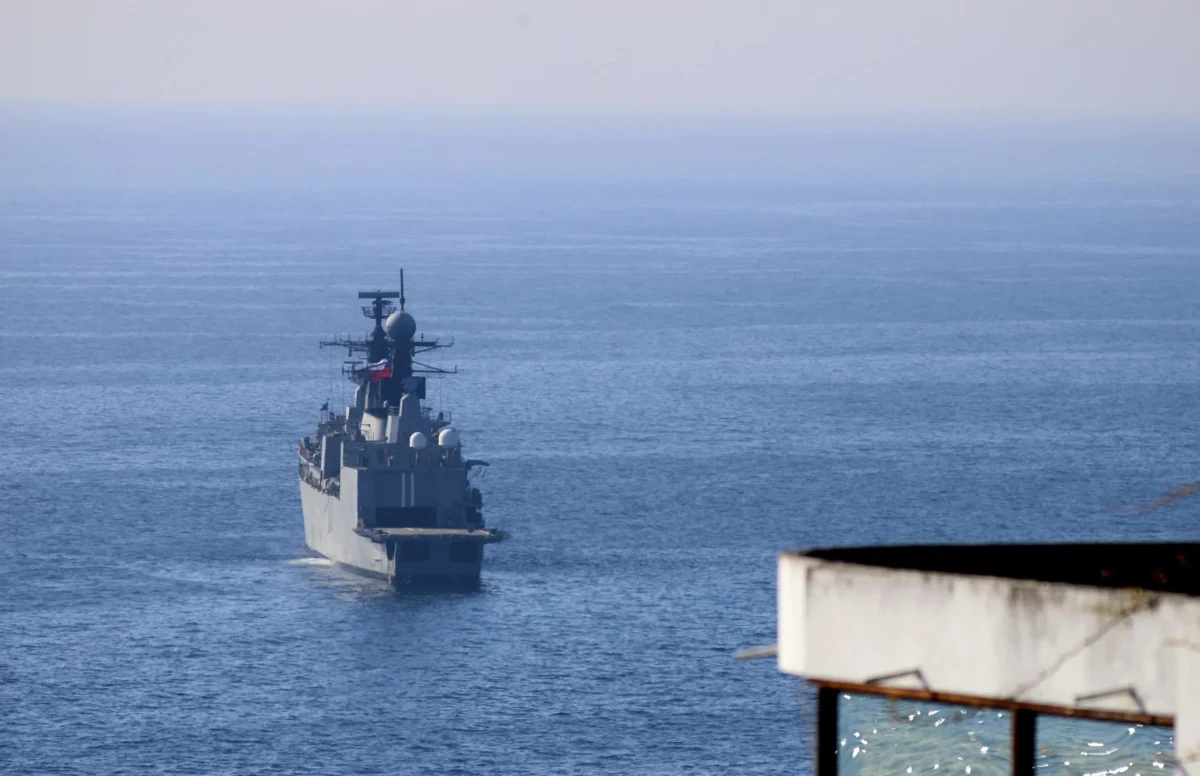
The navy remains a combat force; the challenge for its successor is to ensure it continues to be one, following the example of Prat and the heroes of Iquique, as well as the founding mandate of O’Higgins, Blanco Encalada, and Cochrane.
The last time I used the expression “Quo Vadis” was in a letter to the editor of La Segunda a few years ago. In that letter, I inquired about the future of the FACH, and it was literally like poking a hornet’s nest, as I was met with a backlash from its commander-in-chief and a good part of that prestigious institution, which daily defends our skies and airspace.
May 21 is the day we celebrate Chile’s naval glories. We honor Prat and the crew of the Esmeralda, as well as Condell and those who manned the Covadonga. We also remember those who founded the Navy, such as Blanco Encalada and Cochrane, and all those sailors who fought for Chile or helped shape it from Arica to the South Pole, or projected it into the depths of the Pacific Ocean.
May is the month of the sea, and the 21st is its main date, making it an appropriate and correct time to evaluate where we stand, as well as the challenges ahead, especially with a change of commander-in-chief in four weeks. It is the least we owe to the sailors who gave their lives for Chile in the Bay of Iquique, to account for where their navy stands after 146 years and how things look for the future.
Literally, the Navy has been stripped to the bone, a situation that both this government and the previous one have diligently pursued. There is no fat left. The latest cuts are at the expense of muscle, and if this continues, we could end up in a few years like the Argentine Navy, where until recently nothing was sailing, flying, or operating, merely nominally a combat force until Milei arrived, who is reviving them.
The situation could be worse if it weren’t for the fact that the command has sought and worked hard to maintain operational capability and find ingenious ways to keep functioning, but everything has its limits. If the necessary funds are not allocated for operations, it simply cannot operate, as it puts both personnel and equipment at risk. We do not want to follow the fate of the San Juan.
To give an idea, during Piñera’s first term, the navy had a budget between Capex and Opex of about 1 billion dollars. Today, that figure is closer to something between 600 and 700 million, which is clearly insufficient considering its broad spectrum of missions and the fact that they have had marines deployed in the Southern Macrozone since late 2021 without being reimbursed for all the expenses involved in operating continuously in a state of emergency for over three years.
For a navy to be a navy, it must have ships, submarines, naval aviation assets, and trained and equipped marine infantry units. This is why, for a commander-in-chief of the Navy, the renewal and maintenance of equipment is as important as ensuring that the navy trains to have the necessary capabilities to protect Chile’s vast seas and national interests wherever they may be located.
While in Chile the Ministry of National Defense and the Ministry of Finance have the Navy on a bread-and-water diet, which clearly has operational consequences, affects strategic capabilities, and demotivates those who serve in the navy, Peru is very active in building ships with assistance from Korea, and Argentina is launching a rearmament plan that covers all fronts.
The Chilean Navy remains clearly the best in the region, but if we do not react in a timely manner, we are heading straight for the reality we faced when the Snipe Islet issue occurred in 1958, where our strategic weakness was more than evident, something that the Argentine government of the time took advantage of. Wemust take responsibility for maintaining capabilities, which involves, among other things, maintaining a squadron with eight modern and effective ships, a submarine force of at least four fully operational units, the corresponding naval aviation assets required, and a Marine Infantry that can deploy its Expeditionary Brigade with the necessary means and resources, and not just be deployed as part of the forces assigned to the Southern Macrozone, a situation that is exhausting and demotivating as they do not fulfill much more complex functions than being scarecrows due to the limitations placed on what they can do, merely lowering the temperature, and not resolving the insurgency and terrorism.
Another area where the Navy is short on resources is in Maritime Police and other services that fall under the General Directorate of Maritime Territory (DGTM). Not only is an expanded workforce needed, which was recently achieved and was one of the current administration’s accomplishments, but also naval and naval aviation assets, and adequate facilities in maritime, river, and lake ports. We also need to maintain and expand what we have in terms of maritime police intelligence, which is key in the fight against drug trafficking.
The DGTM operates 24/7; restricting its operational resources and the investments it needs to make is not a good business. It is connected to everything that happens in our seas, whether it be industrial or artisanal fishing, the imports and exports that arrive or leave via maritime routes, as well as the water sports that take place in lakes, rivers, and along the coast. It has complex responsibilities regarding search and rescue, being in charge, along with the FACH, of the fifth largest area globally, covering 26 million square kilometers.
All of the above may give the impression of a complex landscape, and indeed it is, but it would be much worse if it weren’t for the work done by its commander-in-chief, high command, officers, non-commissioned officers, sailors, marines, and civilians who make up the naval team, and who day by day keep the Navy operational and consistently among the top institutions in terms of satisfaction in Chile.
I am aware of the work and effort of Admiral De La Maza, and his focus on the renewal of ships, the expansion of the DGTM’s workforce, keeping the Navy afloat, and especially supporting each member of the Navy in their daily work, particularly those who are more remote or in more complex conditions, such as the marines assigned to the Southern Macrozone, or those who operate and live with their families in the lighthouses of the Southern Sea. He says that the commander and his crew make the ship. The same applies to the navy. Ships are important, but their crew is even more so.
It is time to hand over the watch to one of the vice admirals of the quinella, all of whom are certainly good. The navy remains a combat force; the challenge for its successor is to ensure it continues to be one, following the example of Prat and the heroes of Iquique, as well as the founding mandate of O’Higgins, Blanco Encalada, and Cochrane.
In memory of Arturo Prat, the heroic crew of the Esmeralda, Condell, and the brave men of the Covadonga. May we never forget what they did for Chile.