SEMINAR | 80 Years Since the End of World War II
This article was translated automatically and may contain differences from the original. For reference, read the original.

On the occasion of the 80th anniversary of the end of World War II, AthenaLab held a seminar on August 12, where the events that constituted a turning point in the development of the conflict were analyzed from the perspective of the main actors, and the evolution of the nature of war in current conflicts was explored.
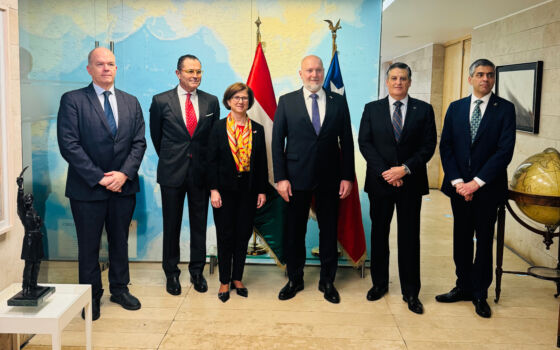
In the first part of the seminar, the defense attachés from the United Kingdom in Chile, Captain Jason White; from Japan, Colonel Narita Kengo; and from Germany, Colonel Lothar Likkus, shared their countries’ viewpoints on the war.
Captain White emphasized that for the United Kingdom— the only country that participated from the beginning to the end of the conflict in all theaters of operations— the turning point was enduring and winning the Battle of the Atlantic, subsequently achieving air and maritime dominance in that geographical area, which was key to enabling the later Normandy landings and the operations ‘Neptune’ and ‘Overlord,’ thus opening a significant second front that facilitated the defeat of Germany.
Captain Narita delved into the effects of naval battles and major land operations in the Pacific theater, highlighting the impact of the outcome of the Battle of Midway (June 1942), which resulted in the loss of four aircraft carriers, marking a shift from Japan’s expansive attitude to a predominantly defensive posture. This subsequently enabled the Guadalcanal Campaign (1942-1943), the effects on the Burma Campaign (1942-1945), as well as the Battle of Leyte Gulf in October 1944. All key events in the Allied victory over Japan.
Finally, Colonel Likkus analyzed Germany’s participation in the conflict, focusing on two key elements: repetition and radicalization. Repetition, in terms of the effects of World War I on the German collective unconscious regarding the recreation of the German Empire, and the desire for radicalization of the conflict by the Axis allied forces, who additionally could not coordinate their actions throughout the war. Following Germany’s capitulation, they had to confront defeat, destruction, territorial separation, humiliation, demilitarization, and deindustrialization. The challenge that arose afterward—he explained—was to recover a community that believed its identity and national cohesion lay in imperial dreams of greatness frustrated by World War I, and exacerbated by a radicalization of political discourse starting in 1929, in order to transform into a successful society that could fulfill a new national aspiration.
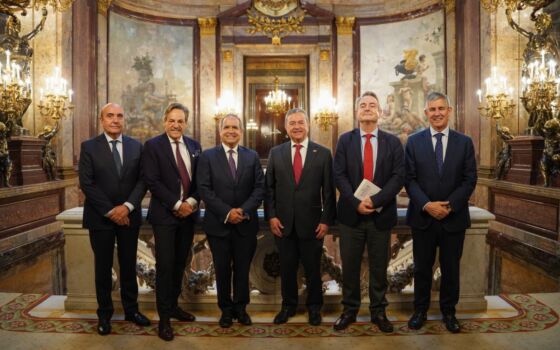
The second part of the seminar featured presentations by the director of the Army War Academy, Colonel Manuel Provis Baker; the director of the Naval War Academy, Captain Rafael Letelier; and the director of the Air Force War Academy, Colonel Gustavo Trejo.
Colonel Provis referred to the ongoing importance of the human element in wars and, from this, to the impact that leadership and the ‘mission command’ doctrine still have in current conflicts. That is, units in the field must act with initiative, understanding the purpose of the higher echelon, even when isolated. He stated that, despite significant technological advancements, the role of the soldier has not changed. Finally, he raised the need to assess the impact of Artificial Intelligence, particularly in decision-making, envisioning some scenarios with varying levels of influence from this technology. On the other hand, Captain Letelier highlighted the benefits of integration in both the battlefield and military logistics, in the naval context and joint planning, despite the evolution of the nature of war, which to date has not changed its essence. Finally, Colonel Trejo emphasized the particularities of air power and its rapid evolution since World War II, in both traditional and asymmetric conflicts, stressing the current challenges of artificial intelligence and automation in the use of air power, where precision and flexibility are relevant and decisive factors. Overall, the three speakers highlighted the evolution of the nature of war, as well as the persistence of the phenomenon’s essence.
Finally, Dr. Hanna Shelest, director of Security at the Ukrainian PRISM research center, addressed the current Russian-Ukrainian conflict, drawing connections to World War II, for example, warning against the error of attempting to appease autocratic powers with concessions, believing that this will halt their imperial ambitions. The parallel between the current situation and the years leading up to 1939 was evident, recalling the case of the Czechoslovak Sudetenland in light of and comparing it to the occupied territories of Ukraine. Additionally, Dr. Shelest delved into the validity of certain strategic concepts from the Ukrainian perspective.
PANEL 1
United Kingdom | Captain Jason White
Germany | Colonel Lothar Likus
Image Gallery

Program