COMMENTARY | Critical Minerals and the U.S.-China Rivalry in South America
This article was translated automatically and may contain differences from the original. For reference, read the original.
- by Carlos Solar
- Noticias
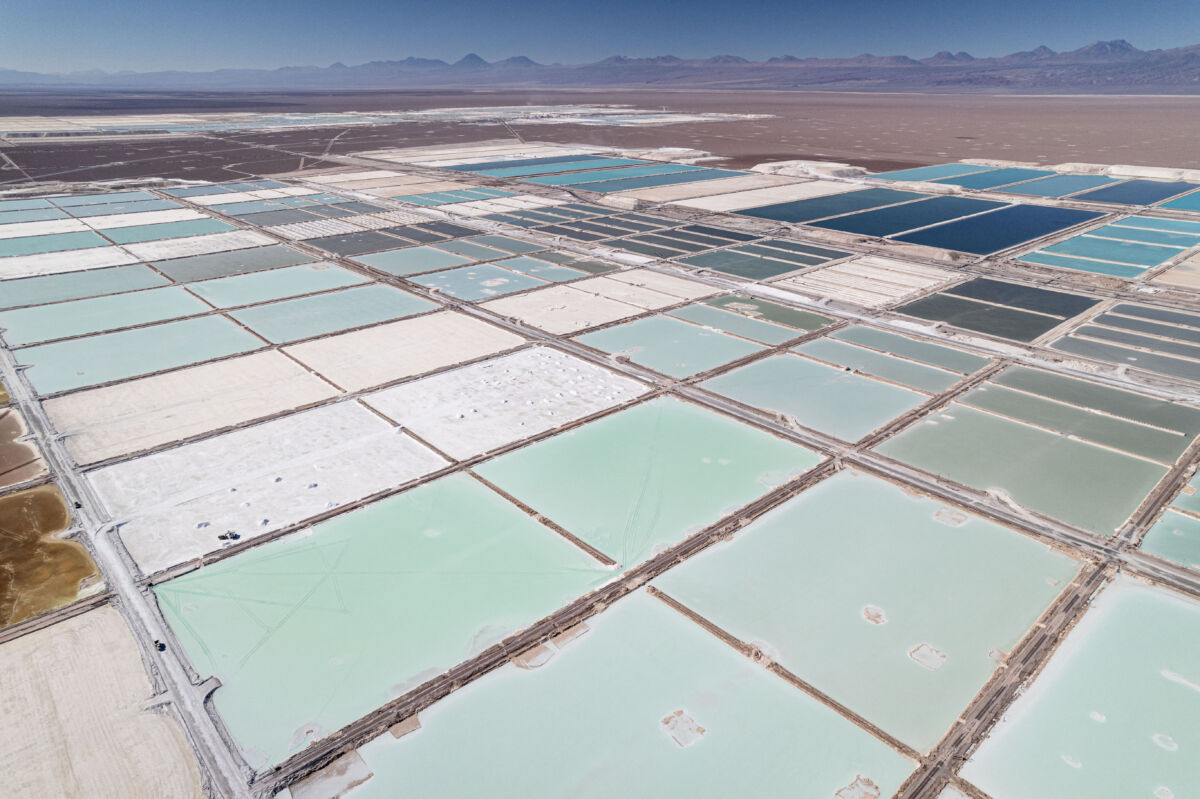
The critical minerals of Latin America make it a focal point of geopolitical conflict, with the defense options of Brazil, Argentina, Chile, and Peru increasingly intertwined in the competition for global power.
The race for market dominance in crucial areas such as artificial intelligence, 5G networks, semiconductors, and essential raw materials is occurring simultaneously at strategic points that are undergoing a significant geopolitical reconfiguration in Eurasia, Africa, and South America.
The increase in military consumption of traditional metals such as copper and silver for munitions, electronic systems, and weaponry, or graphite and lithium used in battery production, military communications, and unmanned systems, has marked the Western Hemisphere as an increasingly strategic playing field due to its abundance of these resources.
Resource-rich nations appear to face what scholars term a “mineral trilemma,” where governments need to “balance national security, economic viability, and sustainability.” For Latin American countries, both from the perspective of domestic defense capabilities and geopolitical relevance, minerals such as lithium, graphite, copper, nickel, uranium, cobalt, and rare earth elements are considered particularly valuable by industrialized nations. The UK Ministry of Defence is actively managing supply chain resilience to protect military readiness, “from the simplest firearm to F-35 fighter jets.” The U.S. Department of Defense is firmly investing in critical mineral projects, as tensions with Chinese competition are high. Beijing announced severe export restrictions on dual-use technologies and barriers to trade in critical minerals at the end of 2024. “The security of critical minerals is now intrinsically linked to the escalation of the technological trade war,” observers added.
According to the North Atlantic Treaty Organization (NATO), critical minerals and rare earth elements enable the operation of high-tech weapon systems and electronic warfare, and can be found in radar systems, precision weapons, jet engines, lasers, night vision lenses, and communications.
Brazil and Argentina have notable reserves of rare earth elements. Cobalt, found in Cuba, Brazil, and small deposits in other countries, is currently used in heat-resistant materials and energy systems, including high-performance alloys, batteries for military electronic equipment, and missiles. Graphite is used in battery production, missile technology, and military-grade lubricants, particularly in battery anodes, lubricants for high-performance military equipment, and nuclear reactors. Mexico and Brazil have significant graphite resources.
Brazilians are developing Latin America’s first nuclear-powered submarine (SN “Álvaro Alberto”), which requires uranium enrichment and high-performance alloys such as niobium and nickel. Its space program, responsible for the Alcântara Launch Center, needs rare earth elements for satellite technology and guidance systems. Additionally, its defense export industry, centered on Embraer aircraft, requires stable access to aluminum, nickel, and rare earth elements. Brazil enjoys a favorable strategic position, being self-sufficient in niobium and uranium. Its ambitions to reduce dependence on China for rare earth elements through domestic development have positioned the country in a leadership role in regional defense industrial cooperation.
The global arms industry increasingly uses nickel (of which Brazil, Cuba, and Colombia have significant production) in alloys for armor, jet engines, and battery cathodes. Nickel and other corrosion-resistant metals provide durability to military hardware.
Systems such as Brazil’s MAR-1 air-to-surface anti-radiation missile, used on AMX, F-5, and Mirage platforms, have various uses for critical minerals, including rare earth elements (neodymium, praseodymium, terbium and dysprosium) for permanent magnets in guidance systems; and copper and nickel alloys for reliable electronics and structural strength. Embraer aircraft (such as the E-jets and C-390) use titanium and a range of other metals and rare earth elements for engines and radar systems, with copper wiring and high-quality aluminum alloys that are essential in avionics and structural components.
Argentina operates nuclear power plants and has enrichment facilities. This supports nuclear energy and potential naval propulsion technology. Its air force and aerospace sector (INVAP) rely on rare earth elements and high-purity metals for radar systems and satellites. Argentina’s strength in scientific research and development contrasts with its limited industrial-scale extraction. While previous governments have sought to partner with Brazil and China for dual-use technology development, the current administration may be more interested in developing national lithium value chains with potential military technological benefits. Argentina has significant reserves in the Lithium Triangle (the resource-rich region spanning parts of Argentina, Bolivia, and Chile) and smaller deposits of rare earth elements in Patagonia.
Brazil and Argentina have known reserves of uranium and some enrichment capacity. The importance of uranium for defense is related to strategic deterrence (nuclear weapons), naval propulsion (submarines), and reactors for military energy needs. Infantry anti-tank armaments, such as the Argentine MARA from the local company DGFM and the federal agency responsible for the development and research of technologies for the armed forces, CITEDEF, typically use copper, nickel and rare earth elements in guidance electronics and rocket propellant ignition systems, as well as high-quality steel/nickel alloys in launcher tubes for structural integrity.
The strong foreign investment from the United States and China in Chile’s lithium and copper contrasts with a smaller national defense industry. The country has largely pinned its hopes on becoming a key mineral supplier for the export market, as it lacks a nuclear program but is heavily involved in the space sector and, slowly but steadily, in the acquisition of unmanned systems. Its focus on resource diplomacy rather than military-industrial development follows a long history of copper production (the world’s largest producer) and new plans to develop its indigenous lithium sector (the second-largest producer globally).
Air defense systems, such as Chile’s NASAMS, contain rare earth elements for radar electronics, phased array components, and magnetics. Chile’s air defense, such as Mistral-type missiles and M-163/M-167 anti-aircraft guns, often have rare earth elements and cobalt in guidance electronics and magnetic sensors; and copper and nickel alloys in fire control electronics and launch structures. The state-owned company FAMAE produces firearms such as the CT-30 carbine, the SAF submachine gun, the FD-200 sniper rifle, and rocket launchers that frequently use copper and nickel alloys in precision barrels and firing mechanisms, and lithium and graphite in advanced multiple launch guidance modules and warhead electronics. Similarly, Peru’s defense industry is limited, making the country act more as a resource provider. Foreign companies, especially from China and the United States, are heavily involved in extraction practices, making Peru a significant competitor to other regional value chain hubs, such as Brazil and Chile. However, given its large reserves of copper
(the second-largest producer in Latin America), lithium (emerging but less developed deposits), and rare earth elements (small but untapped potential in the Andean regions), it could change the country’s internal supply for the global defense market. Peruvian armaments, including Russian-made Mi-24 helicopters, use titanium
in their armor, and ships currently under construction for the Navy by Hyundai Heavy Industries will have cobalt and manganese used in wiring, communications, and sensors across all systems, with nickel , cobaltand rare earth elements required in missile systems, armaments, engine turbines, and electronics. Lithium-ion battery technology capabilities will be offered in Hyundai’s package for submarine replacement. Strategic Alignment or Neutrality? China is Brazil’s main trading partner and investor in rare earths, lithium, and infrastructure. The United States, on the other hand, supports Brazil’s defense industry through partnerships with Embraer and Amazon surveillance, among others, but is wary of Chinese access to dual-use minerals and strategic ports such as Rio Grande do Sul. Brazil’s nuclear submarine relies on uranium and high-strength alloys and faces export control sensitivities, with the United States and China watching. The country’s niobium reserves (90% of the global supply) are strategically vital for U.S. and NATO aerospace and defense companies. Washington may encourage Brazil to “reduce the risk” of Chinese rare earth supply chains, but Brazil is carefully balancing. Its semi-alignment with both superpowers means that Embraer’s military exports (e.g., the KC-390) may be affected by supply chain nationalism or export controls.
Argentina’s geopolitical pressure points are growing. China is heavily investing in lithium projects and nuclear power plants. However, under President Javier Milei’s administration, the United States is attempting to reaffirm its influence, including through negotiations with the IMF and lithium partnerships with U.S. companies. The country’s position in the lithium triangle places it in the midst of the battery war between the United States and China, which could affect technology for military purposes. Recently, China offered JF-17 fighter jets and military modernization packages, which included systems requiring rare earths, lithium, and advanced alloys, but Argentina opted instead for the U.S.-approved deal to acquire F-16s from Denmark. Nevertheless, Argentina’s access to Western defense technology could be limited if it deepens security cooperation with China in the future. Control of lithium is a key battleground.
Similarly, Chile is a global heavyweight in lithium and a copper superpower. China is a major buyer, but the United States is increasing pressure to build a lithium supply chain away from Chinese processing, offering a U.S. tax credit for Chilean lithium in 2024. Although Chile is not a major arms producer, the United States may use its influence over lithium to shape foreign policy alignment, including military purchases. Chile uses defense systems from the United States and Europe, such as the Leopard 2 battle tank, F-16 fighter jets, and naval capabilities with technologies that depend on critical minerals, which could create dependencies on Chile’s own exports.
China dominates Peru’s mining sector, especially in
copper
, through companies like MMG and Chinalco. The United States is wary of Chinese control over ports, railroads, and the extraction of Peruvian rare minerals. However, news about naval modernization with Hyundai alleviated U.S. concerns about military technology entanglement between Peru and China. Many of Beijing’s weapon systems require copper, cobalt, and rare earth elements , which can be extracted in Peru but are primarily exported to China for processing, trapping Peru in China’s technological cycle. Facing the “Mineral Trilemma”If South American countries lean too heavily toward China, Washington could impose economic sanctions or new tariffs targeting Chinese-origin defense systems, dual-use technologies, and related companies operating in Latin America. This could include restrictions on interoperability, software integration, and sensitive mineral supply chains. However, countries are already designing their bilateral relationships with Washington.
For countries processing
lithium
, it may make more sense to promote regional processing centers not linked to China and convincingly ensure that military platforms remain 100% interoperable with the West. Copper exports could be indirectly targeted through dual-use restrictions, and military-to-military training or intelligence sharing with the United States could be reduced. In the short term, Brazil’s defense sector should continue to lean toward U.S. and European systems, avoiding deep entanglement with Chinese defense. Argentina is eager to continue with U.S. technology transfer opportunities, and Chile’s close relationship with the U.S. military may need to be counterbalanced if the country chooses to align mineral exports with Beijing (which could potentially prohibit processed Chilean lithium from entering U.S. defense supply chains). Will South American nations create a more resilient industrial base, avoiding technology leakage to companies linked to China? Can they become a reliable supplier of critical minerals for NATO countries? Can they escape being caught between the major U.S. weapon platforms and Chinese mineral dependence? Will there be room to reduce risk by negotiating with more European counterparts? Military and civilian decision-makers in South America must respond to the “mineral trilemma,” a decisive cornerstone of current strategic sovereignty, faster than the rest of the world moves toward controlling its market.Dr. Carlos Solar (RUSI) London, July 1, 2025 Reprinted with permission from the Royal United Services Institute
(RUSI)
.
The views expressed in this commentary are those of the author and do not represent those of RUSI or any other institution.