ANALYSIS | Results of the 2024 Census and Its Impact on National Security and Defense
This article was translated automatically and may contain differences from the original. For reference, read the original.
- by John Griffiths Spielman
- Noticias

The decrease in the youth population may result in a lower availability of citizens for mandatory military service and joining the armed forces, which requires innovative solutions.
The results released by the National Institute of Statistics of Chile (INE), as a consequence of the 2024 census in Chile, outline a scenario of declining population growth in the country, as well as an aging population and a significant decrease in the youth rate, among the main findings. The population increased from 13,348,401 inhabitants in 1992 to a total of 18,480,432 in 2024 (48.5% men and 51.5% women).
Therefore, it is relevant to review global demographic trends, highlight the main findings of the 2024 census, and thus visualize the potential consequences this situation may have on national defense.
Global Trends
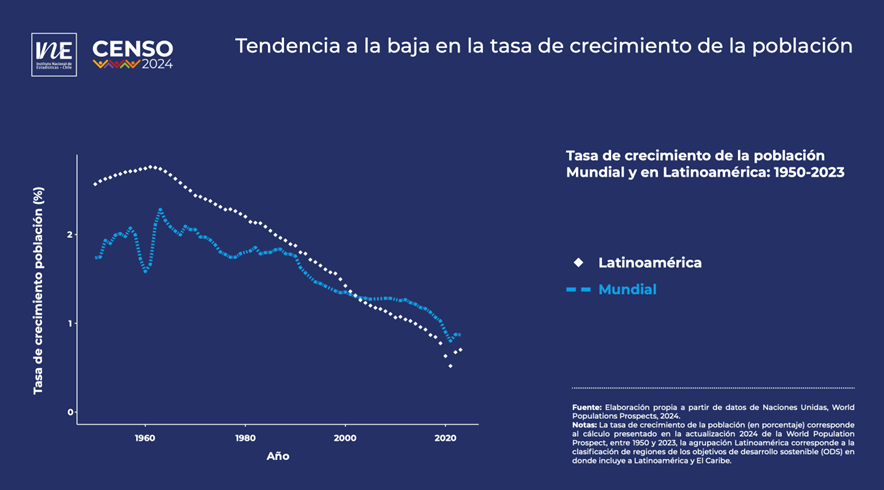
Although the world population continues to grow, having surpassed 8 billion inhabitants, with India (1.46 billion) and China (1.405 billion) as the countries with the largest populations, the trend is that the population growth rate has decreased from 1950 to 2023. Similarly, this has occurred in Latin America. In fact, since the year 2000, it has been below the global average, as shown in the following figure.
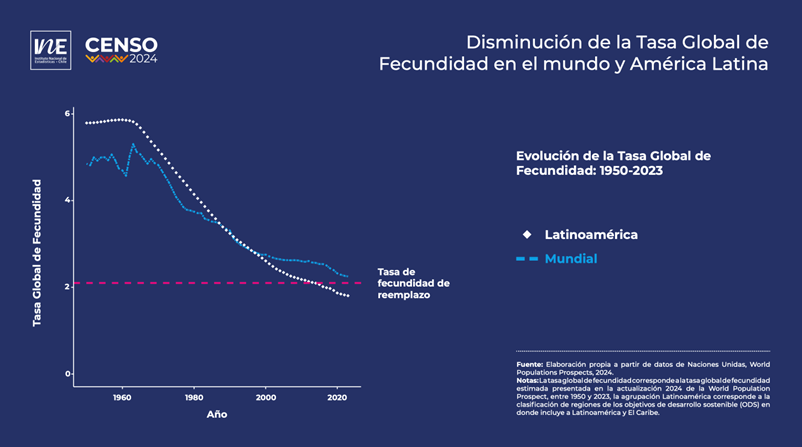
Likewise, the fertility rate has decreased between 1950 and 2023, with a significant drop below the replacement rate[1], defined as 2.1.
On the other hand, globally, life expectancy continues to rise, as it does in Latin America. This is driven by advances in technology and improvements in nutrition and healthcare, among other factors. The accompanying figure shows the trend:
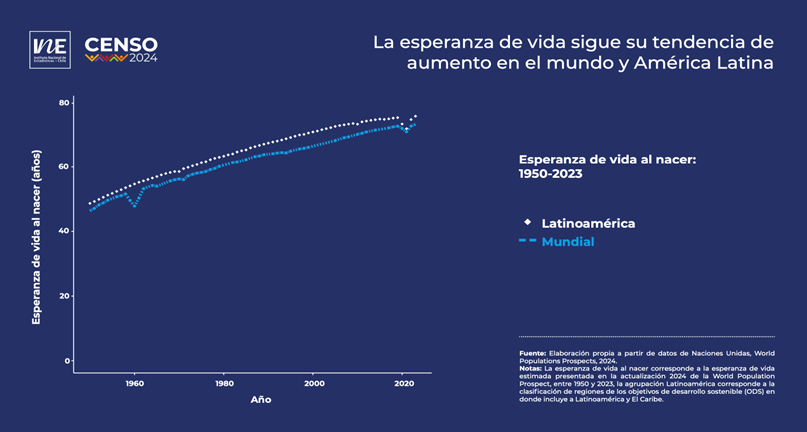
In summary, globally, the most notable phenomenon is the decline in the fertility and population growth rates, alongside a clear increase in life expectancy. Latin America is not immune to these global trends.
Main Findings for the National Case
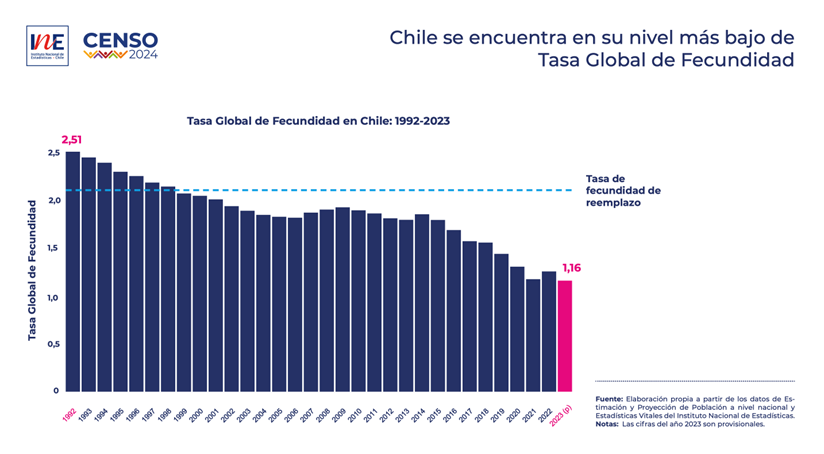
In the national case, one of the main discoveries, consistent with global and Latin American realities, is the decline in the fertility rate from 2.51 in 1992 to 1.16 in 2023. This positions Chile as one of the countries with the lowest global fertility rates in the world.
Regarding the population distribution at the national level, the graph confirms the trend of greater population concentration in the Metropolitan, Valparaíso, and Biobío regions, as well as Aysén, Magallanes, and Arica, which have the lowest population presence.
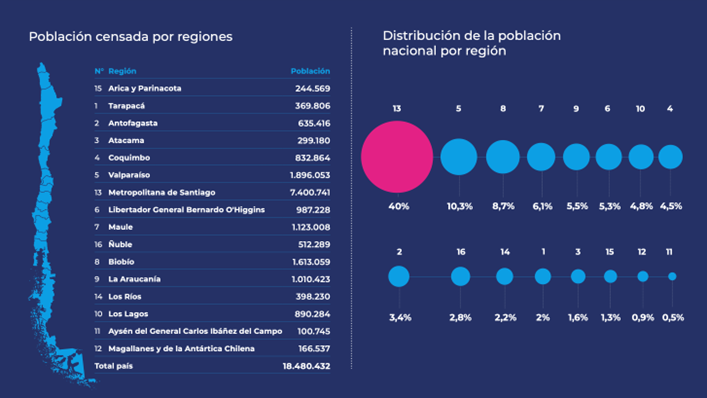
Source: INE.
Furthermore, the census confirms Chile’s marked trend towards a population with a higher number of elderly individuals and, conversely, a decrease in the youth segment.
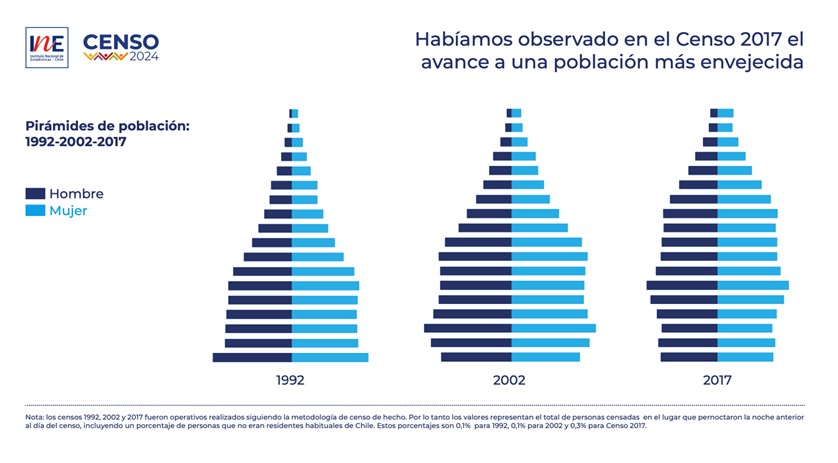
Now, if we analyze the age groups at the national level, the situation is as follows:
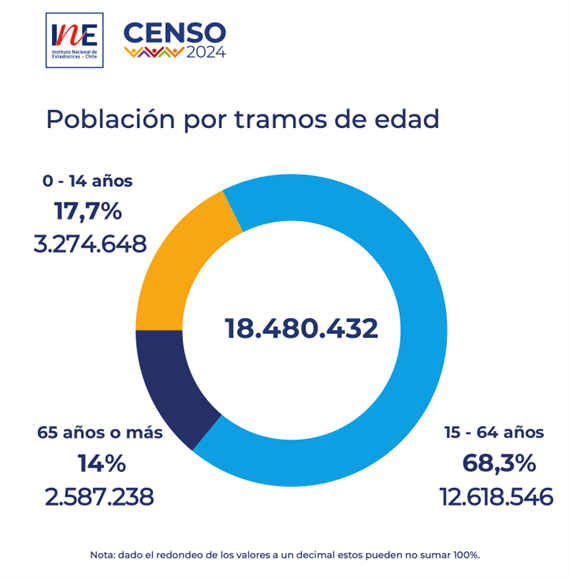
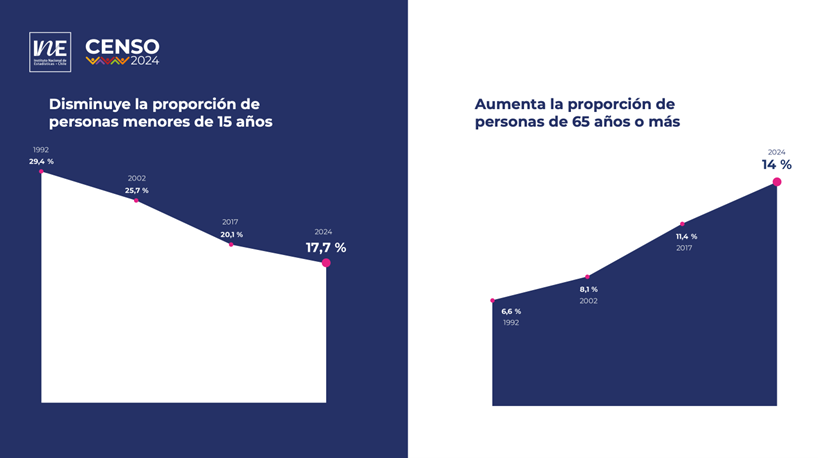
As a consequence of the above, if we focus our analysis on the trend of decreasing the age group under 15 years versus the increase in individuals over 65 years, the situation is as follows:
This leads us to determine the “aging index”[2] between 1992 and 2024, yielding the following results:
| Year | Index | Population |
| 1992 | 22.3 | 13,348,401 |
| 2002 | 31.3 | 15,116,435 |
| 2017 | 56.9 | 17,574,003 |
| 2024 | 79.0 | 18,480,432 |
If we focus on the analysis of the three regions with the highest aging index and the three with the lowest population, the situation is as follows:
| Highest Index | Percentage | Lowest Index | Percentage |
| Valparaíso | 98.6 | Tarapacá | 43.9 |
| Ñuble | 97.6 | Antofagasta | 49.3 |
| Los Ríos | 89.2 | Atacama | 63.7 |
Finally, another focus of interest in this document is to ascertain the number of immigrants that the country has maintained during the same period, from 1992 to 2024. The figure shows the evolution of the number of immigrants, which increased by 1,500% by 2024.
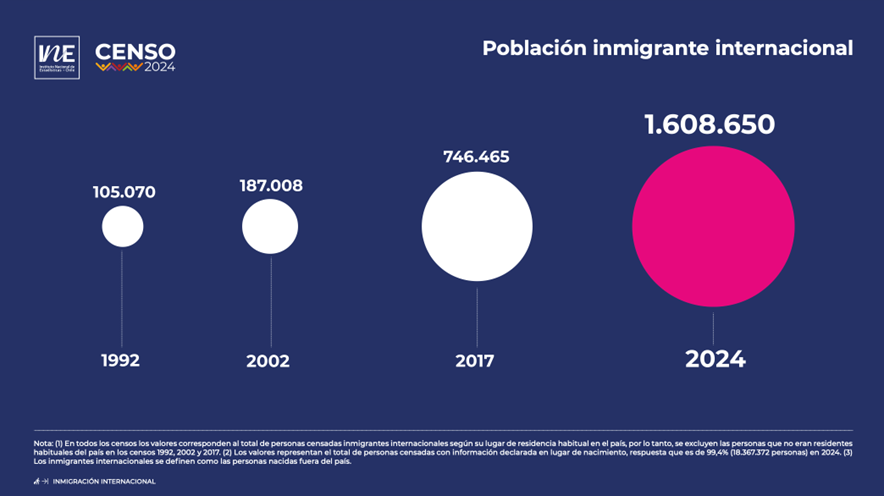
If we examine it in terms of percentages of immigrants versus the general population, the result is as follows:
| Years | Percentages |
| 1992 | 0.8% |
| 2002 | 1.3% |
| 2017 | 4.4% |
| 2024 | 8.8% |
The most significant changes occur between 2002 and 2017, as well as again between 2017 and 2024, with a 100% increase in the percentage of immigrants.
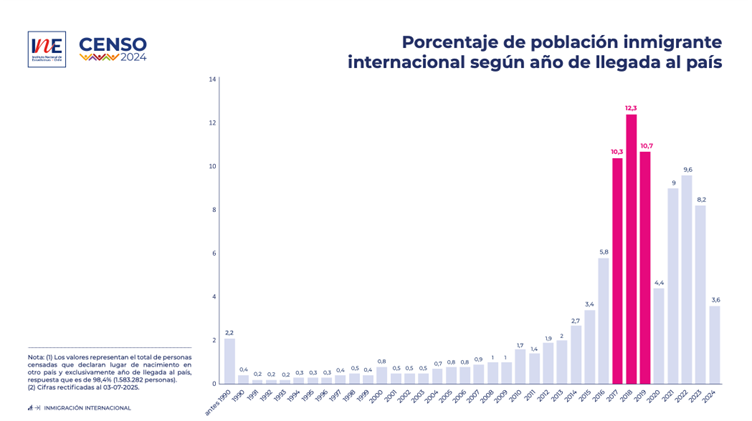
Now, if we focus the analysis of immigration by the years of arrival in the country, the situation is as follows:
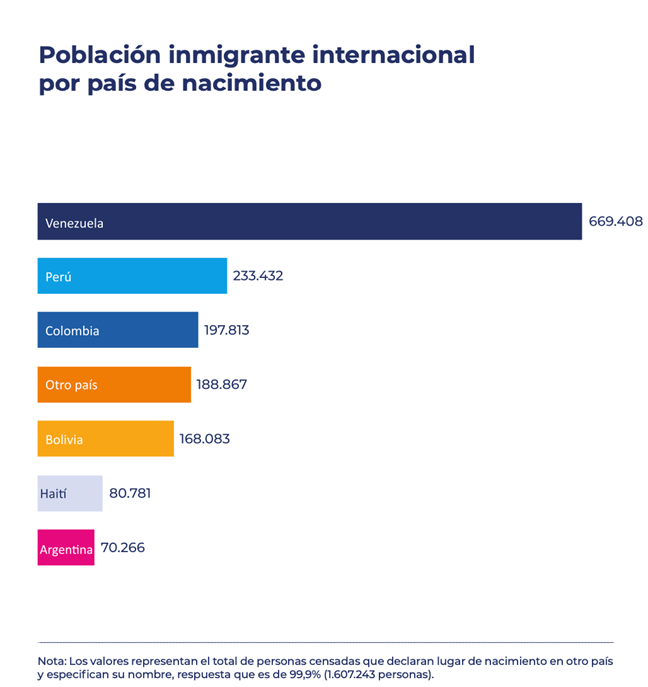
Finally, if we review the origin of immigrants by country of birth, the situation is as follows:
In summary, for the national case, the most relevant confirmation of data is the national fertility rate —1.16—, which is below the minimum required to maintain a stable population set at 2.1. This has resulted in a substantial decrease in the population under 15 years from 29.4% in 1992 to 17.7% in 2024. On the other hand, there is a notable increase in individuals over 65 years, who grew from 6.6% to 14% of the total population during the same period. International immigration has clearly increased since 2002 and explosively since 2014, reaching a total of 1,608,650 officially registered individuals.
Potential Consequences for National Defense
From a general perspective on the results of the 2024 census, we could assert that national defense will be impacted in the coming years by the following factors:
- Lower availability of citizens for the processes of soldier conscription fulfilling their mandatory military service. This should be addressed by concretizing the mandatory nature expressed in the universality of this civic duty, as well as in its equality.
- Less availability to meet the technical-professional requirements of the force in the non-commissioned officer ranks, as well as a similar impact in the professional realm of the officer ranks in the training schools of the armed forces. Policies should be promoted to attract the greatest number of interested individuals to avoid affecting the quality of potential force members.
- To neutralize the reduced strength in the institutions, a plan should already be considered that incorporates civilians into administrative and some logistical tasks, strengthening technological processes as much as possible to minimize the number of personnel required, improving the certainty and precision of these tasks.
- The increasing number of elderly individuals could impact the healthcare services of the armed forces, which will logically be more demanded due to the improved life expectancy of retired personnel and their family members entitled to use these services. This aligns with the national reality of a greater demand for the healthcare system.
- The limitations of the force, as well as its age composition, could be addressed by studying the effective retirement age of the force, as well as the probability of older personnel performing administrative tasks to free up strength in the coercive employment units.
- Given the high number of immigrant population, provisions should be adopted to prepare for the incorporation of children of immigrants with Chilean nationality into the force from a cultural perspective, as this will begin to manifest in the short term, in a more massive way, benefiting the personnel shortage.
- The census shows that in Chile, the lower number of inhabitants is expressed inversely proportional to the strategic relevance of the various regions of the country. This should be acknowledged to ensure effective sovereignty across the entire national territory, despite current limitations and the effective presence of personnel.
- The full incorporation of women into the force will continue to be a factor that can additionally benefit the personnel shortage across all military ranks of the armed forces.
- If the trend of having smaller forces continues, there is a risk of being unable to carry out the potential missions that the state may demand from the armed forces, especially in long-term deployments or in national crises and emergencies.
John Griffiths Spielman, Head of Studies, AthenaLab
August 6, 2025
[1] The population replacement rate of 2.1 refers to the average number of children per woman necessary for a population to maintain its current size without decreasing or increasing.
[2] The aging index indicates how many elderly individuals there are for every 100 children and youth in a given population.