The Shield of the Americas and the Limits of Voluntary Coordination: Key Aspects of Chile's Full Accession
EXECUTIVE SUMMARY
On 22 September, Chile formalised its accession to the Shield of the Americas, the hemispheric coalition created by the Trump administration in March 2026, after several months of participation in its working bodies without formal membership. This report explains what the coalition is, what is contained in the joint statement signed by fifteen governments, and what Chile gains —and risks— by joining it. It advances four key ideas about the agreement: first, that for now it creates no legal obligations; second, that its operational value is limited by the absence of Brazil and Mexico; third, that it overlaps with a regional mechanism led by Chile itself; and fourth, that the Rio Treaty (TIAR) is the point at which voluntary coordination could become a collective commitment.
WHAT HAPPENED
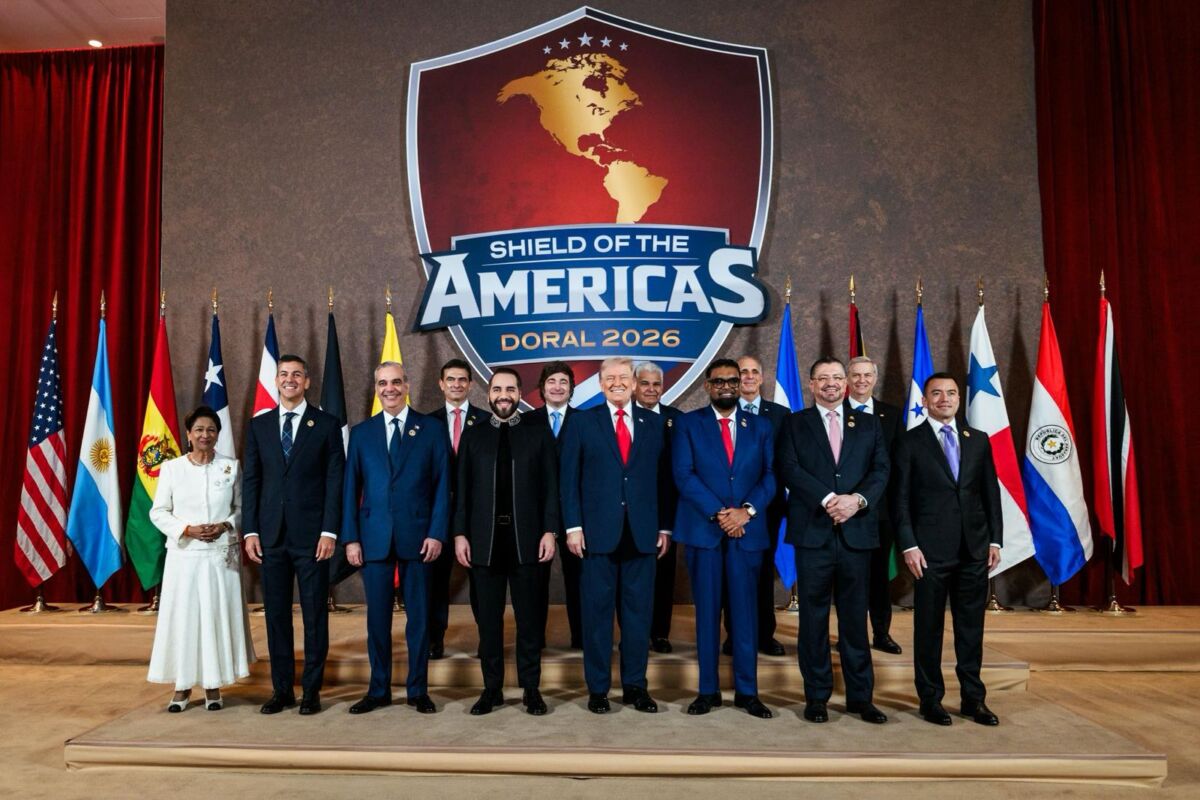
On the margins of the 81st United Nations General Assembly, President José Antonio Kast formalised Chile’s full accession to the Shield of the Americas. Until then, the country had participated in its working bodies without formal accession, through the Ministry of Defence, which had signed a Joint Security Declaration on 12 March and attended the coalition’s forum in Panama in August. In announcing the accession, the Ministry of Foreign Affairs described it as a “framework for voluntary coordination among American governments” that complements the Santiago Commitment.[1] President Kast, for his part, ruled out the existence of either a treaty or military operations.[2] That same day, the US Department of State released the Joint Statement on Defending Hemispheric Sovereignty,[3] signed by the United States and fourteen governments in the region, including Chile.[4]
The joint statement, published on 22 September, sets out the intentions of the signatory countries. It is structured around three pillars. On security, it proposes joint action against twenty-four organisations designated as narco-terrorist, including asset freezes, migration restrictions and criminal liability for material support. On the economic front, it points to the review of investments, critical minerals supply chains and trusted-provider standards in digital infrastructure. In terms of multilateral coordination, it provides for the coordination of consultations and common positions in regional and multilateral forums. Even so, one of its most operationally significant elements is the intention to request that the Permanent Council of the Organization of American States (OAS) convene an Organ of Consultation under Articles 6 and 13 of the Inter-American Treaty of Reciprocal Assistance (TIAR).
WHAT IS THE SHIELD OF THE AMERICAS
The Shield of the Americas is a political and security coalition created on 7 March 2026 at a summit in Florida, United States. It is not a treaty or an international organisation; it has no legal personality and no founding instrument subject to parliamentary ratification. Its operational arm is the Coalition of the Americas against Cartels, based at United States Southern Command.[5]
The initiative did not emerge from a prior institutional design. Rather, it took shape around faits accomplis. The first was the “Southern Spear” campaign, which since September 2025 has destroyed vessels identified by the United States as linked to drug trafficking in the Caribbean and the eastern Pacific, with close to two hundred deaths according to press counts. The second was the military intervention in Venezuela on 3 January 2026, which ended with the capture of Nicolás Maduro. Human rights organisations have questioned the legality of those attacks.[6] In this context, the coalition gave a political framework to operations that were already under way. That origin explains both the speed of its formation and the absence of an institutional architecture.
Figure 1. Timeline of Events over the Last 12 Months (2025–2026).

Source: Author’s own elaboration.
THE SECURITY PILLAR
With full accession to the Shield of the Americas, Chile obtains a commitment to access information on financial flows, routes and transnational structures, training for Carabineros and the Investigative Police, as well as access to data-analysis systems.[7] However, Chile already has police and judicial cooperation mechanisms with other countries, which have enabled the arrest of fugitives from Chilean justice and the extradition of leaders of criminal groups.[8]
A relevant limitation of the Shield of the Americas affects precisely the information-sharing it promises. Shared intelligence is built from what member states contribute and, paradoxically, two of the key countries in Latin America’s transnational organised crime ecosystem are absent: Mexico and Brazil. Mexico occupies a central position in fentanyl supply chains bound for the United States market, while Brazil hosts the region’s two largest criminal organisations and is the main transit platform for cocaine moving towards Europe and Africa. Of the twenty-four organisations designated on 22 September, ten are based in those two countries: eight in Mexico and two in Brazil.[9] So far, the composition of the Shield appears to reflect political alignment with the United States more than comprehensive coverage of the regional threat map. That places concrete limits on the benefits of taking part in the initiative.
Figure 2. Organisations included in the first joint action, by country of primary base.

Source: Author’s own elaboration.
The second problem is overlap, a recurring difficulty in regional security cooperation. On 28 May, Chile promoted the Regional Santiago Commitment, which now brings together seven countries, has had a Working Group in place since August, and is due to review progress in Buenos Aires at the end of November.[10] Six of those seven countries also signed the Shield statement. Uruguay is the only exception. The Ministry of Foreign Affairs says that accession “complements” the Commitment, but does not explain how two mechanisms that share six members and operate in broadly overlapping areas are to be articulated. The four areas of the Commitment —security, financial and tax intelligence, traceability and migration control, and border control— largely coincide with what the Shield promises under its security pillar.
The difference lies in scale and operational capacity. A mechanism with an operational arm at United States Southern Command and fifteen members may end up relegating another with rotating leadership and only seven members. The region knows this pattern from Mercosur, the Andean Community, AMERIPOL and EL PAcCTO, where different cooperation mechanisms coexist alongside persistent coordination problems. The risk, therefore, is not the existence of two initiatives, but the possibility that they develop parallel agendas without a clear division of labour. If the Working Group of the Santiago Commitment does not articulate the Shield’s capabilities in the Southern Cone, the mechanism promoted by Chile risks being reduced to a diagnostic forum.
Figure 3. Signatories of the Shield of the Americas statement and members of the Santiago Commitment.

Source: Author’s own elaboration.
THE ECONOMIC AND MULTILATERAL PILLARS
This is one of the least discussed aspects of the statement, but also one of those that raises the most questions. The statement refers to investment screening, critical minerals supply chains with “diversified and trusted” sources, and trusted-provider standards for digital infrastructure. It does not mention China, but it uses a vocabulary that the United States has employed in recent years to reduce dependencies on that country in 5G networks, critical infrastructure and minerals.[11]
For Chile, the tension is concrete. China is the leading destination for its exports and has a presence in electricity distribution and lithium. Subscribing to “trusted provider” criteria defined in Washington could make decisions that Chile currently takes autonomously on connectivity and infrastructure more costly, exposing it to commercial costs. Although the clause on “non-discriminatory” application offers a safeguard, it remains a clause rather than a guarantee.
The statement also commits the signatories to “strengthen consultation and the coordination of common positions on matters of shared interest in regional and multilateral forums” and refers to “necessary reforms to multilateral organisations”. None of this, however, defines what coordination actually means.
The formula proposed in the text allows for three readings. First, it may refer to prior consultation before votes, a common practice among partners that does not limit the final decision. Second, it may imply bloc voting on defined issues, which would constrain that autonomy. Third, it may translate into alignment with the United States agenda for reforming the multilateral system. This last possibility already found an echo in President Kast’s speech before the General Assembly, when he stated that the United Nations “has not lived up to expectations”.[12]
The loss of autonomy, naturally, is not written into the text. Its scope will depend on which of these three interpretations prevails in practice. A public commitment to coordination, even if voluntary, makes every divergent vote more visible and thereby raises the cost of dissent, even when nothing formally prohibits it. For a country that has regularly voted against Washington’s position on issues such as the embargo on Cuba or the status of Palestine, that cost is not abstract and will be quickly perceived.
WHERE DOES THE SHIELD’S COORDINATION CEASE TO BE VOLUNTARY?
The answer lies in one paragraph of the statement. The signatories declare their intention to request that the Permanent Council of the OAS convene an Organ of Consultation under Articles 6 and 13 of the TIAR and, once convened, to participate at ministerial level in order to consider a resolution for collective action against narco-terrorist organisations.
At present, this creates no obligations. The possibility that such coordination may acquire binding effects arises if the Organ of Consultation is activated and adopts measures. Chile is a party to the TIAR, and Article 20 establishes that decisions requiring the application of the measures provided for in the treaty are binding on the signatory states, except where they involve the use of armed force without their consent.[13] The text of the TIAR itself sets out that exception expressly. In this way, coordination that is initially voluntary could become a collective commitment adopted in a forum that Chile does not control on its own.
Figure 4. Where coordination ceases to be voluntary, according to the joint statement.

Source: Author’s own elaboration.
Chile already faced a comparable situation in 2019. It supported the convening of the Organ of Consultation in response to the governance crisis in Venezuela and, at the same time, placed on record that it would neither promote nor support measures involving the use of force. The current government has gone further, stating that any operation must have the express consent of the state involved, respect international law, and not affect Chile’s sovereignty or autonomy of decision. Between that precedent and the conditions now set out, there is a line that Chile can once again put in writing.
Putting that position in writing, however, would resolve only part of the problem. It may preserve Chile’s room for decision-making in the face of possible collective actions, but it does not remove two political costs associated with participation in the Shield. One stems from the context in which the coalition operates. The Shield is advancing in parallel with United States military actions whose legality is contested. For a country that has made international law a central axis of its foreign policy, close association with those actions may carry a reputational cost. The other arises from the way in which Chile decided to join. Accession was adopted without parliamentary debate or political consensus. If the commitment is perceived as a government decision rather than as state policy, its continuity will be more uncertain and its strategic value lower.
FOLLOW-UP INDICATORS
Five indicators will help assess the direction in which Chile’s accession evolves.
• Whether the joint request is submitted to the OAS Permanent Council, and how Chile votes if the Organ of Consultation is convened.
• What institutional form cooperation takes in Chile, now that participation has moved from “observer country” status —with the Ministry of Defence as counterpart— to full accession, with the Ministry of Foreign Affairs taking the lead; and how this is coordinated with the Working Group of the Santiago Commitment ahead of the November review in Buenos Aires.
• Whether the coalition brings in Brazil or Mexico, which would help clarify its membership criteria and increase the value of shared intelligence.
• What domestic legal route Chile uses to give effect to the asset freezes and migration restrictions agreed in relation to the designated organisations.
• How China responds to the commitments undertaken on critical minerals and to the other issues covered under the statement’s economic pillar.
DIEGO SAZO
Head of Research in International Relations

[1] Ministry of Foreign Affairs of Chile, “Chile adhiere a Escudo de las Américas”, press release, 22 September 2026, https://www.minrel.gob.cl/sala-de-prensa/chile-adhiere-a-escudo-de-las-americas
[2] BioBioChile, “¿Tropas o intercambio de datos? A qué adhirió Chile con el Escudo de las Américas”, 22 September 2026, https://www.biobiochile.cl/noticias/nacional/chile/2026/09/22/tropas-o-intercambio-de-datos-a-que-adhirio-chile-con-el-escudo-de-las-americas.shtml
[3] US Department of State, “Joint Statement on Defending Hemispheric Sovereignty”, Media Note, Office of the Spokesperson, 22 September 2026, https://www.state.gov/releases/office-of-the-spokesman/2026/09/joint-statement-on-defending-hemispheric-sovereignty/
[4] United States, Argentina, Bolivia, Chile, Colombia, Costa Rica, Dominican Republic, Ecuador, El Salvador, Guyana, Honduras, Panama, Paraguay, Peru and Trinidad and Tobago.
[5] US Department of State, “Shield of the Americas”, 22 September 2026, https://www.state.gov/policy-issues/shield-of-the-americas/
[6] The legal controversy centres on the classification of the attacks as the lethal use of force outside a recognised armed conflict, and has been raised by international law specialists and human rights organisations.
[7] Ministry of Foreign Affairs of Chile, “Chile adhiere al Escudo de las Américas”, 22 September 2026, https://www.minrel.gob.cl/sala-de-prensa/chile-adhiere-a-escudo-de-las-americas
[8] BBC News Mundo, “Quién es Larry Changa, el cofundador del temido Tren de Aragua que era buscado en 196 países y fue arrestado en Colombia”, 1 July 2024, https://www.bbc.com/mundo/articles/cv2g094p0peo; BioBioChile, “Quién es Carlos ‘el Bobby’ Gómez: capturado líder del Tren de Aragua, mano derecha del ‘Niño’ Guerrero”, 7 December 2024, https://www.biobiochile.cl/noticias/servicios/explicado/2024/12/07/quien-es-carlos-el-bobby-gomez-capturado-lider-del-tren-de-aragua-mano-derecha-del-nino-guerrero.shtml; and BioBioChile, “Sicario de ‘Rey de Meiggs’ llega a Chile tras extradición desde Colombia: protagonizó bullada libertad”, 10 September 2026, https://www.biobiochile.cl/noticias/nacional/region-metropolitana/2026/09/10/sicario-de-rey-de-meiggs-llega-a-chile-tras-extradicion-desde-colombia-protagonizo-bullada-libertad.shtml
[9] The organisations based in Mexico are Carteles Unidos, Cártel del Golfo, La Nueva Familia Michoacana, Cártel del Noreste, Cártel de Jalisco Nueva Generación, Cártel de Sinaloa, Los Viagras and Cártel de Juárez (La Línea). Those based in Brazil are Primeiro Comando da Capital and Comando Vermelho. The remaining fourteen are based in Ecuador (four), Colombia (three), Venezuela (two), Haiti (two), El Salvador and Central America (two), and Peru (one). Colombia joined the coalition on 12 August 2026, following the inauguration of the government of Abelardo de la Espriella.
[10] Diego Sazo, “Compromiso de Santiago contra el crimen organizado transnacional: Oportunidades y limitaciones”, AthenaLab, 29 May 2026, https://www.athenalab.org/publicaciones/analisis-es/2026/05/29/compromiso-de-santiago-contra-el-crimen-organizado-transnacional-oportunidades-y-limitaciones/
[11] The vocabulary of “trusted providers” and investment screening derives from United States policy towards digital infrastructure and critical minerals, particularly the State Department’s Clean Network initiative (2020) and the Minerals Security Partnership (2022).
[12] BioBioChile, “Kast debuta en la ONU: ‘Esta organización no ha estado a la altura de los desafíos de estos tiempos’”, 22 September 2026, https://www.biobiochile.cl/noticias/nacional/chile/2026/09/22/en-vivo-presidente-jose-antonio-kast-realiza-su-primer-discurso-en-la-asamblea-general-de-la-onu.shtml
[13] Inter-American Treaty of Reciprocal Assistance (TIAR), Rio de Janeiro, 2 September 1947. Article 6 allows for the convening of the Organ of Consultation in the event of an aggression that does not constitute an armed attack, or in response to any fact or situation that may endanger the peace of America. Article 13 regulates convening at the request of any signatory state. Article 20 provides that decisions requiring the application of measures are binding on the signatory states, with the sole exception that no state shall be obliged to use armed force without its consent.