Implications of the AUKUS Initiative
This article was translated automatically and may contain differences from the original. For reference, read the original.
- por Ivo Brito Sánchez
- Colaboraciones externas
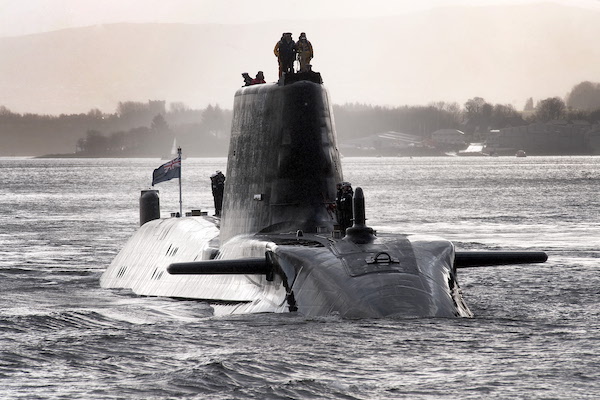
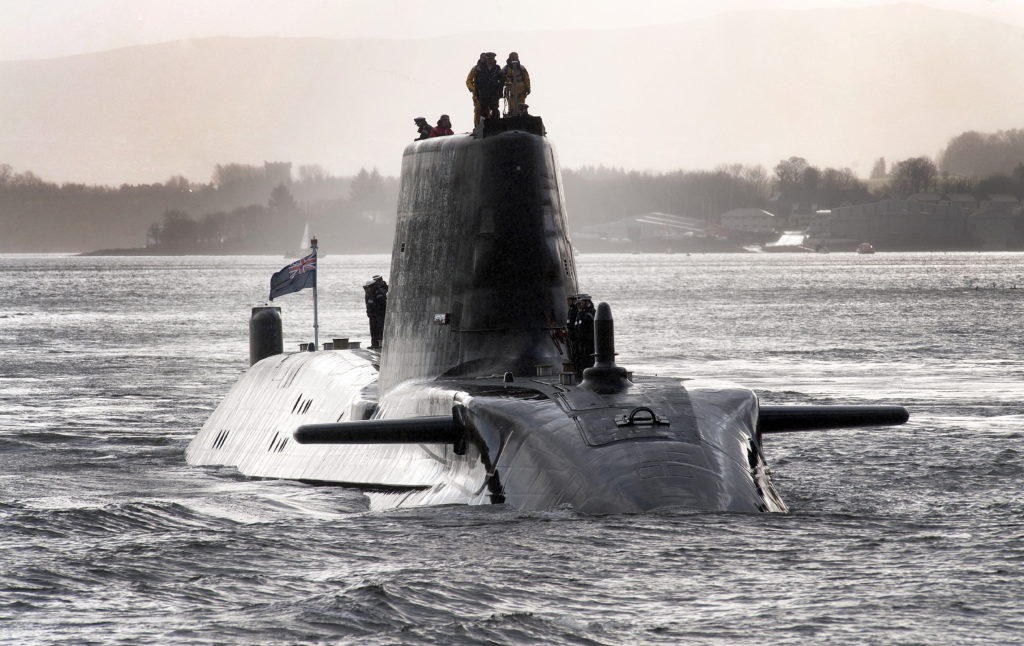
A In mid-September, the United States, the United Kingdom, and Australia announced an ambitious security pact to share advanced defense technology, interpreted as an attempt to counter China’s advances. This strategic pact was named AUKUS (from the acronym in English for Australia, the United Kingdom, and the United States) and aims to defend the shared interests of these powers in the Indo-Pacific region.
The announcement has generated a series of responses and repercussions at the international level. For France, it represents a “low blow” from Australia, as it breaches a multimillion-dollar contract with the company Naval Group, for the acquisition of 12 conventional submarines from that country, which has been criticized by the European Union; for others, it symbolizes a new world order focused on the Indo-Pacific region.
While the Chinese government has not strongly criticized AUKUS, it has stated that this pact promotes nuclear proliferation and a return to Cold War policies. Additionally, several countries in the region, including Malaysia and Indonesia, have expressed concern about the new pact. New Zealand welcomed the agreement but indicated that Australian nuclear-powered submarines would not be permitted in its territorial waters, consistent with its historical stance.
Geopolitical Implications
The AUKUS initiative, beyond being a commercial agreement where Australia will benefit for the first time from nuclear technology for its submarines and the development of its military defense, represents a global geostrategic shift aimed at addressing current and future challenges in a region where China is increasingly influential.
It is important to note that France has significant interests in the region due to its overseas territories, where one and a half million French citizens reside and over 8,000 military personnel are deployed. For France, this area has become an important geopolitical axis, clearly indicating that the center of gravity of the global economy has shifted from the Atlantic to the Pacific. Consequently, Paris considers it essential for the development of the region to maintain constructive political dialogue and deepen economic and trade relations with China, a situation that discomforts the U.S., which views Chinese expansionism as a major threat.
Indeed, following the abrupt U.S. withdrawal from Afghanistan and the loss of leadership in the Middle East, Washington is redirecting its interests to one of the fastest-growing regions, which includes some of the world’s largest economies (China, Japan, and India, a country whose economic development has been steadily increasing for years). Moreover, China, India, and Indonesia account for over 50% of the global population, making the long-term interest in the Asia-Pacific region increasingly significant, and anticipating a positioning is essential for the United States to maintain its global leadership at a time when its foreign policy is in retreat.
Thus, leveraging Australia’s strategic geographical position, the U.S. sees in that country the opportunity to expand its military influence in the region, thereby broadening its operations and being able to act in the event of a Chinese intervention in Taiwan or the South China Sea, whose waters are almost entirely claimed by Beijing, representing one of the greatest threats in that region, where 30% of global trade circulates and which is rich in oil and gas reserves.
China is becoming a very powerful strategic competitor. Beijing has increased military spending, which concerns its neighbors and is prompting them to enhance their defense. For Australia, possessing nuclear-powered submarines will serve to create a deterrent effect on Beijing and strengthen its defense in the contentious South China Sea region. It is worth noting that both the United States and Australia have expressed concern over China’s “legally baseless” maritime claims and the militarization of the area, making the agreement a response to these concerns.

Effect on Naval Operations
It is highly likely that Australian submarines will closely resemble the latest versions of U.S. and British arsenals, which possess two types of nuclear submarines: ballistic and attack submarines. Both operate with nuclear reactors that convert water into high-pressure steam to turn turbines for propulsion.
However, attack submarines and ballistic missile submarines have very different purposes. In this regard, Australia’s stated intention is to acquire nuclear attack submarines, the basic pillars of the U.S. and U.K. submarine fleets, rather than submarines armed with ballistic missiles and nuclear warheads.
Attack submarines are designed to seek and destroy enemy submarines and surface ships; project military power ashore with Tomahawk cruise missiles and Special Operations Forces (SOF); conduct intelligence, surveillance, and reconnaissance (ISR) missions; support battle group operations; and engage in mine warfare.
The U.S. has three classes of attack submarines in its fleet of 53. The newest (16) are the Virginia class. Armed with dozens of torpedoes and Tomahawk cruise missiles with a range of over 1,600 km, these 115-meter, 8,000-ton submarines can travel at over 46 knots and remain submerged indefinitely; their time underwater is limited only by the need to resupply provisions for their crew of 132 personnel. The U.K. has Astute and Trafalgar class attack submarines, which generally fulfill the same roles and possess capabilities similar to their U.S. counterparts.
This is the type of firepower and capabilities that Australia seeks to protect its northern waters from any naval threat and project its naval power in the South China Sea, where, along with the United States, it aims to mitigate the influence of the Asian giant and protect freedom of navigation.
Thus, incorporating nuclear submarines into its inventory, replacing conventional diesel-electric models, will allow the Royal Australian Navy to expand the operational capabilities of its submarines in seas densely populated with maritime traffic and with very intense air-maritime surveillance, exploiting the possibility of deploying and redeploying invisibly; rapidly covering long distances without exhausting their fuel and with the ability to conduct attacks with highly lethal weaponry.
The announced tripartite agreement only foresees an 18-month study to determine how to build nuclear-powered submarines for Australia. The Australian government has officially stated that the new submarines would be in its fleet by 2040, although given the security situation in the Indo-Pacific, Australia may expect its submarines to be operational sooner.
por Ivo Brito Sánchez
Contralmirante en retiro de la Armada de Chile
¿Quieres publicar con nosotros? Revisa nuestras normas para colaboradores externos.
Ver normas de publicación