The AUKUS Effect for Chile: An Invitation to Think Strategically
This article was translated automatically and may contain differences from the original. For reference, read the original.
- by Juan Pablo Toro
- Strategic Affairs

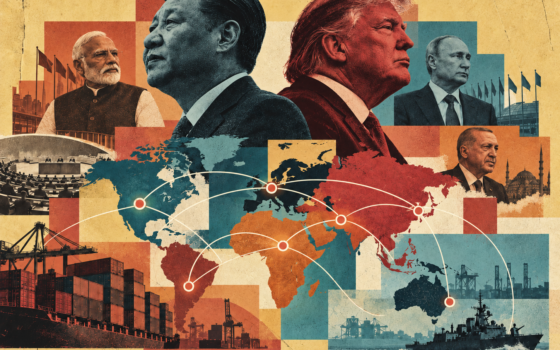
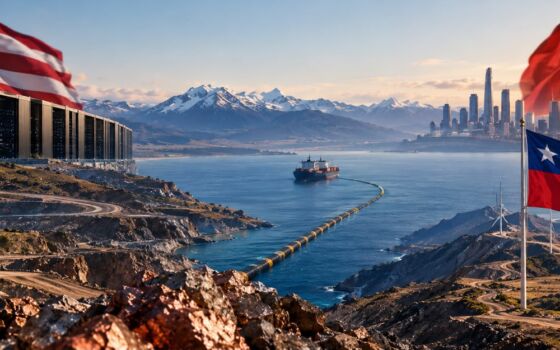
As the extended Indo-Pacific is the region Chile has chosen to connect with the world, overcoming distances and geographical scales, everything that happens there will directly affect it, sometimes even more than what occurs in Latin America itself. This is particularly true while the majority of our exports go to China and our main security partner is the United States, that is, the two great powers in the region that are increasingly at odds with each other.
We are talking about an interconnected maritime system (trade, diplomacy, security, and infrastructure), where events in one part affect another. Its size is variable, depending on who draws the map, which is why it can extend to the American coasts. Due to its economic and demographic weight, its stability is crucial, as any crisis or conflict would create disruptions on a global scale.
As Rory Medcalf argues, this megaregion is currently in the early stages of its configuration, where there will be many possible combinations of nations, such as the new group of Australia, the United Kingdom, and the United States (AUKUS, for its acronym in English). Because it is not suitable for the hegemony of a single actor due to its vastness, but rather for multipolarity, the alliances that emerge will create the balance of power that will define its future.
In this sense, the birth of AUKUS has been presented as a tripartite agreement to ensure a free and open Indo-Pacific among like-minded countries that already have a long history of cooperation and common cultural origins. And although this pact has very significant diplomatic and technological implications (from artificial intelligence to drone development), the most important aspect is that it facilitates Australia’s acquisition of nuclear-powered submarines, as the United States agrees to share the necessary technology; just as it has already done with the United Kingdom, which in turn plans to deploy submarines in the oceanic country.
Why does this matter? Without delving into technicalities, nuclear-powered submarines have a greater range than conventional ones, given that their energy sources have superior longevity; they can carry more and more powerful weapons, as they tend to be larger, and can operate stealthily closer to the coasts of China and its supply lines. In other words, Beijing has every reason to believe that this move will make it more vulnerable.
This was made clear by a spokesperson from the Ministry of Foreign Affairs, who warned that AUKUS would damage “regional peace and stability” and intensify an “arms race,” which—fairly speaking—is currently led by the Chinese, with the formidable expansion of their navy over a couple of decades.
Ultimately, what this chain of events triggered by the birth of AUKUS demonstrates is that systemic competition will only intensify in the Indo-Pacific, reducing the maneuvering room for countries attempting to navigate independently. And while we are not facing a new Cold War, the situation increasingly resembles that period. On one side are the democracies that defend freedom of navigation and share technology, and on the other are the authoritarian powers that have more closed territorial approaches.
So far, Chile has attempted to play the independent card somewhat spontaneously; this is the only explanation for its adherence to the Chinese infrastructure project of the Belt and Road Initiative while simultaneously adopting the concept of “Indo-Pacific” in an official document (notably, the 2020 Defense Policy). When necessary, it seems that authorities prefer to look the other way to avoid any source of tension, or simply do not take decisive actions that might irritate one side or the other.
Thus, Chile does not block investments from Chinese state-owned enterprises in strategic sectors of the economy; it does not address the situation of human rights in Hong Kong or Xinjiang, and it works continuously with the United States in military exercises such as Rimpac, DESI, Southern Vanguard, or Team Work South.
However, in the new context created by AUKUS and other clubs, such as the QUAD (Australia, the United States, India, and Japan), it is naive to think that Washington and Beijing will not begin to demand clearer political definitions and concrete gestures so that their spheres of commercial, diplomatic, and military influence start to converge once and for all, which poses a significant problem. When countries like Australia or Canada took measures to halt projects by Chinese technology companies for security reasons, they almost immediately saw barriers raised against their exports.
In an old and significant book on interdependence, Robert Keohane and Joseph Nye developed the concepts of sensitivity and vulnerability. While the former refers to the degree to which a country can be affected by an external event, the latter relates to an actor’s capacity to respond to and adapt to the impact of an external event.
Chile’s sensitivity is extremely high regarding what happens in the Indo-Pacific, such as a potential crisis or conflict between China and the United States or their allies, primarily due to our commercial ties with many countries in the region. Any confrontation would jeopardize the maritime lines through which the raw materials we supply to Asian markets and the technological and industrial products that come to our shores travel. Let us remember that in a recent webinar by AthenaLab, Admiral (ret.) James Stavridis warned that Washington and Beijing are already “navigating on a pool of gasoline” and any spark could trigger an explosion.
Therefore, given its sensitivity, Chile must work to identify and reduce, as much as possible, the vulnerabilities of its national interests. Economic dependencies, seeking new partners, consciously accepting alliances, technological networks, valuing key natural resources, and diplomatic action fronts—all must be considered.
AUKUS is, above all, an invitation to think about how to improve our capacity to respond to the new power configurations that are beginning to shape the Indo-Pacific. Ideally, we should establish scenarios, where one extreme is war and the other is the creation of a new statu quo with rules. And in between, the most probable scenarios, including dynamics of competition and cooperation. It is clear that a comprehensive strategy for international positioning is becoming increasingly urgent.