Military Presence of Russia: Latin America on Putin's Chessboard
This article was translated automatically and may contain differences from the original. For reference, read the original.
As part of the escalating tensions between Russia and Ukraine, Russian Deputy Foreign Minister Sergey Ryabkov asserted that a military deployment of his country in Cuba and Venezuela could not be ruled out, in a clear response to the pressure being exerted by the United States to curb any hostile intentions from Moscow. While such statements could be framed within the strategic competition between powers and the delineation of their respective spheres of influence, it is all part of a classic “security dilemma.”[1]. Therefore, it is pertinent to review the feasibility of a potential increase in Russian presence in Latin America and its effects, should it materialize.
Feasibility of Military Deployment
The possibility of deploying Russian military assets in Latin America (personnel and platforms) is real but very limited. In fact, such deployments have occurred for decades, including in recent years. During the Cold War, the then Soviet Union (USSR) used the Western Hemisphere to threaten the United States, with the most serious incident being the “missile crisis” in Cuba in 1962. There was also support with arms and advisors to the Sandinista regime and related guerrillas in the 1980s. After the collapse of the USSR in 1991, Russia maintained its presence in the region through arms sales, trade exchanges, political ties, and more recently, with the supply of COVID-19 vaccines.
In particular, the relationship of the Russian military industry with Latin America dates back to the Cold War, when the then USSR supplied and sold weapons to several countries in the region. This practice has continued in recent decades; however, it has never reached the scale of contracts that the United States and some European countries (Germany, France, and the United Kingdom) have as suppliers in this part of the world, except during the periods of 2005-2008 and 2011-2014, driven by Venezuelan acquisitions that amounted to around $11 billion.
According to the records of the Stockholm International Peace Research Institute (SIPRI), an organization that maintains data on arms transfers, during the Soviet era, arms exports were concentrated in Cuba, Nicaragua, and Peru. Cuba was the most significant partner and, therefore, the recipient of a vast amount of material, which included hundreds of tanks, artillery, anti-aircraft weapons, warships, and a significant number of combat aircraft and helicopters, along with other supplies. In the case of Nicaragua, the material received focused on combat aircraft, helicopters, armored vehicles, artillery, and anti-aircraft weapons. Peru, for its part, acquired a disproportionate number of tanks, helicopters, and attack and transport aircraft, artillery material, and anti-aircraft weapons.
After a period of decline in Russian influence in Latin America due to the Soviet collapse, a process of re-engagement in the region resumed in the mid-2000s. In this new phase, Venezuela became the main partner with the advent of Hugo Chávez’s regime, which included the incorporation of 24 Sukhoi Su-30 aircraft, 92 T-72 tanks, and 10 Mi-35 attack helicopters, among other weapon systems. Other countries in the region that have invested in Russian arms over the past three decades include Argentina (two transport helicopters), Brazil (12 Mi-35 combat helicopters, portable anti-tank and anti-aircraft missiles), Colombia (25 transport helicopters), Ecuador (12 transport helicopters and portable anti-aircraft weapon systems), Mexico (63 transport helicopters and portable anti-aircraft weapon systems), Nicaragua (50 T-72 tanks, 86 armored vehicles, two transport helicopters), and Peru (two Mi-35 attack helicopters, 40 transport helicopters, three MIG-29s, four An-32 transport aircraft, and portable anti-tank missiles). Except for Venezuela, the investment in Russian arms by countries in the region does not exceed that made in U.S. equipment, which has also been affected by the influx of Chinese military material.
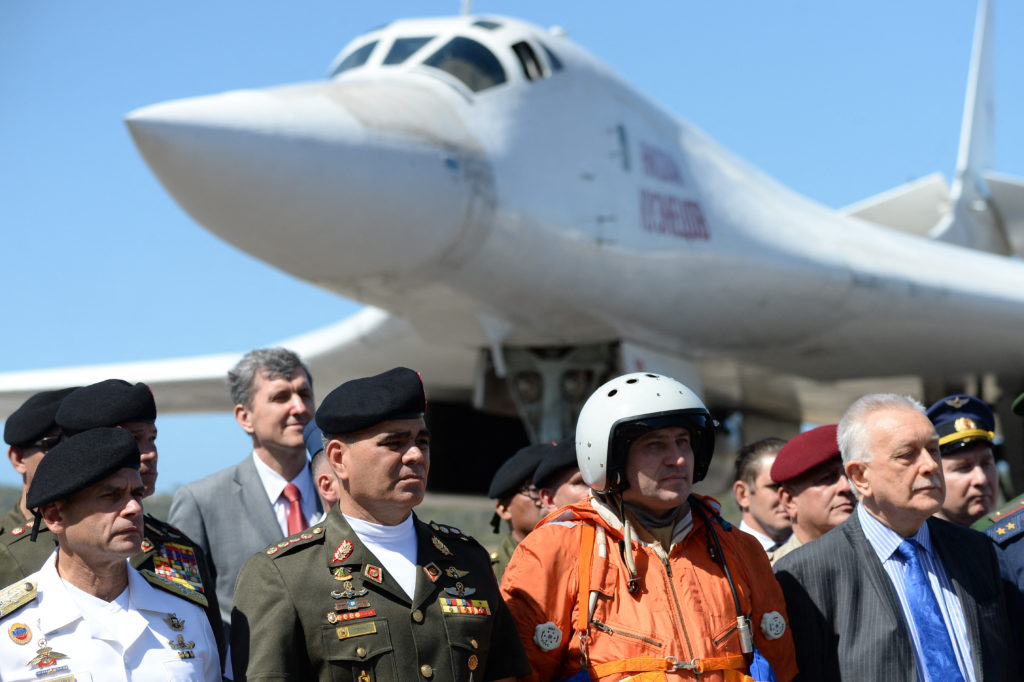
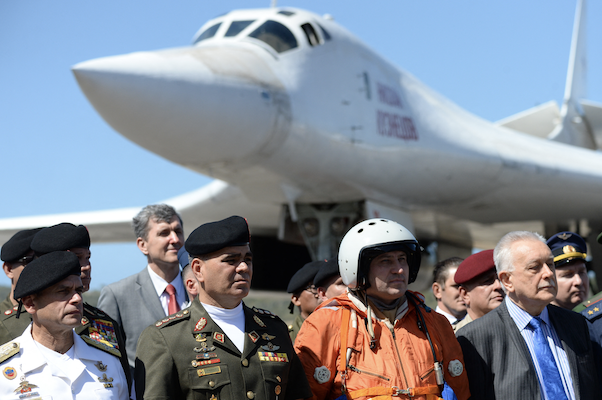
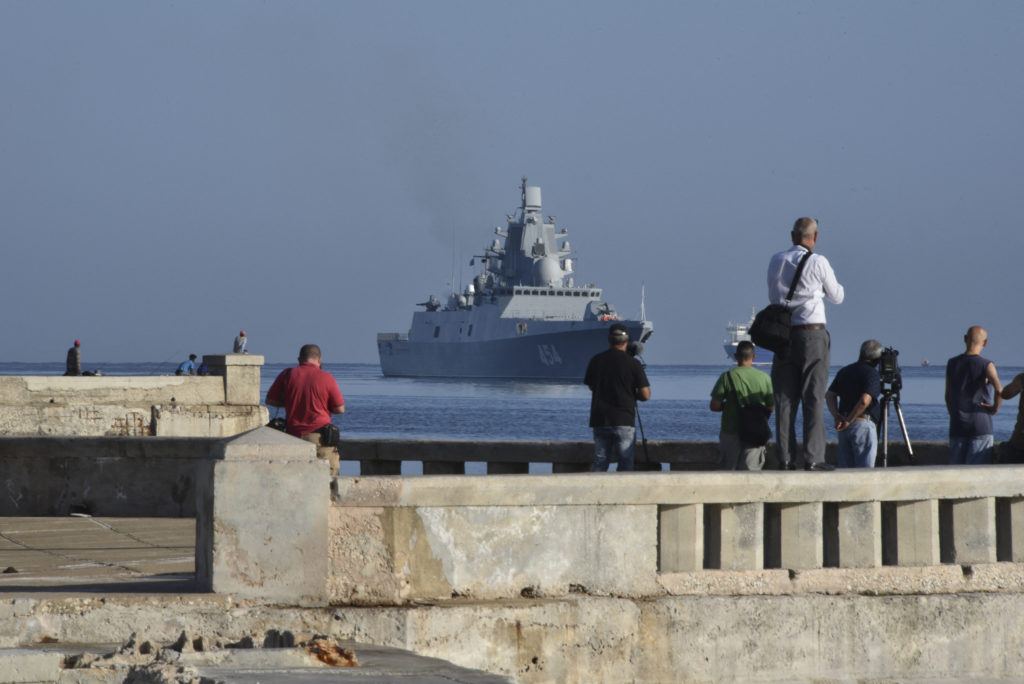
However, the military presence of Russia in Latin America is not limited to arms sales. Moscow also seeks to maintain some form of recurring presence in the region, particularly since 2008. That year, two Russian strategic bombers, Tu-160 Black Jack, with nuclear capability, arrived in Venezuela, a visit that was repeated in 2013 and again in 2018. An electronic intelligence vessel also arrived in Havana in 2014. A year later, four Russian Navy ships moved to Venezuelan waters, including the flagship cruiser “Pedro El Grande.” Finally, in 2019, one of Russia’s most advanced naval assets, the frigate “Admiral Gorshkov,” docked in Havana alongside a logistics ship and a rescue tug.
In the case of Venezuela, it is necessary to add that the relations and exchanges with Russia include technicians in weapon systems and intelligence, who could participate in the installation and operation of mobile reconnaissance radars, such as the P-18 radars deployed on the border with Colombia, as stated by Joseph M. Humire from the Center for a Secure Free Society in a report released last week (see report https://www.youtube.com/watch?v=offZJ8o_vG0).
Also recently, Manuel Cristopher Figuera, former director of the Bolivarian National Intelligence Service, asserted that Russia has two military bases in Venezuela[2]. One of them would be within the 41st Brigade in Valencia, Carabobo, while the other would be located in Manzanares, Miranda state, where the Russian Military Communications and Intelligence Exploration Base operates. The former Chavista official, who defected in 2019 and now collaborates with U.S. authorities, stated in a statement that the purpose of these facilities is to “threaten the national security of the United States.”It should also be noted that in April 2021, two Kfir aircraft from the Colombian Air Force intercepted a Russian intelligence-capable aircraft while it was flying over its territory on an unauthorized route. Here, it is worth highlighting Colombia’s status as a global partner of the North Atlantic Treaty Organization (NATO) and that it is the country closest to the United States in the region in terms of security. Another area utilized by the Russians to strengthen their military relations with the region has been the academic one. Beyond the traditional ties with Cuba, Nicaragua, and Venezuela, Peru signed an agreement to allow the admission of military personnel to Russian military education centers in 2011. Then, in December 2021, the Peruvian government formalized the agreement with the Russian Federation on mutual protection of classified information in the field of technical-military cooperation
[3]
. Similarly, in 2021, Argentina signed an agreement to train officers and non-commissioned officers in Russian military educational institutions[4].External Crises, Visits ArriveAll of the above might seem anecdotal if military deployments are not related to the current international context. In 2008, when the first visit of Russian strategic bombers to the region occurred, a conflict was underway between the military forces of Georgia and separatists supported by Russia, to which Moscow faced clear Western pressures. There was even talk of the possibility of Tbilisi joining NATO. Subsequently, when the Ukraine crisis erupted between 2013 and 2014 due to this country’s rapprochement with the European Union and the United States in opposition to Russia’s desires, military assets were also sent to Latin America, opening another front against diplomatic pressure on Moscow in the West.
It is also no mystery that certain Latin American regimes with an anti-American stance take advantage of situations to express or publicly show their sympathy towards Russia in search of a counterbalance. The most characteristic cases are those of Cuba, Venezuela, and Nicaragua; to a lesser extent, Bolivia, Argentina, and Peru, a situation that has varied according to changes in government. Likewise, Brazil, a regional power, maintained good ties with Russia when the BRICS initiative, which united these two countries in a bloc with China, India, and South Africa, was in effect.
It is possible that the current predominance of leftist governments in the region, particularly in South America, offers a more favorable environment for the global interests of President Vladimir Putin. For example, amid the current Ukraine crisis, Argentine President Alberto Fernández is scheduled to visit Putin in early February
[5]
. Similarly, Brazilian leader Jair Bolsonaro plans to do the same[6].There are also instances of high-level Russian politicians visiting the region, such as the visits between 2008 and 2009 by then-Russian President Dmitry Medvedev to Venezuela, Bolivia, Nicaragua, and Ecuador, all countries with sympathetic regimes at that time. Subsequently, Putin himself traveled to Cuba, Argentina, Brazil, and Nicaragua in 2014, while his Defense Minister, Sergey Shoigu, did the same in 2015, visiting Havana and Managua with the intention of scouting potential ports and airstrips for Russian forces. Finally, we cannot forget the political support from Bolivia, Cuba, Nicaragua, and Venezuela in 2014, when they voted against the United Nations resolution condemning the Russian actions that led to the annexation of Crimea.Regarding trade relations, it is important to note that for no Latin American state does Russia represent a significant partner on par with the United States or China, and vice versa. Its economy is the eleventh largest in the world in terms of national GDP and is less than one-tenth the size of the U.S. economy. Generally speaking, the main commercial activities, besides the sale and maintenance of weapon systems, relate to Russia’s purchase of agricultural raw materials from Argentina, Brazil, and Paraguay. There is also the involvement of Rosatom, a Russian nuclear industry company, in the construction of a research nuclear reactor in Bolivia, as well as its intention to build two nuclear power plants in Argentina. Today, GLONASS, the Russian version of GPS, is being used in Latin America. Finally, in the oil sector, there are investments from companies like Rosneft and Gazprom, primarily in Venezuela and, to a lesser extent, Bolivia, Ecuador, and Colombia.
Image: France Presse. Ships of the Russian Federation Navy arrive at the port of Havana on June 24, 2019.
Regarding the actual capacity for a massive increase in Russian military presence in the region, there are serious doubts. Unlike the United States, which has had to cross oceans since World War I to project its forces in various conflicts, experience shows that Russia’s logistical capabilities allow for large-scale deployments on its borders or in nearby countries, but not at great distances overseas. Examples such as the recent Russian military deployment in the Syrian conflict demonstrate a force that participated primarily with air, naval, special forces, and some missile platforms, but with a limited ground effort. Historically, there are no examples of large-scale Russian landings, recognizing that Russian maritime doctrine is oriented towards coastal defense and the protection of its inland seas, but there is no greater expeditionary vocation. Besides the distance to Syria, as well as the importance of the Tartus port in the Mediterranean for the Russians, these are not comparable to Latin America.
The first would involve repeating what has been done to date with the sending of bombers and warships, which serve a more symbolic role to demonstrate the reach of modern and lethal platforms. The second would focus on information operations and actions in the cyber realm, where the security of Latin American countries, especially those close to the United States, is significantly lagging. In this sense, rather than highlighting the Russian position, these operations would aim to exploit media and social networks to create instability in countries that are not aligned with Russia and to encourage the anti-American sentiment that prevails in some sectors of the region. Third, and perhaps the most likely, is a combination of both, as it has the capacity and its implementation is comparatively low-cost.
Although not crucial, Latin America is not insignificant for Russia, as it represents a geographical region that has historically been within the sphere of influence of the United States. We must consider that Russian media have had Spanish-language broadcasts for the region for several years, such as RT (since 2009 via cable and with permanent offices in several countries) and Sputnik (since 2014). Experiences of Russian interference in the internal politics of Western countries are numerous and even extend to the United States.
CONCLUSIONS
Russia finds itself at a geopolitical crossroads, seeking to improve its position for negotiations with the United States and maintain a security space to the west of its territory. While Moscow has global aspirations and its behavior attempts to align with that of a power of that level, the reality is that its economic limitations frame it as a power of rather regional reach.
Russia has had political and military ties with the Latin American region for decades, primarily characterized by arms sales to some countries, but it does not surpass the United States globally, except in the case of Venezuelan contracts.
- The presence of Russian military assets in the region is not new and is expected to behave similarly to recent years. When Moscow is embroiled in a conflict, it sends ships or aircraft to display the flag in the region.
- Russia could now add its capabilities in information operations and cyberspace to affect the stability of non-aligned countries and to undermine the position of the United States, encouraging the anti-American sentiment that persists in some countries in the region, particularly at a time of a leftward shift in several Latin American states.
- The United States has been neglecting this geographical area, despite its immediate relevance.
- DOWNLOAD THIS DOCUMENT HERE
- *
is a researcher at AthenaLab. Former officer of the Chilean Army, holds a degree in Military Sciences. Master’s in Military Sciences from ACAGUE. M.A. in International Security from Georgetown University. He has taught at the Army War Academy and the Chilean Air Force, as well as at the United States Military Academy at West Point.[1] This concept, coined by John Hertz in 1950, establishes that if a country improves its strategic conditions through a strengthening of military power, what ensues is an arms escalation due to the perceived insecurity of the affected actor. See John Hertz in “Idealist Internationalism and the Security Dilemma.” World Politics. Vol. No. 2. 1950, pp. 157-180.
[2] Infobae: “Where is the Russian military base in Venezuela, according to the complaint of a former Chavista intelligence chief,” in
https://www.infobae.com/america/venezuela/2022/01/20/donde-esta-la-base-militar-rusa-en-venezuela-segun-la-denuncia-de-un-ex-jefe-de-inteligencia-chavista/ [3] Andina: “Legal Norms: formalize agreement between Peru and Russia on military cooperation,” in
https://andina.pe/agencia/noticia-normas-legales-oficializan-acuerdo-entre-peru-y-rusia-cooperacion-militar-874354.aspx[4] Government of Argentina: “The Ministries of Defense of Argentina and Russia signed an agreement for the training of Argentine military personnel in that country,” in
https://www.argentina.gob.ar/noticias/los-ministerios-de-defensa-de-argentina-y-rusia-firmaron-convenio-para-la-formacion-de [5] La Nación: “The inexplicable meeting between Vladimir Putin and Alberto Fernández,” in
https://www.lanacion.com.ar/politica/la-inexplicable-reunion-entre-vladimir-putin-y-alberto-fernandez-nid21012022/ [6] Clarín, “In campaign for his re-election, Jair Bolsonaro travels to Russia and strengthens his ties with Vladimir Putin,” in https://www.clarin.com/mundo/campana-reeleccion-jair-bolsonaro-viaja-rusia-refuerza-lazo-vladimir-putin_0_GCNeI2KjOn.html