SPECIAL | Russia-Ukraine Crisis
This article was translated automatically and may contain differences from the original. For reference, read the original.


COLLABORATION | War in Ukraine and the Indo-Pacific, where do they connect?
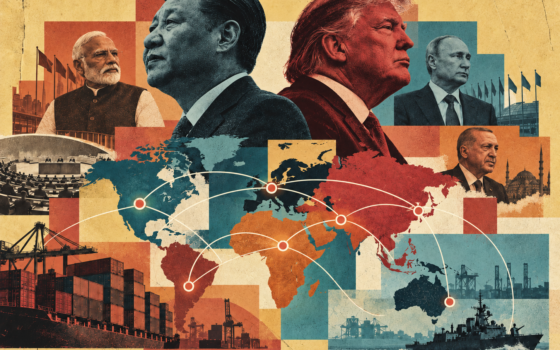
06.10.2023. The Russian invasion of Ukraine in February 2022 marks an escalation of the Russo-Ukrainian war that began in 2014 with Russia’s occupation of Crimea and Donbas. This is the most significant conventional military operation since World War II, affecting strategic alignments, military doctrines, and supply chains. Additionally, it contributes to a growing bipolarization in the international system.

ANALYSIS | The Koreas move their pieces
22.09.2023. Dictator Kim Jong-un decided to briefly leave the so-called “Hermit Kingdom” in his curious armored train bound for the easternmost region of Russia, which is currently in need of artillery and rocket munitions to continue its war of aggression against Ukraine. After decades of stockpiling for a conflict that technically continues against its southern neighbors, North Korea seems to have much compatible material to offer, and at a very good price, to Vladimir Putin.

COMMENTARY | Clearing myths about the war
14.09.2023. Over the past few decades, ideas in the realm of international security, safety, and defense have turned into pseudo “truths,” despite lacking substantial grounding. Assertions that labeled “conventional warfare” as obsolete, assumed that conflicts would be short, or that precision weapons would allow battles with few casualties are some examples. Based on what is happening in Ukraine and other experiences, the accumulated myths from the last thirty or forty years of armed conflicts will be clarified.

ANALYSIS | Multilateralism attempts to regain momentum with the “rise of the rest.” Will it succeed?
13.09.2023. In this era of competition, multilateralism is not faring well. International organizations are either paralyzed (like the United Nations Security Council) or are subject to attempts of undue influence (like the World Health Organization).

HISTORY | Reviewing the other 50 years… and the war in Ukraineitating the other 50 years… and the war in Ukraine
07.09.2023. 1973 was a very complex year. Not only for Chile but globally. Events occurred that left an indelible mark on recent history, including the signing of the Paris Peace Accords between the United States and North Vietnam, and the Yom Kippur War, which pitted several Arab countries against Israel.

COMMENTARY | Did the Ukrainian counteroffensive fail?
04.08.2023. Two months after the start of the anticipated Ukrainian counteroffensive, what has generated the most expectation is the use of new brigades organized based on Western armored material. This would involve nine units, 63,000 soldiers, and about 150 battle tanks.

ANALYSIS | Iranian drones and Danish F-16s? Changes in the neighboring skies
31.07.2023. The skies of South America are quite active these days, with possible purchases by Argentina, Bolivia, and Peru of new aerial units, ranging from surveillance drones to combat aircraft.

COMMENTARY | Vladimir Putin’s Hunger Games
25.07.2023. The Russian invasion of Ukraine is having a tremendous impact on global trade routes and food exports, even causing famines in the most vulnerable countries in Asia and Africa in the 21st century.

ARTICLE | Extraterritorial powers in Latin America
17.07.2023. China, Russia, and Iran are showing renewed interest in Latin America. Countries in the region must carefully consider whether they want to ally with those promoting a multipolarity without values.

CEP Seminar | Rebellion in Russia: Keys and dangers of the new chapter of the war in Ukraine
12.07.2023. Yesterday, the summit of leaders from NATO member countries began in Vilnius, Lithuania. As was the case last year in Madrid, the meeting is marked by the war in Ukraine. However, this time there are elements that have significantly changed the scenario.

PODCAST | What is at stake in the NATO summit?
12.07.2023. Yesterday, the summit of leaders from NATO member countries began in Vilnius, Lithuania. As was the case last year in Madrid, the meeting is marked by the war in Ukraine. However, this time there are elements that have significantly changed the scenario.

John Griffiths talks with T13 about the war in Ukraine
10.07.2023. The war in Ukraine has reached 500 days. Since the onset of the armed conflict on February 24, 2022, the UN has documented the deaths of 9,000 civilians, including 500 children, although it estimates that the actual number could be much higher.

ANALYSIS | Six notes on the destruction of the Kakhovka dam
08.06.2023. In the context of Russia’s illegal and unprovoked military aggression against Ukraine, this week the partial destruction of the Nova Kakhovka dam on the Dnieper River was reported. While both sides blame each other for the attack, the thesis of Ukrainian self-sabotage put forth by Moscow contrasts with a history of Russian attacks on critical infrastructure in the invaded country, which includes power plants and nuclear facilities.

ANALYSIS | War in Ukraine accelerates military spending in 2022
26.04.2023. The prestigious Stockholm International Peace Research Institute (SIPRI) published this week the conclusions of its latest analysis document on global military spending trends. The impact of last year’s Russian invasion of Ukraine, as well as other conflict and confrontation hotspots, is evident when reviewing the findings. Here are some necessary points highlighted by AthenaLab.

ANALYSIS | Macron, Taiwan, and multipolarity
12.04.2023. Recent statements by French President Emmanuel Macron, who upon returning from his trip to China warned that Europe “should not get involved in crises that are not ours,” citing Taiwan as a matter that does not concern them, have caused justified uproar.

COMMENTARY | False calm before the (new) storm
11.04.2023. Today, little is said about the Russian invasion of Ukraine in national media. The few references tend to describe a sort of stagnation or paralysis of the conflict, with little or no movement in which both belligerents would reach points of exhaustion, while there are also references to an imminent offensive from both Ukraine and Russia. In this regard, three points should be noted: there is no such calm, the new offensive will indeed be a reality in the short term, and finally, what to expect from this conflict.

ANALYSIS | Notes on Finland’s accession to NATO
04.04.2023. Just as sniper Simo Häyhä did during World War II, Finland has taken a direct shot at Russia’s security calculations by joining the North Atlantic Treaty Organization (NATO) today, the world’s largest military alliance. AthenaLab Team.

INTERVIEW | “What is at stake for Latin American countries in supporting Russia or Ukraine?” BBC Mundo consulted AthenaLab
04.04.2023. What lies behind this supposed “neutrality”? And what is at stake for various Latin American countries when supporting Russia or Ukraine in the conflict? Here we present four key elements that address these questions.

INTERVIEW | Putin’s challenging speech that suspends the nuclear disarmament agreement with the U.S.
22.02.2023. LUN interviews John Griffiths, head of studies at AthenaLab, on February 22, 2023.

REPORT | John Griffiths participates in T13 report on the war in Ukraine
16.02.2023. One year into Russia’s war against Ukraine, Teletrece was able to speak with a soldier decorated by the government of Volodymyr Zelensky for his bravery on the battlefield. His account is one of thousands of testimonies that reflect the brutality of this armed confrontation. What is the future of the war? Why—despite initial expectations—does the conflict continue one year later? The answers… in the following Tele13 report.
WORKING DOCUMENT No. 21 | One year after Russia’s invasion of Ukraine
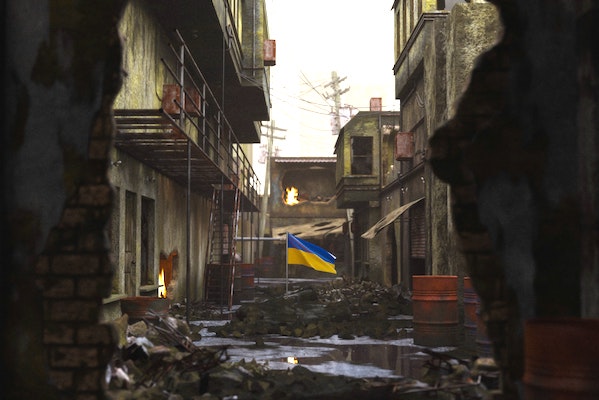
21.02.2023. The objective of this document is to analyze some aspects of what has occurred during the last twelve months in this armed conflict. Initially, some of the assumptions held before the war began will be presented, and the evolution of operations will be reviewed. Then, some experiences that can be deduced from the course of the war will be proposed. Finally, scenarios that are expected to arise in the future of the conflict will be presented, along with considerations that must be taken into account to determine a probable outcome and its consequences.

ANALYSIS DOCUMENT | New tanks for Ukraine
26.01.2023. In recent months, much of the debate among Western powers has focused on the decision to supply tanks to Ukraine. Despite the insistence of President Volodymyr Zelensky, his counterparts in the United States and Germany had repeatedly opposed. Ultimately, both countries agreed to provide Kyiv with their main battle tanks.

KEYS | To understand the phenomenon of war
23.11.2022. In light of the current conflict between Russia and Ukraine, public opinion has been subjected to a series of comments about the war, its characteristics, evolution, nature, and character. In these interactions, concepts and notions are explicitly stated that are not necessarily appropriate according to strategic studies. Below, we provide further information for your knowledge and application.

COMMENTARY | The diffuse impact of air power in the Russia-Ukraine war
17.11.2022. The war in Ukraine is nearing nine months in duration. While the conflict has unfolded across the five domains of operations—land, sea, air, space, and cyber—one aspect that has drawn significant attention is the limited role of the air domain, primarily from the Russian perspective.

COMMENTARY | Naval warfare in Ukraine is tactically innovative, but not revolutionary
08.11.2022. Naval warfare in Ukraine has recently returned to the center of international attention. In a scenario that has so far been defined by the Russian assault on Snake Island in the early stages of the invasion and the Ukrainian sinking of the cruiser “Moskva,” Russian sources reported that Ukrainian forces dealt a new blow. This time, unmanned surface and aerial vessels conducted a bold incursion into the naval port of Sevastopol.

SEMINAR | Head of studies at AthenaLab participates in CEP seminar on the Russia-Ukraine war
03.11.2022. Six months have passed since the Russian invasion of Ukraine. We review the milestones and moments that have marked this period in history, which still has no end in sight. T13 report with comments from John Griffiths, head of studies at AthenaLab.

KEYS | Iran’s incursion in the Russia-Ukraine war
27.10.2022. Reports about the use of Iranian weapons in the current conflict between Russia and Ukraine have sparked interest in that state, which is also going through difficult times in its internal stability. The Islamic Republic of Iran, known as Persia until the early 20th century, has a population of nearly 87 million, all of whom are Muslims, with a significant majority being Shia. Below are some points of interest.

COMMENTARY | Open-source intelligence in the Russia-Ukraine war
27.10.2022. Russia’s military invasion of Ukraine has reached eight months, proving more difficult than all conflict specialists, including major intelligence agencies, had anticipated. With the perspective of time, we can now affirm that Ukraine’s resistance to the Russian offensive is partly due to the role that open-source intelligence (OSINT) has played in the confrontation.

KEYS | Mobilization and desperation in Putin’s war
21.09.2022. The government of Russian President Vladimir Putin announced the partial mobilization of 300,000 reservists with military experience, while warning that it is capable of employing “all necessary means,” including nuclear weapons, to defend the country. Declaring such a mobilization indicates that Russia is in an open war against Ukraine and not in the midst of a “special military operation,” as the Kremlin labeled the invasion launched on February 24. Below is a brief analysis.

COMMENTARY | Russia-Ukraine war and long-range ground fires
12.09.2022. An old military adage states that “fire is what stops,” which is reflected in the fact that since World War I, ground fires, particularly artillery, are the conventional weapons that produce the highest number of casualties on the battlefield. In combat, fires generated from various platforms are integrated into maneuvers, but undoubtedly the most relevant, due to their impact on the development of the battle, are the fires executed by long-range ground weapon systems.

CONFERENCE | John Griffiths at CEP seminar “Who is winning the war?”
01.09.2022. John Griffiths, head of studies at AthenaLab, was invited for the third time to participate in the CEP seminar series on the war between Russia and Ukraine, this time under the title “Who is winning the war?”

REPORT | Head of studies at AthenaLab consulted about Ukraine in T13 report
24.08.2022. Six months have passed since the Russian invasion of Ukraine. We review the milestones and moments that have marked this period in history, which still has no end in sight. T13 report with comments from John Griffiths, head of studies at AthenaLab.

KEYS | Russian weapons for Latin America: More rhetoric than anything else
18.08.2022. Moments of crisis in the international system always open opportunities for great powers to settle scores, and often, rather than seeking direct confrontation, they prefer to do so in peripheral theaters by encouraging or strengthening allied countries. All with the aim of causing disruptions in the rival’s sphere of influence.

COMMENTARY | The threat of nuclear weapons
08.08.2022. In this context, questions arise about what level of security and stability exists in the international system, what limitations are present for the development of such weapons, and what can be expected in the future regarding these weapons of mass destruction.

ARTICLE | Relevance or obsolescence of the tank?
26.07.2022. The Russian invasion of Ukraine has left impressive images. Some of the most circulated show destroyed Russian tanks and armored vehicles on roads, rural paths, or in the midst of towns, not to mention many others abandoned by their crews. From these records, voices have emerged once again proposing the end of tanks and other armored means.

INTERVIEW | AthenaLab talks with General (r) David H. Petraeus
13.07.2022. The Director of AthenaLab spoke with renowned U.S. General (r) David Petraeus about the war between Russia and Ukraine, an interview that was later edited and published by El Mercurio.

COMMENTARY | NATO Summit: Reinforcements and definitions
29.06.2022. In the context of the NATO Summit held in Madrid, the new “Strategic Concept 2022” was announced on Wednesday, a guide for action for the decade from which a new reinforced posture emerges against Russia, which is identified as “the most significant and direct threat to the security of allies and peace and stability in the Euro-Atlantic area.”

INTERVIEW | Chargé d’Affaires of Ukraine visits AthenaLab
27.05.2022. The Chargé d’Affaires of the Ukrainian Embassy in Chile, Vladyslav Bohorad, visited the offices of AthenaLab where he discussed the situation in his country, nearly 100 days after the Russian invasion began.

COMMENTARY | The Russia-Ukraine war and the international order
24.05.2022. The war between Russia and Ukraine has surpassed 74 days, the duration of the Falklands/Malvinas War in 1982. As it appears, there is no evidence that the conflict will come to an end in the immediate future, given the increasingly hard and distant stances of both sides.

CONFERENCE | Head of studies presents at CEP Cycle “Is Putin losing the war?”
11.05.2022. As part of the conference cycle organized by the Public Studies Center on the Russia-Ukraine conflict, the head of studies at AthenaLab, John Griffiths, presented today alongside Fernando Wilson, a professor at Adolfo Ibáñez University, in the session titled “Redesigning the map of power.”

COLUMN | What Russia’s invasion of Ukraine tells us about the sea
08.05.2022. Although the maritime aspect of Russia’s military aggression against Ukraine had not been prominently highlighted, the sinking of the cruiser ‘Moskva’ or ‘Moscow’ (what symbolism) after an attack by Kiev’s forces with anti-ship missiles launched from land served to elevate this angle of the largest conflict in decades in Europe, the repercussions of which will be felt far beyond. Here are some notes in the Month of the Sea. Juan Pablo Toro, El Mercurio.

COLUMN | Zelensky, a living lesson in leadership
27.04.2022. At some point in their lives, every person can take a leadership position. They will be given authority to exercise it over human beings, whether in a work group or even a country. Their collaborators will expect that their leader is much more than just a boss and behaves as a true guide leading them toward a higher common goal. Julio Leiva, El Mercurio.

ARTICLE | Loss of the cruiser “Moskva”: A chain of Russian errors or a Ukrainian success?
22.04.2022. How does one lose a 12,500-ton cruiser in a war that is essentially terrestrial and at the hands of a country without a navy? This is the question many naval experts were asking after the sinking of the “Moskva,” the flagship of the Russian Black Sea Fleet, struck by a “Neptune” missile launched from the coast, according to the Ukrainian version, or due to a fire on board, according to Moscow.

REPORT | The war and the changes it brings to the international order
17.04.2022. The head of studies is consulted by El Mercurio de Valparaíso in the report “The war and the changes it brings to the international order.”

ANALYSIS | Preliminary conclusions 40 days into the Russia-Ukraine war
07.04.2022. It is relevant to extract some preliminary experiences from what has been observed and read, especially regarding a war that has so far been conventional. This is because there are elements of judgment based on what has been seen in the war in Ukraine that could contribute to future discussions about the experiences that the most relevant European conflict of the present will leave us, particularly for states the size of Chile.

CONFERENCE | Head of studies at CEP seminar “Is Putin losing the war?”
29.03.2022. On March 29, 2022, the Head of Studies at AthenaLab, John Griffiths Spielman, participated in the seminar organized by the Public Studies Center (CEP) on the Russia-Ukraine war titled: “Is Putin losing the war?”

ARTICLE | Ukraine, one month into the war
25.03.2022. On February 24, 2022, the armed attack that Russia executed on Ukrainian territory was realized. Difficult to conceal for the West, the invasion caught no one off guard. A month has passed, and multiple reports are received daily from the front lines, mainly with testimonies from affected civilians and severely damaged essential infrastructure.

INTERVIEW | Ukrainian polar vessel could temporarily occupy a port in Chile
18.03.2022. Regarding the recent arrival of the vessel “Noosfera” in Punta Arenas, the director of the National Antarctic Scientific Center of Ukraine, Evgen Dykyi, detailed to AthenaLab from Kiev the impact of the Russian aggression on his country’s ambitious polar plans.

COLUMN | The return of geopolitics to Europe
12.03.2022. Discussions about Russia and Ukraine fill military study centers, but also Parisian cafés. It is the war that Kiev must not lose, as the security of Europe itself and its future as an international actor are at stake. Juan Pablo Toro, El Mercurio.

ARTICLE | Maritime notes on the Russian invasion of Ukraine
10.03.2022. If maritime strategy is about “access,” as James Holmes indicates, we can affirm that, in the context of the current Russian invasion of Ukraine, the aggressor country will seek to take control of Ukrainian ports to deny them.

ARTICLE | On the “hybrid” nature of the war
11.03.2022. In light of the Russian invasion of Ukraine, one of the terms that has been repeated countless times in recent days is “hybrid warfare” (HW). On one hand, experts, journalists, and others have used the concept broadly, often without fully understanding the term. There is no doubt that its correct conceptualization is essential.

COLUMN | War in Ukraine and the reconfiguration of European security
25.02.2022. Since its onset in 2021, the Russian strategic deployment has posed a threat to Ukraine from the North, South, and West. Thus, it has been observed that the strategic objectives are not limited to the rebellious regions of Donetsk and Luhansk, as explosions have been witnessed in various cities, including Kiev. Ukraine, Russia, Europe, and the U.S. observe, react, and defend their actions from different perspectives, all rational and justified according to each, but interpreted differently by their counterparts. In El Mostrador by John Griffiths, Pilar Lizana, and Marcelo Masalleras.

ARTICLE | Russia, Ukraine, and the Gerasimov Doctrine
24.02.2022. The initiation of military operations in Ukraine is the result of a long process, and this action is framed within the Russian strategic doctrine, popularly known as the “Gerasimov Doctrine.” Understanding it allows for a better comprehension of what is happening today and the development that led to the war we are witnessing. By Marcelo Masalleras.

ARTICLE | Beginning of the War in Ukraine: The materialization of an armed attack
24.02.2022. In the early hours of Thursday, February 24, eastern Ukraine suffered a military attack by Russia, in what that country has termed a “special military operation,” following a concentration and deployment of military forces reaching 190,000 personnel among conventional and irregular forces. By John Griffiths.

ANALYSIS | Has the other war already begun?
17.02.2022. It is difficult to remain aloof from what is happening in Eastern Europe regarding a potential conflict. Russia, Ukraine, the U.S., and NATO are the most affected by this escalation, while the world observes and awaits the economic repercussions of the matter. But another element is missing in the equation of global power: China. By Marcelo Masalleras.

COLUMN | Crisis in Ukraine, a window to today’s world
12.02.2022. Column published by Juan Pablo Toro, executive director of AthenaLab, in El Mercurio.

REPORT | AthenaLab researcher interviewed by Canal 13 about the conflict in Ukraine
10.02.2022. Due to global tensions in Ukraine, Canal 13 interviews AthenaLab researcher Marcelo Masalleras about Russian weapon systems and military exercises in Belarus.
ANALYSIS | Ukraine: different views of the conflict
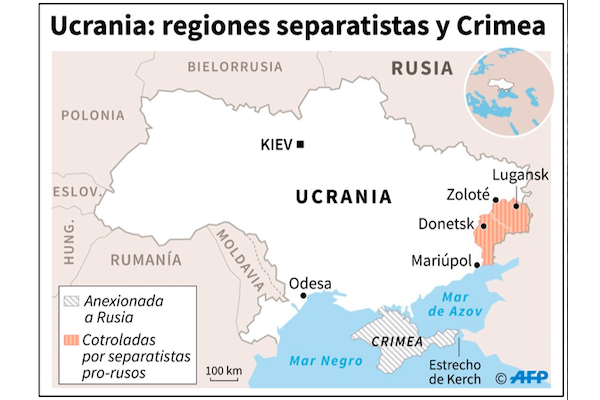
04.01.2022. The situation is complex: Ukraine, Russia, Europe, and the U.S. view and defend their actions from different perspectives, all rational and justified according to each, but interpreted differently by their counterparts.

INTERVIEW | “I am quite sure that Putin wants to take military action,” says Niall Ferguson
27.01.2022. The director of AthenaLab, Juan Pablo Toro, spoke with renowned British historian Niall Ferguson. Interview available in Spanish and English.

ANALYSIS | Ukraine: An unpredictable outcome
26.01.2022. “Perhaps the most novel element of this new crisis (…) is the very tough position adopted by the new German coalition government.” By Jorge Guzmán, associate researcher at AthenaLab.

COMMENTARY | Russian military presence: Latin America on Putin’s chessboard
25.01.2022. As part of the escalation of tensions between Russia and Ukraine, it is pertinent to review the feasibility of a potential increase in Russian presence in Latin America and its possible effects. By Marcelo Masalleras, researcher at AthenaLab.