Has the other war already begun?
This article was translated automatically and may contain differences from the original. For reference, read the original.
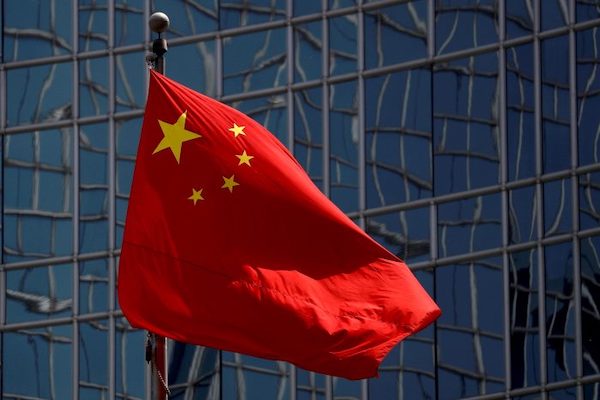
It is difficult to remain aloof from what is happening in Eastern Europe. Daily news reports detail the movements of Russian troops and Ukraine’s consequent preparations for a potential conflict. Russia, Ukraine, the U.S., and NATO are the most affected by this escalation, while the world watches and awaits the economic repercussions of the situation. However, another element is missing from the equation of global power: China. This power, more than a mere observer, could be the biggest beneficiary of this crisis when evaluating the reconfiguration of the balance of power and its aspiration to regain control of Taiwan. Is this a conspiratorial view? It could be.
RUSSIA AND UKRAINE, CHINA AND TAIWAN
What is happening at the borders of Ukraine can be characterized as a zero-sum game, where what one side gains comes at the expense of the other. However, China appears to be a spectator, at least on the surface. It does not seem to be directly involved in the crisis, nor does it have significant interests in the conflict. But there are other ways to view what is occurring in Ukraine. The Eastern power may be interested and, although it may sound exaggerated, could be involved as part of a much larger maneuver.
We must start with the most obvious point. China must be interested in the conflict, as it is a power that gains without taking risks. It gains because, despite not involving human or material resources, it can obtain what others lose: power and opportunities. Similarly, the crisis in Europe serves as an excellent testing ground in various aspects that the Asian giant can exploit, given some similarities to its situation regarding Taiwan. On one hand, Russian President Vladimir Putin has repeatedly highlighted the historical and ethnic ties between Russia and Ukraine, indicating that the latter has been part of Russia and that a significant portion of its inhabitants are Russian or Russian-speaking. Meanwhile, the government of the People’s Republic of China (PRC) has asserted the communist regime’s resolution regarding reunification with Taiwan, claiming it is an integral part of China. This issue is of utmost relevance to the ruling party and is identified as a matter of survival for the communist regime, given its importance to the Chinese people. “One China, two systems” defines that both the territory and the population of Taiwan are Chinese and must return to the administration of the PRC.
On the other hand, both Beijing and Moscow share the fact that they are permanent members of the United Nations Security Council and, therefore, have veto power over any resolution that may affect their interests. This includes the idea of the use of force authorized by the United Nations, which rules out intervention under the auspices of international law. Additionally, both powers have global aspirations; while China is in a better position than Russia, both seek a greater sphere of influence, especially in areas close to their territories.
Both countries have authoritarian regimes. China has a single party, with no free elections or political opposition. Russia, while it holds elections, consistently nullifies opposition, discrediting the electoral processes. In both cases, the issues under analysis generate some internal cohesion—especially in the Asian giant—and their communicational use is exploited by leaders to improve their positions and internal image.
In both the situation in Ukraine and a potential event in Taiwan, it is noteworthy that the “victim” states do not have a formal military alliance with the U.S., which relativizes their participation and level of involvement (it cannot be compared to what NATO or alliances with Japan or South Korea represent), not to mention that both Russia and China are open antagonists of the Americans.
In summary, there are certain conditions that configure a scenario in which the experiences gained from the ongoing conflict in Eastern Europe could be observed, analyzed, and applied by the Chinese government in its effort to regain control of Taiwan. In this sense, it is clear that there are differences in context, history, societies, and power between the two cases, but as seen, there are common patterns that allow for the utilization of experiences.
WHAT CHINA WOULD GAIN
There are at least five elements that China could leverage to its advantage. First, Ukraine will serve to evaluate the reaction of Western leaders and security structures to each of the “stimuli” presented by Putin, not only now but over a horizon extending back to before 2014 (military deployment, use of cyberspace, diplomacy, etc.). Additionally, it will be possible to observe the reaction of public opinion in each Western country to the behavior of their leaders and how each society influences its decision-makers. Furthermore, it is feasible to assess the procedures applied to address the issues and the personal characteristics of those making decisions, as well as to account for the instruments used by each state individually and the alliances in general (diplomatic, economic, political, military). Concurrently, having identified the tools used, their repercussions can be evaluated, along with potential measures to neutralize or minimize their effects.
Second, the crisis in Ukraine has shifted global attention to Europe, where the states of the old continent have demanded greater commitment from their members and from the U.S. This could translate, in the longer term, into the diversion of other resources to address this or another future crisis. Such a situation would favor China, as Western countries had been focusing on the Indo-Pacific for several years. Considering that material resources are always limited, having forces and efforts committed in Europe helps to change the balance in Asia.
Third, China, either directly or through Russia, could test various cyber capabilities, as well as different options for information operations to affect public opinion in Western countries, especially in the U.S. There have already been direct accusations against both Russia and China for meddling in U.S. internal affairs through these tools. Now, it is possible to test cyber weapons directly on a state that could be subject to military intervention, in this case, Ukraine, gaining significant experiences.
Fourth, the crisis in Ukraine serves to evaluate the strengths and weaknesses of the alliances in which Washington participates, as well as the reactions within NATO. While there is a sense that it would emerge strengthened internally, it is no secret that there have been questions about the reactions of some of its members. A review of the available information easily reveals that the United Kingdom has politically engaged and sent arms to Ukraine. France has expressed its commitment to the security of Kyiv, and its president has intervened to mediate in the matter. Germany, while reiterating its commitment to the alliance, has refrained from sending arms, and its chancellor has avoided directly addressing the future of the Nord Stream 2 pipeline.
Fifth, all of the above would serve to weaken the position of the U.S. in each region and, ultimately, in the world. On one hand, the world’s leading power was an active participant in the Budapest Memorandum, during which Ukraine sacrificed the military arsenal inherited from the USSR in exchange for certain guarantees of sovereignty and independence that are now gravely threatened. In 2014, the U.S. was unable to prevent Russia’s annexation of Crimea. Now, Biden has already announced that he would not intervene militarily in the event of an invasion. In short, Washington’s commitment to situations like this or potentially Taiwan is limited. As mentioned at the outset, to reach any agreement, all parties will have to concede something.
REFLECTIONS
China is the one that wins. Whether it is Russia, the U.S., Europe, or, for that matter, Ukraine, they will all have to grant their counterpart something that allows them to move forward toward a peaceful solution or, as a last resort, bear the costs of a military confrontation. In the end, it is highly unlikely that any of the intervening parties will emerge with all their demands satisfied, which will translate into a loss of relative power. In this regard, China observes how negotiations unfold without having direct objectives or interests committed to the game. It is known that in the international system, when distributing power, when one adversary loses, it is a gain for the opponent.
This crisis may represent an excellent “testing ground” for Xi Jinping’s regime. There are several situations occurring in Ukraine that could be transferred—with obvious differences—to Taiwan, considering China’s intention of reunification with the island.
While everything happening at the borders of Ukraine and the ongoing negotiations can be seen as an opportunity for China, there is a possibility that—hypothetically—the events unfolding in Europe are part of a larger maneuver driven by China and Russia, aimed at generating international instability, obtaining real experiences, evaluating alternatives, weakening Western alliances, affecting U.S. power, and ultimately creating better conditions to continue its objective of effectively regaining Taiwan (China), strengthening internal cohesion, and increasing its power in the international sphere.
While there is no further information to affirm this assertion, it must be acknowledged that Chinese President Xi Jinping has stated reunification as a state objective, without ruling out the use of force. In the last two years, incursions of military aircraft from the PRC into Taiwan’s “air defense zone” have multiplied, with up to 54 events recorded daily in October 2021.
Taiwan is significant not only as a potential conflict scenario between major powers but also as the largest producer of computer chips and, for Chile, it is located in a strategic area for national trade circulating through the Pacific.
Robert Leonhard, in his book “Fighting by Minutes,” proposed that, from a temporal perspective, war and operations have four characteristics: duration, sequence, opportunity, and frequency. Regarding the latter, he indicates that, similar to sound, many times the actions of the adversary occur at very high or very low frequencies, which prevents us from perceiving or assimilating them. We do not realize they are there. Perhaps, in the minds of Russian leaders, the war for Ukraine has already begun, and we have not noticed, while we witness the initial actions of configuration, to measure forces and adjust plans. Perhaps the recovery of Taiwan has also begun. Sometimes, reality surpasses fiction.