Ukraine, One Month into the War
This article was translated automatically and may contain differences from the original. For reference, read the original.
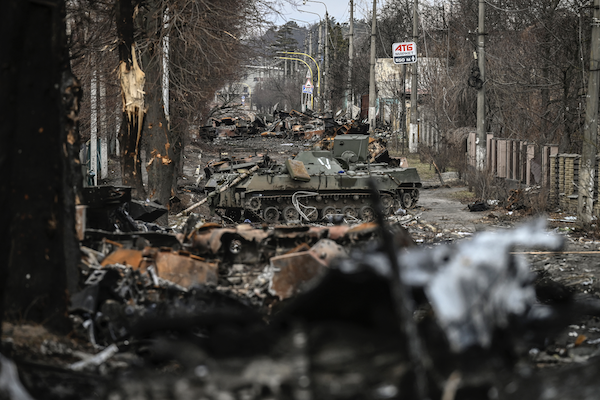
On February 24, 2022, the armed attack executed by Russia on Ukrainian territory was realized. Difficult to conceal from the West, the invasion caught no one off guard. A month has passed, and each day brings multiple reports from the front lines, primarily featuring testimonies from affected civilians and severely damaged essential infrastructure.
At this point, it has been possible to confirm a series of elements that were initially a matter of speculation. Today, there is some confirmed information regarding the Russian offensive, as well as the actions taken by the Ukrainian armed forces and the people. Similarly, for logical reasons, there are still unknown areas on which various hypotheses are formulated, some more credible and logical than others. Nevertheless, the most relevant question—certainly one without an answer—is where the war will head and how it can be stopped.
WHAT WE KNOW OR ASSUME
We knew, even before the war began, about the deployment and intention to invade by Russia. In this regard, the intelligence accuracy of the United States and the United Kingdom was high, even establishing a time window between the end of the Winter Olympics and the arrival of spring in Ukraine.[1]
We know that the initial employment of available Russian forces was limited and took place on four main fronts. In this sense, it is not entirely clear why all potential was not employed from the outset, which would have provided greater superiority. It is also unclear why efforts were not concentrated on certain fronts to prioritize the main objectives, seemingly resulting in insufficient power everywhere.
We are aware of logistical problems within the Russian forces, particularly regarding fuel and food supply (in some areas), as well as the maintenance and preparation of equipment. It is estimated that many units were only prepared for participation in military exercises, not for an offensive like the one they are currently engaged in, which translated into a lack of adequate preparation for the challenges they now face. [2]
We know that the Russian air force has not achieved air superiority.[3] Given Moscow’s enormous material superiority, air supremacy was anticipated; however, Ukrainian air assets operated for a long period, and for now, there is no certainty that they are completely neutralized. On this point, it is worth noting the impact of the “Stinger” anti-aircraft missiles provided by the West, which have caused significant losses to Russian combat aircraft (planes and helicopters).
Likewise, based on various information obtained from open sources, Western intelligence has concluded that Russian forces have faced communication problems,[4] resulting in a lack of coordination in their advance. This is particularly striking, given that Russian military resources have invested significant resources in developing command and control capabilities, apparently without achieving their intended purpose.
All of the above is estimated to have affected the morale of Russian troops, especially among the contingent of non-professional soldiers, and particularly on the northern and central fronts, where the advance has evidently been more limited than originally anticipated. This must be added to what appears to be Russia’s underestimation of Ukrainian defense. On one hand, the strength of the people’s cohesion, the leadership driven by President Zelensky, and the effectiveness of the defense imposed by the armed forces and resources mobilized by Kyiv have exceeded Russian expectations, which would partly explain the problems they face today.
Another element that may not have been adequately considered by Kremlin authorities is the reaction of the West. The actions taken by Putin in Georgia and Crimea in 2008 and 2014 exhibit similar patterns. In both cases, information operations and cyber activities were employed before the onset of military operations; in both instances, there was a combination of regular and irregular means; both Georgia and Ukraine expressed their intention to integrate into NATO; on both occasions, Russia ultimately executed military actions that violated international law; and in both cases, the Western response was weak and limited. Thus, it could be argued that, on one hand, an “incentive” was created for Russia to continue acting in the same manner with Ukraine, as the pattern was very similar, and on the other hand, it was mistakenly anticipated that the response from the victim and the international community would be the same this time.
The sum of economic sanctions coordinated by a broad spectrum of states, the strengthening of NATO as a political structure, and the decision to provide first-level lethal weapons to Ukraine have had a significant impact on the development of the conflict and are expected to influence its future resolution.
WHAT IS HAPPENING
So far, as mentioned, the Russian advance has not met expectations (no one has the invasion plan in hand to assert whether it worked or not), and time is running against Putin, as economic sanctions will begin to take effect within Russian society, inflaming sentiments regarding a military adventure that is not easy to justify. This does not take into account the impact of the arrival of bodies of Russian soldiers killed in combat. At this point, it is worth recalling the internal effect that the casualties from the conflict in Afghanistan had on the Soviet Union in the 1980s. Another element that undermines possible Russian plans is the arrival of spring and the increase in temperatures and precipitation, which generates the phenomenon of “raspútitsa,” limiting the mobility of Russian armored and motorized units. Overall, their offensive has lost momentum and must regain the initiative. As a result, pressure on Russian military commanders may increase, and the Kremlin’s “anxiety” to achieve political objectives is likely to rise.
What can be observed from the observations made is that Putin has opted to escalate the level of violence, primarily using his weapons against civilian targets (population and infrastructure). This, while it could be evaluated as “irrational,” is not from the Russian perspective. First, it is not new, as Moscow’s armed forces have done this before in Chechnya and Syria. Second, it responds to an intentional and deliberate decision, which could be characterized as incomprehensible, inhumane, and criminal, but is rational. The most evident effect of all this, in addition to civilian deaths, is the massive exodus of Ukrainians, the largest in Europe since World War II, whether as displaced persons within their country or refugees to neighboring states like Poland, and the urgent need to establish and maintain humanitarian corridors.[5] The use of violence against civilians typically aims to break the will to fight and compel leaders to concede to the demands of the attacker. Nothing irrational about it.
However, since the beginning of the war and now with the punishment being inflicted on cities and towns, far from affecting the morale of the Ukrainian people, the effect has been entirely the opposite. It is feasible to observe that morale, despite the bombings, is high, at least to continue fighting against the invaders. The leadership of President Volodymyr Zelensky, if it was ever questioned, at this point in the conflict places him near heroism and represents a figure around whom Ukrainians have united. Finally, the cohesion of the Ukrainian armed forces appears solid, fueled by the success achieved so far in preventing the capture of the country’s major cities.
On the battlefield, so far, Russian superiority has not been clearly evidenced. Observations indicate that Russian forces have used roads and bridges, faced logistical and communication problems, and lost or abandoned many of their vehicles. However, this is not necessarily due to a lack of foresight or Russian incompetence; it must also be assessed in its proper measure against the actions of Ukrainian defense. First, the armed forces of Kyiv did not act as the Russians apparently expected; rather, they fought and adapted to the demands of the Russian offensive, avoiding large unit combat in open fields where they would have been annihilated. On the contrary, within the limited available information, it is estimated that they have mixed different organizations and units to wear down the attackers in their advance, taking advantage of their knowledge of the terrain, extending communication lines, ambushing them in tactically selected locations to achieve local superiority and inflict casualties with available weaponry, including missiles and attack drones provided by the West.[6]
For now, the type of operations being conducted appears to benefit the defense forces, preventing Moscow from imposing its material and numerical superiority. This will become increasingly relevant when Russian forces must enter cities like Kyiv, with a substantial increase in violence and casualties on both sides anticipated.
WHAT CAN WE EXPECT
It is not possible to predict the future, much less in a phenomenon as complex as war. However, some scenarios for the current conflict between Ukraine and Russia could be envisioned. Theoretically, a conflagration of this nature could come to an end through third-party intervention, a crushing military victory, diplomatic negotiation, or a change in the political regime of one of the parties.
The intervention of third parties is estimated to be unlikely, as no one in the international community has plans to expand the fighting due to the extreme risks this entails, including the potential use of nuclear weapons. Additionally, as Russia is a permanent member of the United Nations Security Council with veto power, any resolution seeking to stop the conflict will be blocked. However, the use of chemical, biological, radiological, or nuclear weapons could change the scenario.
If the war is resolved through a military victory, in this case for Russia, this outcome would strengthen Putin’s internal position—his main concern—while potentially incentivizing other territorial or diplomatic adventures. Similarly, his victory would signify a loss of power for the U.S. and Europe and a setback for NATO. An immediate effect would be Russia’s access to the entire coast of the Sea of Azov, not to mention greater Russian control over the Black Sea. For Ukraine, it would likely constitute a significant territorial loss and, at the same time, a loss of political independence from Russia. Nevertheless, this scenario is viewed as unlikely in both the short and long term.
Conversely, if the conflict concludes with a military victory for Ukraine, it would represent a major disaster for Putin, leading to significant internal political weakening, which would severely threaten the regime’s survival. In contrast, it would be considered a victory for the West, especially for Europe and NATO, opening the possibility of Ukraine’s eventual accession to the European Union and the Atlantic alliance. However, this alternative is even less likely than the previous one, being possible only in the long term, in a prolonged low-intensity conflict, with a high cost in lives for both sides.
On the other hand, a solution could arise from diplomatic options. In recent weeks, in addition to the efforts of European leaders, initiatives from other states less involved in the conflict have emerged, which could eventually lead to the end of hostilities. Among them, China, India, Israel, and Turkey have received the most media coverage. However, a solution of this nature would require, on one hand, Ukraine to cede some region of its territory, which has so far been expressed as unacceptable. On the other hand, the Kremlin would need to concede some of its political objectives, which, given the circumstances and Putin’s own commitment, appears improbable. In summary, a resolution of this nature currently seems unlikely, given the irreconcilable antagonistic positions of the warring states.
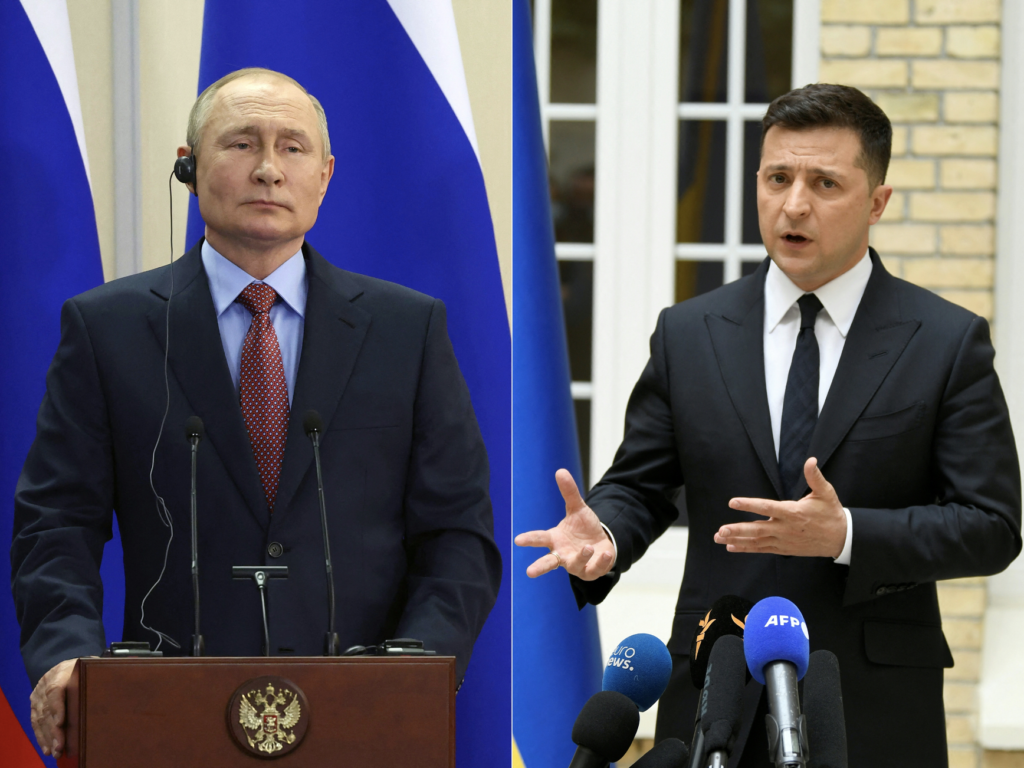
The fourth theoretically possible alternative could be a change in the political regime in one of the parties. In the case of Ukraine, while the removal of President Zelensky is feasible, a more or less secure replacement of leadership is expected, given the high internal support and cohesion. In short, it is possible but unlikely to stop the war. On the other hand, in the case of Russia, a regime change, while very unlikely due to the structure and framework created by Putin around himself, is estimated to potentially stop the war. In the last two weeks, signs of popular discontent against the war have emerged in major cities, which will be compounded by the impact of economic sanctions as time goes on, potentially affecting the loyalty of the oligarchy towards Putin. As Claus Von Clausewitz posits, the balance in the triad of Government – Population – Armed Forces is what provides rationality, will, and possibilities in an armed conflict. The weakening of morale and cohesion among the Russian people would affect the other two components, but an authoritarian regime is not inclined to consider public opinion much. Conversely, in circumstances where the governing regime is strong and significantly controls the other two elements of the triad, a change in leadership could indeed trigger the end of the war.
Finally, it is estimated that a less improbable solution would be a combination of all the above. First, the territorial control of a portion of Ukraine by the Russians would be offset by significant casualties inflicted on their ranks and resources by the Ukrainians, which would incentivize negotiation. Second, the pressure from the international community on both states, including relevant non-involved countries like China and India that have vital trade ties with Russia, could generate additional stimuli for Putin to sit down for diplomatic negotiations. Third, the effect of international pressure, the familial ties many Russians have with Ukraine, the imposed economic sanctions, the cutting of technological services, and the restrictions placed on the oligarchy are all measures that will affect the Russian population and elites, potentially exerting pressure on the government, generating a sense of threat to its continuity, which is Putin’s main concern.
However, those offering a way out for Russia must keep in mind that Putin is fully involved and committed to this war, and that his continuity as head of the Kremlin will depend on the outcome of the conflict, making a dishonorable exit not an option. Instead, a formula that allows him to appear as the strong leader he aims to be, achieving what is fundamental for Russia and presenting it as an advancement for the country in the international arena, could be a viable option. All of this, provided that the independence, values, and basic demands of the Ukrainian people are respected, as they have demonstrated that they are not a secondary factor in this war and will not accept an imposed unfavorable peace, as they have been able to confront Russia and could continue to fight favorably in a war that has already lasted a month.
[1] Regarding the start of the war, given the importance of the visibility of the Winter Olympics for Beijing and, particularly, for its leader Xi Jinping, it would not have been acceptable for China to have an event overshadow the media coverage of the sporting event, which concluded on February 21, 2022. On the other hand, regarding “raspútitsa,” it refers to a phenomenon in which the melting of snow and the precipitation brought by spring in this part of Europe causes the ground to absorb and become saturated with water, transforming it into terrain that makes the transit of any type of land vehicles impossible.
[2] See: https://rusi.org/explore-our-research/publications/rusi-defence-systems/russia-reverts-positional-warfare. Accessed: March 22, 2022.
[3] See: https://rusi.org/explore-our-research/publications/rusi-defence-systems/russian-air-force-actually-incapable-complex-air-operations. Accessed: March 18, 2022.
[4] See: https://www.rferl.org/a/communication-lapses-russia-invasion-failures/31761259.html. Accessed: March 23, 2022.
[5] See: https://www.csis.org/events/humanitarian-crisis-ukraine. Accessed: March 24, 2022.
[6] See: https://amp-ft-com.cdn.ampproject.org/c/s/amp.ft.com/content/f5fb2996-f816-4011-a440-30350fa48831. Accessed: March 21, 2022.