Strategy and Semiconductors
This article was translated automatically and may contain differences from the original. For reference, read the original.
- by Cristián de la Maza
- Guest Contributions
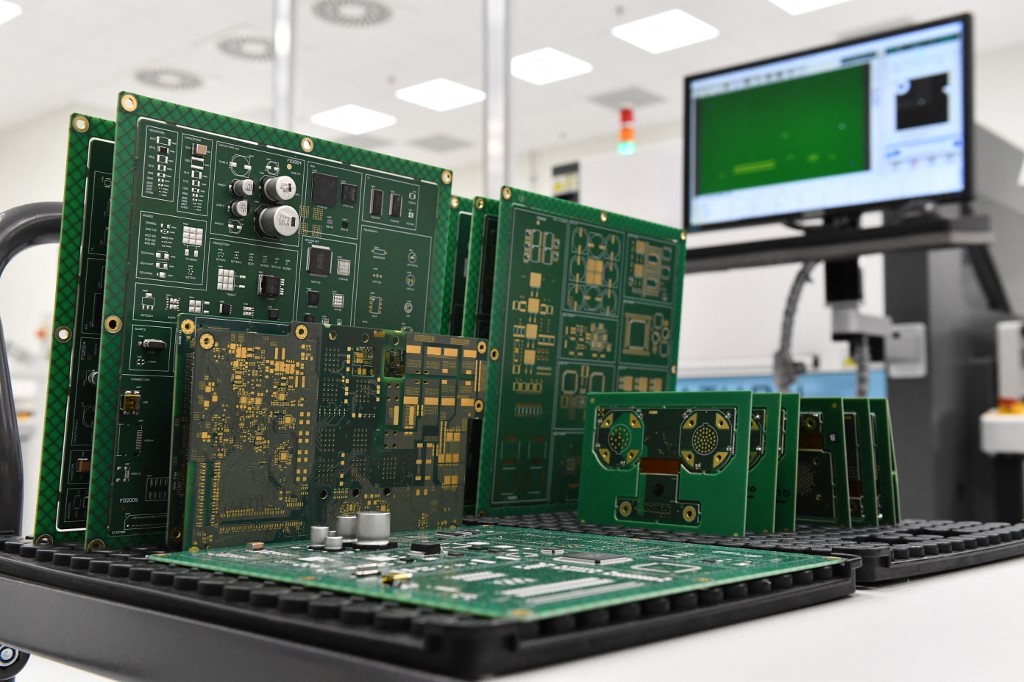
After a lengthy discussion[1], the United States Senate approved the so-called CHIP and Science Act, which authorizes an investment of $52 billion to revitalize the semiconductor industry in the country, along with an additional $200 billion for research in areas such as artificial intelligence, robotics, and quantum computing.
Given the numerous demands arising from the energy crisis, climate change, health, security, and international commitments, including a confrontation with Russia and China through “like-minded intermediaries” (Ukraine and Taiwan), why spend so much taxpayer money promoting a semiconductor industry that already exists and is economically healthy?
A semiconductor, in a simple technical explanation, is a material that allows control of the flow of current in an electronic circuit. It is a fundamental element for manufacturing solid-state transistors that enable the formation of binary bits: 0 (no current flow) or 1 (current flow). A group of bits forms words or bytes. Each word in this binary code can represent data or an instruction, which are related in a sequence marked by a clock, through programs and with a high integration of transistor circuits, ultimately achieving digital processing capability.
Scientific and technological development in recent decades has allowed the integration of millions of transistors based on semiconductors into very small physical components (millimeters), which can operate with increasingly faster sequencing clocks (millions of sequences per second) and with ever-lower energy consumption. These elements are generically referred to as chips, microchips, microprocessors, or simply semiconductors.
Currently, almost all our social, economic, industrial, financial, defense, and security activities depend on devices and digital information processing, communications, sensors, actuators, and computers. From our phones to satellites, from household appliances to weapon systems, all share the common need for integrated microprocessors. Moreover, it is anticipated that this trend will continue into the future with the evolution of so-called artificial intelligence, machine learning, robotics, and other enabling technologies that vitally depend on the capabilities and availability of these elements.
The more advanced and sophisticated the chips, the greater the possibility of gaining a comparative advantage over the capabilities of competitors or adversaries. Conversely, a disruption or slowdown in chip deliveries in the supply chain will cause damage to the economy and vulnerabilities in various areas, including defense.
DEPENDENCE AND RESILIENCE
The Covid-19 pandemic worldwide resulted, on one hand, in an increase in demand for digital devices and, on the other hand, a decrease in supplies, highlighting global dependence on this industry.
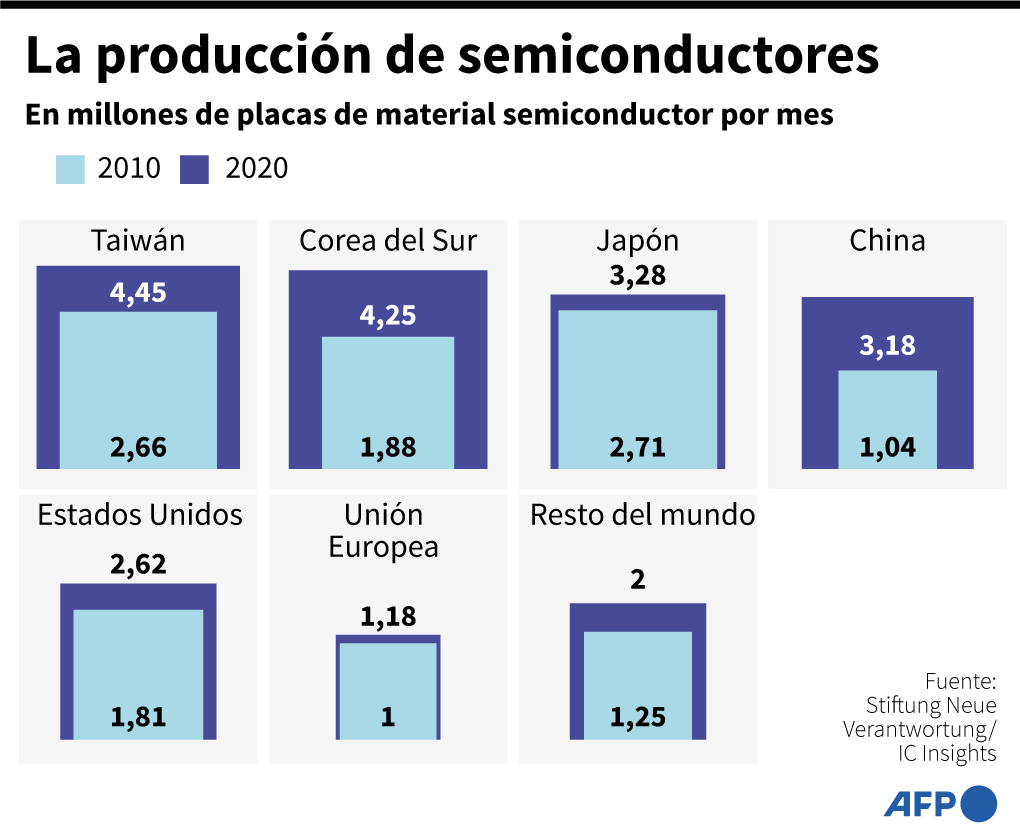
In recent years, while the United States maintains the largest market share in chip design, a significant portion of manufacturing has shifted to Asia[2], primarily Taiwan, China, South Korea, Malaysia, and Singapore. The case of Taiwan is of particular interest, as its companies Taiwan Semiconductor Company (TSMC) and United Microelectronics Corporation (UMC) account for over 40% of global production[3]. This percentage is even higher for advanced chips used in more demanding applications related to defense, artificial intelligence, or those that represent a competitive advantage such as 5G, smart vehicles, and supercomputers.
Here, the strategic implications of this industry begin to be understood, considering the strategic competition between China and the United States and the need for other powers to mitigate vulnerability to disruptions or interference in the supply chain. Another relevant factor is the geopolitical value of Taiwan in the global scenario and the effects that the dispute over sovereignty claimed by China may have, beyond territorial aspects or stability in the Asia-Pacific[4].
In this context, powers like China are heavily investing in technology and production capacity to increase the percentage of local supply to 70% by 2025. The United States has prohibited SMIC, the Chinese producer, from selling semiconductors to U.S. companies and pressured TSMC to stop selling advanced chips to the Chinese company Huawei[5], affecting the latter’s production of advanced phones, to which the CHIP and Science Act.
At both the country and corporate levels, there is a trend to promote the establishment of factories in their own territories. In the United States alone, new production plants have been announced by Samsung in Texas, TSMC in Arkansas, and Intel with two plants in Ohio, with an investment that could reach $100 billion in the long term. Initiatives are also being added in Europe and Japan.
Analogous to the past dependence on oil from the Middle East, the strategy of the United States is aimed at reducing its dependence on semiconductor supply from the Asia-Pacific, thereby reducing a vulnerability that has become evident, while maintaining actions that sustain a technological advantage over its strategic adversary, China.
THE OPPORTUNITY FOR CHILE
In the case of Chile, this reality deserves utmost attention, not only due to the geopolitical aspects and potential conflicts that may affect Chile’s interests but also regarding the approach to investment in security and defense, which in today’s world includes those that mitigate possible vulnerabilities and ensure a technological advantage and economic development in the information society with a strong dependence on digital technology. In the case of democracy in the United States, a broad consensus was achieved between the government and the opposition, which is uncommon.
In the case of Chile’s defense, the sector can play an important role and contribution in this area, both from the perspective of national development and the strategic stature of the country, which is already a nascent reality.
Indeed, following the guidelines of the “Defense Policy 2020” for the development of strategic capabilities, Chile is investing in technological development and innovation in areas such as satellite systems and geospatial information, design and construction of aircraft and vessels, modernization of land platforms, integration of advanced technologies and systems, Command and Control applications, and decision-making based on artificial intelligence, among many others.
In addition, a new approach to open innovation is being added to create solutions that can be scaled for dual civil and military use, utilizing a triple helix model that integrates industry, academia, and the State, this time through defense institutions.
In its armed institutions and academia, Chile possesses a highly skilled human capital motivated by innovation that, through state support, institutional leadership, and political direction of defense, can be articulated to achieve synergy and create not only economic value but also enhance the strategic stature of the country.
This is a challenge that goes beyond the political context and social polarization, and can serve as an example for other areas of national society, where a forward-looking perspective is required for the sustainable development of Chile as a sovereign nation integrated into a world immersed in the Fourth Industrial Revolution.
[1] Senator Bernie Sanders has opposed this Act, arguing that it makes no sense to subsidize large corporations and that it sets a bad precedent to accept lobbying from these companies, which have warned that if better incentives are not approved, they would establish factories abroad.
[2] Aranca (2022). Semiconductor Supply Chain Analysis. Available at: https://www.aranca.com/knowledge-library/special-reports/investment-research/semiconductor-supply-chain-analysis
[3] Counterpoints (2022). Global Semiconductor Foundry Market Share. Available at: https://www.counterpointresearch.com/global-semiconductor-foundry-market-share/
[4] Taiwan was the main topic of conversation between the leaders of China and the United States, Xi Jinping and Joe Biden, respectively, on July 28, due to the announced visit to Taiwan by House Speaker Nancy Pelosi, which Beijing deems a crossing of a red line and threatens with retaliation.
[5] Nikkei Asia (05/18/2020). TSMC halts new Huawei orders after US tightens restrictions. Available at: https://asia.nikkei.com/Spotlight/Huawei-crackdown/TSMC-halts-new-Huawei-orders-after-US-tightens-restrictions
Want to publish with us? Review our guidelines for external contributors.
View submission guidelines