Energy Security and Climate Change: An Opportunity for Chile
This article was translated automatically and may contain differences from the original. For reference, read the original.
- by Cristián de la Maza
- Guest Contributions
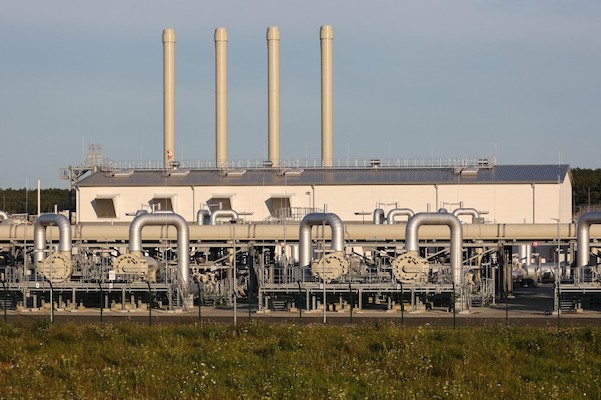
European countries are preparing for a scenario of energy supply deficits, primarily driven by the reduction of gas supplies from Russia, which accounts for about 40% of total shipments. This could lead to serious problems for the population, especially in the upcoming winter, not to mention the effects on the economy.
Currently, measures for rationing and energy consumption savings are already being observed, as well as efforts to diversify supply sources and modify the energy production matrix, including coal, oil, and liquefied natural gas (LNG). However, this complicates energy decarbonization processes and leads to increased costs and availability for industrial processes.
According to German authorities, the reduction and cutoff of gas supply through the Nord Stream 1 pipeline, citing maintenance issues, corresponds to a retaliatory maneuver for Germany’s support of Ukraine.[1]. Germany has adopted a policy for decades to eliminate coal and nuclear power plants, increasing its dependence on natural gas supplies from Russia, which had been warned since 2014 as a danger due to its potential use as a “large-scale political weapon.”[2].
In February of this year, a resolution from the European Commission on environmental taxonomy classified both nuclear energy and energy produced from natural gas as “green” energies, despite the carbon and methane emissions associated with the use of natural gas.[3]. The reason is practical; it is necessary to maintain “less polluting” fossil fuel energy, such as natural gas, compared to coal and oil, to facilitate a gradual transition to non-polluting energies.
Meanwhile, Turkey will begin operating a new coal-fired power plant, with an investment from China amounting to $2.17 billion, as part of the Belt and Road Initiative. This plant will generate the equivalent of the total energy needs of the capital Ankara, and government sources stated it was necessary to reduce dependence on natural gas supplied by Russia.[4]. However, the greenhouse gas emissions it will generate go against Turkey’s declared goal of achieving “net zero emissions” by 2053.
Turkey is not the only country maintaining plans to expand coal-based electricity generation capacity, as significant countries such as China, India, Vietnam, Bangladesh, and Indonesia are also in this situation.[5], which are likely facing circumstances that compel them to delay their energy matrix decarbonization processes.
Finally, last Sunday, after many months of discussion, the United States Congress passed a law that originated as an impetus for the fight against climate change.[6], but which only garnered sufficient support after providing concessions to the oil and gas industry. In the congressional discussions, the factors of energy security and independence—particularly considering the situations with Russia and China, along with the need to address rising fuel costs—allowed for modifications to initial positions and progress on this law, which commits a historic amount of $396 billion over the next 10 years.
A COMPLEX ENERGY TRANSITION
These are some recent news items that seem very contradictory to the declared objective and explicit commitment of all these countries to drastically reduce their carbon dioxide and other greenhouse gas emissions, the main causes of global warming that is producing unprecedented climate change in human history.
While the diagnosis and solution to the problem of global warming is widely shared by the global community and requires collective action, short-term decisions necessarily reflect the current interests and problems of each country. An economic and political crisis caused by high prices or lack of energy can today delay or compromise long-term goals and even provoke a backlash from the population.
The issue is complex, and it is necessary to develop the capacity and political will to achieve a balance between the commitment to combating climate change, garnering internal support, and maintaining energy security while mitigating the costs of measures that affect the population in the short term. A degree of flexibility in the methods and means to achieve these goals appears realistic in an uncertain, complex, and unstable world.
This situation highlights the importance of good planning and political leadership in the energy transition, vital for the survival of humanity in the medium term, but which, like any structural change, carries the potential to generate collateral damage, costs, and problems that must be identified and resolved by political authorities, in conjunction with industry and society.
TRANSITION TO CLEAN ENERGY: AN OPPORTUNITY FOR CHILE
Chile is not immune to this challenge that demands collective action to reverse global warming and effect the energy transition. Moreover, for the country, it also represents a significant opportunity to shift from a global economy based on energy generated from fossil fuels, of which Chile is a net importer and highly dependent, to a sustainable development based on non-polluting energies.
Our country has accumulated experience, qualified professionals, natural resources, and relative advantages over other countries, making it very relevant to have a political direction that plans and leads the energy transition as quickly as possible, mitigating and considering the multiple effects on employment, skills, transformation costs, and security during the process.
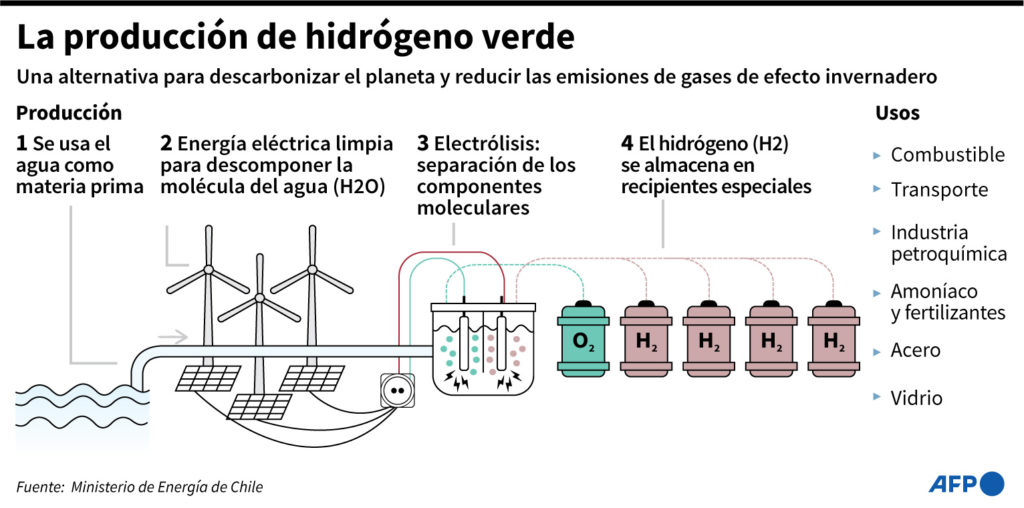
Chile has a potential for renewable energies with technological maturity, such as hydropower, solar, and onshore wind energy, along with potential comparative advantages in producing green hydrogen (see video). This must be complemented by research, development, and support for other energy sources, such as offshore wind, tidal, wave, or run-of-river hydroelectric plants, to name a few, while necessarily considering aspects such as continuity and security of supply in the face of demand or production variations, storage, distribution, and efficient consumption.Additionally, following global trends, it seems advisable to monitor the development of new generations of safer fission nuclear energy, through the small modular reactors under development and production in both Asia and the United States and Europe, as well as advancements in fusion nuclear energy. Although both technologies will not be available for operation for at least another decade, they could eventually provide a response to urgent clean energy needs to meet the minimum global decarbonization goals.Regardless of timelines, transition measures, or technologies used, it is essential to maintain the objective of achieving a secure and stable availability of clean energy at competitive prices. This not only helps reduce the emission of polluting gases in electricity generation but also produces a positive effect in other areas that will help improve the environmental situation.
In this way, industrial processes can be modified to reduce pollution and eliminate or minimize so-called “sacrifice zones.” Additionally, this energy would enable the economic viability of direct air capture technologies for carbon, as well as achieving greater profitability for projects aimed at capturing and obtaining water for human, agricultural, or industrial consumption in currently deficient areas or activities that harm the environment. It is also noteworthy that, with this type of energy, it is possible to improve the feasibility and profitability of producing other fuels, such as green hydrogen, which will be in high demand for applications such as transportation or industrial processes, where it is not feasible to operate connected to an electrical distribution network. A developed and advanced clean energy industry in Chile, in addition to providing a margin of maneuver in the international scenario by reducing energy dependence in an increasingly volatile world, could also become a potential source of export, both of energy and technology, management, and solutions, generating value for innovation and the capabilities of Chilean professionals.
Thus, as long as the energy transition process is embraced as a State Policy, with social support and technical backing, this global problem also represents a significant opportunity for Chile, both for its economic development and for the care and recovery of the environment that we will leave to future generations.
DOWNLOAD ESSAY
[1]
Statements by Germany’s Federal Minister for Economic Affairs and Climate Protection, Robert Habeck, on July 23, 2022. Available at: https://www.dw.com/en/germany-raises-energy-alarm-level/a-62228541
[2]
[3] In February 2022, the European Commission announced the adoption of a project that grants a sustainability label to energy investments, presented as a step towards carbon neutrality and including nuclear and gas generation. The regulation aims to promote strong investments in clean and renewable energy initiatives (DW.com, Germany, February 2, 2022. Available at: https://www.dw.com/en/eu-classifies-gas-and-nuclear-energy-as-sustainable-investments/a-60633782).
[4] Paradoxically, the plant will operate with Russian coal purchased at a discounted price due to the European embargo on fuel purchases from Russia, with an estimated annual amount of 3 million tons.
[5] Laura Pitel and Nimet Kıraç: “Turkey’s New Power Plant Exposes ‘Huge Contradictions’ of Net Zero Pledge,” published in
Financial Times , on July 27, 2022. Available at: https://www.ft.com/content/1aa8c98b-ff80-461b-bad6-b3232377f904
[6] It was ultimately named the “Inflation Prevention Act”because it also generates revenue to reduce the fiscal deficit, in addition to supporting public health, but most importantly, it represents the largest push to date in the fight against climate change, which will undoubtedly accelerate the development of clean energy and facilitate the energy transition. Available at https://www.congress.gov/bill/117th-congress/senate-bill/3495/text.