New Strategic Realities of the South Atlantic: Brazil's Commitment
This article was translated automatically and may contain differences from the original. For reference, read the original.
- by Juan Pablo Toro
- Analysis
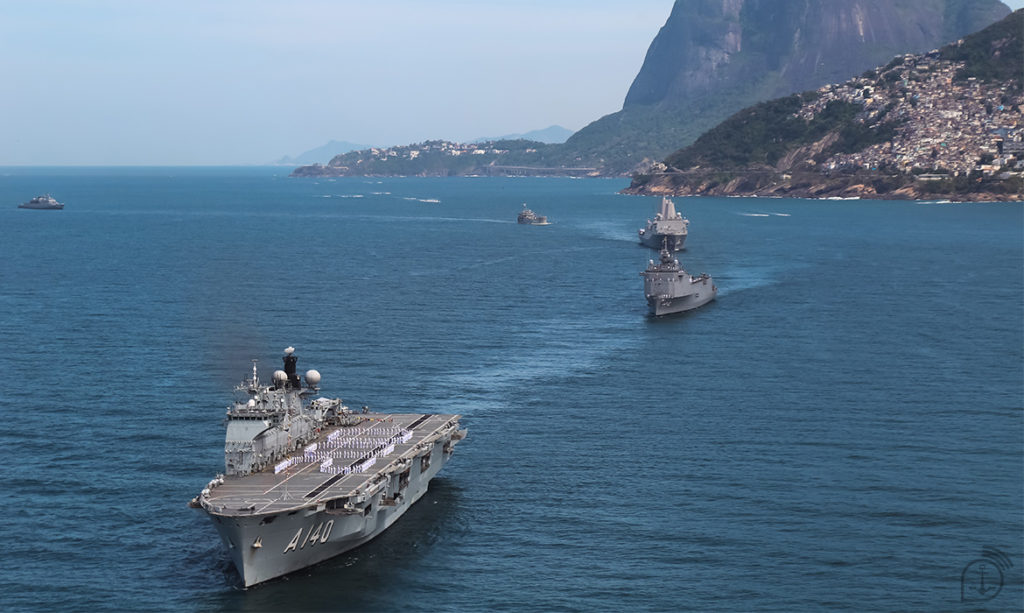
Among all maritime spaces, the South Atlantic is one of the most stable, as it seems to escape the strategic competition among great powers, unlike what occurs in parts of the Indo-Pacific, Arctic Ocean, Black Sea, Eastern Mediterranean, and Persian Gulf.
However, events in the aforementioned regions should lead us to conclude that maritime domains have become increasingly central to the stability of the international system as a whole, making it pertinent to review the current state of the South Atlantic and the new realities that are emerging there.
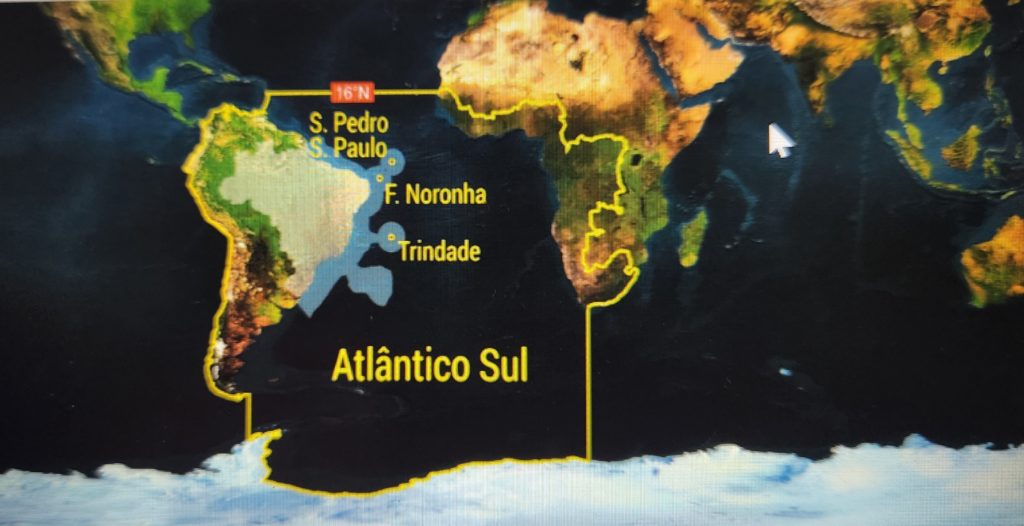
Framed between the equator, the western coast of Africa, the eastern coast of South America, and Antarctic waters, the strategic value of this space can be justified by several factors:
- The presence of interoceanic passages that connect the Atlantic with the Indian Ocean (Cape of Good Hope) and the Pacific (Strait of Magellan and Cape Horn). Although these routes are not heavily trafficked today, they can always serve as alternatives to any disruption in the Suez or Panama canals.
- The discovery of large hydrocarbon deposits in Brazilian waters, known as the pre-salt, as well as the presence of enormous banks of fish and squid that attract fishing fleets from distant countries, demonstrate the existence of significant resources within, which will gain more importance in future scarcity situations.
- There is also the Antarctic projection granted by continental and insular territories to countries with a presence in the South Atlantic, such as Argentina, Brazil, the United Kingdom, and South Africa.
- Finally, in terms of threats, it is true that the South Atlantic presents itself as a less militarized scenario than others. Illegal fishing, piracy (especially in the Gulf of Guinea), and drug trafficking are recurring challenges that currently affect order at sea[1]; although there are open disputes in this ocean, such as the one between Argentina and the United Kingdom, which led to a war 40 years ago. Buenos Aires’ claim over a group of islands (Falkland/Malvinas, South Georgia, and South Sandwich Islands) remains intact, as does London’s determination not to concede on the matter. Furthermore, British dominion extends to possessions such as Saint Helena, Tristan da Cunha, and Ascension, which were of proven importance in the 1982 conflict.
It is also noted that some powers are exploring the establishment of bases, as is the case with China in Equatorial Guinea[2], a country that would provide an entry point to interior regions of Africa and a platform to combat piracy.
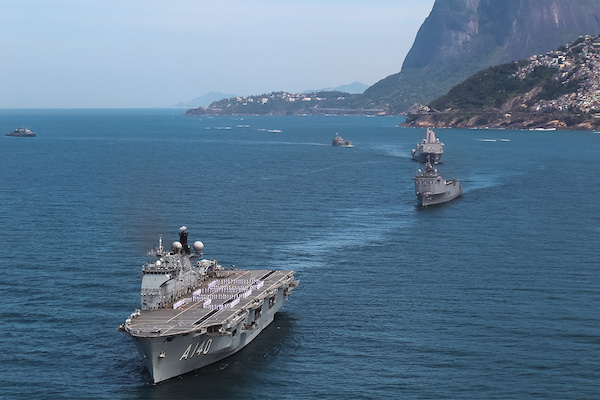
On the South American flank, it is noteworthy that Brazil is in the process of renewing its naval platforms, with the ambitious goal of constructing a nuclear-powered submarine and four conventional Scorpène-class submarines (the first commissioned on September 1), and that Argentina has publicly expressed its interest in acquiring up to four submarines[3].
All of the above leads us to approach Brazil’s perspective on the evolution of the South Atlantic; in particular, alongside the projects of its navy outlined in the Plan Estratégico da Marinha 2040[4], which has just celebrated its 200th anniversary.
Sovereignty and Resources
The influential diplomat George F. Kennan coined the term “Monster-Countries” to describe nations such as the United States, Russia (then the Soviet Union), China, India, and Brazil. Countries that have continental size with large populations and are essentially a problem for themselves when it comes to governance. It should be added that all have large economies to complete the description.
In the case of Brazil, the South American giant possesses a vast continental territory of 8.5 million square kilometers, which in turn has a long coastline of over 7,300 kilometers very exposed to the Atlantic, from where the country was discovered by the Portuguese. Some well-protected islands along the coast and bays outline the coastal line.
In its maritime dimension, 95% of its foreign trade is conducted via this route; 60% of a total population of 210 million lives within 15 kilometers of the coast, and it has an exclusive economic zone (EEZ) of 3.5 million square kilometers.
These realities are crucial for shaping a series of official documents that gather the country’s strategic vision[5], identifying its national interests and the possible threats that may affect them, where “Amazonia Azul” takes a prominent place. It is an immense area that extends directly from the continent to the east, which includes the current EEZ and could potentially expand to 5.7 million square kilometers if claims over the extended continental shelf are considered. It consists of an area of vital importance due to the hydrocarbons contained therein, which justifies the protection of resources as one of the missions imposed on the armed forces.
For the Marinha do Brasil, a force historically focused on coastal and later hemispheric defense, the need to assert sovereignty and protect “Amazonia Azul” has generated a tremendous responsibility. Especially since the country is not a naval power, neither in terms of units nor firepower. Therefore, it has had to initiate a significant effort to equip itself with deterrent capabilities at sea that align with its new strategic demands. As determined early on in the 2008 Defense Strategy, this deterrence would be achieved through the endogenous construction of diesel-electric and nuclear submarines, a project that includes the establishment of a series of facilities and logistics to provide permanent support.
Named PROSUB, the project is currently underway, with the incorporation of the first of four Scorpène submarines, built by the consortium Águas Azuis, which includes the French manufacturer Naval Group. The other three units are expected to be commissioned successively in 2023, 2024, and 2025, according to the official schedule. The nuclear-powered submarine, whose development is being carried out simultaneously, is expected to be launched in 2029. However, the complexity of this project is greater, as countries that build such units must secure the fuel to power them, as it is not sold on the market. In this regard, Brazil has the advantage of possessing the sixth-largest uranium reserve in the world.
The total cost of this project is 51 billion reais (approximately US$9.7 billion), which has led to comparisons with the construction of the Itaipu Dam as an example of a major public work. Although there have been delays since the agreement between Brazil and France was signed in 2008, it should be noted that the signed contracts include submarines, torpedoes, countermeasures, support infrastructure, interfaces, and technology transfer.
Statistics compiled by the Navy indicate that there are more than 700 companies involved, while 24,000 direct jobs and 40,000 indirect jobs are being created.
Beyond the technological feat involved in constructing submarines, especially a nuclear-powered one—capability that only the United States, Russia, China, France, the United Kingdom, and India possess—the purpose of this new force is to provide a renewed deterrent leap and constitute a true “Sea Tripwire” for potential aggressors. The value of nuclear-powered attack submarines was precisely demonstrated when the “HMS Conqueror” of the United Kingdom sank the cruiser “ARA Belgrano” 40 years ago in South Atlantic waters[6].
The geostrategic scenario for Brazil tends to be disadvantageous, as its vastness and absence of natural obstacles allow an opponent to approach from multiple directions to attack various targets simultaneously. Although the deterrent capacity that will be achieved may be limited, it is certain that units like the future nuclear-powered submarine “Álvaro Alberto” should allow for the denial of maritime use in coastal and oceanic areas.
However, since the protection of maritime communication lines and the surveillance of coastal facilities are carried out more by surface units than by submarines, the Marinha do Brasil has also found it necessary to begin replacing its ships, as they have an average lifespan of 38 years.
As the PROSUB program progresses, the combat fleet has experienced a continuous contraction, currently represented by four Niterói-class frigates, one or two Type 22 frigates, and one corvette. It is estimated that the fleet could consist of only four or five units in the near future[7].
To address this deficit, among the multiple projects being developed by the navy is PROSUPER, which aims to construct four Tamandaré-class light frigates, based on the Meko A-100 model from the German manufacturer Thyssen-Group, measuring 107.2 meters in length, 15.95 meters in beam, and 3,455 tons in displacement. Although its maximum speed is only 26 knots, it is expected to compensate for this situation with weapon range and an operational radius of 5,500 nautical miles.
The cost of the project amounts to US$1.7 billion[8], with construction anticipated between 2025 and 2028. The jobs generated would be around 2,000 direct and 6,000 indirect. The Navy estimates that the local components of the first ship will be 32%, rising to 41% in the second. One of the criteria that prevailed in the selection of the model was the maintenance cost during its lifespan, rather than the value of the unit itself, in addition to technology transfer.
Considerations
The Brazilian state demonstrates the capacity to carry out strategic projects that transcend the contingencies of government changes and economic fluctuations, which is noteworthy. Although the nuclear-powered submarine itself is a dream of forty years or more, material steps are being taken for its construction, and the “SS Riachuelo,” the first domestically manufactured Scorpène, is already in operation.
It is also interesting to note the realistic perspective taken on international politics, as it is assumed that the protection of national interests is of a permanent nature. In this sense, “Amazonia Azul” appears as a very guiding reference; just as Antarctica was for the reconstruction of the Comandante Ferraz base and the decision to manufacture a new polar vessel.
Undoubtedly, the South Atlantic enjoys greater stability compared to other regions, but two recently published books in Brazil and Argentina do not assume that this situation will remain unchanged over time:
“Several states with interests in this ocean have powerful navies, and although none of them are a potential enemy of Brazil, the emergence of crises is possible even among friendly states”[9].
“Regional instability in the South Atlantic continues in a restricted mode, although it should be emphasized that there is potential for a future transformation into critical instability in three specific cases: the intensification of Sino-American and/or Russo-American tensions; the escalation of three unconventional issues, such as fishing, resources, and piracy; and finally, the de facto termination of the Antarctic treaty” [10] .All of the above should awaken interest in this area among those studying today’s and tomorrow’s maritime domains, even if they are focused on the Pacific. The last naval air war was fought in South Atlantic waters and remains a subject of study to this day. Moreover, from a geopolitical perspective, the ocean is one[11]
[1]
Till G. (2007). Maritime Power: A Guide for the 21st Century. Buenos Aires: Naval Publications Institute, p. 385.
Infobae (28/08/2022). Submarines, planes, and a military base in the south: the government’s plan to re-equip the Armed Forces
, Andrés Kipphan. Available at: https://www.infobae.com/politica/2022/08/28/submarinos-aviones-y-una-base-militar-en-el-sur-el-plan-del-gobierno-para-reequipar-a-las-fuerzas-armadas/ [4] Plano Estratégico da Marinha 2040.Available at: https://www.marinha.mil.br/sites/all/modules/pub_pem_2040/book.html
[5] Política Nacional de Defesa y Estratégia Nacional de Defesa (2020). Available at: https://www.gov.br/defesa/pt-br/arquivos/estado_e_defesa/pnd_end_congresso_.pdf [6]
Freedman. L. (2005). The Official History of the Falkland Campaign
. New York: Routledge P.284. [7] Waters, C. (2019).World Naval Review
2020. Yorkshire: Seaforth Publishing, p.25. [8] Defense News (04/05/2022). Delay hits Brazil’s $1.7 billion frigate program, by José Higuera. Available at: https://www.defensenews.com/naval/2022/05/04/delay-hits-brazils-17-billion-frigate-program/ [9]
Abreu de Moras, J. A. (2022). Power, deterrence and the role of the Brazilian nuclear-propeller submarine project
, in The Influence of Sea Power upon Maritime Studies , Alves de Almeida, Fernandes da Silva Ribeiro, and De Sousa Moreira. Rio de Janeiro: Editora SDM, p.301.[10] Gonzalez Levaggi, A. (2022).From the Indo-Pacific to the South Atlantic: Maritime Strategies of Great Powers in the 21st Century
. Buenos Aires: Naval Publications Institute, p.209. [11]Stavridis, J. (2017).Sea Power: The History and Geopolitics of the World’s Oceans