The State of Chile and Critical Infrastructure
This article was translated automatically and may contain differences from the original. For reference, read the original.
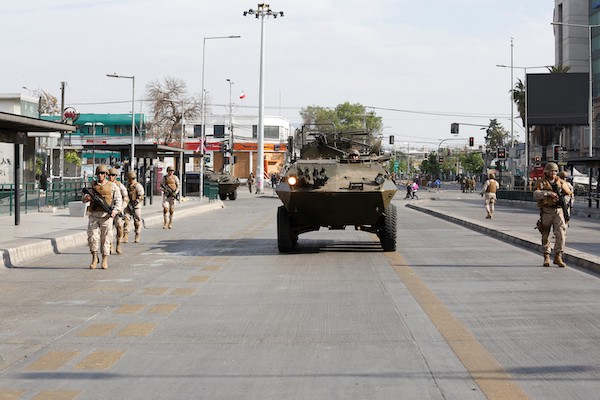
Recently, the Congress has been discussing a constitutional reform project aimed at regulating what is referred to as “national critical infrastructure.”[1] and border protection. In AthenaLab’s view, the ad hoc solutions being sought do not adequately address the underlying security issues, and therefore sustainable results cannot be expected. Below, we present some ideas and considerations on this matter.
THE LEGISLATIVE PROPOSAL
What is known about the legislative proposal establishes, first and foremost, the authority of the President of the Republic to deploy the Armed Forces to “take charge” of the so-called “critical infrastructure” in the event of a “serious or imminent danger to it.” Subsequently, it aims to describe what would be understood as such, defining that a law will regulate the obligations to which public agencies and private entities responsible for said infrastructure will be subject. It further stipulates that an officer from the Defense branches will command the Armed Forces and Public Order and Security forces assigned for protection, who will also assume “responsibility for maintaining public order in the designated areas, according to the instructions established by the Ministry of the Interior and Public Security.”
On the other hand, it establishes that the mission of the forces “will not imply the suspension, restriction, or limitation of the rights and guarantees enshrined” in the Constitution or international human rights treaties ratified by Chile, and they must perform their functions within the framework of the “powers for maintaining public order,” in accordance with the legal regulations issued. Within this context, it specifies that the forces must act “exclusively within the territorial limits for the protection of critical infrastructure that are set, subject to the procedures established in the current legality and the rules of the use of force,” ensuring proportional use of the same.
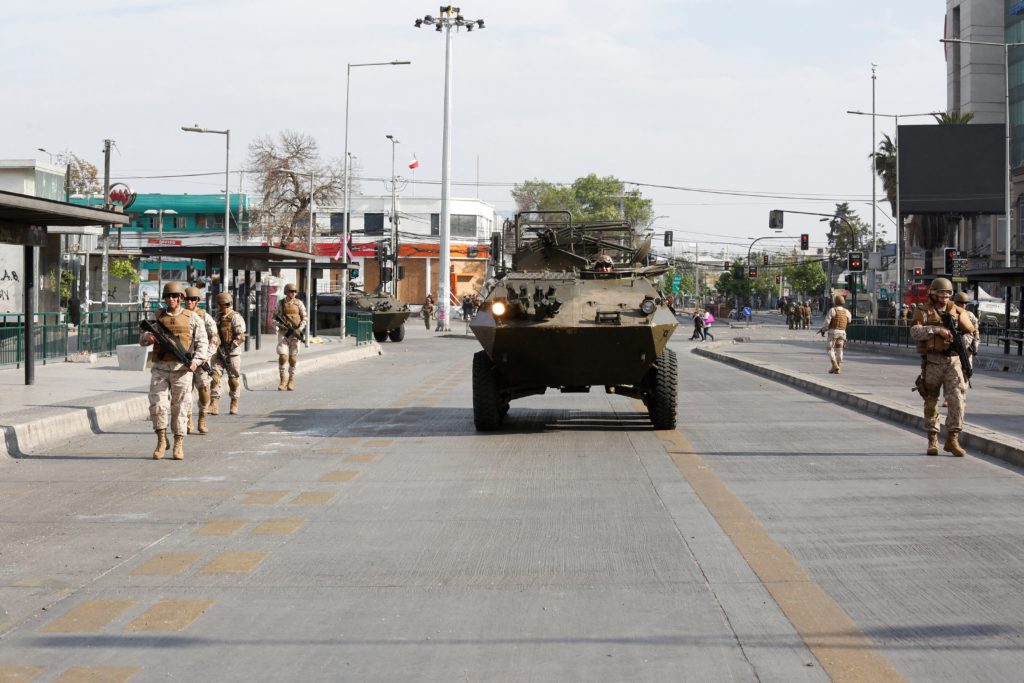
The same project establishes a maximum validity period of 90 days, extendable with the agreement of Congress, requiring the President of the Republic to inform Parliament of the measures adopted at the end of each period. Similarly, it grants the President of the Republic the authority, through decrees with the force of law, to issue the necessary regulations for the Armed Forces to assume the protection of border areas, limiting their actions to “powers for identity control and registration” in those sectors, as well as “detention solely for the purpose of placing individuals at the disposal of the police” and collaboration with the “oversight authority,” in accordance with the provisions of Law 21.325 on migration control.
ASPECTS TO CONSIDER
While the purpose of this initiative is understood, in terms of addressing issues that are pressing for citizens, it is believed that it will not constitute the effective tool that is expected, as it does not solve the real and underlying problem. As always, the first obstacle is to identify and adequately define the problem to be solved, which, in this case, does not occur. From there, issues arise that will complicate the use of the Armed Forces in the manner intended and, ultimately, will not be sufficiently effective.
First, if the Executive and Legislative branches assume that the central problem is a matter of public security, then the State must employ the tools it has been provided for such purposes and not resort to other organizations that have been created for different purposes. It is true that the State has a set of elements that constitute its instruments of power and has the obligation to use them to achieve its objectives and interests, but that does not mean it should distort the function of fundamental institutions, such as the Armed Forces, given the risks that could entail. The problem is that, for various reasons, the institutions that are obligated to enforce the rule of law —police, Public Ministry, courts, executive authorities— are not being as effective as expected. Therefore, instead of strengthening, overseeing, and demanding compliance from them, recourse is made to others that, over the years, have become a sort of “factotum“, believing that they will solve all problems, when in reality only the symptoms of an issue whose nature requires a different solution are being addressed.
In summary, the use of the Armed Forces for tasks outside their nature should be the exception, regulated and controlled by Congress, and should not become something habitual or normal, as has happened in the country and in other Latin American regions.
Second, the project conflates two distinct problems in origin and nature. The protection of critical infrastructure is not the same as border protection. It seems that Congress is taking advantage of the opportunity presented by the issue to attempt to “solve” two matters in one move. This is a mistake. If the intention is to protect certain relevant facilities in the face of serious situations, we are talking about an exception and not a norm, which is contemplated in the legal regulations through Constitutional States of Exception; something that works, even with a government that was resistant to it.
On the other hand, the lack of control at the northern border is something that occurs daily and is not sporadic, thus requiring a permanent solution, for which solutions must be applied that do not demand exceptional measures. While there may be critical infrastructure located in border areas, border control is different —in scope, means, techniques, and persistence— from the protection of strategic centers.
On this last point, it is worth pausing for a moment. The security problem arising from the State’s inability to control the border cannot be denied, whether due to its use by organized criminal gangs or its permeability to illegal migration. Along the 850 kilometers of the border between Chile and Bolivia, there are around one hundred usable crossings, of which less than 10% are controlled. This is not an exceptional situation; it is a permanent one, and therefore, the solution must be permanent. In this sense, just as the Chilean Navy has special competencies for controlling maritime boundaries, another institution should assume control of these spaces. The solution would involve creating a new organization for this purpose, something already discussed in Parliament, or utilizing an existing one. It has been demonstrated in practice that, for various reasons, the police are not in a position to do so, so an alternative could be to assign the Chilean Army a permanent control role. This would mean that, with the corresponding legal modifications, the legal coverage regarding the use of force and the allocation of appropriate resources would allow that institution to carry out —something it has already done previously and currently— preventive and effective actions so that the State can impose itself. In this case, periodic and permanent control activities would be carried out to detect and stop activities undesirable to Chile. It may not be ideal, but it is realistic. Overall, there should be a clear responsibility to coordinate and integrate all governmental means acting at the border within the same situational framework, to achieve intelligent border control, with clear responsibilities for who executes it.
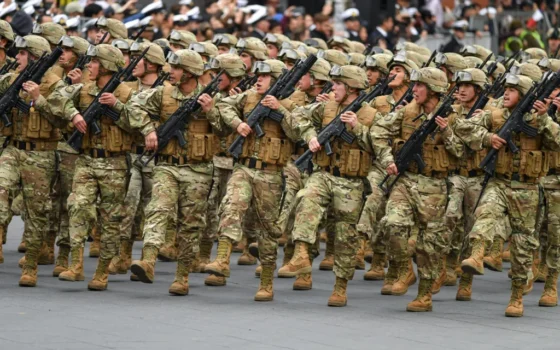
Third, continuing to expand the tasks of the Armed Forces will have negative effects on these organizations, which will impact the State as a whole. The Armed Forces have a nature that is often misunderstood. When a completely different use of their raison d’être is mandated, but that involves the use of force, something is not functioning properly. The way the text is drafted in the legislative process demonstrates a lack of understanding of the essence, organization, doctrine, and capabilities of the Armed Forces. The importance of the legitimate use of state force is relevant and final. After the Armed Forces, there is no remnant of legitimate authority to turn to. They cannot be seen as simple labor or their deployment as fixed-point sentinels. When the Armed Forces are employed in a mission area that involves the use of force, they are the “last resort” of the State.
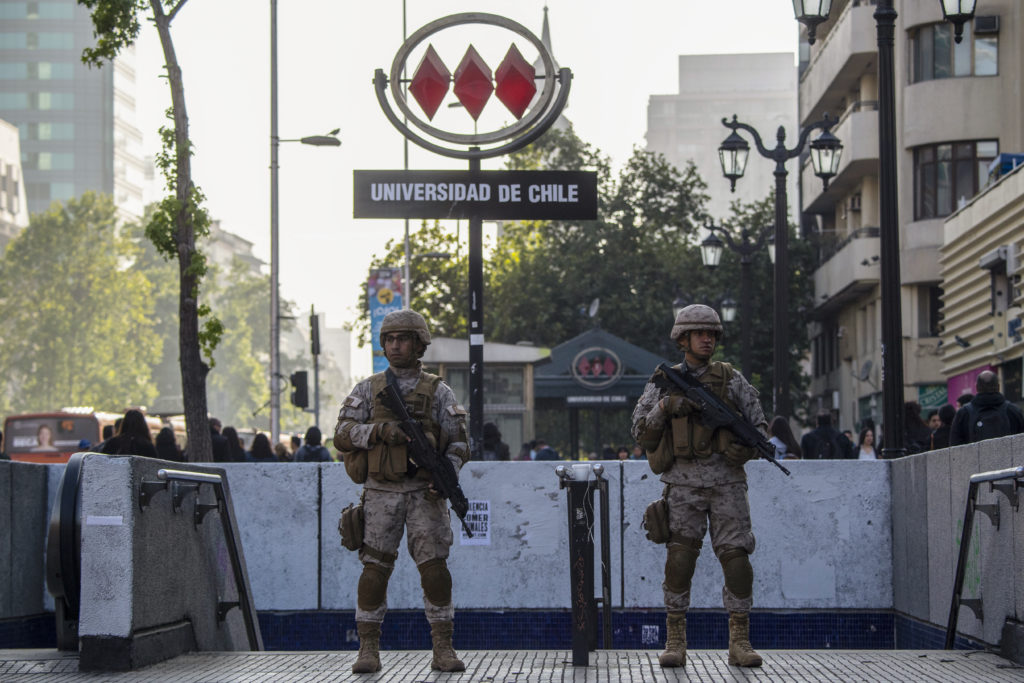
The employment of the Armed Forces in tasks that, while contemplated in their mission areas, have the character of being very specialized and exceptional, and that have now become habitual and for long periods of time. Another mistake. Far beyond any operational, human, or technical consideration, this constitutional reform, as currently drafted, implies that the use of the Armed Forces ceases to be a “constitutional exception.” Indeed, the deliberate breadth of the wording of the norm allows the executive authority to deploy the Armed Forces at its discretion, without constitutional checks.
Fourth, the proposal does not address something that has already become a central issue for the Armed Forces: the jurisdictional competence of the courts. Every time the State itself sends the Armed Forces to assist in public order tasks, it must be assumed that there could be a use of force —if not, why employ them?—. That is to say, we send soldiers, sailors, and aviators to perform a task that no one else can execute, they do so under exceptional conditions, in a special context, to safeguard the public good of “security,” but the same State that has sent them subjects them to the action of ordinary courts and laws. A total absurdity. Given the conditions and circumstances in which military force is employed, its exceptional action must be subject to courts and exceptional regulations, which exist and are contemplated in Chilean law; in this case, the Military Justice Code. Obviously, this must apply exclusively to military personnel in situations related to their actions as described and in no case to other crimes or involve civilians.
Fifth, political leaders who decide on the employment of the Armed Forces must take into account the essential characteristics of these institutions, which are as follows:
- The Armed Forces are not police forces nor an extension of them. Their employment for internal security tasks must always be “exceptional,” as a last resort, limited in time, and with the appropriate legal framework.
- If more police are needed, it seems more effective to increase or redistribute trained and equipped police officers, even through the transfer of tasks to other organizations and institutions, rather than increasing the number with military personnel.
- If this is not possible and there is a need to employ the Armed Forces for public order tasks, it must be under a “Constitutional State of Exception” that requires periodic accountability from the Executive to Congress to authorize its renewal.
- In these exceptional cases, there must be legal regulations that support a different way of operating and provide legal certainty to those who might use their weapons against civilians who do not have the status of combatants in an armed conflict, in addition to equipping and training the Armed Forces to fulfill this mission.
- These situations must be the exception and not the norm, as they assume the political responsibility of applying greater legitimate force of the State.
- The employment of the Armed Forces in no case replaces the political will to uphold the rule of law. This latter concept is the key tool to achieve definitive results and not end up managing security, with extremely high costs for citizens themselves.
Finally, if there were adequate laws, if the police were efficient in making arrests, if the Public Ministry did its job of prosecution, if the courts applied the law in favor of victims, and if, ultimately, the penitentiary centers secured criminals, then we should not worry, as the rule of law would prevail. Unfortunately, this chain has several links that are not fulfilling their functions. Instead of addressing the problem and enforcing the political and administrative responsibilities of this chain, in this case, other actors (Armed Forces) are being involved, who will be of little help. It is insisted that the solution to emerging security problems is the creation of new laws; additionally, improving police capabilities, as well as their procedures and standards; strengthening the work of prosecutors so that they focus on effectively prosecuting crime, while ensuring that the courts do not get lost in interpretations that benefit criminals, weaken the rule of law, and threaten the population. For this, political leadership is needed, and thus demanding accountability and results, which in today’s Chile —and in recent years— has not been carried out with the required will.
FINAL CONSIDERATIONS
- The project under discussion, while aiming to address a real problem and one of concern for Chilean society, avoids the fundamental discussion, which is the loss of authority and enforcement of the rule of law throughout the national territory, stemming from institutional weakening and misguided political leadership practices.
- The initiative is imprecise and will be inefficient. It is open to discretion and lack of control, and worst of all, it will not solve the problem, generating other difficulties that are hard to predict.
- The project mixes issues that are distinct in nature and complexity, such as critical infrastructure and border protection and safeguarding. Perhaps out of a sense of urgency, it is believed that the proposed solution will ultimately weaken both strategies.
- The public security problem, more than new tasks for the Armed Forces, requires that the various relevant political actors in the administration and control of national power become aware and take real responsibility and initiative in strengthening and enforcing the rule of law. In this sense, the cross-party, unequivocal, permanent, and unconditional support for the work carried out by the police, prosecutors, and courts, even if it entails political costs, is the beginning of the path for the State and its institutions —which already exist but are questioned and weakened— to take control of public security.
- The political responsibility for the tasks assigned to the Armed Forces requires that the chains of command be clear and unequivocal. These are relationships of power and authority that require specialized responses. There can be no doubt regarding the role of the Ministry of the Interior and its undersecretaries, the Ministry of Defense along with its undersecretaries, and the Joint Chiefs of Staff. (It is worth recalling the impasse of Undersecretary of the Interior, Manuel Monsalve, demanding the presence of Rear Admiral Juan Pablo Zúñiga a few months ago).
- If the initiative continues its process, some legal and operational safeguards will need to be taken that should be resolved before it is implemented:
- If the Armed Forces are to be required to fulfill these tasks, they must be provided with the necessary budget and time to develop doctrine, prepare training, and acquire the necessary equipment. Likewise, in the model for force development, it must be assumed that, with the same number of troops, there will be tasks that will no longer be performed, which will impact national preparedness and strategic projection.
- The specific legislation addressing this issue should stipulate that for those soldiers, sailors, and aviators who, fulfilling a constitutional task, are assigned by the supreme government, in accordance with the legal provisions established by the Congress of the Republic, they should fall under the jurisdiction of military courts. In exceptional situations, it is not possible for them to be judged under normal legislation and procedures.
- It is expected that the proposal will include some additional control by other branches of government and not leave the use of such relevant tools for national life to presidential discretion, whose work is aimed at fulfilling other ends and objectives.
- The State must address exceptional problems with original measures, and everyday problems with normal and habitual tools. The challenge lies in making these latter tools function adequately, as political problems are solved with political measures and those of force, with measures of force, supported by the political framework. All indications are that the problems being addressed, while related to security, are more political in nature and rest on a lack of will and courage to confront them, assuming the costs and risks that this entails. This only evidences political fragility and calls into question the solidity of Chilean democracy.
- A separate issue is the need for a national intelligence system capable of timely identifying risks and threats, which supports the work of a national security architecture capable of providing tools to the political leadership of the State to effectively face these challenges with greater chances of success. The absence of this function is deemed of utmost importance. Without adequate quality information, efforts will be even more difficult to coordinate and succeed.
- Finally, a central aspect that must be kept in mind when defining the fate of this initiative is that the Armed Forces constitute the last resort of force reserved by the State, so if this fails or is poorly defined, we will be exposed to the defenselessness of national interests, the protection of sovereignty, and the safeguarding of the Chilean nation. All this, knowing that there are currently means to carry out all the tasks envisioned through professional Public Order and Security Forces, adequately prepared, equipped, and, above all, backed by their constitutional political authorities. This does not mean that there cannot be coordination between the Public Order and Security Forces and the Armed Forces or, in other words, that political authority should stop utilizing all available instruments of power to address a security problem, but it must do so with clarity regarding the nature of the problem and the emphasis on the most appropriate instruments, not using the easiest or most available ones. This is the essence of a good security strategy.
[1] This issue has already been addressed by this think tank in the document “Role of the Armed Forces in the Protection of Critical Infrastructure in Emergencies, Natural Disasters, or Constitutional States of Exception,” available at: http://www.athenalab.org/wp-content/uploads/2020/03/IC-John-Griffiths-VFF-1.pdf