The Crossroads of Venezuela: Maduro Has Many Reasons to Stay in Power, None to Leave
This article was translated automatically and may contain differences from the original. For reference, read the original.
- por Juan Pablo Toro
- Análisis
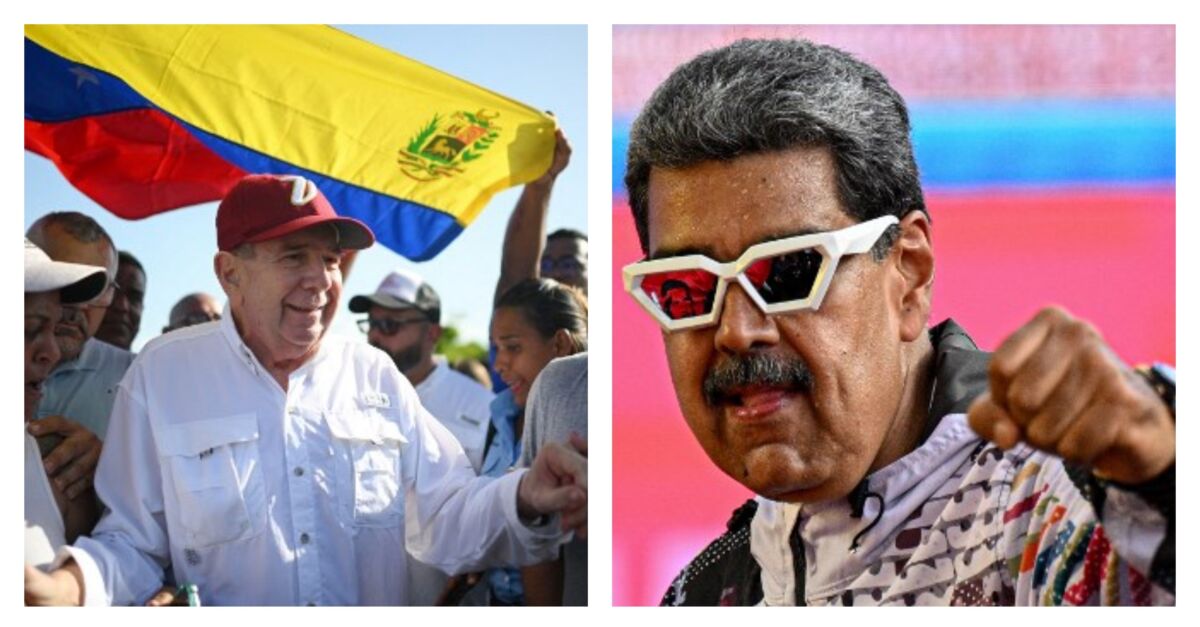
As Chavismo marks 25 years in power, it is hard to imagine what reasons President Nicolás Maduro and his inner circle would have to stop governing Venezuela if he were to be defeated in an electoral process that has raised all possible barriers to opposition, including the disqualification of the original candidate María Corina Machado, media blockades, and arbitrary detentions.
Although the streets and polls seem to predict a victory for Edmundo González next Sunday, it should not be forgotten that over this quarter-century, a familiar script has been implemented each time elections approach: manipulated campaigns; high expectations for change; expected outcomes; massive protests; heavy repression; exodus from the country; and consolidation of the regime for another term.
So, why should we expect a sudden democratic awakening from Maduro now, allowing for a political transition of uncertain fate for him, especially when the international environment, from where pressure to accept an adverse result could come, seems to favor him more than ever?
Amid the tribulations of his own campaign, it is unlikely that the U.S. government has the will to engage in a crisis or exert more pressure on Venezuela than it has already attempted without success. With Gustavo Petro in Colombia and Lula da Silva in Brazil, the flanks of the country have probably never been more secure for the so-called Bolivarian Revolution. The European Union was preemptively sidelined from the electoral verification process. And there remain China, Russia, and Iran, who have been significant facilitators of the regime’s continuity following Hugo Chávez’s death and the economic collapse that ensued. Even the price of oil has stabilized above $80 per barrel, much to the delight of those in the Miraflores Palace.
If the election results in a defeat, Maduro and the other ruling factions will still have many tools at their disposal to prevent or complicate the transfer of power. Unlike transitions in South America and Eastern Europe, where top authorities faced serious human rights violations, in this case, there are also criminal behaviors that would hardly fall under the political logic of an amnesty.
Since 2020, the U.S. Department of Justice has offered $15 million for the capture of the president and $10 million for the rest of the Chavista leadership, including the long-serving Defense Minister, Vladimiro Padrino, and the ‘acting agitator,’ Diosdado Cabello. Maduro’s Bolivarian leaders are accused of ‘having participated in a criminal association involving an extremely violent terrorist organization, the Revolutionary Armed Forces of Colombia (FARC), in an effort to flood the United States with cocaine.’
While a direct accusation against a sitting head of state is quite unusual in international politics—this occurred during the previous administration of Donald Trump—being indicted for charges more related to organized crime than to war or internal repression is even stranger.
Facing that judicial landscape outside of power is nearly impossible. Just last June, the former president of Honduras, Juan Orlando Hernández, was sentenced to 45 years in prison by a New York court for various drug trafficking and weapons-related offenses after being extradited. In other words, there are plenty of examples, and Maduro shares traits with both Fidel Castro and Manuel Antonio Noriega, the Cuban and Panamanian dictators, respectively.
Therefore, the scenarios that open up in Venezuela after Sunday’s elections are much more complex than simply victory or defeat. In fact, the current president warned of a possible bloodbath or civil war if he loses the contest against González. In this context, the military forces—completely politicized and the cornerstone of the regime for a quarter of a century—undoubtedly have the final word.
In order to remain in the Miraflores Palace, Maduro could claim a new plot to harm him, alleging that this time it involved stealing his victory, which would be quite implausible given that the government controls the electoral power. There is also the possibility of igniting a military crisis with neighboring Guyana—over which Venezuela claims two-thirds of the territory—which could create some exceptional situation justifying his continued stay in office. This last scenario resembles a ‘forward escape,’ akin to the Argentine dictatorship in 1982.
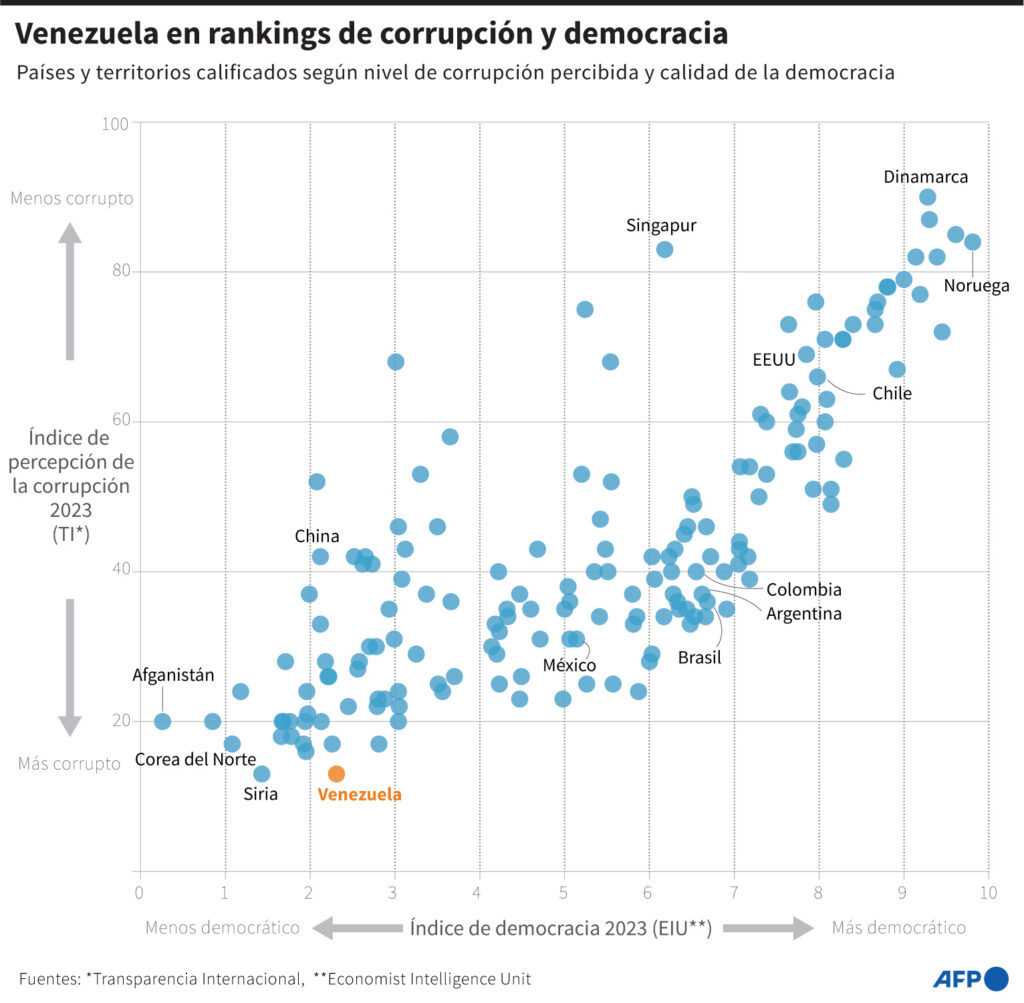
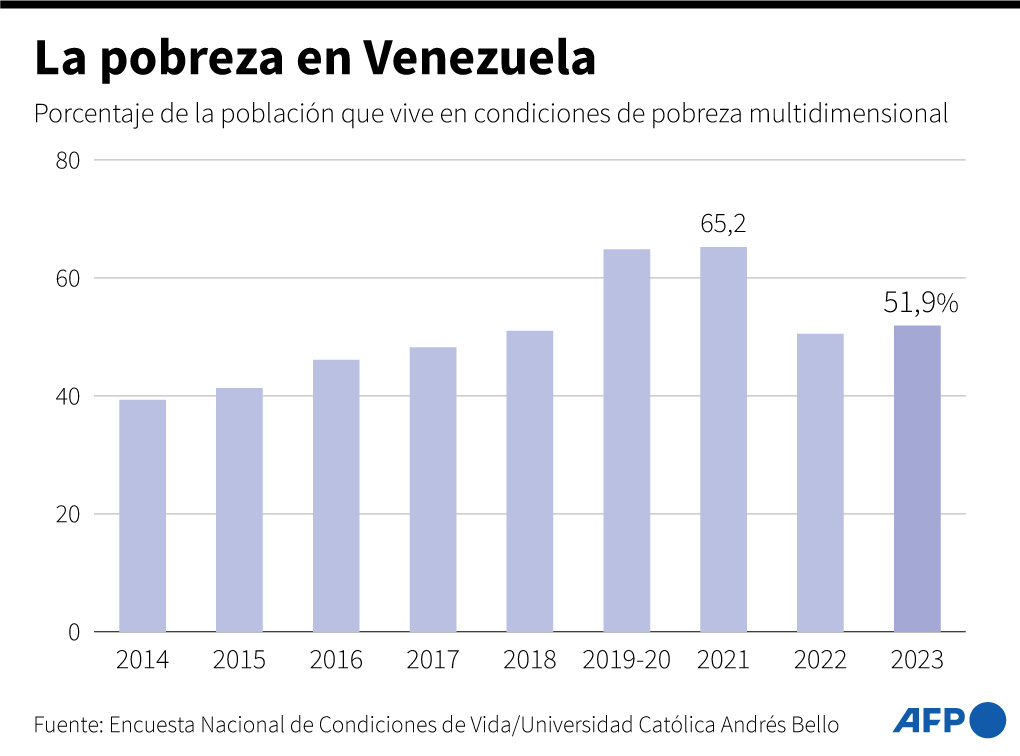
However, if the president decides not to win at all costs, candidate González would inherit a ruined, deeply corrupt nation, a population expeller, plagued by irregular groups (militias, ‘collectives,’ and binational guerrillas), and aligned with authoritarian regimes. Furthermore, he would assume power with the backing of a highly diverse coalition of parties and forces, which only share a common desire to end Chavismo but differ on the economic project needed for the country to recover. Statists and free-market proponents coexist under the same banner, for now.
In Democratic Transitions: Lessons from Political Leaders (2016), Sergio Bitar and Abraham Lowenthal compiled a series of useful lessons for successfully advancing from dictatorship to democracy, such as: reconciling demands for justice with conditions for governance; separating the military from the police; promoting incremental changes as much as possible; always betting on dialogue; uniting democratic forces; not confusing the transition to democracy with economic reforms; and garnering all international support.
It is a titanic task for any political leader; especially after 25 years of the same regime, meaning an entire generation. Moreover, there will always be sectors that will sabotage the eventual transition to protect their sources of power; particularly, the Bolivarian kleptocrats.
History shows that in the Caribbean basin, authoritarian regimes have been very resistant to accepting pressures to come to an end. For this reason, there is still a Cuban regime that has lasted six decades. Those that have fallen have done so through the force of internal revolutions, external invasions, or coups d’état. While Maduro’s departure is a possibility, it seems distant, especially when there is no clear incentive to accept a potential defeat, leave power quietly, and enjoy a golden retirement in a third country without an extradition treaty with the United States (Cuba and Russia do not seem very attractive today).
Nonetheless, this time it would indeed be worth being wrong. The return of democracy to Venezuela would not only be beneficial for the country but for an entire region suffering from the side effects of a collapsed nation, such as uncontrolled migratory waves, gang flows, the presence of extra-continental powers, and support for political forces with radical agendas.
Photos: France Presse