Chile presents intervention in South Africa vs. Israel case
This article was translated automatically and may contain differences from the original. For reference, read the original.
- por Paz Zárate
- Análisis
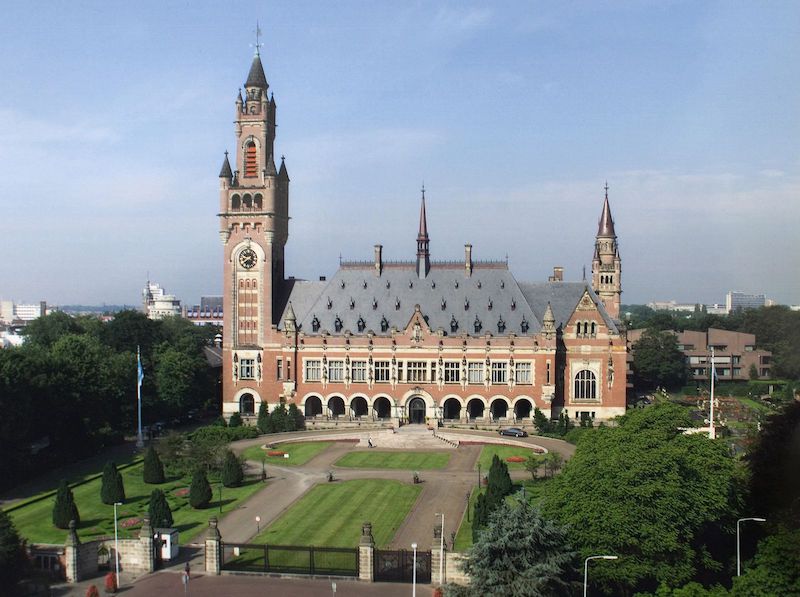
Corte Internacional de Justicia (CIJ), La Haya
Chile submitted yesterday (September 12, 2024) to the Secretariat of the International Court of Justice (ICJ) a declaration of intervention in the South Africa vs. Israel case, concerning the application in the Gaza Strip of the Convention on the Prevention and Punishment of the Crime of Genocide.
Background on the Chilean intervention
This intervention corresponds to a right that, according to the Statute of the Court, can be exercised by countries that are parties to the aforementioned Convention. In accordance with Article 63 of the Statute, when a contentious case questions the interpretation of a treaty to which states other than the parties involved in the case are parties, each of those states has the right to intervene in the proceedings. If they do so, the interpretation given by the Court’s judgment is also binding for them.
Chile has been a party to the Genocide Convention since June 3, 1953, when, in accordance with the provisions of that treaty, it deposited its instrument of ratification with the United Nations. Subsequently, according to the same regulations, the Convention entered into force for Chile on September 1, 1953. Chile did not make any reservations and remains a party to this Convention to this day.
The International Court of Justice has informed in a statement that both the applicant (South Africa) and the respondent (Israel) have been notified of Chile’s intervention and invited to submit written observations on the Chilean declaration, in accordance with the Court’s Rules.
Content of the Chilean intervention
Chile’s intervention document has been published by the ICJ today, September 13, 2024 (SEE HERE).
In this text, Chile argues that any state party to the Convention, without distinction, has the right to invoke the responsibility of another state party for an alleged breach of its obligations, without the need to demonstrate a special interest, given that the obligations arising from the Genocide Convention have erga omnes character: that is, each of the states parties has an interest in their compliance.
Chile also explains that, in its view, the South Africa vs. Israel case concerns the interpretation of specific norms of the Genocide Convention (Articles I, II, III, IV, V, VI, and IX), and presents its interpretation of those specific provisions.
Eight countries have submitted their declaration of intervention in South Africa vs. Israel: Nicaragua, Colombia, Mexico, Spain, Turkey, South Africa, Palestine, Libya, and now Chile. The Chilean document, consisting of 22 pages and 12 annexes, focuses on technical aspects and is relatively brief compared to the others (for example, Colombia’s has 75 pages, Turkey’s has 50, and Mexico’s has 24). Chile’s arguments will be developed for the purposes of the oral pleadings, which will occur in a public hearing, the date of which has not yet been set by the Court. According to the case schedule, on October 28, 2024, South Africa will present its Memorial (which contains the text of the claim in full) and Israel its response or Counter-Memorial on July 28, 2025. It is likely that the parties will also submit Reply and Rejoinder documents; therefore, the oral pleadings should take place after those submissions, that is, towards the end of 2026.
Background of South Africa’s claim
On December 29, 2023, South Africa filed a request to initiate proceedings against Israel, arguing violations by Israel of its obligations under the Genocide Convention in relation to the Palestinians in the Gaza Strip.
The South African request also included a request for the indication of provisional measures, in order to “protect against further serious and irreparable harm to the rights of the Palestinian people in accordance with the Genocide Convention” and “to ensure Israel’s compliance with its obligations… not to engage in genocide and to prevent and punish genocide.”
On January 26 of this year, after hearing both parties on the matter in oral pleadings, the Court issued an order on South Africa’s request for provisional measures and also determined that it had prima facie jurisdiction in the case because the Parties appeared to “hold clearly opposing views regarding whether certain acts or omissions allegedly committed by Israel in Gaza constitute violations by the latter of its obligations under the Genocide Convention.” In the Court’s opinion, at least some of the acts and omissions that South Africa alleges Israel has committed in Gaza “appear to be susceptible to being encompassed within the provisions of the Convention.” The Court also determined that there was a link between some of the requested measures and the rights invoked by South Africa under the Genocide Convention, which the Court considered plausible. Finally, the Court accepted to issue provisional measures because it considered that there was a “real and imminent risk” that, before it issues its final decision in the case, “irreparable harm would be caused to the rights that the Court considered plausible.”
Urgency of the situation on the ground: provisional measures
On March 6, 2024, South Africa submitted a request for the indication of additional provisional measures and/or modification of the Court’s Order of January 26, 2024, in light of the situation in Rafah. On March 28, 2024, the Court indicated those additional provisional measures. On May 10, 2024, South Africa submitted a new request for modification and indication of provisional measures. By Order dated May 24, 2024, the Court reaffirmed its previous provisional measures and indicated new provisional measures.
The accumulation of orders for provisional measures is quite unusual in the history of these proceedings and is explained by new events in a dynamic and extremely serious situation.
The latest order of provisional measures from the ICJ states the following:
(1) Reaffirms the provisional measures indicated in its orders of January 26, 2024, and March 28, 2024, which must be applied immediately and effectively. Such measures were:
Order of January 26:
Israel, in relation to the Palestinians in Gaza, shall take all measures within its power to prevent the commission of all acts falling within the scope of the Genocide Convention, in particular:
a) killing members of the group;
b) causing serious physical or mental harm to members of the group;
c) deliberately inflicting on the group conditions of life calculated to bring about its physical destruction in whole or in part; and
d) imposing measures intended to prevent births within the group;
Israel shall ensure immediately that its armed forces do not commit any of the acts described above;
Israel shall take all measures within its power to prevent and punish direct and public incitement to commit genocide in relation to members of the Palestinian group in Gaza;
Israel shall take immediate and effective measures to allow the provision of basic services and urgently needed humanitarian assistance to address the adverse living conditions faced by Palestinians in Gaza;
Israel shall take effective measures to prevent the destruction and ensure the preservation of evidence related to allegations of acts falling within the scope of the Genocide Convention against members of the Palestinian group in Gaza;
Israel shall take effective measures to prevent the destruction and ensure the preservation of evidence related to allegations of acts falling within the scope of the Genocide Convention against members of the Palestinian group in Gaza;
Order of March 28 (additional measure in light of the worsening living conditions in Gaza, particularly the spread of famine and starvation):
Israel, in accordance with its obligations under the Genocide Convention,
a) shall take all necessary and effective measures to ensure, without delay, in full cooperation with the United Nations, the unhindered and large-scale provision by all concerned of the basic services and humanitarian assistance urgently needed, including food, water, electricity, fuel, shelter, clothing, hygiene and sanitation items, as well as medical supplies and healthcare to Palestinians throughout Gaza, including increasing the capacity and number of land crossing points and keeping them open for as long as necessary;
b) shall ensure immediately that its armed forces do not commit acts that constitute violations of any of the rights of the Palestinians in Gaza as a protected group under the Genocide Convention, including preventing, by any means, the delivery of urgently needed humanitarian assistance;
(2) Indicates the following provisional measures:
Israel, in accordance with its obligations under the Genocide Convention, and in light of the worsening living conditions of civilians in the Rafah Governorate:
a) shall immediately cease its military offensive and any other action in Rafah that may inflict on the Palestinian group in Gaza conditions of life that may bring about their physical destruction in whole or in part;
(b) shall take effective measures to ensure unhindered access to Gaza for any commission of inquiry, fact-finding mission, or other investigative body designated by the competent United Nations organs to investigate allegations of genocide;
(3) Decides that Israel shall submit to the Court a report on all measures taken to give effect to this Order, within one month from the date of the Order.