Cuba in Critical Condition
This article was translated automatically and may contain differences from the original. For reference, read the original.
- por Paz Zárate
- Análisis
The Cuban people are characterized by their resilience, having to cope with a permanent scarcity of many goods and services. However, the already precarious situation on the island has worsened in recent years to the point that the current crisis is considered even worse than that which followed the collapse of the Soviet Union.
Economically, the country has notably impoverished in recent years, as the tourism industry has not been able to recover after the pandemic, and the regime’s major allies (Venezuela and Russia) now have other foreign policy priorities. In terms of energy, specifically, the country has an outdated infrastructure lacking investment. The fuel that came from Venezuela has significantly decreased in recent years, and while Russia and Mexico have increased crude oil deliveries, they are not sufficient to meet the island’s needs, which also cannot finance the purchase of hydrocarbons in global markets for its aging thermoelectric plants. China is installing solar panels on the island, but this is a long-term project.
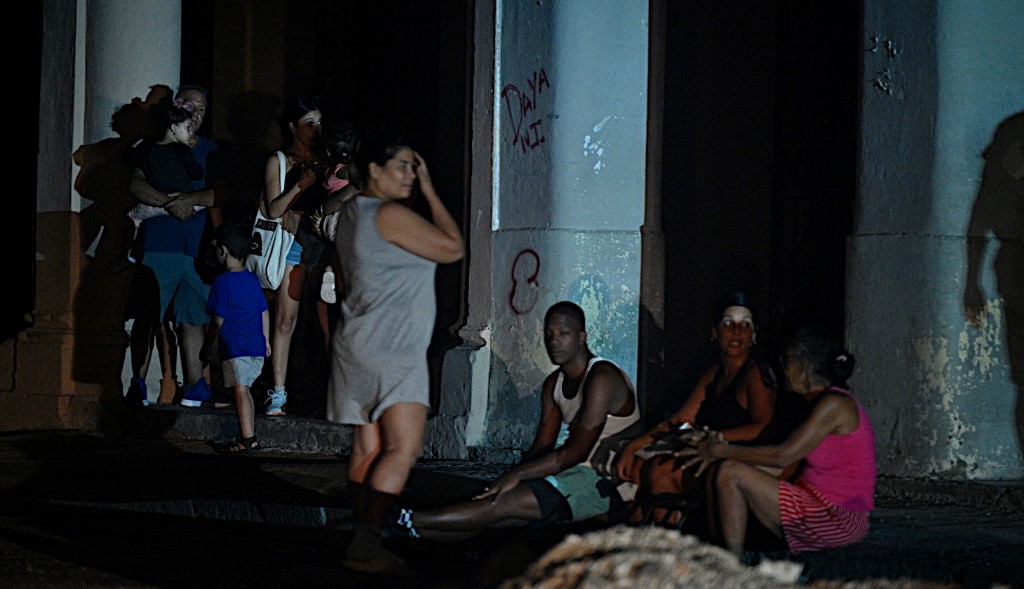
This situation has forced Miguel Díaz-Canel’s government to paralyze the country in the last month in order to save energy. Extended periods without electricity mean there is no way to cook or keep food fresh, nor are there transportation services, garbage collection, internet access, or means to charge cell phones. Additionally, potable water is scarce (due to problems with pumping), making it difficult even to sleep due to the inability to combat high temperatures.
The deep economic crisis is significantly impacting the food and nutritional security of the population, to the point that last May, for the first time in its history, Cuba had to request assistance from the United Nations World Food Programme to nourish children in order to maintain the distribution of subsidized milk to those under seven years old.
The situation has triggered a new wave of migration and caused the regime to no longer pursue those who escape the island daily. More than 18% of the population has emigrated in the last two years. It is estimated that by the end of this year, the population will have fallen to 8 million from the 11.1 million recorded in the 2022 census. Those who remain survive thanks to remittances from relatives abroad, but this factor is a source of great social inequality.
The Cuban government blames the United States for the situation. The embargo, in fact, limits the country’s ability to import fuel and spare parts for thermoelectric plants. Additionally, it should be noted that the Trump administration practically reversed all the political reforms aimed at normalizing relations with Havana that had been promoted by Barack Obama, and reimposed travel bans for U.S. citizens and limits on remittances to the island. The maximum pressure sanctions from the Trump era have been maintained by President Joe Biden’s administration.
Finally, climate change is causing Cuba and other Caribbean countries to experience destructive weather phenomena more frequently. This vulnerability exacerbates the island’s poverty.
Could this perfect storm that Cuba is experiencing trigger some reforms? It is worth remembering that three years ago (2021), precisely due to power outages, the largest protests in memory took place on the island. In response to that crisis, the government then allowed the formation of small and medium-sized private enterprises. But just as with individuals, those same businesses are unable to fulfill their purposes and commitments without access to basic services. Radical reforms are therefore essential for foreign investment to arrive, which would allow for the modernization of the island’s infrastructure.
What is certain is that without assistance, Cuba is heading toward a humanitarian disaster, including a migration wave greater than what has been seen so far, primarily directed toward the United States, but also to other countries on the continent.
Given the effect of the Venezuelan and Haitian migration waves in the region, it would be advisable for Cuba, before the crisis worsens further, to receive international aid; and for the United States (depending on the eventual success of Kamala Harris) to reinstate the measures taken during the Obama administration.