War, Nuclear Deterrence, and Missiles
This article was translated automatically and may contain differences from the original. For reference, read the original.
Today, we are closer to the use of nuclear weapons than we were at the end of the Cold War. With the strengthening of autocratic axes, increasing polarization, and the worsening of conflicts, a new global conflagration no longer seems impossible.
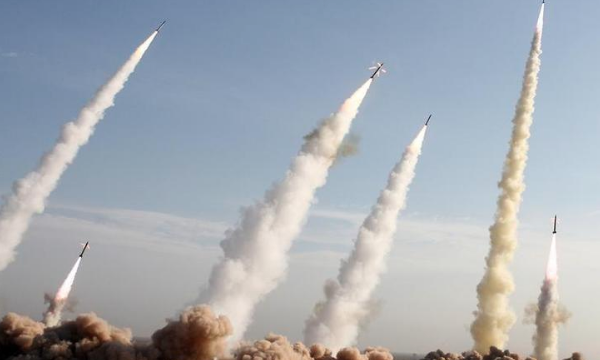
The threats to the West from Vladimir Putin, President of Russia, regarding what he considers direct intervention in the ongoing conflict in Ukraine, have included the potential use of nuclear weapons. While this is not the first time, the launch of an Oreshnik missile underscores the seriousness with which the Kremlin views the current confrontation.
Although this scenario may seem straight out of a Cold War movie, it is not. Since the onset of the large-scale Russian invasion of Kyiv, this issue has been in the air. As the intention to deter requires two elements—capabilities to inflict damage on adversaries and a clear willingness to do so if necessary—the success of Putin depends on NATO leaders’ perception of these factors.
Among the main elements of Russian deterrence, the nuclear threat is central. In more technical terms, when addressing the issue of nuclear weapons, there are always two aspects to consider: atomic bombs and the vector with which they will be delivered. Russia possesses both in large quantities and with effectiveness. However, while it has been effective thus far, the impact seems to be waning. Indeed, the decisions to supply tanks, aircraft, and artillery to Ukraine by the U.S., and the subsequent possibility of firing long-range weapons on Russian territory, have already crossed various ‘red lines’ drawn by Putin.
For these reasons, the war in Ukraine is far from being a local or regional conflict; it has already reached a global scale and has expanded in time, involved actors, and geographical terms. We are witnessing significant geopolitical changes that tend to worsen and accelerate. Today, Russia’s relationship with countries like Iran and North Korea is becoming less asymmetric, as its growing dependence on Iranian and North Korean weapons and munitions systems suggests a new phase. This indicates a rebalancing in the relationship, which now appears to be more equitable. A special case is the sending of soldiers from Pyongyang to Kursk, as sharing the cost of human lives with Russia is very different from merely providing weapons and munitions. It creates a special relationship.
What will North Korea gain in this new phase? That remains to be clarified. Obviously, there will be economic compensation and the provision of essential hydrocarbons for North Korean survival. There may also be a transfer of very essential food supplies for the Asian nation’s economy. However, undoubtedly, the most concerning aspect is the potential transfer of military technology. It is no mystery that Pyongyang is enhancing the development of its nuclear program, so Russia’s knowledge and experience would be invaluable. Cooperation in the miniaturization of nuclear bombs, improvement of launch vectors—including MIRV—and the capability to launch nuclear-armed missiles from submarines are probable alternatives.
It seems we are facing a new Cold War. However, there are two particular characteristics that make it more dangerous. On one hand, there are Putin’s threats, the new capabilities of North Korea, and/or the potential capabilities that Iran could achieve, which suggest considerable risks of nuclear proliferation. This new scenario may induce a demonstration effect among non-nuclear powers, which would prefer to have strategic independence in these matters.
The second derived characteristic is that, in time, we would face a sort of ‘nuclear multilateralism,’ meaning the existence of more than two nuclear powers with a response capacity that fulfills the idea of ‘mutually assured destruction.’ Consequently, instead of the reduction of nuclear capabilities previously posited, there would increasingly be more countries with atomic weapons or interested in acquiring them, the treaties that limit them would be less effective, and threats like those from Putin would not appear disproportionate.
In summary, today we are closer to the use of nuclear weapons than we were at the end of the Cold War. With the strengthening of autocratic axes, increasing polarization, and the worsening of conflicts, a new global conflagration no longer seems impossible.
Investigador senior AthenaLab