To recover Latin America, the United States needs a solid hemispheric security strategy.
This article was translated automatically and may contain differences from the original. For reference, read the original.
- by Juan Pablo Toro & Carlos Solar
- Guest Contributions
Among Trump's potential allies, Latin America is expected to become a "priority for U.S. foreign policy." The border issue, the rise of China, and the spread of authoritarianism concern Trump and his closest advisors, but in what terms will the ties between the U.S. and Latin America be reactivated?
Donald Trump must ally with Latin American countries to curb the convergence of criminal and terrorist practices in the region.
Changes in leadership in the United States do not reveal much about how incoming presidents will approach their international relations, simply because foreign heads of state do not usually attend. However, Donald Trump’s second term marks a turning point. Trump’s guest list included Javier Milei (President of Argentina), Giorgia Meloni (Prime Minister of Italy), Han Zheng (Vice President of China), Daniel Noboa (President of Ecuador), Subrahmanyam Jaishankar (Minister of External Affairs of India), and Takeshi Iwaya (Minister of Foreign Affairs of Japan), among other representatives. While some observers believe the world must prepare for a U.S. withdrawal, it is evident that others seek to befriend the North American power center. “Trump-proof” In light of the U.S. withdrawal, it is evident that others seek to befriend the North American power center.
Among Trump’s potential allies, it is expected that Latin America will become a “priority for U.S. foreign policy.” Trump’s desire to re-engage with the region comes after decades of what some scholars have described as a “benign neglect” attitude from Washington towards the hemisphere. The border issue, the rise of China, and the spread of authoritarianism in Latin America concern Trump and his closest advisors, suggesting that this neglect may soon come to an end. But in what terms will the ties between the U.S. and Latin America be reactivated?
The perception that U.S. long-term policy and that of the Americas are not aligned is a debate that has been ongoing for decades and resurfaces in every presidential election. It gained relevance in the mid-1970s when Jimmy Carter was unsuccessful in his efforts to promote human rights and democracy in a region then governed by many dictators. Since then, U.S. diplomats and other career officials realized that they could oppose U.S. policy without suffering political repercussions. This trend has continued for over 50 years, and today Bolivia, Cuba, Nicaragua, and Venezuela lead an anti-American movement in connection with the global movement against the West.
Can Trump Lead on Regional Security?
The new Trump administration claims to have learned from its past mistakes. In his first term, Trump took too long to appoint ambassadors in the Americas, withdrew from the Trans-Pacific Partnership, and left many public policies unfinished, including agreements on migration and asylum with Northern Triangle countries, the dispute over the border wall with Mexico, and sanctions on Cuba. And of course, his main thorn in the side was the anti-democratic regime in Venezuela led by Nicolás Maduro. Under Joe Biden’s administration, the White House reversed some of these programs, lifted sanctions, and renegotiated the border issue. Later, Biden tightened security measures and ultimately reinstated sanctions against Venezuela (following the failure of the Barbados Agreement), while launching an offensive at the U.S.-Mexico border. Therefore, the new Trump administration assumes office after a period of trial and error, which should prompt Secretaries Marco Rubio and Pete Hegseth to rethink U.S. diplomacy and military alliances in the Western Hemisphere.
President Trump’s decree designating cartels and other organizations as foreign terrorist organizations means that his administration will push for greater cooperation to combat actors considered threats to U.S. national security. The decision to target Venezuela’s Tren de Aragua and El Salvador’s MS-13 could persuade many other countries in the region, where both organizations have imposed violence, murder, terror, and a level of corruption capable of infiltrating governments. “The activities of the cartels threaten the security of the U.S. and its population, and the stability of the international order in the Western Hemisphere,” states the decree.
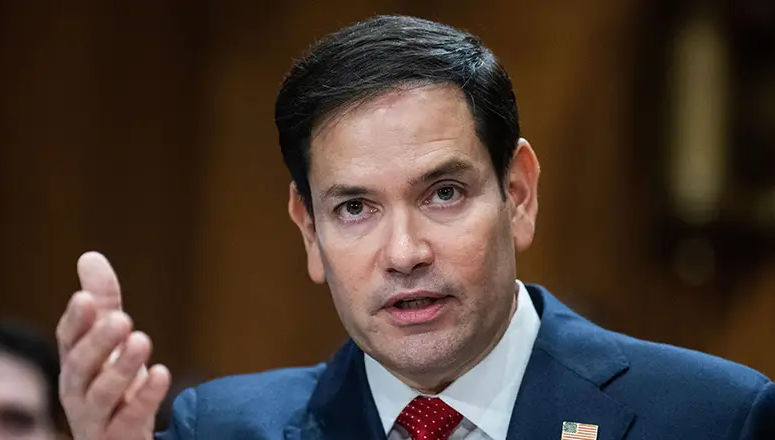
The designation of cartels operating inside and outside the U.S. as terrorist organizations could open an operational door for U.S. security forces to attack them directly, if not covertly. “These sophisticated transnational terrorist organizations have operational and functional control over vast portions of territory bordering the United States,” said Marco Rubio in his nomination for the State Department. “For us, it is important not only to pursue these groups but also to identify and denounce them for what they are: terrorists by nature,” he added.
Although the former Republican senator softened his comments by stating that ideally, cooperation with the Mexican Army would be best, he was clear in asserting that one of the priorities for the United States will be the hotspots of regional insecurity. The cartels “generate terror through mass migration and drug trafficking,” Rubio explained.
The United States and Mexico have a complex history of security relations, which includes mutual complaints about the control of the 3,200-kilometer border that has become a two-way highway for the entry of drugs from Mexico and the smuggling of arms from the U.S. Mexican President Claudia Sheinbaum refused to link the phenomenon of terrorism with organized crime, warning that her country is “sovereign” and willing to “coordinate,” but not to “subordinate,” which is understandable.
The Legacy of the Old ‘Wars’
The global war on terrorism launched by George W. Bush after the 2001 attacks in the United States had no geographical limits. Wherever the enemies were, deserved punishment would be applied, using special forces, drones, contractors, and whatever was necessary. The war on drugs launched by Richard Nixon in 1971 tended to be more frontal and focused primarily on Latin America and the Caribbean—for obvious reasons—incorporating a strong police and military component.
Both “wars” were connected, and they have continued to be in various ways throughout successive U.S. national security policies. The search for Colombian drug lord Pablo Escobar, which led to his death in 1993, was the product of a complex operation that included Colombian forces, U.S. agencies (the CIA, FBI, DEA, and others), and rival groups from the Medellín Cartel. In addition to trafficking thousands of tons of cocaine, Escobar was the mastermind behind bomb attacks against planes and shopping centers, as well as the assassinations of ministers, judges, presidential candidates, and police officers. This pursuit of drug lords left many lessons on locating and eliminating terrorist leaders, which continue to be applied, for example, to combat drug cartels in Mexico and Central America.
When the Colombia Plan was launched in 2000, funded by the U.S. to combat drug trafficking and internal conflict in Colombia, there was an initial debate about whether the equipment donated by the United States, such as Black Hawk helicopters, could be used for purposes other than combating drug trafficking, for example, to attack guerrillas like the Revolutionary Armed Forces of Colombia. It took the attacks by Al Qaeda on New York and Washington for the debate to disappear. Anything that smelled of terrorism could and should be eliminated.
From a legal standpoint, the State Department can designate as foreign terrorist organizations those that carry out a series of activities established by specific norms (sabotage, murder, and attacks, among others) and whose effect is a threat to “U.S. citizens or the national security (defense, foreign relations, or economic interests) of the United States.” Institutions or individuals with a financial relationship with the group are also penalized. Recently, the Biden administration offered a reward of $25 million for information leading to the arrest of Venezuelan President Nicolás Maduro for his responsibility in drug trafficking to the U.S.
Terrorism and organized crime are two very different phenomena. The former is a method of exercising violence that serves to intimidate a specific group. The latter relates to criminal associations whose ultimate goal is to profit through the production of goods or the sale of services. Can a cartel intimidate through terror? Of course, and there are many examples. The current Secretary of Security and Citizen Protection of Mexico, Omar García Harfuch, was attacked by hitmen from the Jalisco New Generation Cartel in 2020 while working at the Mexico City Citizen Security Secretariat. Mexican authorities have been unable to confront organized crime, and the previous presidential term of Andrés Manuel López Obrador was the bloodiest on record. García Harfuch wants to strengthen the intelligence and investigative capabilities of the Mexican state to reverse the unleashed violence.
What Can the United States Do?
Rubio and Trump will pressure the Mexican government and others in the region, including Colombia, Ecuador, and Peru, to directly tackle the scourge of transnational crime. According to the U.S. Southern Command, the illegality and violence emanating from the region have reached a global scale due to the extensive portfolios of criminal groups. Their firepower has led them to develop armed wings for asymmetric warfare, capable of handling everything from drones to narco-submarines. The U.S. perspective is shared by other like-minded countries, including the United Kingdom, as indicated recently by government officials who visited Latin America and the Caribbean.
But above all, political authorities should consider a realistic reading of what is known in security studies as convergence. Criminal groups throughout the region have the capacity to attack state bureaucracies, citizens, and adversarial groups, as they now possess military structures more characteristic of insurgencies, allowing them to exert a certain territorial control. The United States asserts that current international cartels constitute a national security threat that goes beyond that posed by traditional organized crime, given the “convergence between them and a range of extra-hemispheric actors, from foreign terrorist organizations to antagonistic foreign governments”.
Therefore, when cartels are designated as terrorist organizations, the message is clear: the Trump administration wants to have all options on the table to regain its strength, or—as Rubio stated in a 2015 essay— to attack them and not just watch them grow. Whatever the plan, there are political, operational, and, of course, ethical implications that must be considered. And, definitely, the opinions of Latin American countries on the matter cannot be ignored.
Juan Pablo Toro
Executive Director AthenaLab
Carlos Solar
Senior Research Fellow RUSI
Article originally published at ww.rusi.org.