Revisiting the Last War Between States in Latin America: Ecuador-Peru (1995)
This article was translated automatically and may contain differences from the original. For reference, read the original.
- por Juan Pablo Toro
- Análisis
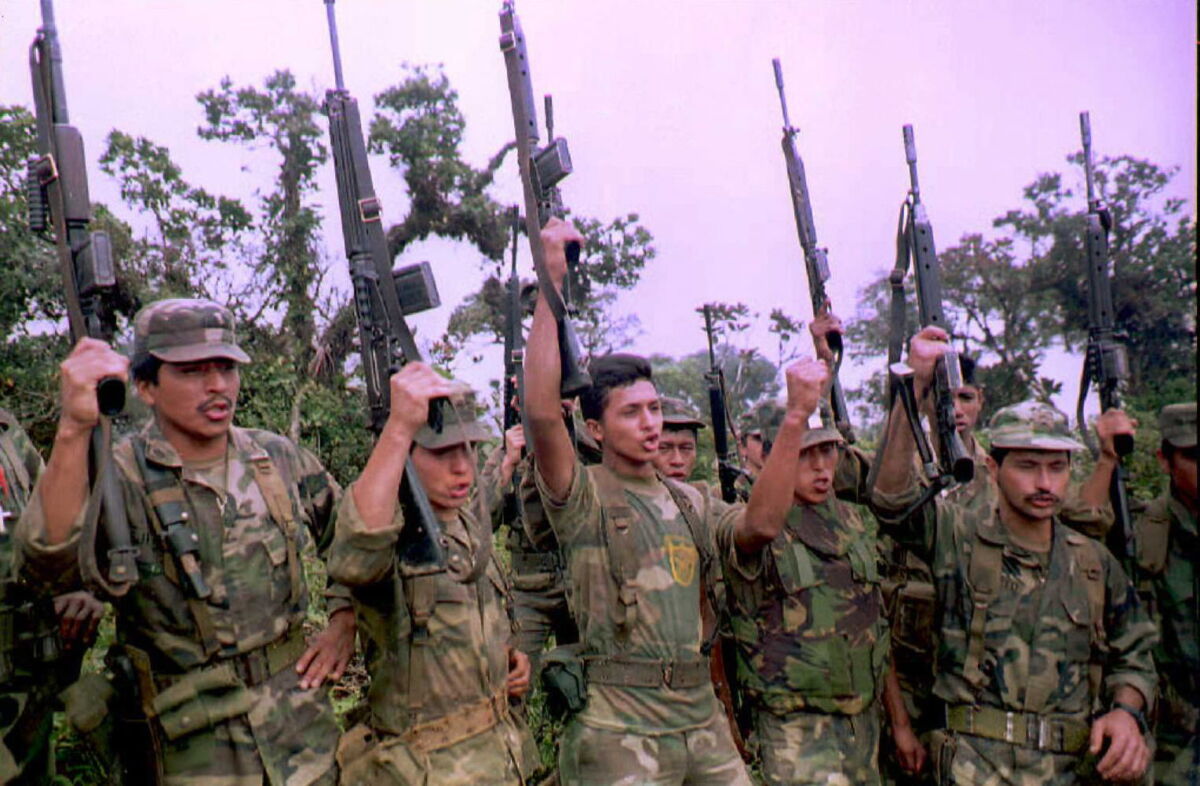
Exactly three decades ago, Ecuador and Peru engaged in a brief and limited conflict in the Amazon jungle, which included artillery fire and the downing of aircraft in uncommon combat for the region.
Since then, no two Latin American states have faced each other directly using their armed forces; they have preferred to resolve territorial disputes through international courts, opening bilateral negotiations, or simply postponing issues. Nevertheless, this does not mean that ruptures in relations, protest notes, and even threats have disappeared from the regional landscape.
Revisiting the “Cenepa War” is pertinent, as in 1995 no one expected that two countries focused on trying to grow economically and dealing with internal problems would end up confronting each other. Below are some notes on the last Latin American war.
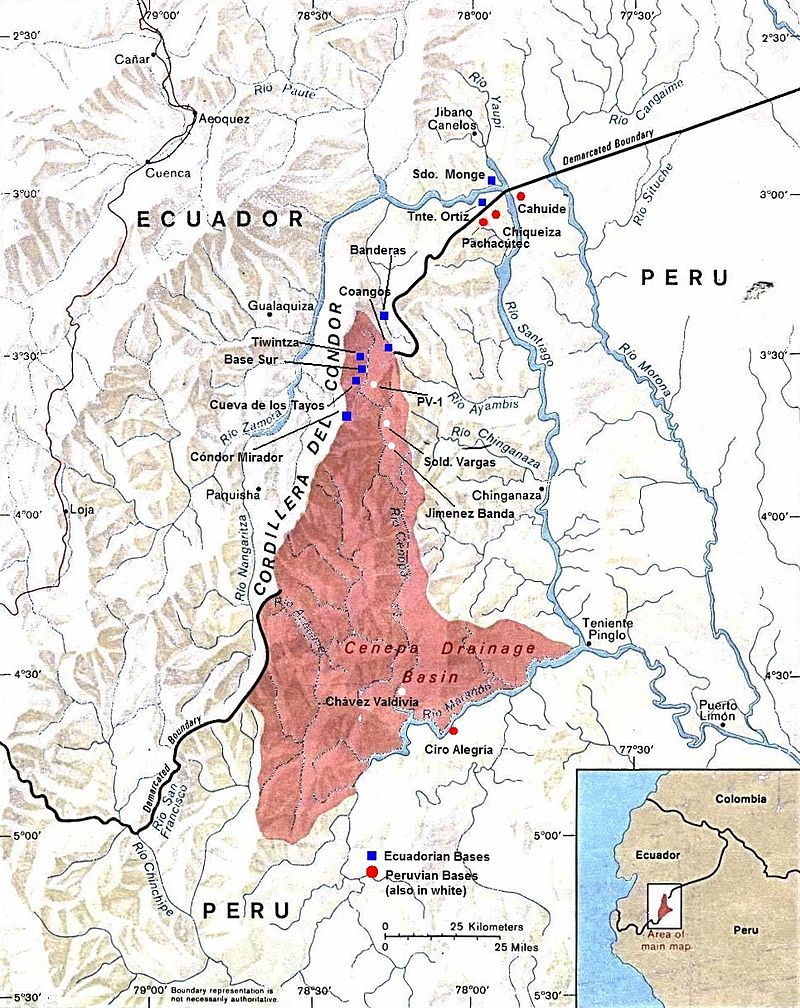
BACKGROUND. Following the principle of uti possidetis iuris, after their independence, Ecuador and Peru claimed as their own the territories defined during the Spanish colonial period. However, some sections of the Amazon border could not be well defined due to its rugged geography and the lack of technical means at the time to delineate them.
This reality created a permanent focal point of tensions that led to multiple confrontations over two centuries. After a brief conflict in 1941, the parties signed the Rio de Janeiro Protocol a year later to establish definitive boundaries and resolve any future discrepancies by appealing to guarantor nations; in this case, Argentina, Brazil, Chile, and the United States.
But once again, the difficulties in identifying the boundaries along a 78-kilometer line on the eastern side of the Cóndor mountain range created the conditions for a confrontation, which erupted on January 26, 1995, when Ecuadorian and Peruvian troops clashed in the Cenepa River region.
At its peak, it is estimated that Ecuador mobilized about 3,000 soldiers, including special forces, while Peru deployed around 2,000 military personnel, many of whom were conscripts. Reinforced forward positions, mortars, rocket artillery, and anti-aircraft batteries were deployed in the theater of operations.
In use at the time were Kfir, Mirage F-1, A-37, and Sukhoi 22 combat aircraft, as well as various helicopters. Air defense over Ecuador quickly became evident, resulting in the downing of four Peruvian planes and three helicopters, marking a milestone for that country’s Air Force.
After intense confrontations, whose final figures vary—Ecuador reports 33 of its own casualties while Peru cites 60—the declaration of a ceasefire, which was not always respected, and pressure from Washington led the governments of Sixto Durán Ballén and Alberto Fujimori to seek a diplomatic solution in accordance with the Rio Protocol. Thus, the conflict concluded on February 28, and the subsequent process culminated in the signing of the Brasilia Act in 1998.
WHO IS THE WINNERAND WHO IS THE LOSER ?When assessing the outcomes, Gabriel Marcella, a researcher at the U.S. Army War College, argued that Ecuador achieved a “limited victory” in the Cenepa, while inflicting a military defeat on Peru for the first time since 1829. Most importantly, in his view, is that “Ecuadorians successfully integrated strategy, operations, and military tactics with an assertive information campaign, both at the national level (diplomacy) and military level (psychological operations). This is a significant achievement for the Ecuadorian nation.”However, since it was not a large-scale war, the political objectives of the opposing parties were never clear, beyond enforcing what both considered their border. Nevertheless, Ecuador’s military victory was not reflected in the delimitation itself, where the 30 markers established by the guarantors ratified the boundaries described by Peru, and its neighbor only gained access to one square kilometer, where the emblematic Tiwintza base was located. Although this area belongs to the Ecuadorian state, it is classified as private property. Therefore, when identifying winners and losers, it is important to have the complete picture. After signing the peace agreement in 1998, the countries would even manage, years later, to peacefully resolve their maritime delimitation (2011), putting an end to all their disputes dating back to the 19th century.
POPULISM.
The fall of Alberto Fujimori in 2001 allowed for a better understanding of the functioning of his regime and the role of his advisor Vladimiro Montesinos, a unscrupulous former military officer who practically ended up governing in tandem with the president.
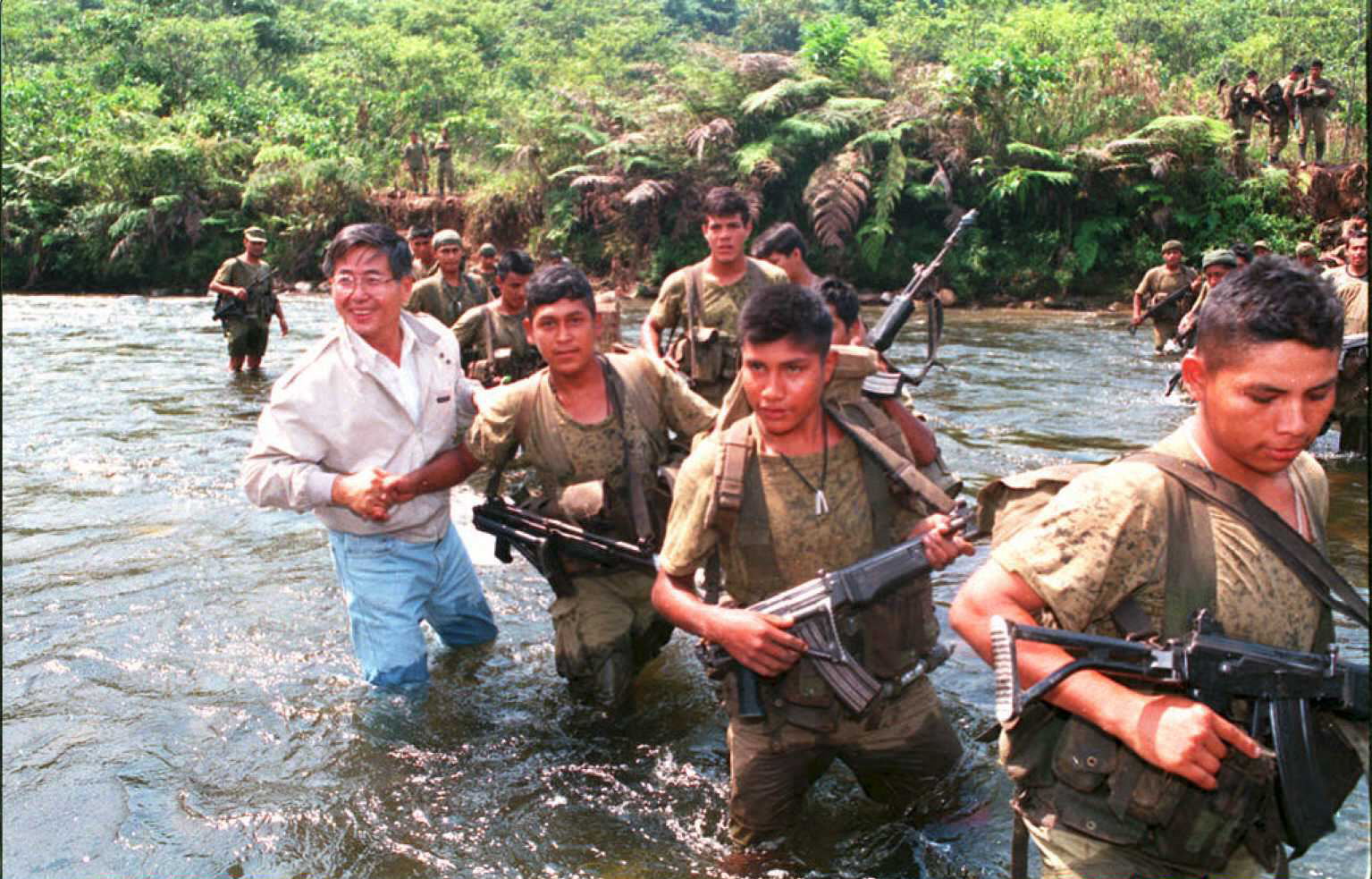
Despite the concerns expressed by high-ranking military officials about an imminent conflict, Montesinos saw in the war an opportunity to guarantee Fujimori’s reelection in the April elections and, as such, did everything possible to promote the president’s image, even organizing his trips to the theater of operations with the press. Unlike Durán Ballén, who only gave a broad order to his military (“Not a step back”) and left them to conduct the war, in Peru the confrontation was managed from the outset for internal political purposes, in a populist manner. The results were evident. According to an Ecuadorian researcher, the commander of the military forces, General Paco Moncayo, was able to apply active defense and ground-air combat learned during his years as a military attaché in Israel.
Over time, it would also be revealed that the Peruvian advisor even demanded money commissions from arms traffickers to avoid publicly denouncing that Ecuador was smuggling equipment and ammunition to evade embargoes during the conflict.
Perhaps, in the use of this war for purely electoral and personal purposes lies the explanation for why Peru did not decide to open other fronts to improve its position in the conflict, which could have included using its ships to blockade the port of Guayaquil or deploying its best aircraft to bomb its neighbor’s oil facilities. During the conflict, many analysts questioned the reasons for keeping the confrontation limited to a sparsely populated jungle area.
LESSONS.
When revisiting the “Cenepa War,” it is interesting to identify some points of interest for the current situation in the region.
First, it is necessary to assume that conflicts tend to be unexpected and have the potential to erupt when very specific border disputes are part of a larger historical context of tensions that can date back centuries. Although the possibilities may be remote, they always exist.
Second, although countries may not want to go to war, they must consciously prepare to prevail in a potential conflict. This is what Ecuador did by keeping its equipment operational, adopting new doctrines, training its special forces, and building reinforced positions in the Cóndor mountain range, while Peru realized too late the obsolescence of its mostly Soviet material dating back to the 1970s. Years of combat against the Shining Path and the Tupac Amaru Revolutionary Movement sidelined conventional capabilities. The outcome of the conflict would motivate Fujimori’s government to initiate a certain rearmament with the purchase of Mig-29 and Su-25 aircraft from Belarus; another opportunity that Montesinos used to collect millions in commissions, without paying much attention to the maintenance status of the aircraft.
Third, populist leaders, who are never in short supply in Latin America, can use border conflicts to gain mass support during times of crisis or elections. This is what Fujimori and Montesinos did at the time.
For example, currently, Nicolás Maduro’s regime claims two-thirds of the territory of neighboring Guyana, for which it organized a consultative referendum, presented new maps, and began constructing military infrastructure along the common land border. It also strengthened the Navy with fast attack missile boats that could jeopardize the gas and oil exports of its defenseless neighbor. The possibility of an armed clash motivated by Maduro and his associates should not be ruled out, although perhaps the return of Donald Trump to the presidency of the United States may act as a deterrent.Fourth
, it is important to have reliable supplies of weapons and military equipment, as well as minimum capabilities in the local defense industry to face potential conflicts and external embargoes.
Fifth, one should not be mistaken. After the last war between states in Latin America, the region did not become a “zone of peace” in the proper sense, as some argue to reduce resources for the armed forces. The absence of interstate conflicts coincided with the intensification of intra-state conflict in Colombia between 1998 and 2003. Furthermore, today, narco-insurgencies challenge states and armies in several countries. The region accounts for 30% of the world’s homicides (about 140,000 per year), with almost only 8% of the world’s population. Therefore, peace must be understood as a product of permanent deterrence among states, which is a result of momentary political sympathies or a certain apparent tranquility in the region.
Juan Pablo ToroFebruary 4, 2025.