Prepared for the "Liberation Day": The U.S. trade war takes a defined shape
This article was translated automatically and may contain differences from the original. For reference, read the original.

Generally, the dates of military operations are not made public to preserve the element of surprise, although they can sometimes be leaked through chats. This was kept a maximum secret during D-Day, for example. However, in the “trade war” unleashed by U.S. President Donald J. Trump, April 2 has already been labeled as the “Liberation Day of the United States.”[1].
It is expected that next Wednesday, his administration will make a major announcement (the BIG ONE, as the president called it), where the reciprocal tariffs that will be the cornerstone of his trade policy for the period will be revealed. Depending on how detailed the content is, it could reduce the uncertainty that currently prevails in the markets.
According to estimates from the Tax Foundation, if during Trump’s first term tariffs were imposed on thousands of products valued at $380 billion between 2018 and 2019, the new wave of increases could affect imports valued at one trillion dollars.[2].
In his first two months in office, the head of state has made it clear that unilateral tariff increases are his preferred tool to restore the economic strength of the United States— which he believes has been affected by unfair competition from other countries— or to improve national security, whether by pressuring rivals or allies to follow Washington’s directives.
However, there is not much clarity on whether, at the end of the day, with higher tariffs, Trump will definitively increase tax revenues; stimulate local production (Latin America could teach him something about its failed experience in import substitution industrialization); reduce strategic dependence on certain key products from abroad, or achieve behavioral changes in countries that send or allow drugs (especially fentanyl) and migrants to pass through, threatening their trade.
What is certain is that President Joe Biden left the U.S. economy growing, and in 2024 it recorded a GDP expansion of 2.8%. For this year, it is expected that this figure will reach 2.4%, because, among other things, the trade war will have a negative effect on the country itself. The same Tax Foundation estimates its impact at four-tenths lower.
Although it is always possible for the president to change his mind, April 2 seems to be key for several reasons. One day prior, the deadline given to the Departments of Commerce and Treasury to complete studies on the impact of imposing external tariffs on certain sectors of the country will expire. Temporary exemptions from the 25% tax increases on Canada and Mexico will also end (additionally, it is “April Fool’s Day,” just in case).

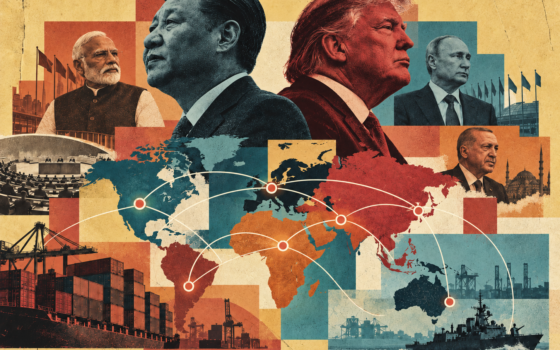
THE “DIRTY 15.” Certainly, the most affected by the tariff tsunami that the Trump administration will unleash would be the countries with which the United States has a trade deficit, which is essentially what the president wants to correct. Among them are both allies and systemic rivals.
Treasury Secretary Scott Bessent referred to the “Dirty 15” (“Dirty 15”) to describe the nations with which there are severe trade imbalances. Another advisor put the number between 10 and fifteen, but without providing details.[3].
So far, Canada and Mexico already know they are on the list. China, whose products have seen tariffs increased by 20%, is also included, as it is the preferred target of the Republican. In terms of products, steel, aluminum, and automobiles from abroad have been hit with additional tariffs of 25%.
The question now lies in how those countries will respond, whether like Beijing and Ottawa, which prefer to elevate their complaints to the World Trade Organization, or like Mexico City, which preferred direct negotiations with Washington and reinforced the common border with troops to reduce the flows of drugs and migrants. It is also possible that the affected parties will respond with harsh reprisals, which would only escalate the trade war, exposing the world to significant effects. Therefore, the markets have not perceived as much uncertainty since the Covid-19 pandemic in 2020.[4].

THIRD PARTIES IN DISCORD. The use of trade tools to advance security objectives entails a greater complexity that requires attention.
Trump announced this week that, given the “hostility” of Venezuela, which he blames for sending the criminal group Tren de Aragua to U.S. soil—now considered terrorist— the United States will impose a 25% tariff on countries that purchase oil and gas from the South American nation.[5]. Among its main clients are India, China, and Spain.
The concern centers on the possibility that Washington, by extending its trade war, ends up punishing third parties as a means to indirectly attack its enemies. For example, there are plans to raise port fees on cargo ships linked to China as a way to stimulate the moribund U.S. shipbuilding industry. Today, Beijing has not only consolidated itself as the world’s leading manufacturer of commercial vessels, but many international companies acquire or use them to move containers and all kinds of products.

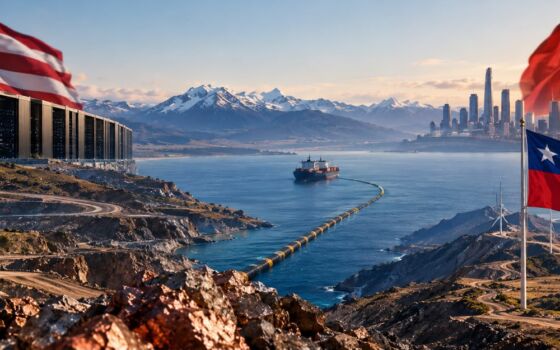
CHILE UNDER THE RADAR. So far, Chile has not appeared on the radar of those marking targets in the trade war unleashed by the Trump administration. Not only does the size of our economy help to render it invisible, but the fact that the trade balance is favorable to the United States and that neither drugs nor migrants are “exported” to that country. In other words, there would be no need or urgency to correct this situation.
The bilateral economic relationship is subject to the Free Trade Agreement[6] in effect since 2004 and to the agreement that prevents double taxation between Chile and the United States, which will take effect at the end of 2023.[7]. But we know that this does not shield countries, given what is happening with Mexico and Canada.
Currently, the United States is Chile’s second-largest trading partner, representing almost 16% of the total export destination, with products valued at nearly $16 billion, where copper and wood in various formats drive the needle.
Currently, investigations are underway in the United States to determine the impact of copper and wood imports on the national security of that country, in accordance with Section 232 of the Trade Expansion Act of 1962.[8]. The outcome will determine whether the president adopts executive adjustment measures regarding this, which are expected by November when the deadline for researchers concludes. Although Bloomberg news agency stated that a tariff increase could occur within weeks.[9].
Percentage of Chile’s export destinations by country (2023)

Source: OEC World.
Given that Chile is one of the world’s leading producers and exporters of copper, it is impossible to disregard this reality. While the Ministry of Foreign Affairs has established a public-private committee to analyze the potential impacts of unilateral measures by the Trump administration, businesses and industry associations are preparing reports to present in Washington the realities of sectors such as copper and timber, where, moreover, there are significant U.S. investments.
There is even a possibility that copper, currently soaring to prices above $5 per pound, will be declared a critical or strategic mineral by the United States[10], as it is essential for the energy transition, which would change the landscape. Both situational reasons and the fact that countries are increasing their stocks in anticipation of future price increases due to the trade war, along with projections that foresee greater structural demand in the long term, explain this bullish situation.
The search for new markets to diversify Chilean exports, which are too concentrated in China rather than in the United States, is also deepening. An imminent presidential tour to India adds to visits made to the United Arab Emirates and received from the Association of Southeast Asian Nations.
CONCLUSIONS. April 2 could be a key day in the trade war launched by Trump during his first term, continued under Biden—just to clarify—and now intensified by the Republican upon his return to the White House. The strength, or lack thereof, and the direction of the increase in reciprocal tariffs will help to clarify, to some extent, the great uncertainty that currently reigns in the markets due to the number of announcements from the president, which do not always materialize or on which he even backtracks days later.
The latest Monetary Policy Report (IPoM) from the Central Bank estimated that the tightening of geopolitical tensions due to military conflicts, such as those in Ukraine and Gaza, as well as the imposition of tariffs by the United States, has already affected global growth expectations. However, the effects of Trump’s tariff measures would be “limited” on the local economy, which this year will present a growth range of 1.75-2.75%.[11].
But these projections could be affected if direct actions are taken against local shipments, especially copper, or if Chile’s partners experience a relative slowdown. For a country that has made free trade one of the levers of its growth and international positioning, the current course of the global economy is not favorable, as the harmful effects of protectionism are known from experience. For this reason, partnerships with other nations inclined toward free trade are more imperative than ever, such as the one established with Japan to rescue the Comprehensive and Progressive Agreement for Trans-Pacific Partnership at the time.
And while comparative advantages should prevail in the long run when evaluated from a cost/benefit perspective, it is a fact that the security variable cannot be disentangled from international trade, as excessive dependencies or exposures to risks also arise from it. This is one of the explanations that seems to be behind the real possibility that U.S. tariffs, under Trump, will reach their highest level since 1947, when the current global financial and trade system began to be created, which sought to prevent, among other things, the economic crises that preceded World War II and made the world a more prosperous place.

[1] https://www.forbes.com/sites/dereksaul/2025/03/25/trump-says-he-may-give-a-lot-of-tariff-breaks-heres-what-to-know-about-liberation-day-as-reciprocal-tariffs-loom/
[2] https://taxfoundation.org/research/all/federal/trump-tariffs-trade-war/
[3] https://www.newsweek.com/trump-tariffs-countries-map-dirty-15-2050696
[4] https://www.policyuncertainty.com/
[5] https://www.bbc.com/mundo/articles/cly642ezvvqo
[6] https://www.subrei.gob.cl/acuerdos-comerciales/acuerdos-comerciales-vigentes/ee-uu
[7] https://cl.usembassy.gov/es/acuerdo-que-evita-doble-tributacion-entre-ee-uu-y-chile-entra-hoy-en-vigor/
[8] https://www.bis.doc.gov/index.php/other-areas/office-of-technology-evaluation-ote/section-232-investigations
[9] https://www.bloomberg.com/news/videos/2025-03-26/us-tariffs-on-copper-imports-may-come-within-weeks
[10] https://www.athenalab.org/publicaciones/documentos-de-trabajo/2024/08/27/chile-frente-a-la-geopolitica-de-los-minerales-criticos-litio-cobalto-y-tierras-raras/
[11] https://www.bcentral.cl/contenido/-/detalle/informe-de-politica-monetaria-marzo-2025