Reflections of a Soldier on War: General Valerii Zaluzhnyi
This article was translated automatically and may contain differences from the original. For reference, read the original.
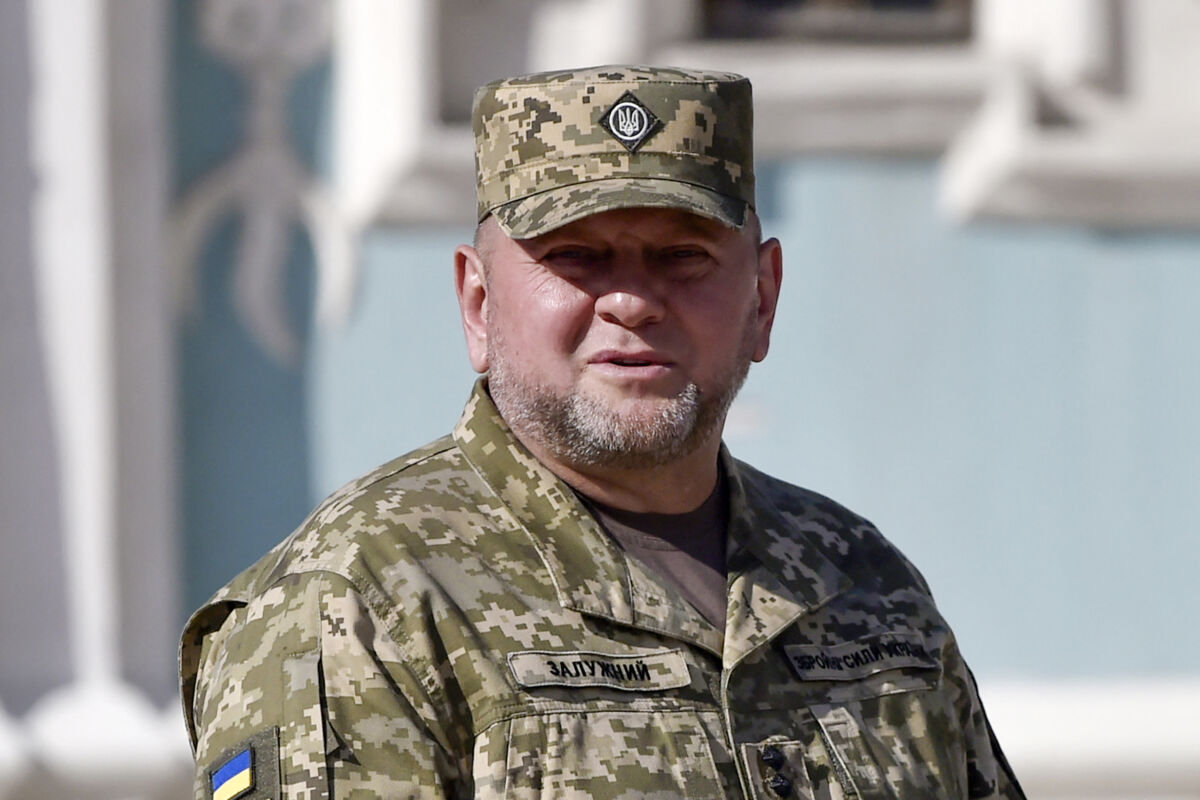
The opportunity to exchange views with someone who has been labeled a national hero and is a significant part of recent history represents an exceptional occasion. The meeting with Zaluzhnyi was characterized by an open and frank conversation and took place at the end of January 2025, shortly after the inauguration of United States President Donald Trump, but before he began negotiations for the anticipated, yet seemingly distant, ceasefire.
On February 24, 2022, Russia launched its large-scale invasion of Ukrainian territory, which Russian President Vladimir Putin referred to as a “special military operation.” What Moscow’s leadership projected as a multi-day offensive to reach Kyiv was unsuccessful and was repelled. After three years of war, operations have extended to the oblasts of Luhansk, Donetsk, Zaporizhzhia, Kherson, as well as Crimea in Ukraine and the Russian region of Kursk.
In command of the Ukrainian armed forces responsible for defense was General Valerii Zaluzhnyi[1], who remained in the position of commander-in-chief until February 2024, meaning he led not only the defense of Ukraine but also the planning and execution of the counteroffensives in 2022 and 2023.
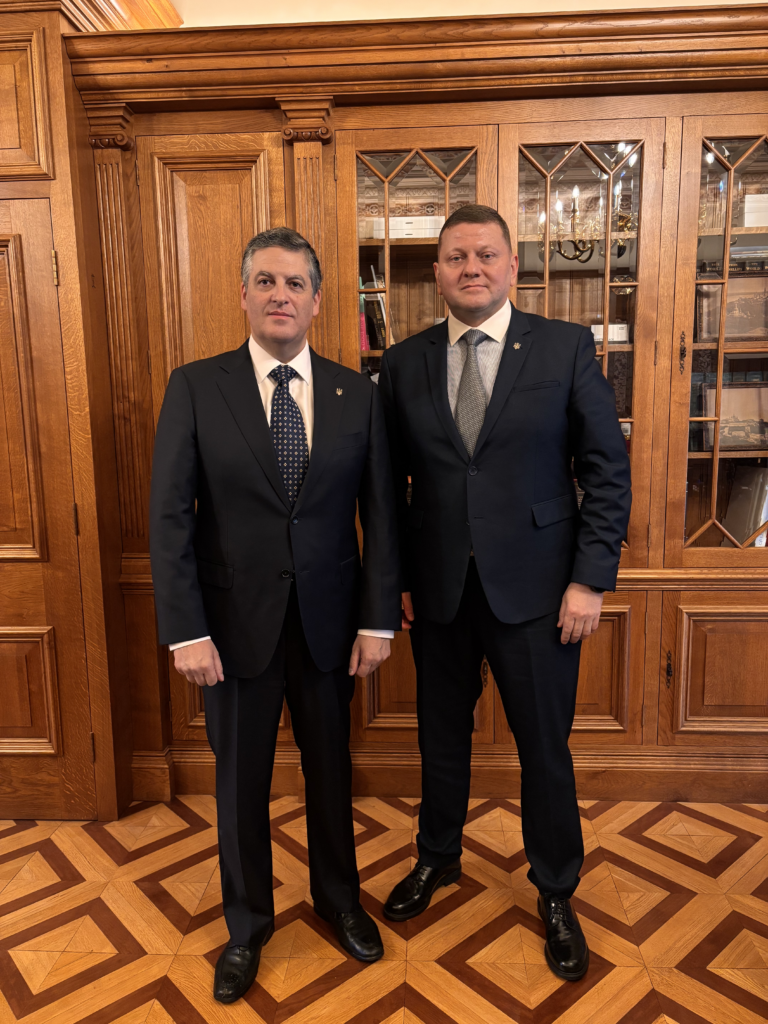
While conversing with a sitting ambassador is interesting, doing so with someone who was also the senior commander of armed forces involved in a high-intensity conflict is even more so. Additionally, having the opportunity to exchange views with someone who has been labeled a national hero and is a significant part of recent history represents an exceptional occasion. The meeting with Zaluzhnyi was characterized by an open and frank conversation and took place at the end of January 2025, shortly after the inauguration of United States President Donald Trump, but before he began negotiations for the anticipated, yet seemingly distant, ceasefire.
ON THE DEFENSE OF UKRAINE
One of the topics discussed in the meeting concerned the success of the Ukrainian defense against the initial Russian offensive of 2022. When identifying the factors that determined the favorable outcome for Ukraine, seven aspects stand out. First, undoubtedly the most important, the will to fight and resilience of the Ukrainian people, which has been a decisive component to this day. This element has been one of the most important objectives that the Russian regime seeks to undermine, as it is key to sustaining the operational effort, completing personnel in the armed forces, and supporting the government in the direction of the war.
Second, he acknowledges that Kyiv had capabilities to fight and sustain the struggle. While prior to the Russian invasion on February 24, Moscow appeared to have evidently superior military power, expressed in the quantity and modernization of weapon systems of all types, the truth is that the outcome—after three years—is that this asymmetry did not prevail on the battlefield. In this sense, the third element highlighted is the international support. The initial provision of weapon systems such as the Javelin (anti-tank missile) and the Stinger (anti-air missile), combined with intelligent deployment and proper operation, inflicted unexpected damage that had a significant impact on the Russian units tasked with capturing the Ukrainian capital, supposedly in a matter of days, forcing them to withdraw and reorganize their operations. The fourth element mentioned by Zaluzhnyi refers to the leadership and military command. This component created the defense strategy and led the operations that allowed for the repulsion of the offensive, continuously adapting to the changes and demands of the situation. Additionally, from the perspective of military command, the former chief of the Ukrainian armed forces identifies as a key factor the correct balance between offensive and defensive. On the other hand, but closely related to the above, he emphasizes the role of technology to compensate for the imbalance of forces. Thus, while Russia presented a larger military force, the technology provided by the West, combined with good intelligence, the appropriate concentration of forces to create local superiority at decisive moments, as well as correct decisions at key times, were decisive for success.
Finally, he identifies that the political leadership in conducting the war was what managed to guide the nation during this stage, defining the objectives of the war, generating the material conditions for defense, and playing a role in strengthening cohesion during the most complex moments.
ON THE BATTLEFIELD
General Zaluzhnyi’s experience is interesting for evaluating the current behavior of the battlefield. He envisions that some characteristics of World War I (massive use of artillery and trenches), World War II (use of armored units), and precision weapons that emerged in the 1970s and were progressively developed until 2022 remain. However, one quality that became evident in this war is that these types of weapons—precision weapons—are extremely costly, complex to operate, have limited availability to meet the high demand for high-intensity operations among peer states, and are of questionable effectiveness against troops deployed across a wide front and protected by fortifications. In contrast, efficient and more economical alternatives have emerged, such as those developed by the Ukrainians: massive use of drones (UAVs). Examples include FPV (First Person View) drones built in Ukraine in facilities as basic as a garage or the dining room of an apartment, or the Iranian Shahed-136, which costs around $10,000 and can be produced in tens of thousands per month, changing the landscape.
In this process, he projects the year 2027 as the point at which mass production capacity will allow for the availability of these means in acceptable quantities and costs for large-scale warfare. He suggests that countries like China and Russia have identified this situation and are working to get ahead of this scenario. Similarly, he posits that a true race is unfolding between drone capabilities and electronic warfare (EW) capabilities. For now, according to Zaluzhnyi’s observations, UAV builders have a slight lead.
At the same time, in his analysis, he notes that 2024 was a significant year for the emergence of artificial intelligence (AI) in the deployment and use of drones. These vehicles are being experimented with and utilized on land, in the air, and at sea, in what he estimates will be a profound and relevant change in the characteristics of the battlefield. Ukraine has understood this, adapted, and has been a pioneer in innovation over the past three years. He states that countries like Russia, China, Iran, and even North Korea have also recognized this, but that NATO countries, in general, are much further behind in this process, which will present limitations that could be exploited by their adversaries.
Finally, when defining the type of force that countries require in this scenario, he asserts that it is very difficult to establish as this process is dynamic and in full evolution. However, in general terms and according to the reality of each country, from his experience, he identifies that changes in doctrine will be required to promote and facilitate the adaptability of forces, as well as to generate large formations (corps or division level) to cover extensive areas of terrain, coordinate operations, and integrate support and enablers.
ON WAR
The first element that emerges from the conversation about the characteristics of this war is that what is at stake goes far beyond Ukraine, having global repercussions and, particularly, for the future and security of Europe. The involvement of Iran and China and the deployment of North Korean soldiers in support of Russia’s war effort add to the recognized Western support for Ukraine, providing a global context. Since war is a political act, as such, this conflict will inevitably affect the politics of other countries and their alliances, so all countries must observe how conflicts and war evolve, especially democracies.
The ambassador and Ukrainian general reiterates that war must be avoided at all costs due to the dramatic effects it has on nations, but if that cannot be achieved, the state must be prepared to face it and protect its citizens, not only through military power but especially through the preparation of society for conflict.
He asserts that the development of the war affecting Ukraine has made it clear that to achieve success and triumph in the conflict, two conditions are required as a foundation: the demographic characteristics and the economy of the countries. The birth rates of a century ago, when families were large with a dozen children, allowed societies like Russia to absorb significant losses as seen in World War II, being able to replenish casualties in high-intensity and prolonged conflicts. This has changed, as many societies have reduced their births to figures that barely reach what is necessary for replacement—without war—or are definitively in decline. The Russia-Ukraine conflict has reiterated that the primary instrument and the most difficult and costly to replace remains people, so the demographic characteristics of countries significantly define the future in a prolonged conflict.
As previously mentioned, the costs of modern weapon systems developed in recent decades make high consumption prohibitive. Thus, states with stronger economies will have greater chances of overcoming conflicts. The artillery ammunition consumption of World War I is inconceivable today. Many developed Western states, as of February 2022, did not have sufficient stocks of artillery shells, not even equivalent to what armies fired in a day during the major offensives of 1917. In summary, Zaluzhnyi projects that the future of war will be characterized by the deployment of fewer soldiers and the massive use of more economical weapons.
IN CONCLUSION
From the discussions held in January 2025 with Ambassador Zaluzhnyi, the following can be highlighted:
- The nature of war remains unchanged, as a political phenomenon that confronts wills;
- As always, the character of war is evolving, driven by the will of people, the necessity of operations, and technological innovation;
- Leadership during war—both political and military—is fundamental to the outcome of conflicts;
- While war must be avoided at all costs, it is the responsibility of states and their governments to prepare for these situations, whether through societal preparation, training the elites that will lead them, the armed forces that will execute them, and the economy—including industry—that will sustain them;
- States that are not at war must always observe the military events unfolding to gain the necessary experiences, according to their own reality.
Marcelo Masalleras
April 23, 2025
[1] Valerii Zaluzhnyi currently serves as Ukraine’s ambassador to the United Kingdom, since 2024. He joined the Ukrainian ground forces in 1993, graduating from the Odessa Military Academy in 1997. He has held leadership positions at all levels from platoon upwards, notably as commander of the 51st Mechanized Brigade of “Guards,” deputy commander of the Western Operations Command, chief of the Joint Operational Staff of the Ukrainian armed forces, and commander of the Northern Operations Command. From July 2021 to February 2024, he served as commander-in-chief of the Ukrainian armed forces, meaning he directed operations in Donbas from the time he took office and, after the onset of the large-scale Russian invasion in 2022, the complete defense of Ukraine. Under his command, the initial defense and the counteroffensive of 2022 and 2023 were planned and directed.