The Strategic Decline of Iran in Latin America?
This article was translated automatically and may contain differences from the original. For reference, read the original.
- by Carlos Solar & Juan Pablo Toro
- Guest Contributions
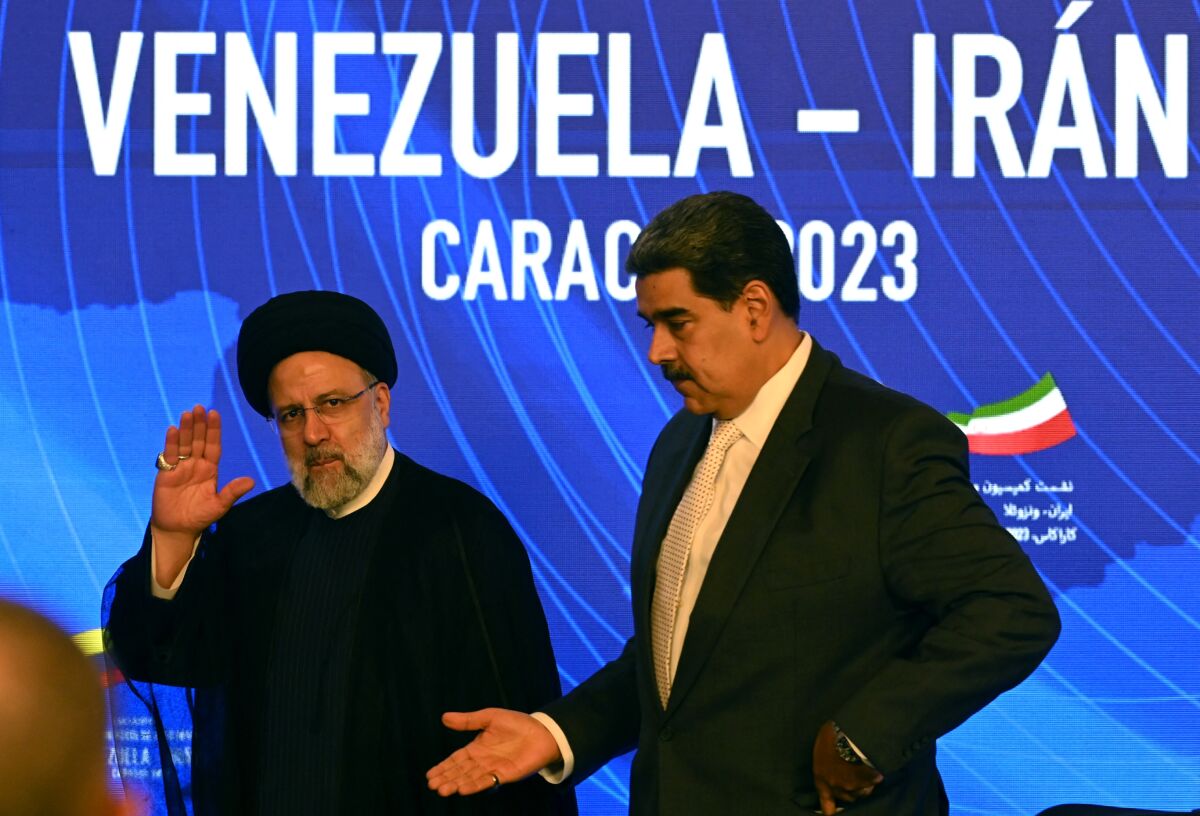
It is not easy to gauge Iran’s presence or effective penetration in Latin America due to the opacity that often surrounds the global activities of the Ayatollahs’ regime. Nevertheless, in its constant quest to challenge the United States, Tehran has established itself in the region, prioritizing partnerships with Cuba, Venezuela, Nicaragua, and Bolivia.[1], in addition to already having affiliates of the terrorist group Hezbollah present.
In this context, Israel’s recent air offensive against Iran’s nuclear program, which includes neutralizing its high-ranking military and paramilitary leaders, could compromise Tehran’s ability to continue its activities in Latin America, depending on the degradation of its security apparatus.
The reconstitution of military capacity at home will become a survival task for a regime that today cannot deter its adversaries and has been unable to protect its allied militias, such as Hamas in Gaza, Hezbollah in Lebanon, and the Houthi rebels in Yemen.[2]. The destruction of Tehran’s oil infrastructure will also limit the availability of economic resources for extraterritorial ventures.
Another indirect effect of the current conflict in the Middle East lies in the possibility that a cornered Iran may seek weak points to strike Israeli interests in Latin America—and by default, those of its American partners—similar to the bomb attacks against the Israeli embassy in Buenos Aires in 1992 and the Argentine Israeli Mutual Association (AMIA) in 1994. The Federal Chamber of Cassation, the highest court in Argentina, determined that both attacks were carried out by Hezbollah at Iran’s behest, which implies considering it a terrorist state.
While there is a historical precedent, the interpretation of the potential damage of that militia in the region has not been updated, according to a Rand report.[3], so that when Hezbollah is discussed, there tends to be a swing between underestimation and alarmism. The same report also indicates that the main activity of the militia’s agents seems to be aimed at obtaining money from illegal activities and laundering it to finance operations in the Middle East.
In the last three decades, the militia that exploits the presence of Lebanese communities in places like the Triple Frontier between Argentina, Brazil, and Paraguay has received more blows than it has launched attacks, such as those inflicted during Operation Trapiche, initiated in 2023.[4].
The combined efforts of the Brazilian federal police, the FBI, and Mossad led to the capture of three Brazilian citizens and the issuance of arrest warrants for two recruiters, as part of investigations against the fraudulent smuggling of electronic cigarettes, the profits of which funded the Commercial Affairs Component of Hezbollah’s External Security Organization.
Additionally, the immobilization in Argentina of a 747 freighter from a Venezuelan airline, which had previously belonged to the Iranian Mahan Air—sanctioned by the European Union and the United States—allowed for the dismantling of an apparent regional smuggling operation by the Quds Force. While the Jumbo ended up being scrapped in the Arizona desert,[5], other similar flights to Chile by aircraft from the Conviasa airline, with Iranian crew members and no cargo[6], prompted investigations by local authorities. Since then, there have been no reports of new arrivals.
Iranian Military Capability, Irregular Warfare, and Unmanned Aerial Vehicles
Iran’s geopolitical context and its defense industry have developed in response to regional tensions and the need for self-sufficiency.[7]. While Tehran has made significant advances in developing its military industry, it still faces challenges in terms of technological capabilities and the need to modernize indigenous technologies. However, Iran’s focus on asymmetric warfare has made it a reckless regional actor, as demonstrated by its escalation in the conflict with Israel.[8].
The acquisition of armed unmanned aerial vehicles has caused changes in Iran’s air power norms and behaviors, similar to what has occurred in Turkey and the United Arab Emirates. Iran views the use of armed drones as a way to compensate for the vulnerabilities of its conventional air force and enhance its military capabilities. The goal is to prioritize asymmetric warfare to project reconnaissance or long-range attack capabilities without risking Iranian lives.
The aerospace division of the Islamic Revolutionary Guard Corps (IRGC) is driving much of Iran’s drone development, deploying them primarily in its border areas and neighboring countries. The Shahed-129 has been used, for example, to attack targets in Syria, Yemen, and Iraq.[9]. Iranian-made drones have also allowed for greater precision and increased effectiveness of Russian forces in the conflict in Ukraine.[10].
The alleged weakening of the Iranian armed forces and the IRGC, resulting from successive Israeli attacks following the terrorist incursion by Hamas on October 7, 2023, should impact Tehran’s ability to provide military material to its partners, including training for its use and maintenance; particularly in areas like Latin America, which have never been priorities.
A report from specialized sources accessed by Infobae[11] stated this year that, while Venezuela initially acquired observation and attack drones of Iranian origin, some of which were showcased in military parades, it has now established a factory for these devices at El Libertador Air Base in Maracay, 120 kilometers west of Caracas, to manufacture them. These would be the unmanned aerial vehicles (UAVs), ANSU-100 (Mohajer-2), ANSU-600 (Mohajer-6), and ZAMORA V-1 (Shahed-131). This technology transfer would include training in their use.
In January 2025, before assuming the role of Secretary of State, then-Senator Marco Rubio warned that the production of Iranian drones on Venezuelan soil posed a risk to the hemisphere: “Venezuela has prepared for the manufacturing of the combat unmanned aerial vehicle that is a war drone.”
Furthermore, the Venezuelan Navy has previously enhanced its capabilities with the acquisition of Peykaap III-class missile boats and CM90 anti-ship missiles. It is this type of weapon that could, for example, complicate offshore oil activities in Guyana. Additionally, the Iranian navy also conducted a mission to display its flag in 2023 when a logistics ship and a frigate passed through the Strait of Magellan and docked in Brazil, the only country that opened its ports to the flotilla. Argentina has also reported the presence of 700 members of the Quds Force[12], a branch of the IRGC.
As a result of a bilateral cooperation memorandum on security and defense signed in 2023, Bolivia gained access to Iranian drones[13] and other capabilities. Informed sources indicate that at least thirty unmanned vehicles have been transferred from Tehran to La Paz, which are still awaiting their instructors, who are currently focused on the Russian-Ukrainian front and likely on defending their country. The government of President Luis Arce explained at the time that platforms were needed for intelligence, surveillance, and reconnaissance (ISR) tasks to monitor borders, track drug trafficking, and support internal security[14].
Iran’s experience with medium-altitude long-endurance (MALE) drones could significantly enhance Bolivia’s ISR capabilities if they were to be integrated. These systems would provide the country with a significant advancement in persistent aerial surveillance and intelligence gathering, especially in remote or hard-to-access regions.
For now, the lack of transparent data on acquisitions and the potential political sensitivities surrounding Iranian military exports mean that any real impact on ISR remains speculative until deployed assets are confirmed.
Conflict in the Middle East and the Reorientation to Domestic Consumption
While drones offer many advantages, such as their precision and ability to reduce risk for human operators, given the lack of high-intensity armed conflicts, this type of technology would fit with the fight against unconventional threats. Latin American countries that possess drones for ISR missions typically have Tier I platforms (low-altitude long-endurance drones, such as the Hermes 450) and Tier II platforms (medium-altitude long-endurance drones, such as the Hermes 900), according to the U.S. Air Force’s tier system.
Countries like Brazil, Chile, Colombia, and Ecuador have Israeli-made Tier II Hermes 900 drones that can support a variety of ISR purposes due to their long endurance, infrared cameras, sensors, and other digital equipment onboard. Tier II drones tend to be more desirable given their highly autonomous and effective mission reputation and minimal maintenance, even under intensive use in adverse weather conditions[15].
Complementing the success of Israeli warfare with unmanned aerial vehicles, the experience in counter-terrorism operations and its emphasis on operational sustainability have attracted governments in the region, such as Colombia, Brazil, and Mexico. However, if Israel opts for a prolonged war against Iran, it will prioritize its own military supply, which could delay or suspend deliveries of material to other countries. Defense production lines, such as drones, missiles, or air defense systems, could be redirected to the domestic front at the expense of other importing markets, including Latin America.
China, on the other hand, would strategically benefit in Latin America by filling the void that Iran would leave in allied countries such as Venezuela, Bolivia, Cuba, and Nicaragua. These countries could become more dependent on China as a supplier of armament, surveillance technology, cybersecurity, and critical infrastructure[16].
Moreover, with the United States possibly focused on supporting Israel, China would have a window of opportunity to advance with less geopolitical resistance in the Western Hemisphere, strengthening its position through bilateral relations, access to natural resources, and control of key infrastructure.
Conclusion
The presence that Iran dedicated to building in Latin America by tightening security ties with countries like Venezuela and Bolivia, which along with Cuba condemned Israel’s attacks over the weekend, could be severely diminished, weakening its logistical, operational, and diplomatic capacity in the hemisphere. The anti-Western agenda of Caracas and Tehran sought, above all, to bolster themselves against the United States, and today one of the parties, which had the most technology, is under attack. In the case of La Paz, the technology transfer will likely be interrupted.
The possibility of a violent retaliation from Hezbollah, as an allied force of Iran, suggests that there would be operators capable of carrying out actions on the ground, awakening those who have been dormant for three decades, or sending new agents under the constant bombardment of their homes. This seems unlikely, given the current circumstances.
Carlos Solar
Senior Research Fellow RUSI
Juan Pablo Toro
Executive Director AthenaLab
June 17, 2025
[1] Juan Pablo Toro. “Extracontinental Powers in Latin America,” July/August 2023, Política Exterior, No. 214.
[2] John Griffiths and Marcelo Masalleras, “Geopolitical Assessment of the Middle East: Israeli-Palestinian Conflict,” Working Paper No. 33, April 15, 2025, available at https://www.athenalab.org/publicaciones/documentos-de-trabajo/2025/04/15/documento-de-trabajo-no33-evaluacion-geopolitica-de-medio-oriente-conflicto-israeli-palestino/
[3] Marzia Giambertoni, “Hezbollah’s Networks in Latin America: Potential Implications for U.S. Policy and Research,” Expert Insight, March 31, 2025, available at https://www.rand.org/pubs/perspectives/PEA3585-1.html
[4] https://es-us.noticias.yahoo.com/brasil-lanz%C3%B3-operativo-ciudades-agentes-214312723.html
[5] https://www.latimes.com/espanol/eeuu/articulo/2024-02-12/eeuu-dice-que-ha-tomado-posesion-de-un-boeing-747-que-iran-vendio-ilegalmente-a-empresa-venezolana
[6] https://www.biobiochile.cl/noticias/nacional/chile/2022/09/02/pdi-informa-que-10-tripulantes-iranies-ingresaron-a-chile-en-avion-de-linea-aerea-venezolana.shtml
[7] Robert Czulda, “Defense Industry in Iran – between Needs and Real Capabilities,” Defense & Security Analysis 36, no. 2 (2020): 201–17, https://doi.org/10.1080/14751798.2020.1750184
[8] Aniseh Bassiri Tabrizi and Justin Bronk, “Armed Drones in the Middle East: Proliferation and Norms in the Region,” Occasional Paper (2018), https://static.rusi.org/20181207_armed_drones_middle_east_web.pdf
[9] Tabrizi and Bronk, “Armed Drones in the Middle East.”
[10] Mohammad Eslami, “Iran’s Drone Supply to Russia and Changing Dynamics of the Ukraine War,” Journal for Peace and Nuclear Disarmament 5, no. 2 (2022), 507–518, available at https://doi.org/10.1080/25751654.2022.2149077
[11] https://www.infobae.com/venezuela/2025/01/19/el-regimen-de-nicolas-maduro-instalo-en-venezuela-una-fabrica-de-drones-para-uso-belico-con-la-cooperacion-de-iran/
[12] https://eleconomista.com.ar/internacional/maximo-nivel-alerta-argentino-frontera-bolivia-estos-son-motivos-n73069
[13] https://www.bbc.com/mundo/articles/cld9nq1zqwyo
[14] https://apnews.com/article/iran-argentina-novillo-tehran-drones-570b75c7ca61bb6bbf6ca250ccb75828
[15] Stefan Borg, “Assembling Israeli Drone Warfare: Loitering Surveillance and Operational Sustainability,” Security Dialogue 52, no. 5 (2021): 401–17, available at https://doi.org/10.1177/0967010620956796
[16] Carlos Solar, “China’s Weapons Transfer in the Western Hemisphere,” Journal of Strategic Studies 43, no. 2 (2020), 217–244, available at https://repository.essex.ac.uk/28814/1/Chinas%20weapons%20transfer%20in%20the%20Western%20hemisphere.pdf