The Latin American electoral moment in the second half of 2025
This article was translated automatically and may contain differences from the original. For reference, read the original.
- by Carlos Malamud & Rogelio Núñez Castellano
- Guest Contributions
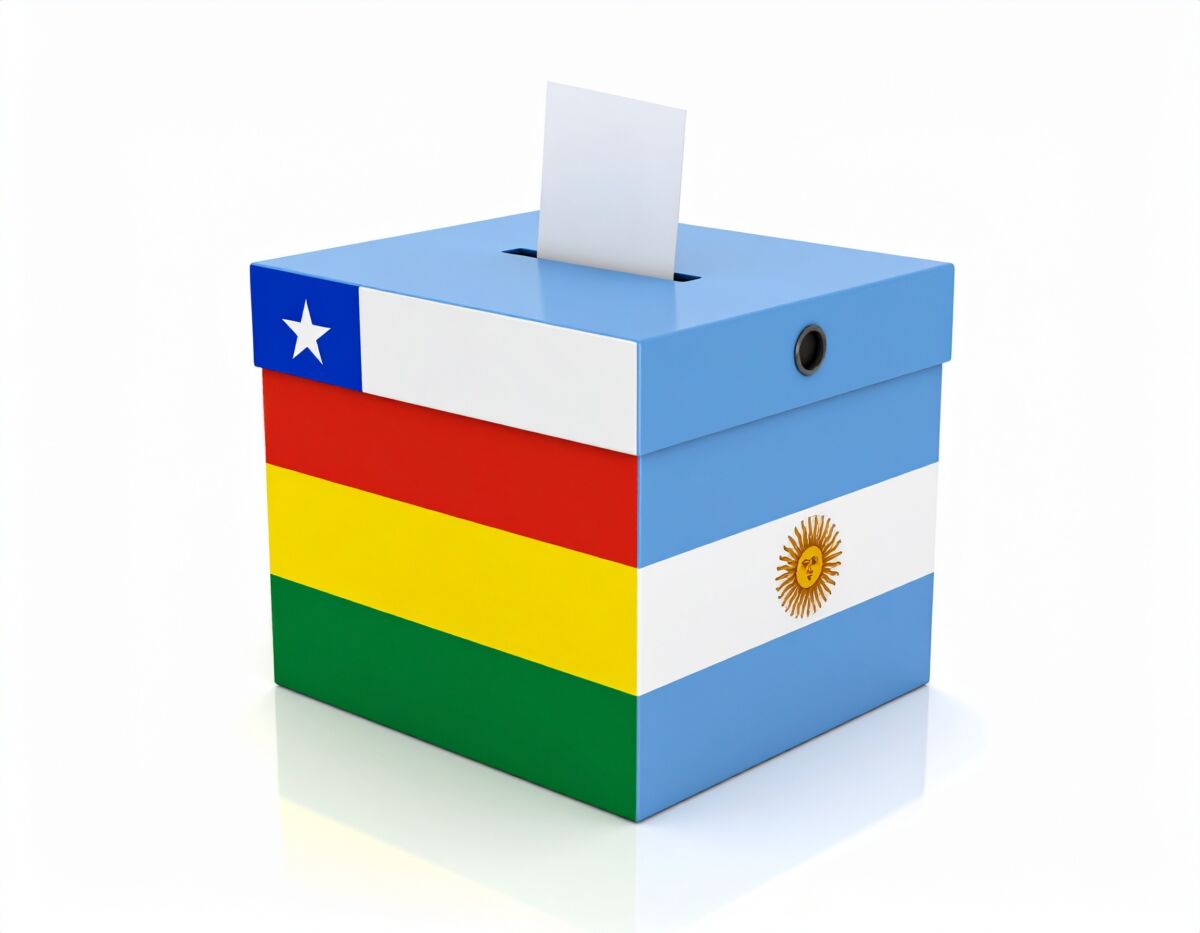
The electoral intensity in Latin America during the second half of 2025 adds political-institutional uncertainty to the existing complex landscape.
1. Introduction: General characteristics of the elections
Latin America will experience three presidential elections and local and legislative elections in Argentina in the second half of 2025. A popular consultation is also possible in Colombia. Bolivia will elect its president and parliamentarians in August, Honduras in November, and Chile in November/December. The electoral intensity adds political-institutional uncertainty to the existing complex landscape. Most elections are polarized and often feature incompatible proposals. In this context, minority governments and fragmented legislatures emerge, complicating consensus-building for structural reforms.
Figure 1. Elections in Latin America, first half of 2025
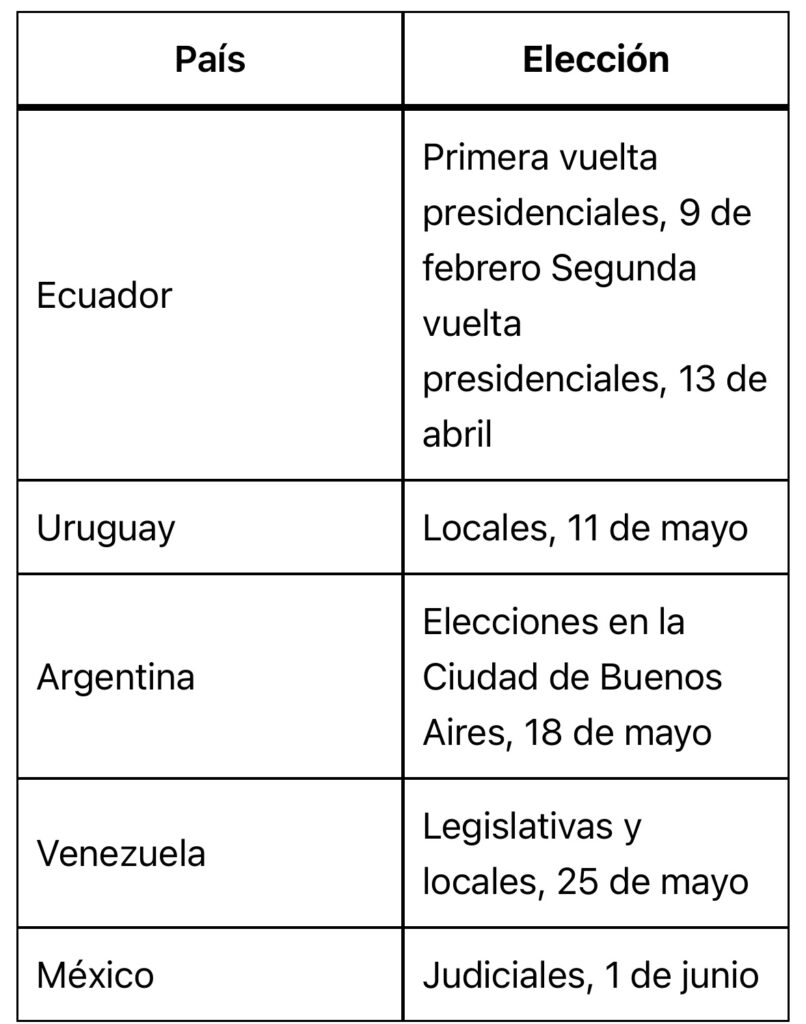
Source: own elaboration.
Figure 2. Elections in Latin America, second half of 2025
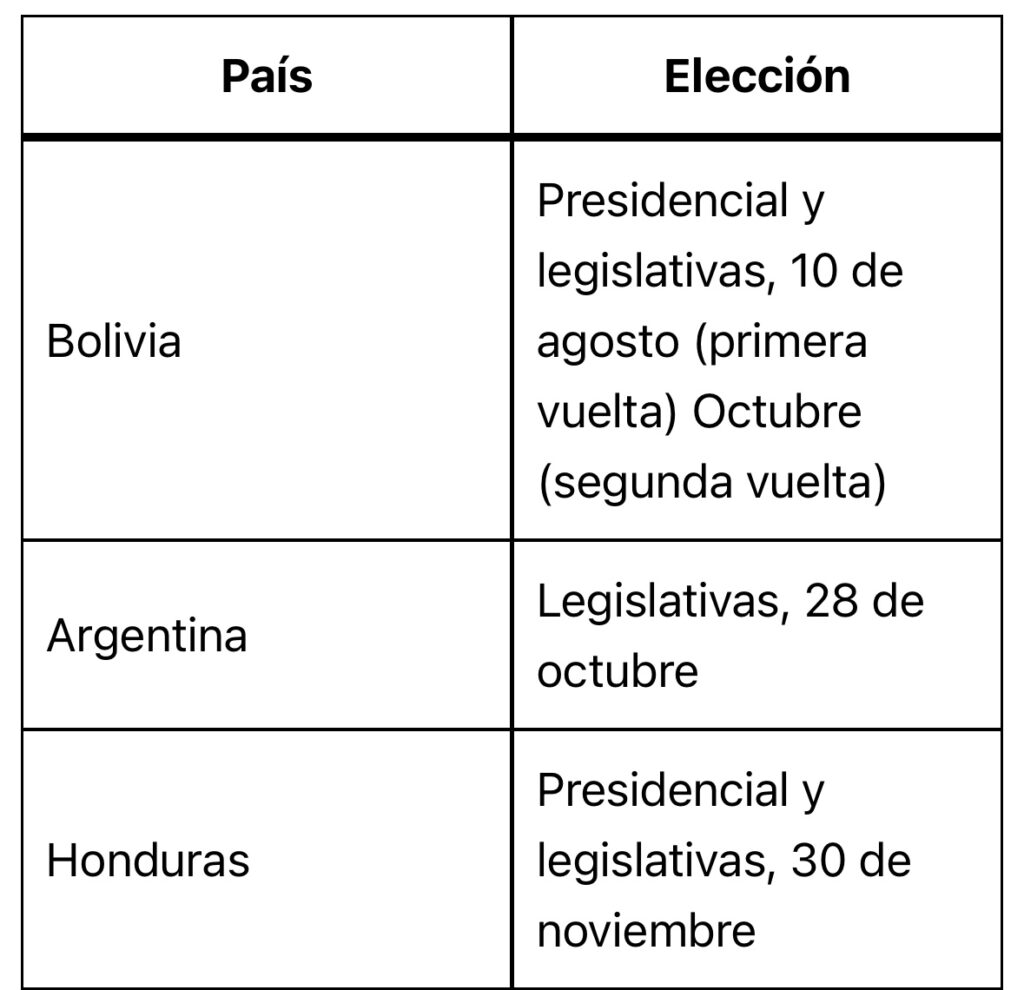
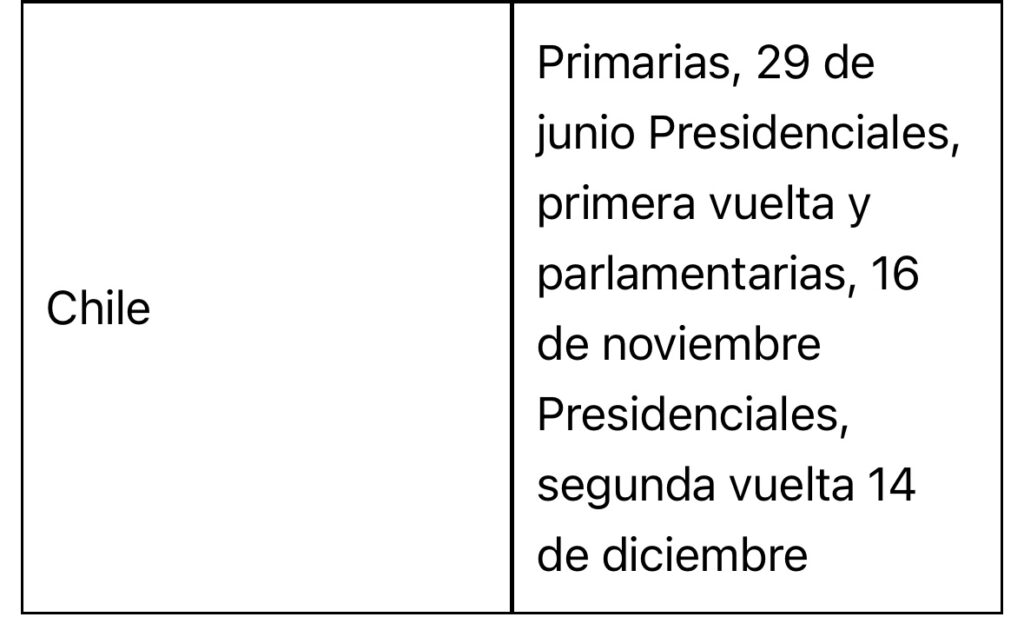
Source: own elaboration.
There will also be a pre-electoral atmosphere in those countries with presidential and legislative elections in 2026: Peru, Costa Rica, Brazil, and Colombia, in addition to Nicaragua. It is an intense calendar that, beyond national specificities, presents three common characteristics: party fragmentation, polarization, and the emergence of candidates with a Trumpist or Bukele-like discourse (or both combined).
Fragmentation affects both opposition and ruling parties, whether left or right, increasing the unpredictability of results and questioning, after Ecuador, a theoretical regional trend toward the right. The initial advantage of the right in Bolivia, Chile, and Honduras is balanced, especially in the Andean countries, by their disunity. In Chile, there are three major trends (center-right, ultra-conservatives, and libertarian right), while in Bolivia, fragmentation is greater, with five anti-MAS candidates ranging from center to Trumpist right. This opens a range of possibilities, without excluding potential victories for the leftist ruling party in all three countries.
Party fragmentation is compounded by political polarization, which surpasses Latin America. Economic stagnation frustrates expectations for personal and intergenerational improvement. According to ECLAC, the region would enter its third lost decade, the second consecutive one after 2014-2023. Such frustration inclines citizens toward rupture options at the extremes of the system, which incentivize polarization, attack the statu quo and propose incompatible options with dialogue.
Polarization favors illiberal candidacies, such as hardline approaches to insecurity (Bukelism) or ultra-conservative shifts (Trumpism). These proposals are bolstered by favorable winds for those showcasing sectoral victories: Javier Milei in economics, Bukele in security, and Trump in his crusade against the political elite and “wokeness.” Bukelism, Trumpism, and Mileism are in vogue and have become a regional trend, similar to chavismo and “21st-century socialism” between 2005 and 2015.
2. Bolivia (August 17)
The Bolivian elections on August 17 aim to end the hegemony of the Movement for Socialism (MAS), the only force with national reach, which has governed almost uninterruptedly from 2006 to 2025. The experience has exhausted itself after its repeated victories in 2005, 2009, 2014, and 2020. Three interrelated causes explain this: the end of Evo Morales’ leadership, the division within MAS, and the economic crisis.
Morales’ charismatic leadership (2006-2019) is contested from within MAS, which he has ultimately abandoned. MAS, a loose coalition of social movements, has split into three factions. Morales’ caudillismo fractured after breaking with President Luis Arce, whom he had anointed as his successor. From his coca-growing stronghold in Chapare, he has boycotted Arce throughout his term and took refuge there, protected by his supporters, when accused of sexual assault. From Chapare, he continues to mobilize his supporters to be registered as a candidate, despite the Constitutional Tribunal preventing him. Outside of MAS, Morales has attempted to force the legal-constitutional framework through mobilizations. Ultimately, the Plurinational Constitutional Tribunal (TCP) canceled the legal status of the political organization he intended to use to seek the presidency while authorizing the party of Senate President Andrónico Rodríguez, the Movement for the Third System (MTS), to participate in the upcoming elections.
The figure of Andrónico Rodríguez, the young Senate president with serious future prospects, has emerged amid the Arce-Morales rivalry. Rodríguez could promote an Evismo without Morales (he has always been considered Morales’ protégé), or the renewal of Evismo or MAS. His pragmatism makes him a potential unifying figure for the left, social movements, and Evismo. Rodríguez is advancing his candidacy independently of Morales and the MAS candidate, who ultimately will not be Arce, after he withdrew due to low social support. It will be Eduardo del Castillo, former Minister of the Interior under Arce and a staunch anti-Evist.
Figure 3. Leftist candidates in Bolivia
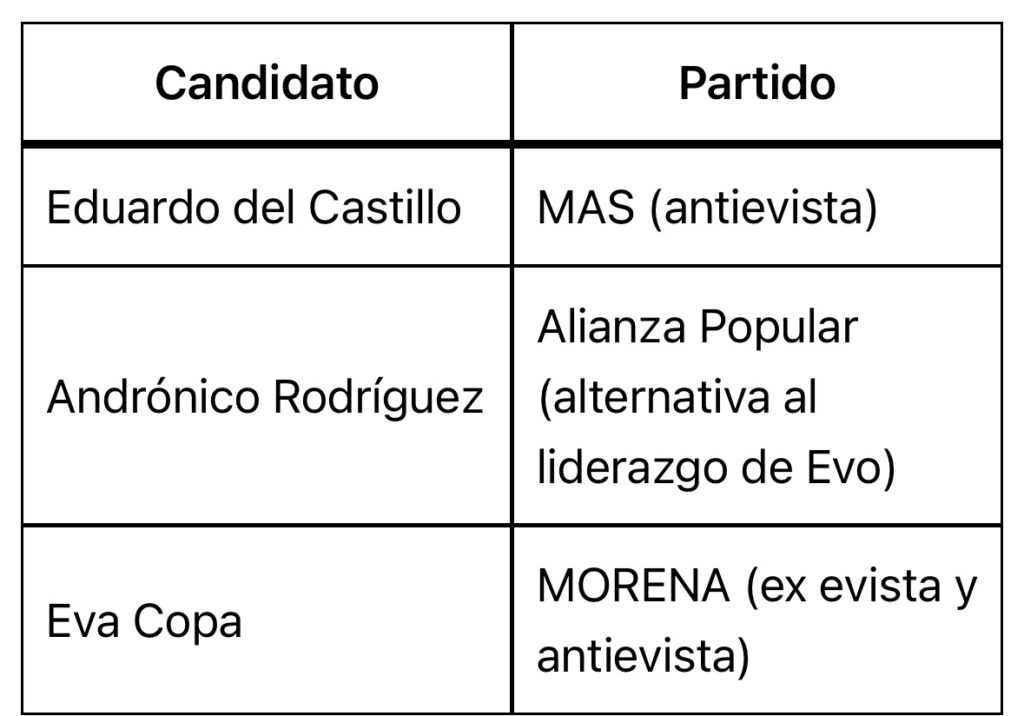
Source: own elaboration.
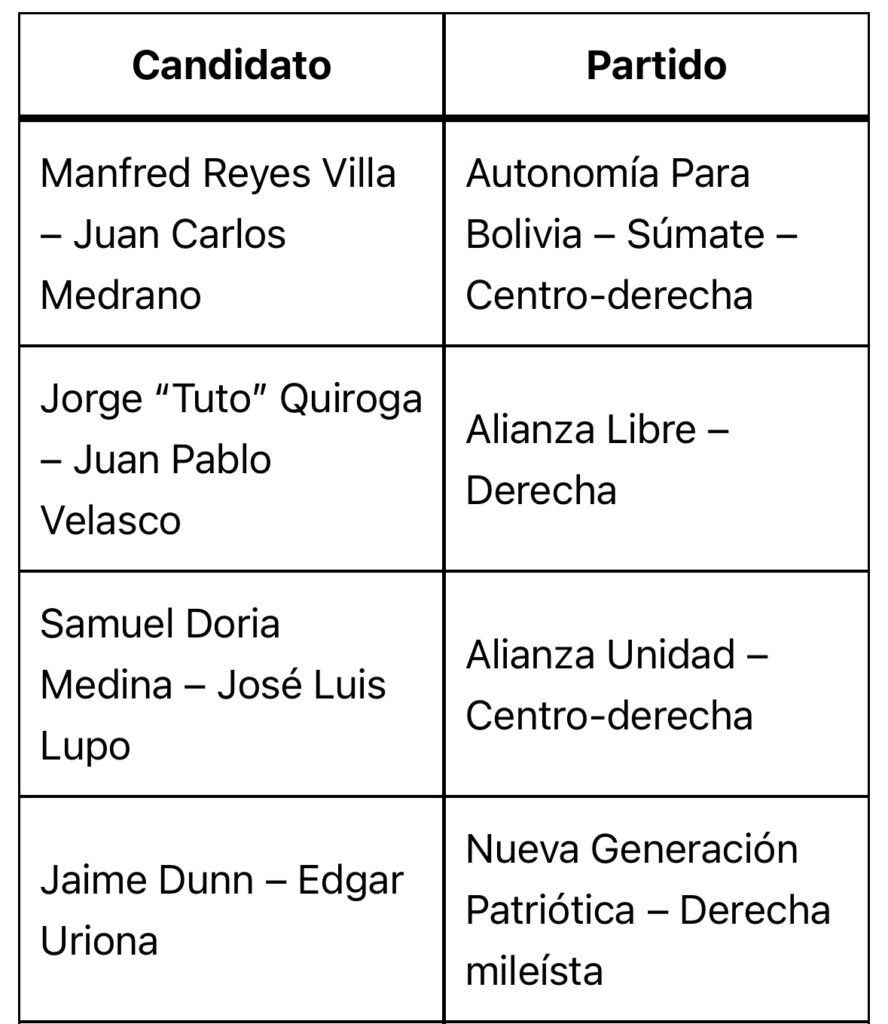
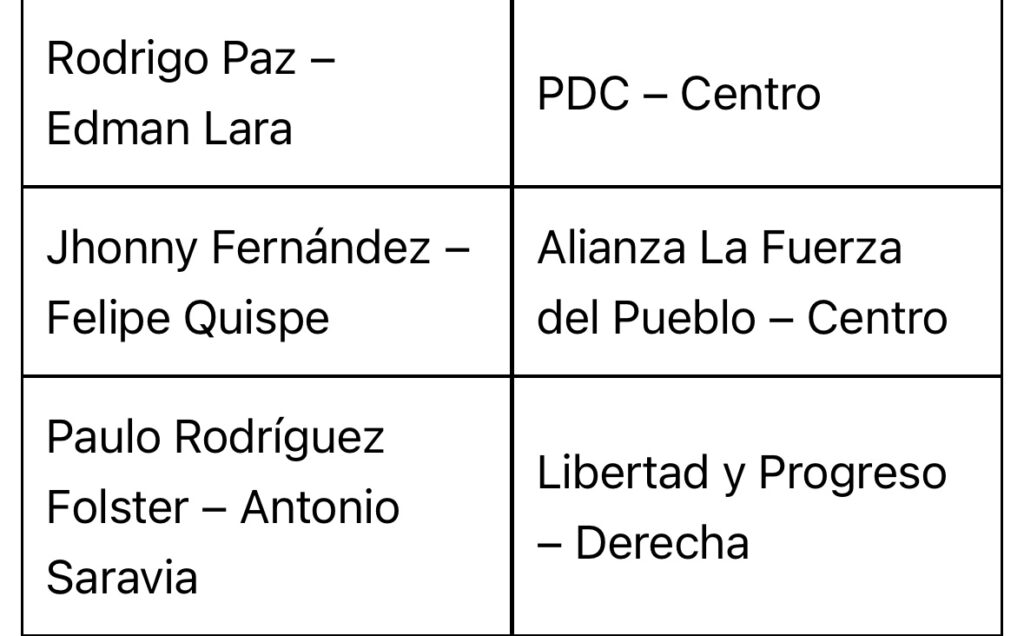
The fragmentation of MAS and the socioeconomic situation present an opportunity for the right-wing opposition, which, after failing to unite, has divided into four coalitions. Currently leading the polls is former President Jorge “Tuto” Quiroga (2001-2002), supported by right-wing leaders and figures from the department of Santa Cruz. His main rival is businessman Samuel Doria Medina, who has the backing of centrist politicians and former parliamentarians, as well as the right-wing former governor of Santa Cruz, Luis Fernando Camacho, imprisoned since 2022 in a high-security prison. Behind them are an old representative of traditional Bolivian politics, Manfred Reyes Villa, mayor of Cochabamba, and Jaime Dunn, a former operator from the New York Stock Exchange, with a Mileist style. Following them is the current outsider and president of the San José sports club, Pablo Rodríguez, who has liberal analyst Antonio Saravia as his vice-presidential candidate. More centrist is Santa Cruz mayor Jhonny Fernández, who views a rapprochement with Rodríguez favorably, and Senator Rodrigo Paz, son of former President Jaime Paz Zamora (1989-1993). Figure 4. Right-wing candidates in Bolivia Source: own elaboration.
The decline of the Bolivian economic miracle, led by Arce when he was Minister of Economy under Morales from 2006 to 2019, has deepened fragmentation and polarization. Whoever wins will find a tense political landscape, with complex economic challenges, such as implementing deep adjustments, turning the primary deficit into a surplus, devaluing the official exchange rate, and opening spaces for private investment. The government should reduce the public sector, inefficient public investment, and energy subsidies.
Bolivia, which a decade ago was an example of economic growth and stability for the IMF, is now facing a severe economic crisis. After 15 years with the same exchange rate, it is left without foreign currency reserves. It is on the brink of a monetary crisis. As the IMF has warned, the country is in an unsustainable situation, with inflation exceeding 15% in 2025 and 2026 and public debt around 95% of GDP. Natural gas and oil production, the main sources of income, fell by 13% between 2014 and 2023, and the contribution of the energy sector to GDP has decreased by 40% in recent years. The fiscal deficit is expected to hover around 11% of GDP in 2025 and reach 13% in 2026. With debt approaching 98% of GDP, the country has no access to external credit.
The Morales and Arce governments did not want to implement structural reforms to avoid undermining their support and did not promote prudent fiscal policies during the boom, which would have required tax reform and adjustments in public spending. Instead, they maintained a high public deficit (7.3% of GDP in 2022), financed by the Central Bank. International reserves were exhausted, foreign currency was rationed, and the black market emerged strongly. Moody’s downgraded the debt rating from Caa3 to Ca, raising the risk of a balance of payments crisis and a possible
default
. In this scenario, the government must decide whether to allocate its scarce dollars to pay interest on external debt or cover essential imports, especially fuel, while maintaining a fixed parity with the dollar. In December 2024, foreign currency reserves barely reached 50 million dollars, less than 1% of GDP, compared to 13.2 billion available 10 years earlier. This is compounded by the penetration of drug trafficking, especially from Brazil’s First Capital Command (PCC). The future government will have to address this issue without a majority in the Assembly and amid growing polarization. Polls, such as those from Ipsos, are still merely indicative, but they show three dynamics. First, the right-wing bloc (taken as a whole) is majority, close to 51%, compared to the different factions of MAS, which traditionally exceeded 50% and now barely reach 22%. Second, within a large fragmentation of the vote, no candidate exceeds 20%, with right-wing candidates Doria Medina at 19.1% and Quiroga at 18.4% standing out. Third, on the left, Rodríguez leads with 14.2%, followed by Fernández at 3.7%, del Castillo at 2.5%, and Eva Copa at 1.7%.Everything points to a second round, which could occur between two right-wing candidates, one more conservative, Quiroga, and another more centrist, Doria Medina, or between one of them and Rodríguez, due to his ability to concentrate his own vote, that of “Evismo without Evo,” and part of the MAS vote. Once the Electoral Tribunal has allowed him to participate, his main problem is that he is unlikely to win in the first round, and in the runoff, he may face the unified vote of the right. This will force the future government to negotiate in an environment of old internal grievances, both on the left and the right, where personal animosities have prevented the presentation of unified candidacies.
3. Honduras (November 30)
Honduras goes to the polls after 12 years of government by the National Party (PN), 2010-2022, and four years of Zelaya’s influence, 2022-2026. Juan Orlando Hernández, president from 2014 to 2022, ended up detained and extradited to the U.S. due to his links with drug trafficking. This profound institutional deterioration allowed the Libre Party to end over a century of dominance by the two historical parties, the Liberal Party (PL)—hit by the split of Zelaya’s faction—and the PN. Libre is a leftist coalition led by former President Manuel Zelaya, ousted from power in 2009 after leaving the PL to ally with chavismo in exchange for subsidized oil. Despite its renewal and progressive discourse, Libre has been personally managed by Zelaya, who imposed his wife, Xiomara Castro, as the candidate. Her government has been disappointing in terms of democratization, fighting insecurity, and drug trafficking penetration, as well as in promoting growth with social development.
After the internal party elections, the three main candidates will be Rixi Moncada from Libre and former Minister of Defense, Salvador Nasralla (PL), and Nasry Asfura (PN). The elections will be a polarized struggle between Zelaya’s faction and Nasralla, a charismatic figure with Trumpist/Bukele-like messages. His anti-establishment and populist discourse has been a constant since he led the Anti-Corruption Party (2011 to 2017). His caudillismo translated into the creation of the Salvador Party of Honduras in 2019, where playing with his name showcased his personalistic and messianic bet. He is shaping up as the favorite to win an election that, if unfavorable, could lead to an institutional crisis as he would denounce fraud by his former political allies. In fact, he has already claimed that the government is trying to disqualify him and that figures close to Libre are attempting to annul his candidacy. Nasralla, showing his ideological pragmatism, was in coalition with Libre in 2021 and served as vice president until he broke with Zelaya and Castro in 2023-2024. However, the elections are single-round, and polls distribute preferences among the three. Anyone could win. The latest measurements place Nasralla at 25% of voting intention, Asfura at 21%, and Moncada at 16%, with 37% undecided. A situation of high uncertainty, predicting a fragmented legislature without a majority.
Nasralla, a former sports journalist who rose to fame, has been a presidential candidate three times and won the internal elections of the PL despite not being from the party. He managed to reach an agreement with the liberal caudillos and rivals, who supported him more out of pragmatism than conviction, as a way to facilitate the return to power of what was a hegemonic party throughout the 20th century. It has been 16 years of a desert journey and an unhealed wound after the Zelaya split. The PL Convention was an example of a party thrown into the arms of a charismatic leader, alien to the liberal tradition, to regain the presidency. Nasralla himself appealed to the old myths of the party (Francisco Morazán) and nationalism: “The Liberal Party does not need more adornments or empty speeches. It needs brave people. People who rise like Morazán… This homeland is not for sale. This flag does not kneel.”
Nasralla’s probable victory will bring the country closer to the U.S. as he shares ideas and political style with Trump, while Moncada’s victory, tutored by Zelaya, would maintain the little existing rapport with the White House. The PN, with its candidate Nasry Asfura, former mayor of Tegucigalpa, is left out of the equation, weakened and delegitimized since Hernández’s arrest, his extradition to the U.S., and his 45-year prison sentence for drug trafficking.
4. Chile (November 16)
Chile, regardless of the outcome of the internal elections in June, will go to the polls surrounded by increasing party fragmentation, polarization, and rupture candidates. Gabriel Boric’s government has entered the last year of its term, politically wounded for failing to approve the new Constitution, especially in 2022 when the left had a majority in the Constituent Assembly. According to the May CADEM Survey, Boric ends his term with approval ratings averaging 31%, due to a strong media offensive and right-wing support, based on citizen discontent over low economic growth and insecurity.
After the presidential elections on November 16, everything points to a second round on December 14. The right will present three candidates. The center-right (Independent Democratic Union –UDI–, National Renewal –RN–, and Evópoli) supports Evelyn Mathei, who leads the polls with between 17% and 20%. The ultra-conservative candidate, Juan Antonio Kast, and the libertarian leader, Johannes Kaiser, aspiring to be the Chilean Milei, are the second and third most supported. In recent weeks, Kast has risen at the expense of Kaiser and Mathei, tying with the latter. Mathei has been penalized for her own campaign errors. Her strategy to avoid losing votes to her right, towards Kaiser and Kast, has led her to defend hardline policies against immigration and insecurity. The latest twist in this dynamic was justifying Pinochet’s coup: “It was necessary. Otherwise, we were headed straight to Cuba. There was no other alternative.” Although she tried to amend this by highlighting her stance against human rights violations, her statements upset Evópoli, the most centrist sector of her coalition. They may also have distanced her from more centrist and even leftist votes in a potential second round between her and Kast, without managing to advance among the more conservative sectors that prefer the proposals of the Republican Party.
Her image as a traditional politician, having been active since the 1990s, has also penalized her, as has her poor handling of a single right-wing candidate. The center-right, fearing to leave the political initiative to the left during the primaries, tried to push its own internal elections, despite the fact that the three parties in the bloc had already expressed support for Mathei.
In the ruling party, twice president Michelle Bachelet has renounced to be a candidate. She will hold internal elections with the participation of Jeannette Jara from the Communist Party (PC) and former Minister of Labor under Boric, Gonzalo Winter, a deputy from the Broad Front (FA), and Jaime Mulet from the Green Social Regionalist Federation (FRVS). However, the favorite is former Interior Minister Carolina Tohá, burdened by her continuity image and struggling to improve in the polls. Her bet is to concentrate all leftist votes. A victory for Tohá in the internal elections would not guarantee unity, as some sectors, such as the communists, aspire to deeper changes after Boric’s experience. Outside, Marco Enríquez-Ominami (ME-O) is running as a candidate for the fifth time. His expectation is to siphon votes from the likely winner of the internal elections, Tohá, and attract anti-system votes. Boric’s recent initiative on the decriminalization of abortion aims to end his term by leaving a successful reformist legacy, in addition to pension reform, after many accumulated failures.
The final result will depend on the two candidates who advance to the second round and whether Mathei will be one of them.
A priori
she could be the most benefited in the runoff, but this will depend on whether she can regain the momentum of her campaign and reconnect with center-right and right voters. Her campaign slogan summarizes her appeal to the old values of traditional right (“order and progress”) while attempting to mobilize a discontented electorate (“hope”). If her rival is heavily skewed to the right (Kast or Kaiser), she could consolidate the left vote, but her comments on the dictatorship may penalize her. If she were to face Tohá, who is still struggling, she could receive a good portion of Kast and Kaiser’s votes. The irony is that Mathei is the favorite to win in the second round, but for that, she must reach the runoff, as she is currently only slightly ahead of Kast and could see a leftist candidate surpass her. For now, the CADEM poll places Mathei and Kast very close. The Chile Vamos candidate reaches 19%, followed by Kast with 16% and Tohá with 8%. Jara ties with Kaiser at 7% in third place. Franco Parisi follows with 6% and Gonzalo Winter with 3%. After the internal elections, the votes of Jara and Winter should theoretically go to Tohá. The challenge for the winning candidate will be to govern with a fragmented parliament, with a right that is likely to be majority and significant Republican representation (Kast). 5. Legislative and provincial elections in Argentina: the province of Buenos Aires
The electoral second half has begun with a political earthquake that, while anticipated, is decisive for the reconfiguration of the national landscape: the Supreme Court confirmed a six-year prison sentence for corruption for former president and leader of the Justicialist Party (PJ), Cristina Kirchner, permanently disqualifying her from holding public office. Kirchner, who failed in her appeal to the Court, will serve her sentence at home, having surpassed 70 years of age (she is 72). The sentence removes her from the electoral race, as she aspired to be a deputy in the Buenos Aires provincial legislature, significantly weakening her leadership within Peronism.
During 2025, 13 of the 24 Argentine provinces will renew half of their legislatures. Governors will also be elected in Corrientes and Santiago del Estero. Among them, the most significant due to their political repercussions will be those in the province of Buenos Aires, to be held on September 7. It is a staggered process, as some provinces have decided to separate their elections from the national ones. So far, elections have been held in Santa Fe, Salta, San Luis, Jujuy, Chaco, and the City of Buenos Aires. A common note among all of them has been low participation, which is beginning to emerge as a serious problem for Argentine politics.
The fragmentation occurring in the center-right spectrum (Civic Coalition, UCR, PRO, and La Libertad Avanza –LLA–) is also present in Peronism/Kirchnerism, exacerbated after Kirchner’s conviction. The governor of the province of Buenos Aires, Axel Kicillof, has shifted from being one of the possible heirs of Kirchnerism to challenging its dominance in the PJ. Milei’s successes compel its two main factions to run united in the elections, although differences remain. The province is the main battleground, where the future of Peronism is at stake, and especially Kirchner’s leadership, who sought to demonstrate her power by presenting herself as a candidate for provincial deputy. Her conviction prevents her from consolidating as a future rival to Milei and shielding herself against her judicial problems. While Kicillof plays a key role in the possible ousting of Kirchner, there are also other leaders aspiring to control the PJ, including former presidential candidate Sergio Massa. Although the former president has been convicted and disqualified, she will attempt to maintain her power and control over Peronism despite the difficulties. As shown on other occasions, she can never be counted out.
In the October legislative elections, several elements are at play. First, the confirmation of the definitive hegemony of the president’s party, LLA, over Mauricio Macri’s PRO and, therefore, over the center and the right. After the elections in the City of Buenos Aires in May, where Milei doubled the votes of Macrismo in its electoral stronghold, the president’s goal is to reinforce his hegemony nationwide. Milei aims to destroy Macrismo, whether by absorption, subjugation, or crushing. To extend what was achieved in the Capital to the rest of the country, LLA must establish itself as a national party, which is difficult due to its lack of structures in the interior. Everything points to Milei improving his results from 2023 and having a larger bench in the Chamber of Deputies. However, he will still be far from having a majority on his own and will need to negotiate with the “caste,” just as he has until now. Macri’s party has entered a clear decline and could only be saved by recovering a significant portion of the lost vote. PRO has decided to weather the storm and participate in coalition in the September elections in the province of Buenos Aires, where Milei needs the votes of radicals and Macristas.
The economic successes of the government guarantee Milei a significant electoral boost, similar to that of Carlos Menem in the midterm elections of 1993 and Néstor Kirchner in 2005 when he disposed of Eduardo Duhalde. These elections cemented the long hegemonies of Menemism (1989-1999) and Kirchnerism (2003-2015). If he wins in 2025, Milei could construct a new polarity between Mileists and anti-Mileists. It would be the rebirth of the “grieta” that divides the country and society. These are just national legislative elections, but they will have the capacity to shape the political-party map for the presidential elections of 2027, perhaps less fragmented, but undoubtedly highly polarized.
Conclusions
The three presidential elections in the second half of 2025—and the Argentine legislative elections—will deepen some electoral trends of recent decades. They will also pose a triple challenge to democratic institutions: exacerbating the crisis of representation that leads to party fragmentation, creating high polarization—which destroys coexistence and prevents agreements—and finally intensifying Trumpist/Bukele-like messages, with contempt for institutionalism and turning the adversary into an enemy. These three dynamics are interrelated and feed into each other. Fragmentation arises from social frustration over the failure of old parties and leaderships. Polarization gives votes to new divisions and party subdivisions.
Of the four elections, the most concerning is that of Bolivia, a potential focal point of regional instability, an economic, social, and political time bomb. The first round will be a sort of internal contest on the right (a duel between Quiroga and Doria Medina) and on the left, it would consecrate Rodríguez as its new leader. In the second round, the right starts as the favorite, but Rodríguez, heir and perhaps grave digger of Morales, may bridge gaps on both sides, as evidenced by the possible withdrawal of Fernández from his candidacy to support him. Macroeconomic problems, not only of debt but also fiscal, monetary, commercial, and exchange rate issues, and stagnation will force the next government to carry out a deep adjustment amid social discontent, institutional weakness, and mobilized political and social sectors. This situation may exceed the capabilities of the possible victors: both the right that wishes to erase Evismo and Rodríguez, with negotiating skills but pressured from the right and left.
In Chile, the consolidation of two figures with marked continuity, such as Mathei in the center-right and Tohá in the center-left, will allow the message of change to be capitalized by other figures situated at the extremes, such as Kast or Franco Parisi. Mathei is the favorite despite showing serious leadership problems within her coalition and reaching the electorate. Her long political career of nearly 40 years penalizes her, as does Tohá’s embodiment of a double continuity as a figure of the old Concertación and one of Boric’s most important ministers. The latest Plaza Pública Cadem poll, from June 8, confirms this dynamic: Kast surpasses Mathei for the first time by a one-point difference (17% to 16%) and Jara leads Tohá by the same difference (8% to 7%).
Nasralla is the great favorite to win in Honduras amid the exhaustion of the ruling party and the crisis of the PN. However, a Nasralla government will strain the political system. Much like Rodrigo Chaves in Costa Rica, Nasralla will soon collide with the legislative and judicial powers and even with sectors of the Liberal Party that support him. Nasralla’s style is authoritarian, demagogic, and polarizing.
In Argentina, the legislative elections and those in the province of Buenos Aires convey a sense of an end of an era: the decline of old leaderships (Kirchner in the PJ and Macri in the PRO), the consolidation of Mileism, and the rise of new, and not so new, leaderships in Peronism around Kicillof and some figures from the interior of the country. It is a transitional period, amid a profound change in the economic matrix and without clear majorities for a Milei who is little inclined to negotiate equally with the rest of the forces. A time is coming in which the old will not yet have disappeared: Macrismo will still have some negotiating capacity, and Kirchnerism will try to survive supported by its electoral strongholds in the province of Buenos Aires. Milei’s followers wish to articulate—by engulfing—all political spectrum from the center to the right. Kicillof aspires to end Kirchner’s leadership of Peronism, something that the former president’s conviction may favor and accelerate.
Carlos Malamud and Rogelio Núñez Castellano
June 12, 2025
Republished with permission from the Real Instituto Elcano. The opinions expressed in this commentary are those of the author and do not represent those of the Real Instituto Elcano
or
nor those of any other institution.