Spaceports: An Attractive and Complex Possibility on the Horizon for South America
This article was translated automatically and may contain differences from the original. For reference, read the original.
- by Victoria Valdivia
- Guest Contributions
Since the early 1950s, space activities have been a constant focus of attention in international debate, shaping social imaginaries about what the behavior of states— as the main actors— should be in this realm beyond planet Earth, for which concepts, norms, and institutions have been structured.
Outer space is simply the area above the Kármán line (about 100 kilometers from the Earth’s surface), where celestial bodies are located, landscape elements are distinguished, and even weather phenomena can be observed. It is a domain that can be appropriated, regarding which humanity has developed knowledge historically linked to conceptions of international security and international order.
Following the launch of Sputnik by the Union of Soviet Socialist Republics (USSR) in 1957, the issue of access to space was connected to latent concerns about the potential offensive use of rockets to place artificial satellites in orbit, particularly if such devices were to carry a nuclear payload. This situation was recorded in the 1963 United Nations General Assembly Resolution, which urged “states not to place in orbit around the Earth any object carrying nuclear weapons or other kinds of weapons of mass destruction nor to station such weapons in celestial bodies.”
In the following decades, the discussion about access to space transformed. Initially, the focus was on ensuring that all states could carry out space activities if they wished. This was particularly relevant considering that, during the Cold War, fewer than five states had their own space capabilities.
Subsequently, attention shifted to international collaboration in the emerging space programs of various countries. This evolution has been widely reflected in agenda items related to international cooperation and access to space benefits, fundamental issues within the framework of the Outer Space Treaty (1967).
Amid their strategic competition, the USSR and the United States invested in programs not only aimed at placing satellites in orbital spaces but also at achieving higher altitudes and reaching celestial bodies, such as the Moon. The interesting aspect of these developments is that they demonstrated the versatility of the technologies employed, as programs like the Soviet Soyuz and the American Atlas capitalized on advancements made in the manufacturing of intercontinental ballistic missiles (ICBMs).
Alongside the launch of satellites and the construction of vehicles capable of leaving the planet, the establishment of permanent sites for rocket launchers emerged as a crucial issue, as exemplified by the Baikonur Cosmodrome in Russia, one of the first spaceports.
These ports, by maintaining constant activity, contributed to generating a knowledge base that allowed for greater control over the dynamics of accessing space from a scientific perspective, such as launch routes and windows, among others. These factors were decisive for states when determining where to build these infrastructures and assessing the potential location of others by third parties.
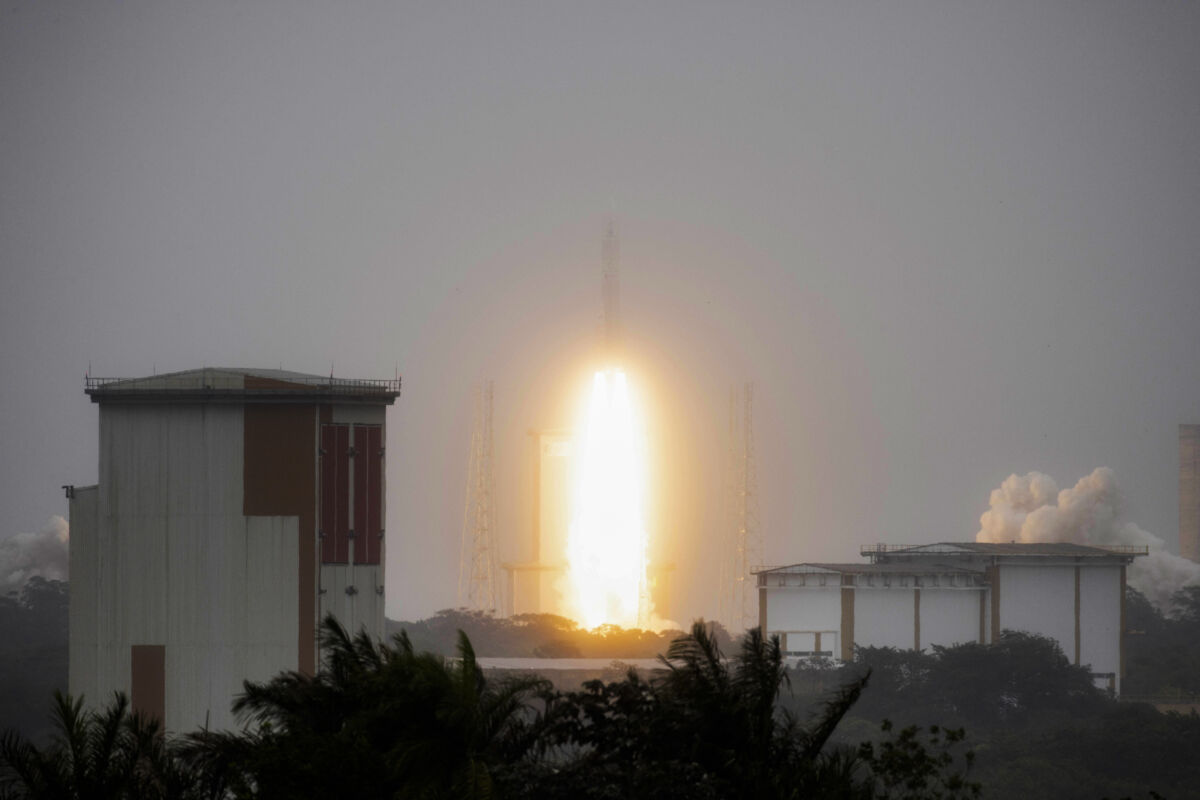
In this context, Europe gained access to space in 1968 with the inauguration of the Guiana Space Centre (CSG) in Kourou, French Guiana, becoming the only port that, due to its geographical position, allowed for energetically more efficient equatorial launches, a relevant aspect for maintaining a higher number of access operations to the cosmos without increasing associated costs.
In the early 1980s, the U.S. transformed the Kennedy Space Center in Florida from a “vertical” port, solely for rocket launches, into a much more complex infrastructure capable of recovering vehicles launched through the Space Shuttle program, implemented by constructing facilities similar to those at airports. Now, spacecraft could “launch” into outer space and “land” upon their return to Earth.
Thus, the development of spaceports was framed within the search for autonomous capabilities by states. This logic was strongly linked to a particular vision of space activity, always seeking to maximize the benefits of these facilities to generate gains in other areas—such as military—and strengthen national power. In this scenario, there were few incentives for international collaboration or commercial developments in the field.
After the end of the Cold War in 1991, the issue of access to space began to be viewed from an economic perspective, generating incentives for the diversification of such facilities, given the growing demand for satellite programs from developing countries that lacked their own launch capabilities. There was also a transition in the understanding of space activity, from one strictly related to Defense and National Security to one linked to scientific development and civil-oriented technological innovation.
The beginning of the 21st century was marked by a progressive intensification of commercial space activity, driven by the reduction of technological barriers that historically restricted access to services such as the internet, satellite television, and mobile telephony. The proliferation of connected devices, along with the growing societal demand for connectivity, positioned outer space as a key dimension for economic, social, and scientific development.
A decisive milestone in the reorganization of access to space was the retirement of the space shuttles by the United States in 2011; possibly an indirect consequence of the subprime financial crisis and following notable accidents. This decision implied a significant reduction in U.S. state capabilities regarding crewed spacecraft. In the following years, the country was forced to rely on third-party actors, primarily Russia, to transport astronauts to space, while the private sector began to emerge as a new protagonist in the orbital ecosystem.
The emergence of companies like SpaceX, alongside the temporary stagnation of public capacity, allowed the United States to gradually regain its autonomy in space launches. This process fundamentally transformed the role of spaceports, which ceased to be considered exclusively as technical platforms or military sites to acquire comprehensive strategic value, as they house critical infrastructure, dual-use (civil and defense) services, logistical capabilities, and governance nodes over access to space.
This paper posits that spaceports constitute critical infrastructure for contemporary international security, not only for their operational function but also for what they represent geostrategically: instruments of state and commercial power; territorial control points; and potential sources of interstate tension or cooperation. In fact, the location of these infrastructures in equatorial, polar, or high-latitude regions is not neutral: it expresses and projects geopolitical and military interests.
Their proliferation and intensive use within a framework of greater importance assigned to space in economic matters and international strategic competition will impact traditionally peripheral regions, such as Latin America and polar areas. To dimension this reality, the role of these infrastructures will be addressed in their technical, geopolitical, and normative dimensions. This approach seeks not only to identify global patterns but also to reveal asymmetries and opportunities.
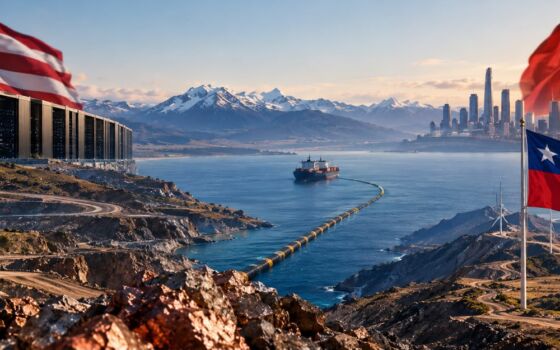
From the perspective of international security studies, special attention will be paid to the situation in Latin America and high-latitude territories as potential emerging scenarios of spatial interest. In particular, the case of Chile is examined, whose geographical positioning, institutional stability, and proximity to Antarctica could make it a relevant actor in the development of future capabilities.