Financing Strategic Capabilities: To Believe or Not to Believe
This article was translated automatically and may contain differences from the original. For reference, read the original.
Recently, the final report of the Advisory Commission for Structural Reforms to Public Spending, a group of experts convened by the Ministry of Finance to propose a more efficient use of fiscal resources[1]. Among the 34 suggested measures, one in particular has raised alarm: the proposal No. 13, which seeks to suspend Articles 1 and 2 of Article 101 of the Constitutional Organic Law of the Armed Forces[2]. These articles regulate the annual contribution that the Budget Law must allocate to the Multiannual Fund for Strategic Defense Capabilities. The recommendation to suspend this funding, combined with the postponements of funds for this and the Strategic Contingency Fund in the budgets for 2024 and 2025, has raised serious concerns about the financial stability of National Defense and, specifically, of the Armed Forces.
The replacement of Law 13196, the “Reserved Copper Law,” required a lengthy process, partly due to the distrust that existed—and still exists—in parts of the defense community regarding the uncertainty of reaching a consistent and stable political agreement that ensures defense funding; while others demanded greater “democratic” and civilian controls over investment. This apprehension was summarized, for the former, in that the change generated insecurity regarding the future availability of resources due to the potential fragility in the actual application of the new regulations, doubts that did not arise with the repealed copper law. Indeed, these concerns seem to have relevance and validity today.
The main criticisms of the old copper law referred to the fact that, according to its detractors, it lacked transparency and democratic control, as the investment of resources did not go through Congress, which does occur annually with the processing of the Public Sector Budget Law, in addition to the claim that defense institutions had high autonomy in investment decisions. In contrast, those who advocated for its maintenance argued that this law provided the necessary stability for very long-term developments in an area of utmost sensitivity for the survival of the State, not to mention that it avoided changing government policies, electoral fluctuations, or potential ideological impulses.
The solution reached was Law 21174, which “Establishes a new financing mechanism for the strategic capabilities of National Defense”[3], a regulation that, according to its proponents, would address these weaknesses. On one hand, it granted control powers to Parliament, as it incorporated resources for the development and maintenance of strategic capabilities into the national Public Sector Budget Law, while at the same time providing the funds and procedures that would ensure the stability of long-term defense investment, with multiannual plans.
However, for various reasons, even before completing the implementation process, this legal framework quickly began to show signs of fragility. A review of the information available on the Ministry of Finance’s website (Budget Directorate) reveals that in both 2022 and 2023, the respective law authorized the transfer of US$ 936,000,000 each year to the Strategic Contingency Fund. However, by 2024, the period in which the transfer of resources to the Multiannual Fund for Strategic Capabilities was to begin, Congress, at the government’s proposal, authorized the postponement of both the obligations to that fund (Article 35) and those arising from the transitional Article 3 of the new law—whether for the Strategic Contingency Fund or the Multiannual Fund for Strategic Capabilities—which refers to the 24 and 48-month deadlines to fulfill the obligation to transfer 20% and 55% of the balances of the old copper law, respectively. In other words, there were no contributions in this area in 2024. Similarly, the 2025 budget (Article 37) again suspended matters related to the same transitional Article 3; in this case, for the Strategic Contingency Fund.
In summary, while the new law for financing strategic capabilities (Law 21174) mandates that both resources from the balances of the old copper law and from the annual public sector budget must be transferred, the reality is that little of this has occurred so far, and the transfers have been limited to the following:
| Year | Multiannual Fund for Strategic Capabilities | Strategic Contingency Fund | |||
| Thousands of pesos | Thousands of dollars | Thousands of pesos | Thousands of dollars | ||
| 2020 | – . – | – . – | 40 | 40 | |
| 2021 | – . – | – . – | 40 | 936,030 | |
| 2022 | – . – | – . – | 40 | 936,030 | |
| 2023 | – . – | – . – | 40 | 936,030 | |
| 2024 | 0 | 0 | 40 | 40 | It was supposed to be the first year in which contributions to the capabilities fund were made. Article 35 of the law postpones obligations. |
| 2025 | 40 | 488,397 | 40 | 40 | First contribution to the capabilities fund. Article 37 postpones the obligation regarding the Strategic Contingency Fund. |
Table 1. Summary of contributions from the Public Sector Budget Law to the Multiannual Fund for Strategic Defense Capabilities and the Strategic Contingency Fund
Source: Own elaboration, based on information obtained from the Budget Directorate of the Ministry of Finance[4].
While several arguments have been put forward for the decisions made, the reality is that the resources have not reached the accounts as anticipated in the law. This becomes increasingly relevant given the context in which our country operates. On one hand, the heightened international conflict not only generates instability in the system but has pushed many countries to increase their defense spending, significantly raising the demand for weapons systems, equipment, ammunition, among others. This only makes the replacement of these elements more difficult and costly. Regionally, Latin America continues on a path of deteriorating security, with historic levels of cocaine production and the increase and expansion of transnational organized crime gangs, not to mention that it remains the most violent region in the world in terms of homicides. To complete the context, Chile faces security conditions that have worsened in recent years, with new types of crimes, in both quantity and magnitude, unprecedented in our history, and with serious problems controlling land and maritime borders, generating a high perception of insecurity among the public.
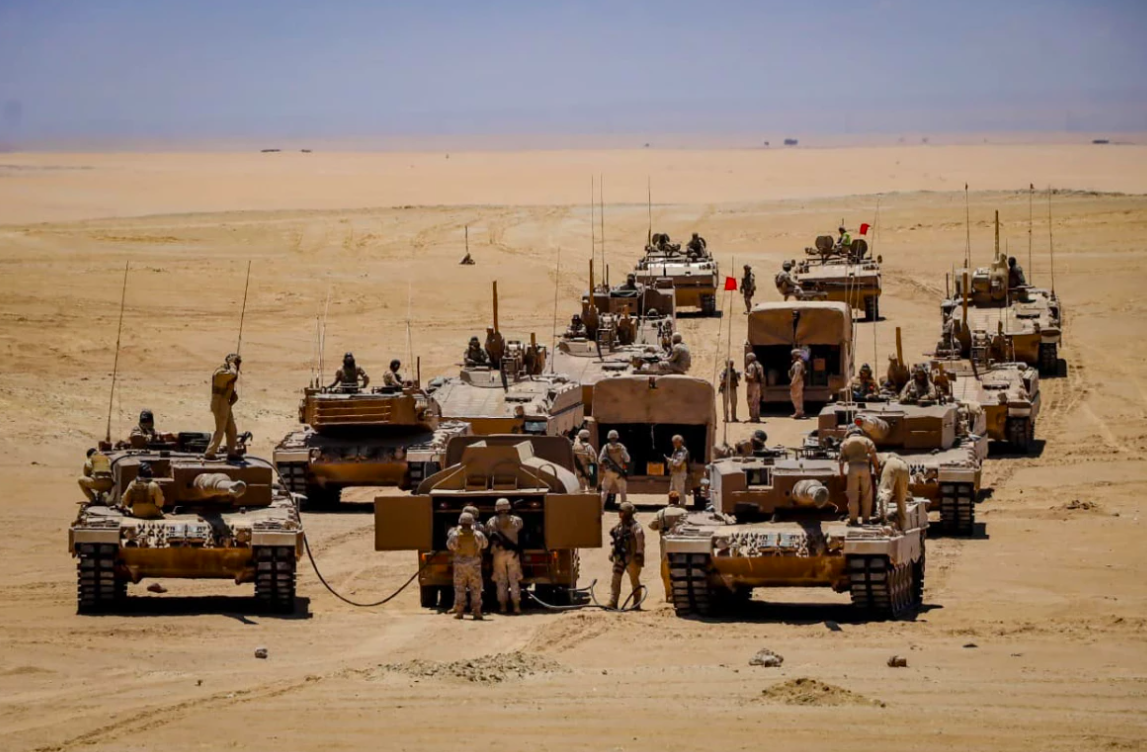
On the other hand, this has forced the Armed Forces to engage in tasks beyond their traditional roles, demanding additional efforts, whether due to the increased scope and number of missions they fulfill or the longer duration of their deployments[5]. It is worth noting that the military forces deployed in the southern macrozone and in the north of the country have been there for years. These deployments, in addition to subjecting the forces to greater stress on personnel, require greater use of military equipment, leading to premature wear. In other words, systems that were acquired to serve for a period of 20 years or more, given the increased usage they have experienced, will obviously need to be replaced much sooner. Vehicles, communication equipment, thermal cameras, or other sensors, drones, among others, are high-value items that are difficult to replace, especially given the current context of demand and limited supply at both the international and local levels. To add to the drama, the equipment of our Armed Forces is moving toward a logic of obsolescence due to time and use. Communication systems, armored vehicles, artillery, ships of various types, aircraft, ammunition and missiles, radars, and a long etcetera will face their last period of useful life. It is true that significant efforts are made to keep the material operational and highly available, extending its operational life, but it is also true that this has real limits.
In summary, Chile finds itself in a perfect storm, facing a greater demand for financing, lower availability, an increasing need for replacement, all at a time of significant economic tightness in the country, making these “postponements” or non-compliance with a law that promised to prevent what is happening a matter of utmost concern and sensitivity. Meanwhile, other countries in the region are going in the opposite direction. Both Argentina and Peru have announced significant investment plans for their defense; in other words, a trend contrary to what we see in Chile.
For these reasons, the dissemination of the proposals from the “Advisory Commission for Structural Reforms to Public Spending” is concerning, as while they are still “proposals,” they become part of an environment that does not favor the assurance of defense financing. Given the national political context, it will be interesting to hear the opinions of presidential candidates and their teams, as one thing that has become evident from government program proposals is that security is a priority for all, yet none address this reality, making it incomprehensible if they evade this debate.
From these ideas, reasonable doubts arise about the future of Chile’s strategic capabilities. The first and most obvious is to know whether the measures to postpone the transfers of resources to the Strategic Contingency Fund and the Multiannual Fund for Strategic Capabilities are a one-time situation, almost a singularity, or conversely, the beginning of a behavior that will continue to repeat itself under these or other justifications, as projected by those who defended the idea of maintaining the copper law. If this persists—everything indicates it has not—let us hope that the impact of these and other measures on defense and national security is evaluated in the medium and long term.
With the perspective of time and the results of the implementation of Law 21174, which “Establishes a new financing mechanism for the strategic capabilities of National Defense,” it seems that the old copper law was not a bad option, as by perfecting the mechanisms of political and civil control over the allocation and management of resources, as well as over investment decisions and the development of strategic capabilities, it could have addressed the criticisms while providing stability and greater certainty in the generation and maintenance of strategic capabilities in National Defense. Now, we can only wait, see how the discussion progresses, and pose a question: to believe or not to believe?
[1] Proposal available at https://www.dipres.gob.cl/598/articles-383579_doc_pdf.pdf
[2] These refer to the annual contribution that the Public Sector Budget Law must make to the Multiannual Fund for Strategic Capabilities.
[3] Available at https://www.bcn.cl/leychile/navegar/imprimir?idNorma=1136740&idVersion=2020-04-02
[4] Available at https://www.dipres.gob.cl/598/w3-propertyvalue-2129.html
[5] Marcelo Masalleras, “Armed Forces, Readiness, and Budget,” AthenaLab. November 14, 2024. Available at https://www.athenalab.org/noticias/2024/11/14/comentario-fuerzas-armadas-alistamiento-y-presupuesto/