The Electoral Closure of 2025 in Latin America
This article was translated automatically and may contain differences from the original. For reference, read the original.
- by Carlos Malamud & Rogelio Núñez Castellano
- Guest Contributions
In the last quarter of 2025, there will be presidential elections in Bolivia, Chile, and Honduras, along with legislative elections in Argentina. It is likely that these elections will deepen some pre-existing trends: polarization, the elite versus anti-elite axis, and the high presence and fragmentation of parties and candidates that threaten governability.
The last quarter of 2025 will see high electoral intensity in Latin America. There will be a presidential runoff in Bolivia, probably two in Chile, a single-round presidential election in Honduras, and legislative elections in Argentina, along with significant local elections in September in the province of Buenos Aires. In Ecuador, there will be a referendum promoted by Daniel Noboa to strengthen presidential powers, which could pave the way for constitutional and institutional change through a Constituent Assembly.
Figure 1. Elections in Latin America in the Last Quarter of 2025

The year ends with four elections that will set the political-electoral tone for the region. If between 2015 and 2023 the vote was primarily a punishment against the ruling party, it now coexists more recently with victories of efficient governments, whether from the right (Bukele or Noboa), the center (Luis Abinader), or the left (Morena). Poor governance is punished for failing to resolve the major issues of the moment: economic reactivation (Bolivia), rising living costs (Uruguay), or insecurity and public order (Ecuador). This quarter, the ruling party could be defeated in Honduras and Chile, as happened in the first round in Bolivia.
These elections deepen some pre-existing trends, such as polarization, the elite versus anti-elite axis, and the high fragmentation of parties and candidates, in a context that complicates governability. Campaigns are based on social media with a strong presence of fake news and demagogic appeals.
1. Unprecedented Runoff and End of an Era in Bolivia
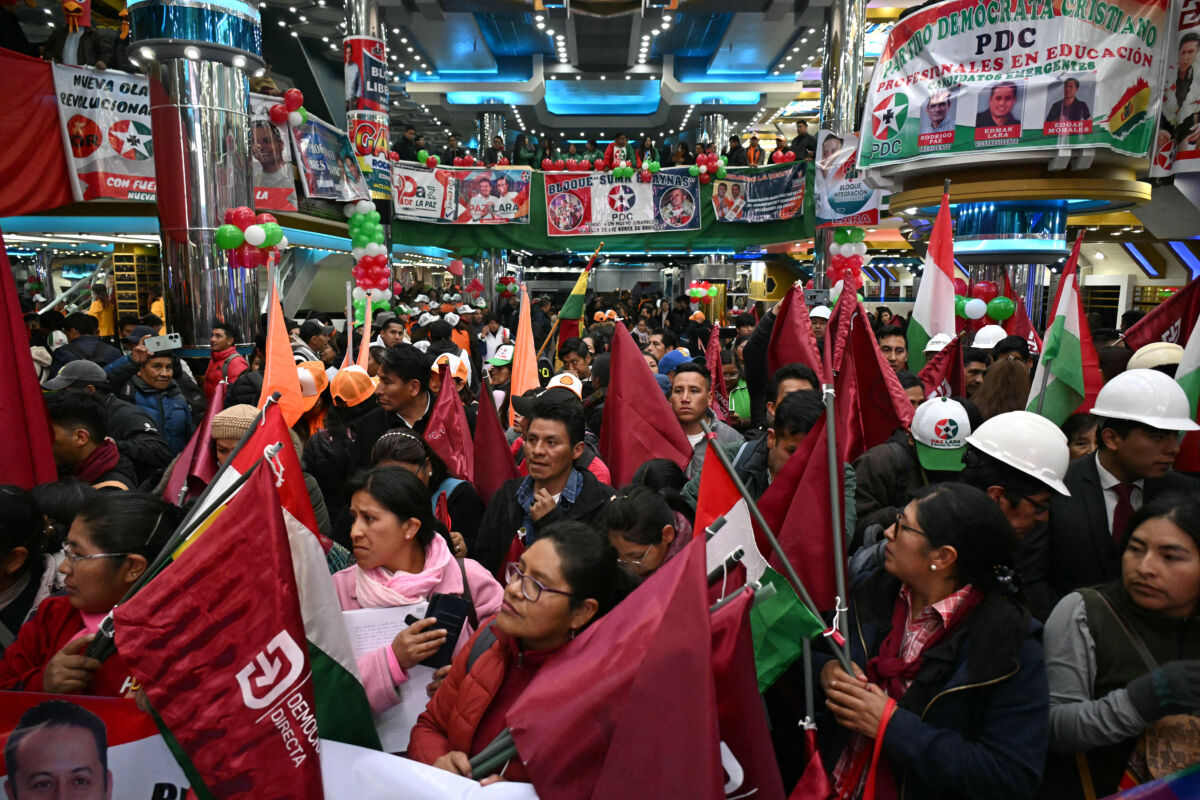
The runoff will be a duel between the center candidate Rodrigo Paz and the right-wing Jorge “Tuto” Quiroga, where Paz could expand his alliances more than Quiroga. Although the runoff has its own dynamics and the support from the first round is not transferable to the second, Paz, with 32% of the votes in August, starts as the favorite. Not only because of his advantage over Quiroga, but also because he can attract the vote of Samuel Doria Medina (19%), who has already offered his support, and Manfred Reyes Villa (6.7%). He has also attracted disenchanted supporters of the MAS, as shown by his results in La Paz and El Alto. Paz can appeal to the entire MAS spectrum, which, although divided, accounted for 30% of the null votes promoted by Evo Morales (19%), the 8% from “evismo without Evo” by Andrónico Rodríguez, and the 3% from the MAS government facing Morales.
This is an unprecedented runoff because there has never been a runoff in previous elections and because it marks the end of 20 years of dominance by the Movement for Socialism (MAS) (2005-2025). The left has emerged severely weakened, not only by losing power but also by its fragmentation and low parliamentary representation. The question is the role of Morales, with his 20% null vote, who, confined in his refuge in Chapare, has been excluded from institutions and has been unable to reunify the MAS. He now emerges as the main obstacle to reunifying the left. One of his bets could be to regain leadership by betting on the idea that the worse, the better. Quiroga’s victory would be functional for uniting the MAS against the neoliberal threat and reviving the evista mystique.
From here, the beginning of the third political-institutional model is outlined in exact two-decade periods since Bolivia regained democracy. One marked by coalition presidencies (1985-2005) and the other by the hegemony of the MAS (2005-2025, with the brief interlude of Jeanine Áñez’s government (2019-2020).
2. Argentina, Key Legislative Elections for Milei
These legislative elections are the first national test for Javier Milei since he won the presidency in 2023. The elections have gained special importance following two difficult months for the government, marked by a corruption scandal (August) and the heavy defeat in the legislative and local elections in the provinces of Corrientes and Buenos Aires (August and September), along with repeated failures in various parliamentary votes. Among the recent corruption scandals, the case of the cryptocurrency $LIBRA (in which he is directly involved) and the alleged overpricing in public procurement of medicines for the National Disability Agency (ANDIS), which affects his sister Karina (the Chief) and the Menem cousins, two of his main political supporters, stand out.
Milei needs victory in these legislative elections to regain political initiative and expand his slim support in Congress, where he does not have the blocking minority of one-third, which would allow him to avoid vetoes on his laws and navigate any attempts at impeachment against him. His parliamentary minority has been exacerbated by the loss of allies. He has seen his margin of action reduced and has accumulated defeats in Congress. This is compounded by his failure by more than 13 points in the province of Buenos Aires. It has been a wake-up call for his administration and a serious warning regarding his un-republican ways and manners. Additionally, he “nationalized” a provincial election, a minor one, by framing it as a plebiscite on his figure, which backfired.
Milei expected to benefit from the division of the opposition. However, despite his problems, Peronism appears to be united, although strong tensions persist between Cristina Kirchner, under house arrest, and Axel Kicillof, governor of the province of Buenos Aires, who aspires to displace her as the opposition leader and presidential candidate in 2027. Kicillof was the big winner of the Buenos Aires elections after his decision to separate them from the general elections, against Kirchner’s wishes. The governor had the support of the mayors who mobilized in the local and provincial elections, where their political future was at stake, rather than in the national elections. Ahead of the legislative elections in October, the tensions between Kirchner and Kicillof are likely to escalate, given the fragility of the Kirchnerist/Peronist unity.
In the legislative elections, a victory for La Libertad Avanza (LLA) was anticipated, although serious doubts about its strength have emerged following the Buenos Aires elections. However, the promised economic aid from Donald Trump is a clear lifeline that will have a positive effect for the government during the electoral campaign. A victory, which now seems somewhat less certain, would position him well for the 2027 presidential elections. There is an additional factor to consider, whose impact is still unknown, which is the introduction of the single paper ballot (BUP), which prevents simultaneous voting for candidates from the same party in different categories.
It will be interesting to see how the ruling party’s desire to paint the country violet (the color of LLA) plays out and the performance of the lists assembled by Karina Milei, who attempted to subordinate both Mauricio Macri’s Propuesta Republicana (PRO) and various governors to her party’s banner. In this context, Provincias Unidas emerges, a coalition driven by several governors that could play a significant role in the future and condition Milei’s management, which will continue to depend on the support of other parties to advance his economic model.
3. Chile, a Duel Between Extremes
Chile is heading towards a runoff between the Republican Party candidate, José Antonio Kast, who is heavily right-leaning, and the ruling party’s Jeannette Jara, leading a heterogeneous coalition ranging from the center of the Christian Democracy to the left of the Communist Party, from which she originates. There are also six other candidates, among them Evelyn Matthei from Chile Vamos, a center-right party. Although her campaign has been quite mediocre, she has experienced a slight uptick in recent weeks, still insufficient to advance to the runoff. Polls show Jara’s leadership, but she is stagnating around 30%, while Kast is on a slight but steady decline. Matthei, still a good distance from the Republican candidate, has surpassed the anti-system populist Franco Parisi and could eventually advance to the second round.
Matthei’s chances rely on her appeal to voters rejecting the extremes of Kast and Jara, as well as on the unpredictable functioning of mandatory voting, in effect since 2022 but never applied in a presidential election. How will the part of the electorate that has historically abstained vote? Will it be an anti-system vote more inclined towards Parisi? Will it lean towards punishing the ruling party represented by Jara? Will it prefer to escape polarization and vote for Matthei? Or will it have a more social content and give the ruling party a chance?
Figure 2. Presidential Candidates in Chile

Despite being positioned at the extremes, Kast and Jara seek the center vote and moderate their proposals. Jara attempts to adopt a more social-democratic profile, while Kast uses firm but not strident language, distancing himself from Milei’s style. He has abandoned his more extreme proposals, especially those related to the “cultural battle,” value issues, gender policies, and even abortion, which he proposed to repeal in 2021 and now does not appear in his program. A runoff between Kast and Jara will increase polarization between “the communist danger” and warnings about a return to authoritarianism. However, if Matthei manages to advance to the runoff, her chances of victory against either of the other two would be greater.
4. Honduras: Nasralla and the Rebirth of the Liberal Party
These presidential elections, held in a single round, may threaten institutional stability, casting doubt over the entire electoral process. The highly politicized National Electoral Council (CNE) is still embroiled in conflict following logistical issues in the March 2025 primaries that aimed to benefit the ruling party. Additionally, the process may be tainted by the evident penetration of drug trafficking and the increase in political violence, essential ingredients for an institutional crisis if the main candidates do not accept the results.
From the crisis of the two parties that have dominated the political landscape since 2010, the National Party (PN) and Libre, currently in power, the Liberal Party (PL) has been reborn around the figure of Salvador Nasralla, in a new attempt to overcome the serious problems it has faced since 2009. None of the three major Honduran forces is in its best moment. The PN, which governed from 2010 to 2022, is burdened by the arrest and extradition to the United States of former president Juan Orlando Hernández (2014-2022), linked to drug trafficking. Libre, in government with Xiomara Castro since 2022, has been unable to solve the country’s major problems (insecurity, corruption, and low growth). Its administration has been marked by the omnipresence of her husband, former president Manuel Mel Zelaya (2006-2009).
This situation has been seized by the PL to recover its unity, after having divided following Zelaya’s departure in 2009, thanks to the decision to unite around the charismatic figure of Salvador Nasralla and his polarizing, demagogic, and messianic discourse. Nasralla is outside the apparatus and history of the PL, but he has significant popular support and is emerging as the favorite against Rixi Moncada, the candidate from Libre, and Nasry Asfura from the PN. Nasralla embodies an “anti-establishment” leadership focused on his anti-corruption campaigns and Bukele-like security policies.
The shadow of institutional crisis and fraud looms over these elections, as in 2017, as Nasralla has denounced. According to his assessment, Castro’s government is attempting to manipulate votes with the support of Cuban and Venezuelan advisors in favor of Moncada. The precedent of the primary elections and attempts to condition voting flows in favor of the ruling party are a very bad omen.
5. Ecuador, a Consultation for Legitimization and Noboa
The consultation promoted by Daniel Noboa is part of a regional trend that seeks to increase the power and autonomy of presidents in the face of legislative fragmentation and institutional blockages. The key question, currently under review by the Constitutional Court (CC), seeks to dismantle Rafael Correa’s legacy with a Constitutional Assembly that changes the institutional model inherited from the previous period. It is also an indirect way to limit the CC’s ability to act as a counterweight to the Executive. There remains the question of whether Noboa, should the Constituent Assembly prosper, will resist the temptation of unlimited reelection or follow the path of Chávez, Uribe, Morales, and Bukele.
6. The Elections and the Political-Electoral Moment in Latin America
These four elections reflect the political-electoral moment in Latin America. While each has its own characteristics, their parallels provide some insights into the regional reality. In all cases, economic difficulties and rising living costs, along with insecurity and the penetration of organized crime, are central to the candidates’ messages and the electorate’s attention.
The electoral processes have unfolded amid strong polarization, especially in Argentina and Bolivia, with a fragmented offer from both the right and the left. Voters seem to lean towards outsiders, such as Milei, or candidates outside the power structure, who have been deputies (Kast) or mayors (Paz) but not ministers or presidents and do not belong to the major parties. The elections are also framed as a confrontation between elite versus anti-elite in Chile (Kast versus former minister Jara), Bolivia (Paz versus former president Quiroga), and Honduras (Nasralla versus former minister Moncada).
Salvadoran Nayib Bukele has become a reference for options further to the right in their fight against crime and corruption. Bukelism advocates for the concentration of power in the president, the implementation of authoritarian policies, and a hardline approach to insecurity, maintaining a direct and plebiscitary relationship with the electorate.
6.1. Insecurity and Economy, Central Themes of the Campaigns
The two issues that most concern the population of Latin America are the economy (low growth and rising living costs) and insecurity, which are shaping the campaigns of the last quarter of 2025. This is a constant in both countries with low homicide rates, like Chile, and those with high insecurity rates, like Honduras.
Milei’s key to winning the legislative elections is his undeniable success in reducing inflation, which has fallen from 211.4% in 2023 to a cumulative 19.5% in 2025. Given the struggles many Argentines face to make ends meet, it remains to be seen whether controlling inflation will be sufficient to win elections. Milei frames the legislative elections as a dichotomy between the continuity of his stabilization program and the measures proposed by the opposition, which he labels as “economic genocide.” Economy Minister Luis Caputo fuels polarization by warning of the return of communism, while it seems clear that macroeconomic successes have not translated into microeconomic benefits, which would explain the electoral defeat in Buenos Aires.
Chile’s economic stagnation and Bolivia’s crisis weigh down the options for the left in power, which has failed to stimulate growth (Gabriel Boric) or tackle the inflationary spiral, dollar shortages, fiscal deficits, and fuel shortages (Luis Arce). The electoral debacle of the ruling party in Bolivia is explained not only by its division but also by economic failure since 2014. The return to high growth in Chile and overcoming the crisis in Bolivia have monopolized the debate and electoral promises. The right seeks to return to growth above 4% and reduce the size of the state. Nasralla offers to exit the crisis by ending the corruption of the traditional political elite, his main leitmotif since 2012, when he founded the Anti-Corruption Party.
Insecurity is another citizen concern. Chile, with low insecurity rates regionally, has experienced an increase in thefts and assaults and a greater presence of organized crime, especially the Venezuelan Tren de Aragua. It is telling that Kast proposes an “emergency government” to combat insecurity and economic paralysis. Even for more centrist candidates like Matthei, security is central; it is the issue that resonates most with the electorate.
In Bolivia, one of the main coca producers and a strategic transit point, insecurity has been overshadowed by the economic crisis, despite the growing presence of organized crime. This is particularly visible with Brazilian cartels, Primeiro Comando da Capital and Comando Vermelho. Quiroga, in his line of more forceful and expedient measures, has proposed the return of the U.S. Drug Enforcement Administration (DEA). In Honduras, Nasralla’s hardline stance against corruption extends to insecurity, with El Salvador as a model.
6.2. Polarization and Anti-Elite Sentiment
Political polarization and anti-elite sentiment characterize the electoral moment in Latin America, although they are very present elsewhere in the world. Polarization divides societies into two irreconcilable camps, with few communication bridges and no willingness to reach compromises to promote state policies. Polarization turns political rivals into existential enemies and manifests in phenomena such as the rift in Argentina (Kirchnerism vs. anti-Kirchnerism and now Mileism vs. anti-Mileism).
Polarization is rooted in the long period of economic stagnation present in Latin America for the past decade, which has fueled public frustration and increased disaffection with democracy. Voting has shifted from the center, where elections were once won, to the extremes. It is increasingly common for runoff elections to occur between candidates positioned at opposite political poles with incompatible political projects.
Polarization extends beyond the electoral process and deteriorates coexistence, as shown by Rodrigo Chaves in Costa Rica. A report from the United Nations Development Programme (UNDP) considers Latin America the most polarized region in the world, a process that has intensified since 2017. Many elections end up being an existential confrontation between the elite and the anti-elite. The anti-elite sentiment, widespread among the population, has led to victories for outsider politicians. But are they winning in Latin America? With exceptions like Milei or Pedro Castillo, it is not the outsiders who win, but rather other emerging candidates, politicians with a track record who have not held national power and are positioned on the periphery, but within the system, like Jair Bolsonaro in Brazil or Bernardo Arévalo in Guatemala. These candidates, untainted by traditional clientelism and who have not been implicated in corruption due to lack of access to administration, embody the desires for change and renewal of an electorate tired and frustrated with the traditional political class.
Figure 3. Surprising Candidate Victories Since 2020

Some results show the difficulty of both public opinion and analysts and pollsters in capturing the political moment and the mood of the citizenry. This is a structural problem present since 2020. Polls did not foresee Castillo’s advance to the runoff, much less his final victory, or Arévalo’s access to the runoff, including his victory in Guatemala, or that Paz would be the most voted in the first round in Bolivia, with no poll placing him in the runoff, or that Peronism would defeat Milei so decisively in the province of Buenos Aires. This is a result of the volatility of electoral alignments among a citizenry seeking new faces or those who have not held power. In 2025, this trend is embodied by Nasralla, Paz, and Kast, who are not newcomers to politics. Paz was a deputy in 2002 and 2005 and mayor of Tarija; Nasralla has been a three-time presidential candidate, and Kast has run twice, having created the Republican Party. Nasralla founded two forces around him (the Anti-Corruption Party and the Salvador Party of Honduras) and now leads the PL.
More than shifts to the right or left, the electorate has moved from punishing those in power by supporting the opposition to seeking faces outside traditional parties and leaderships. Chile is a good example. From 2009, the end of the Concertación governments, until 2017, there was a political alternation (consecutive reelection is not allowed), but in 2021 and 2025, new faces are sought. Following the social outbreak of 2019 and the collapse of old coalitions, the electorate continues to vote for change: Boric in 2021 and perhaps Kast in 2025.
Figure 4. Alternation Between Right-Left and New vs. Old Elite in Chile

In Paz’s case, despite belonging to a family that has produced two presidents, his figure embodies the struggle of David against Goliath. With no resources, he has run a campaign based on social media that has taken him from town to town, managing to capture the MAS and informal vote, which constitutes 85% of the national economy. His running mate is a police officer, Edman Lara, who confronted the police apparatus to denounce corruption. This has made him a popular hero and the one who best connects, especially through social media, with ordinary people weary of traditional politics, using language that sometimes borders on provocation.
6.3. Fragmentation and Governability
Polarization and fragmentation condition governability. Presidents often come to power, with exceptions like Claudia Sheinbaum in Mexico, without a solid party base. They must negotiate with an atomized legislature, which disincentivizes agreements. The lack of parliamentary support has blocked governments, such as that of Arévalo in Guatemala, or has caused conflict between Milei and Parliament. It has also transformed Brazil, in practice, into a parliamentary republic rather than a coalition presidentialism. In Peru, Congress has dominated the weak presidency of Dina Boluarte. And in Colombia, the collaboration between the Executive and Legislative has coexisted with Petro’s appeals for mobilization in the streets or calls for referendums to pressure the Chambers.
Bolivia is the latest example of fragmentation. The anti-MAS forces have participated with four options, three from the right (Quiroga, Doria Medina, and Reyes Villa) and one from the center, Paz. The left has also been divided: Morales and his null vote, the “evismo without Evo” of Rodríguez, and the official MAS with former minister Eduardo del Castillo, loyal to President Arce. The political scenario remains pending reconfiguration and the role of Morales, with his reduced political and legal margin of action.
Chile shows the presence of three right-wing candidates: Kast, Matthei, and Johanness Kaiser, complicating the formation of a solid legislative majority. If Kast wins, he will depend, like Milei, on the center-right. Milei seeks to absorb macrismo, and Kast would seek something similar with Chile Vamos or govern outside the legislature with decrees and administrative powers.
6.4. The Bukelist Temptation
The Bukelist model, with its apparent success in the fight against gangs and insecurity, has strengthened its message in Latin America. It is a reference in Central America and even reaches South America with a high level of acceptance. There are plans to create a party like Bukele’s in Guatemala, and Nasralla proposes it to combat corruption and insecurity. Bukelism is not limited to Central America. In Bolivia, Paz, who claims centrism, takes it as an example in the fight against corruption (“As Bukele says, if they don’t steal it, the money is enough”). His running mate, Captain Lara, attempted to launch his presidential candidacy with his party Nuevas Ideas con Libertad, the same name as in El Salvador.
In Chile, Kast’s right and Matthei’s center-right also look to Bukele. Kast has defended the Salvadoran model. Even Matthei’s more moderate proposal sees Bukelism as a path to follow. The consultation in Ecuador is a personal bet by Noboa to bury the Correa legacy and build a new institutionality that favors the concentration of power and reinforces the presidential figure.
Conclusions
In the last quarter of 2025, there are four electoral appointments that reflect the citizens’ frustration with the inefficiency of democratic institutions and their weariness with the political class and parties. The climate of disaffection is also fueled by an international context rife with illiberal authoritarianism, from Trump to Bukele to Orbán, who boast of having the best tools to combat insecurity and economic stagnation. These two major problems afflicting the population reward those who achieve good results in this area (Bukele, Abinader, Morena, Milei…) or punish those who fail (Arce).
Regardless of the outcomes of these elections, governability and democratic institutionality are at stake. There is a risk of institutional paralysis in Chile, where party divisions will lead to a fragmented legislature. Chile does not know which Kast awaits if he wins the election. Is it the almost Pinochetist of 2021, the more moderate one from the constituent assembly of 2022-2023, or the presidential candidate of 2025? The temptation to revive the cultural battle, which he has renounced at least in the short term, may grow under pressure from the more radical wing of his party, especially if economic reactivation and improved security take time to arrive. His idea of governing in an emergency is an easy door to open, but it is unclear where it may lead. The need to appeal to the center-right vote is an obstacle for a Kast who does not seem to have, at least in appearance, the “predatory instinct” of Milei. Conversely, a Jara government would face business distrust due to its original sin, its affiliation with the Communist Party, which does not seem to see her as one of their own due to her social-democratic drift. A Jara government would be a constant struggle between the two souls of the Chilean left, the more reformist (heir to the Concertación), which has continued with Boric, and the more radical and rupture-oriented. A Matthei government, in a parliamentary minority, would live under pressure from both extremes, although with more possibilities of reaching agreements with one or the other.
Milei, even with a good result, will remain in the minority and will be forced to abandon his contemptuous attitude towards the closest opposition, inherent to his personality, if he wishes to attract support. Especially from governors, some of whom are part of Provincias Unidas.
The greatest risk to governability lies in Honduras, where there are few incentives for Nasralla or Moncada to accept a defeat, especially a close one. Nasralla, who considers himself a victim of fraud in 2017, has been sowing doubt about the process for months. Libre’s future is at stake in these elections. A defeat would entail existential risks of vendettas and settling scores. A Nasralla victory does not guarantee stability because, once in the presidency, conflicts with the legislature and his own party, which does not see him as one of their own, are possible.
Governability seems guaranteed in Bolivia: the right is in the majority and there are incentives for them to work together against a common enemy, Morales. However, the adjustment plan that the country needs, which Quiroga proposes and Paz has yet to consider, will provoke strong social discontent. The example of Ecuador with the end of the diesel subsidy promoted by Noboa illustrates how these economic reforms lead to social protests. Paz, without an economic plan or solid team, will have to follow Quiroga’s recipes for tough adjustment and commitment to the International Monetary Fund (IMF). His proposal that only through the fight against corruption can the necessary resources be obtained will remain a campaign promise. A difficult coexistence with his vice president, prone to verbal excesses and demagogic populism, is anticipated, although with little effective power. It would be another chapter in the poor relationship so typical in Latin America between presidents and vice presidents: Milei-Villarruel, Petro-Francia, etc.
October 3, 2025
Carlos Malamud. Principal researcher at the Real Instituto Elcano (RIE) and professor of American History at the National University of Distance Education.
Rogelio Núñez Castellano. Senior non-resident researcher at the Real Instituto Elcano. Professor of the Master’s Degree in Political Action, Institutional Strengthening, and Citizen Participation in the Rule of Law at the Francisco de Vitoria University in Madrid.
Republished with permission from the Real Instituto Elcano (RIE). The opinions expressed in this commentary are those of the author and do not represent those of the RIE or any other institution.
by Carlos Malamud & Rogelio Núñez Castellano
Real Instituto Elcano