Update on the U.S. Military Intervention in Iran | March 20, 2026
This article was translated automatically and may contain differences from the original. For reference, read the original.
- by Alejandro Amigo & Marcelo Masalleras
- Analysis
DOCUMENT NO. 3 ATHENALAB | Monitoring the Evolution of the Conflict
What has occurred since our last report on the conflict?
Twenty days have passed since the start of the Epic Fury Operation. The conflict has exceeded the short-term projections of previous reports, consolidating as a medium-intensity regional conflict with no clear signs of imminent resolution. The most relevant developments during this period are as follows:
- U.S. and Israeli operations have not ceased and, in recent days, have expanded to strategic facilities, including energy infrastructure, which had previously been avoided.
- The regime has demonstrated greater resilience than anticipated. The formal succession following Khamenei’s death was completed without visible institutional collapse, with the IRGC reinforcing its centrality in the governance of the state.
- Iran maintains its stance of not negotiating under fire and has intensified its missile and drone attacks against U.S. bases in the Gulf, the energy infrastructure of U.S. allied countries, and against Israeli targets; however, the intensity of the attacks has gradually decreased.
- At the same time, actions in Lebanese territory have escalated, constituting a second active axis of the conflict. Israel has initiated limited ground operations in southern Lebanon aimed at dismantling Hezbollah’s military infrastructure south of the Litani River. The Shiite support base of the movement is showing increasing discontent at being drawn into a new conflict, which could introduce a significant internal rift in its political cohesion.
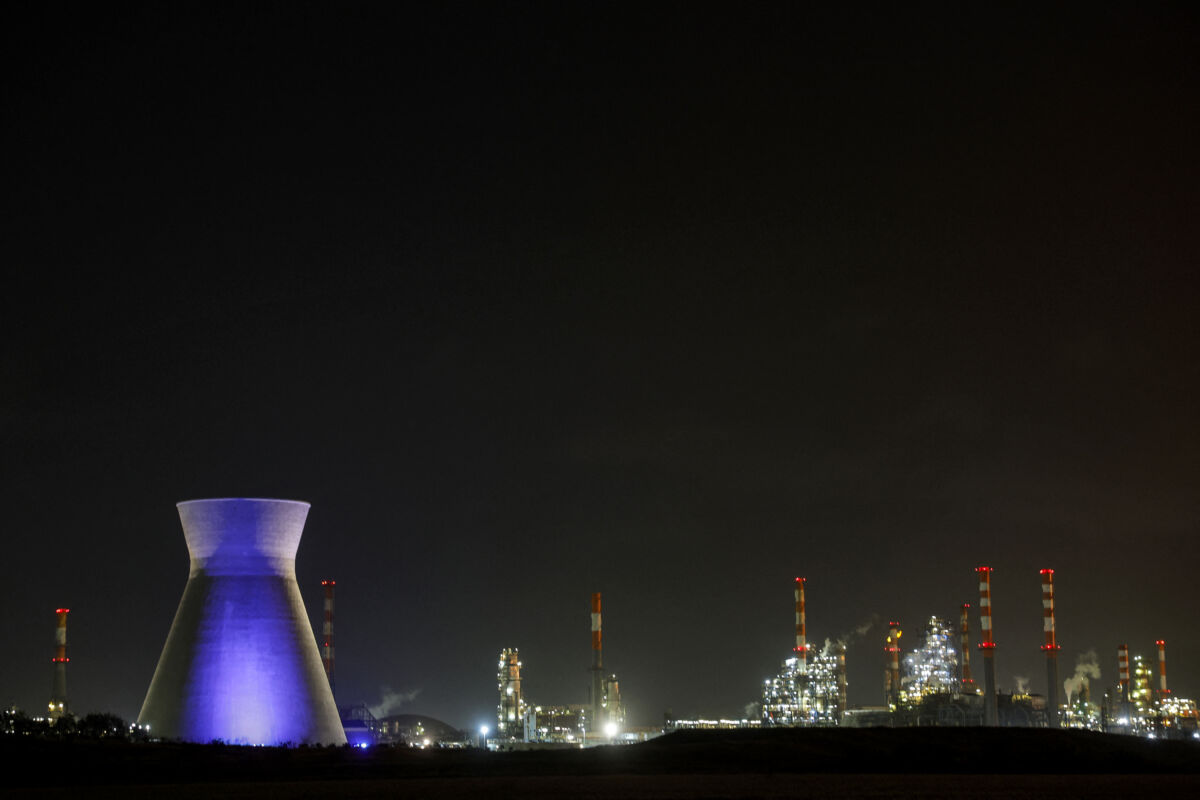
- The Strait of Hormuz has solidified as the area with the greatest systemic impact from the conflict. Brent oil prices have surpassed $120 per barrel, with projections extending the impact into the medium term. A highly relevant phenomenon is that Chinese and Indian oil tankers continue to transit through Hormuz, while Western trade remains disrupted.
- The diplomatic dimension remains formally closed. Iran has ruled out requesting a ceasefire while attacks continue, and the United States has indicated it is not interested in negotiating at this time. China and Russia maintain their political support for Tehran, with Moscow providing satellite intelligence to Iran.
Assessment of Declared Objectives
Of the objectives identified in previous documents, only the degradation of Iran’s military capability has seen concrete progress. The cessation of that country’s nuclear program is not assured with the air campaign. Similarly, regime change appears even more distant, with the IRGC consolidated in the governance of the state. The Trump administration has successively adjusted its statements regarding the timelines and scope of the operation, leaving the political definition of success by the U.S. ambiguous.
On the other hand, the initiation of attacks on Iranian energy infrastructure by Israel—something the United States had apparently avoided—could cast doubt on the real level of coordination and integration of war objectives, beyond the nuclear issue and Tehran’s ballistic missile capabilities.
Possible Short-Term Scenario
On one hand, it is estimated that Iran will attempt to prolong the conflict for as long as possible, maintaining disrupted navigation, within the limits of its remaining attack capabilities. As previously stated in earlier reports, the survival of the regime will remain the most relevant factor for Tehran, and given the current conditions with operations focused on air attacks, there is little indication that it is in serious risk.
On the other hand, the United States may push for an end to actions as soon as possible, claiming the fulfillment of all defined objectives. The prolongation of the conflict will only increase internal criticism, potentially generating significant political costs in an election year. However, this no longer depends exclusively on Washington. On one hand, its ally in the actions—Israel—seems to place greater importance on regime change and the strategic degradation of Iran. Additionally, it depends on Tehran’s willingness to halt the attacks, which will likely entail significant demands.
However, if airstrikes combined with other actions within Iran begin to impact internal stability, it could create space to resume diplomatic negotiations, albeit under more demanding conditions than those prior to the conflict. Nevertheless, this would take some time.
Finally, based on observed trends, it is unlikely that other powers will intervene beyond what has been seen. Russia benefits from the rise in oil prices, and China observes the wear on the United States both strategically and diplomatically.
Final Considerations and Implications for Chile
- The energy impact on our country has deepened. Chile, as an economy dependent on hydrocarbon imports, will face a deterioration of its trade balance in a context of prices that could remain high for an extended period, as it lacks strategic reserves equivalent to those of economies better prepared for such shocks. Diplomatically, alignments that compromise future action capacity have been avoided, with special attention to the relationship with China.
- The evolution of the conflict confirms that while military action can alter the balance of military forces, its capacity to produce deep political transformations is limited without favorable internal conditions. In this sense, the resilience of the Iranian regime emerges as a structural factor that conditions the strategic options of the United States and Israel.
- The importance of defining political objectives for a conflict is significantly related to their determinative role in designing the strategy to achieve them. Therefore, if during the execution of operations a government decides to expand, modify, or reduce those objectives, it will necessarily require adjustments or changes in strategy. In the development of this conflict, we may be observing some mismatches in this process.
- Similarly, the type, characteristics, and scope of the objectives will determine the strategy and means employed to achieve them. If the idea of pressuring for regime change in Tehran grows and becomes a central objective for the United States, then changes in strategy will be required, and certainly, involving other means to ensure the achievement of that objective.
- Moreover, the behavior of the involved actors suggests a preference to avoid greater regional escalation, which has contributed to keeping the conflict within certain margins. However, the coexistence of multiple risk vectors—proxies, miscalculations, economic pressure—maintains a high level of uncertainty.
- From a broader perspective, the conflict reinforces trends already observed in the international system, such as the use of force as a coercive instrument, the difficulty of articulating effective multilateral responses to high-intensity crises, and the growing relevance of technological capabilities—drones, interceptors, and space dominance as support for operations—while always depending on the context and the objectives pursued.
Marcelo Masalleras
Alejandro Amigo