The 'Donroe' Doctrine in Cusco 2026: How the U.S. Narrates Its National Security Strategy and What It Means for the Region
This article was translated automatically and may contain differences from the original. For reference, read the original.
- por Diego Sazo
- Análisis
1. Context
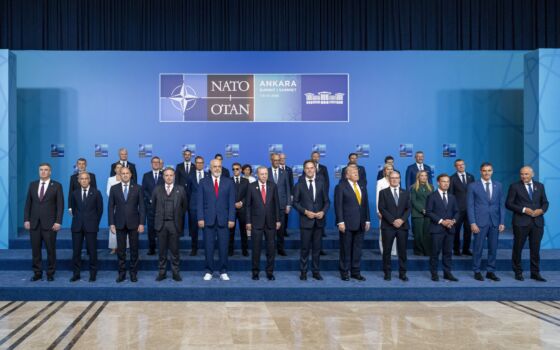
From July 7 to 10, 2026, the XVII Conference of Defense Ministers of the Americas (CMDA) was held in Cusco, the main political defense forum of the hemisphere at the ministerial level.
The previous edition took place in Mendoza in October 2024. Since then, the regional landscape has changed significantly, particularly due to the renewed diplomatic and military prominence of the United States in Latin America, evident in operations against drug trafficking in Caribbean waters, bombings in Caracas, and new anti-drug agreements with Ecuador and Bolivia.
In March 2026, a group of defense ministers met in Florida at the so-called ‘Inaugural Conference Against the Cartels in the Americas.’ However, Cusco offered something different. As a permanent multilateral forum without ideological selection of participants, the CMDA provided the Trump administration its first opportunity to present its new political doctrine to the entire hemisphere.
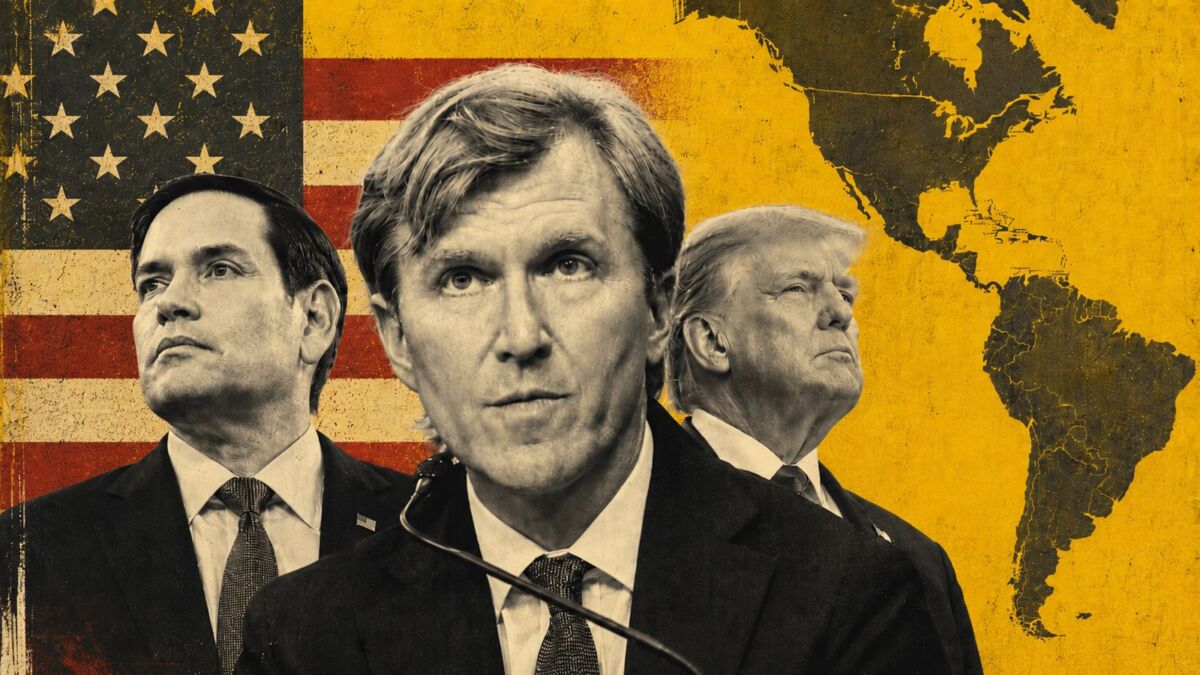
The U.S. delegation was led by Elbridge Colby, Under Secretary of Defense for Policy and one of the key architects of the current National Security Strategy. His speech on July 8 is therefore of high analytical interest. It matters for its emphases, its omissions, and the audience that listened to it. This article examines that speech, identifying how the United States defines current security and defense issues in the hemisphere and what implications arise from that reading for the region.
2. The Logic of Framing
In political communication studies, framing a reality involves selecting certain aspects of it and making them more prominent in the discourse.1. An element gains relevance when the narrative presents it as more significant or memorable, either through its placement in the story, repetition, or its association with culturally familiar symbols.
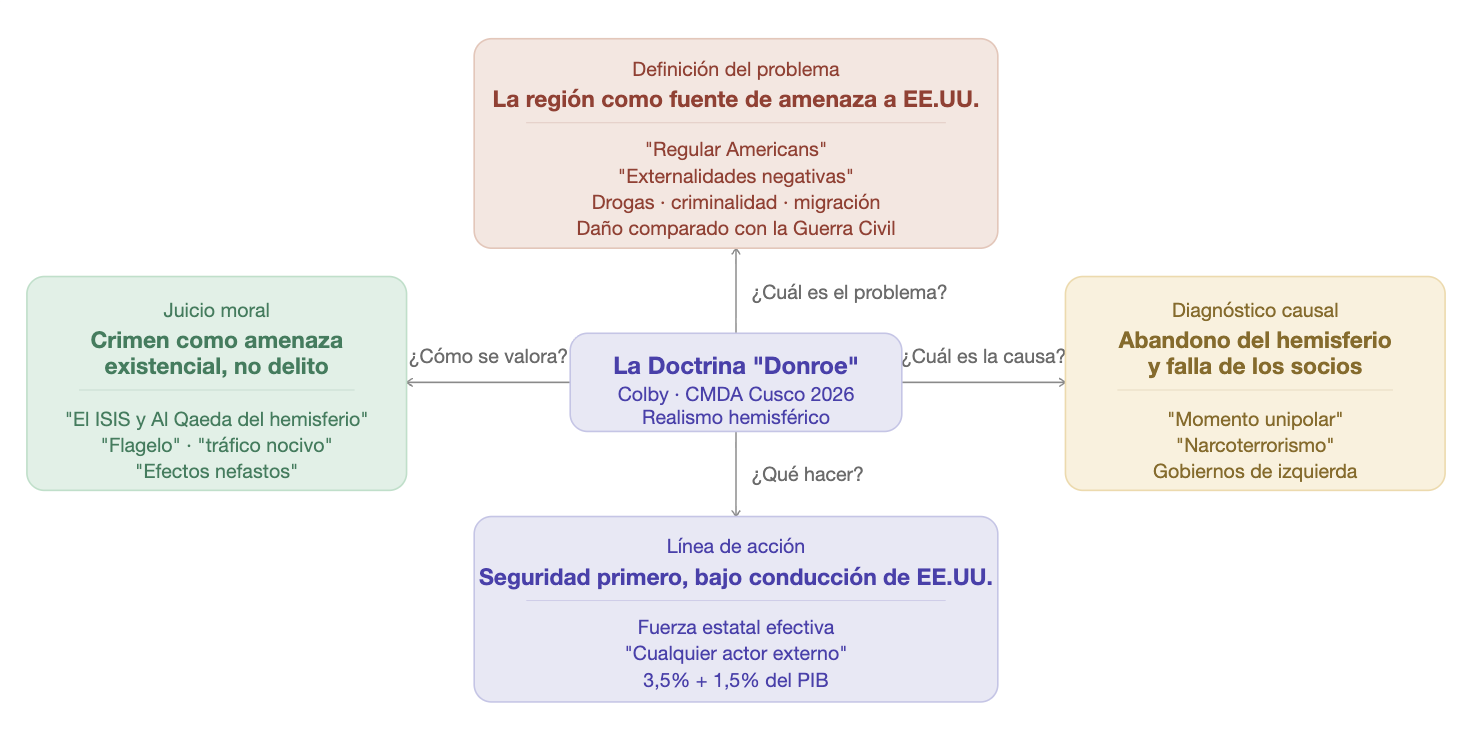
Robert Entman distinguishes four main functions of any frame2. The first defines the problem and specifies what is happening and why it matters. The second identifies its causality and points out which actors or forces produce it. The third issues a moral judgment about its protagonists and effects. The fourth proposes a line of action as a response.
Figure 1. The Four Functions of Framing According to Entman (1993)
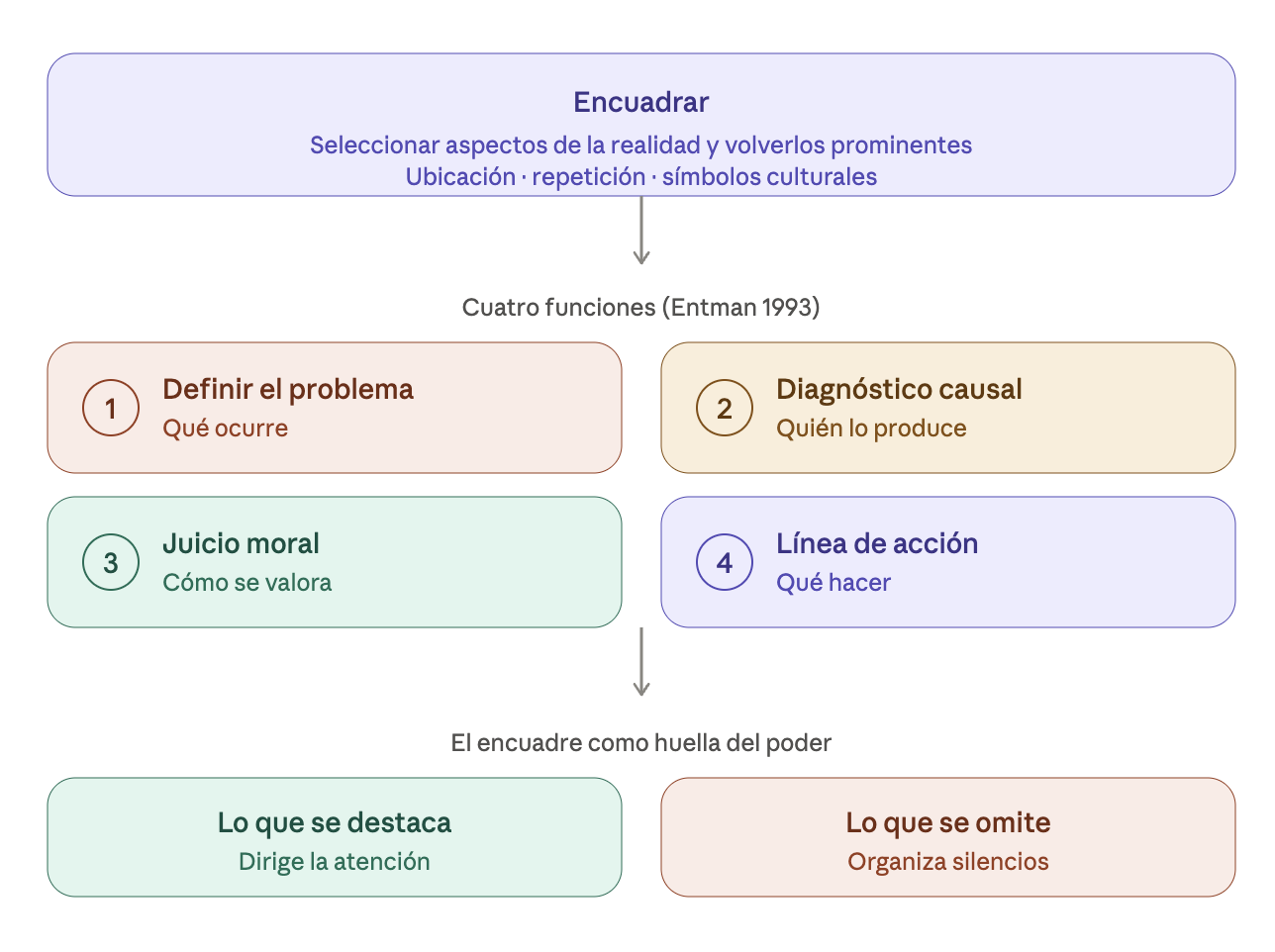
In international politics, this tool allows us to read discourse as a trace of power, as it shows what interpretation of reality certain actors seek to establish. Its design also organizes silences. Just as the discourse highlights certain aspects of the problem, it displaces others out of the field of visibility4. The omission of causes, responsibilities, or alternative definitions can weigh as heavily as what the discourse highlights, as it reduces the repertoire of available interpretations for its audience.3. Thematic Discourse Analysis
3.1. The General Framing
In a nearly 30-minute speech, Under Secretary Colby presented the new hemispheric orientation of Donald Trump’s second administration
5. His general framing can be summarized as ahemispheric realism . The American continent ceases to be a periphery of foreign policy and becomes the immediate perimeter of U.S. security. The so-called ‘Donroe Doctrine’
[*](explicitly mentioned in those terms) plays a central role in that operation. It provides the historical and doctrinal justification for a shift that combines greater military involvement from Washington with new demands for accountability, spending, and alignment from Latin American governments. Thus, the doctrine operates as a formula for updating. It reorganizes the relationship between the United States and the region under the idea that the hemisphere is once again a priority space, vulnerable and politically subordinate.
3.2. Defining the Problem
For Colby, the hemispheric problem is not the deterioration of Latin American security considered in its own terms, but its transformation into a direct threat against U.S. territory and “regular Americans.” Drugs, crime, and migration appear as ‘negative externalities’ overflowing from the region to the north. Latin America is thus narrated as the space of origin and transmission of the threat, while its inhabitants occupy a secondary position, more associated with the collateral effects of the problem than with their status as subjects of protection.
This hierarchy becomes more visible when the discourse quantifies and dramatizes the damage suffered by the United States. Colby speaks of hundreds of thousands of deaths due to drugs and compares that cost to the deadliest wars in the country’s history, including the 19th-century Civil War. The analogy matters because it translates a transnational criminal problem into the cultural register of existential war. Once that magnitude of damage is established, military participation no longer requires extraordinary justification and is presented as a proportionate response to the threat. However, this framing rests on a strong selectivity. The U.S. demand for drugs, the public health component associated with consumption, and the architecture of illicit economies sustaining that market are left out of the scene. Regional violence thus appears as a flow that originates in the south and strikes the north, rather than as a shared chain of responsibilities. This displacement shifts the center of gravity of the problem from the society that demands to the region that supplies.3.3. Causal Diagnosis
For Colby, the deterioration of hemispheric security responds to three main causes. The first is domestic and American. The ‘unipolar moment’ following the Cold War would have relegated Latin America to a marginal place in Washington’s strategic imagination. The second falls on the leftist governments of the early 21st century, which Colby associates with the advance of ‘narcoterrorism’ and the export of instability. The third points to the insufficient political will and defensive capacity of the regional partners themselves. The result is a causal chain that combines limited self-criticism, ideological reproach, and demands for greater Latin American responsibility.
The most significant operation, however, consists of a historical inversion. Colby acknowledges that the Monroe Doctrine is controversial but avoids confronting its interventionist legacy. Instead, he reduces it to its original function of preventing European recolonization and redefines it as a guarantee of Latin American independence. The problem thus ceases to be the doctrine and becomes its abandonment. What a critical tradition identifies as a source of subordination is recoded as a protection whose absence would have allowed regional deterioration.
This diagnosis also organizes relevant silences. Colby’s causal chain excludes aspects acknowledged by specialized literature, such as the U.S. demand for drugs
6
, the massive flow of arms from the United States to the south
7, and criminal governance as a phenomenon with its own logic8. The Latin American audience also does not enter the narrative as a subject capable of defining the problem from its own experience. Under Colby’s framework, the region appears primarily as a stage of disorder explained from Washington. Figure 2.The Framing Applied to Under Secretary of Defense Colby’s Discourse.3.4. Moral Judgment
The main moral operation of the discourse consists of a re-signification of category. ‘Narcoterrorists’ are defined as ‘the ISIS and Al Qaeda of this hemisphere.’ The analogy functions not only as hyperbole. It imports to the continent the moral and operational repertoire of the global war on terrorism, including the use of military force and lethal means. When Colby warns that these actors will not be treated ‘with kid gloves’ simply because they operate in the Western Hemisphere, the text reclassifies a criminal problem as a war threat and anticipates the type of response that the United States and its partners should consider legitimate. The semantic repertoire reinforces that assessment. Expressions like ‘scourge,’ ‘harmful trafficking,’ and ‘nefarious effects’ represent criminality as a form of contamination that must be contained and eliminated. At the same time, Colby presents frankness as respect and associates previous diplomacy with evasion and failure. Thus, objections to the new tone or the Trump administration’s approach are read as attachments to a discredited policy. Even when he admits that the U.S. record ‘is not perfect,’ the concession shifts the burden of proof onto the interlocutor.
Omissions also weigh here. In a multilateral forum, Colby’s discourse omits references to the Organization of American States (OAS), the Inter-American Defense Board, the Palermo Convention, international humanitarian law, and human rights as relevant normative frameworks. Sovereignty appears merely as an attribute that U.S. assistance would help strengthen, rather than as a principle capable of setting prior limits to Washington’s actions. The omission of that legal and institutional architecture reinforces a moral view of the problem centered on military and operational relations.
3.5. The Treatment
Colby formulates three main demands for the countries of the region. The first is to employ effective state force against criminal groups, including progressively joint operations led by the partners themselves. The second is to protect critical assets and prevent ‘any external actor’ from controlling or exploiting them, without explicitly referring to China. The third is to increase defense spending, using the standard toward which U.S. allies are moving: 3.5% of GDP in core military spending, and an additional 1.5% in security-related expenditures.
The distribution of functions is clearly delineated. The United States provides support, coordination, and political backing, while its partners must demonstrate ‘political will, clarity, and seriousness.’ This clause matters because it preemptively shifts responsibility for any potential failure onto Latin American governments. Recognition as a legitimate ally thus becomes conditioned on the performance that Washington expects from them.
Here, the counter-framing appears more clearly. Colby mentions policies inspired by the ‘Peace Corps’
[**]
and explanations centered on ‘root causes’ only to dismiss them as failed formulas of assistance. In his reading, development ceases to be a prerequisite for security and becomes dependent on it. Territorial and coercive control must first be established; only then can economic growth follow.
This is compounded by a closure of deliberative space. Colby presents his diagnosis as something evident to the audience and preemptively neutralizes criticism of militarization. The discourse, thus, does not invite Latin American countries to participate in defining the problem. It places them within a pre-designed response.4. Implications for Latin America Colby’s framing does not end with a description of hemispheric problems. It also organizes a political program for the region. By redefining drug trafficking, crime, and migration as direct threats to U.S. security, the discourse shifts the center of gravity of hemispheric cooperation. The priority ceases to be the protection of Latin American societies in their own terms and focuses on containing risks to the United States. From there, the region enters Washington’s strategic narrative as a space for intervention, alignment, and political validation.
4.1. A New Threshold for Intervention
The first consequence is a change in the political threshold that makes the use of force acceptable. By establishing drug trafficking as an existential threat and equating ‘narcoterrorists’ with wartime enemies, the doctrine offers a discursive framework that retroactively legitimizes operations already carried out and facilitates the justification of future ones. Military force ceases to appear as an exceptional resource and begins to be presented as a coherent response to a threat of strategic scale.
This shift has broader effects than the U.S. case. Under this logic, any internal situation within a Latin American state can be reinterpreted as a source of risk for Washington’s security. Operations like
Southern Spear
thus cease to be seen as a singular instance and begin to be framed as a possible reference for new hemispheric actions. The regional consequence is clear. The margin between security cooperation and intervention becomes narrower, while international law loses centrality as a framework for political containment.
4.2. New Political Hierarchies in the Region The second implication affects the position of Latin American governments within the hemispheric system. Colby’s discourse draws a line of differentiation between reliable partners and lagging actors. Governments that adopt the vocabulary of narcoterrorism, prioritize coercive responses, and show willingness to increase defensive capabilities move closer to the pole of legitimate allies. Those that insist on approaches based on judicial cooperation, development, or international law become more exposed to being portrayed as ambiguous regarding the threat. This new political hierarchy reorganizes relations among states in the region. Hemispheric security ceases to be organized solely around shared interests and begins to depend also on the degree of doctrinal affinity with Washington. The Colombian case illustrates this inflection well. The transition from Petro’s government to De la Espriella in Colombia has been accompanied by a simultaneous change in language, prioritization of security, and geopolitical positioning. On a broader level, the ‘Donroe Doctrine’ introduces a new regional divide by not only separating leftist and rightist governments. It also distinguishes between those who accept the new U.S. strategic framework and those who seek to maintain a more legal, policing, or multilateral reading of the problem.
4.3. Security, Dependency, and Room for Maneuver
The third implication projects onto national security doctrines. By shifting drug trafficking from the penal field to a logic closer to armed conflict, the doctrine favors more militarized responses, expands the role of the Armed Forces, and strengthens exceptional powers. This trend is already finding visible expressions in countries where the fight against organized crime has begun to shift from police and justice to territorial control schemes supported by military instruments or mass incarceration, as seen in El Salvador under Nayib Bukele or Ecuador with Daniel Noboa.
This is compounded by a strategic paradox. Colby presents the strengthening of Latin American military capabilities as a path to greater autonomy, but this path tends to insert countries in the region into enduring dependency relationships with the United States. The acquisition of U.S. military equipment, training, and technological support ties defense decisions for years to an external industrial and operational architecture. Rather than expanding strategic autonomy, this model may narrow it.
The problem acquires an additional dimension in the geopolitical realm. Without naming China, the discourse progressively reconfigures its economic presence in Latin America as a risk to regional security, particularly regarding critical infrastructure and strategic assets. In this way, Latin American states face increasing pressure to limit ties with their main trading partner in the name of security cooperation with Washington. The proposed treatment thus transcends the fight against drug trafficking and projects a broader logic of hemispheric alignment, where the region faces the risk of a double dependency: military with the United States and economic under increasing strategic conditions.
In the event that the Trump administration advances toward a specific security strategy for Latin America, it is likely that this will be based on the principles and functions that Colby defined in Cusco. His discourse already organizes a way to identify threats, assign responsibilities, and prioritize responses. In that sense, intervention can be read less as an isolated episode and more as a plausible anticipation of a more formal regional doctrine, in line with the general security and defense orientations disseminated by Washington in November 2025 and February 2026.
DIEGO SAZO
Head of Research in International Relations
CARMEN GRESSE
Research Assistant
[*]
It consists of a journalistic neologism (a contraction of Donald and Monroe), coined by the
New York Post
in a cover story on January 8, 2025, titled ‘The Donroe Doctrine: Trump’s Vision for the Hemisphere,’ which showed President Trump in front of a map with Canada renamed as state 51, Greenland labeled ‘Our Land,’ and the Panama Canal as ‘Pana-MAGA.’ [**] The Peace Corps ( Peace Corps
- Teun A. van Dijk, “What Is Political Discourse Analysis?”, Belgian Journal of Linguistics 11, no. 1 (1998): 11-52. ↩︎
- Robert M. Entman, “Framing: Toward Clarification of a Fractured Paradigm”, Journal of Communication 43, no. 4 (1993): 51-58. ↩︎
- Paul Statham y Hans-Jörg Trenz, The Politicization of Europe: Contesting the Constitution in the Mass Media (Abingdon: Routledge, 2013). ↩︎
- Robert M. Entman, “Framing: Toward Clarification of a Fractured Paradigm”, Journal of Communication 43, no. 4 (1993): 51-58. ↩︎
- Elbridge Colby, “Remarks by Under Secretary of War for Policy Elbridge Colby at the Conference of Defense Ministers of the Americas in Cusco, Peru”, U.S. Department of War, 8 de julio de 2026, https://www.war.gov/News/Speeches/Speech/Article/4538114/remarks-by-under-secretary-of-war-for-policy-elbridge-colby-at-the-conference-o/ ↩︎
- Keith Humphreys et al., “Responding to the Opioid Crisis in North America and Beyond: Recommendations of the Stanford–Lancet Commission”, The Lancet 399, n.º 10324 (2022): 555–604. ↩︎
- Willy A. Valdivia-Granda, “Structure and Dynamics Mapping of Illicit Firearms Trafficking Using AI Models”, Frontiers in Big Data 8 (2025): 1648730. ↩︎
- Andreas E. Feldmann y Juan Pablo Luna, “Criminal Governance and the Crisis of Contemporary Latin American States”, Annual Review of Sociology 48 (2022): 441-461. ↩︎