Artificial Intelligence and National Power
This article was translated automatically and may contain differences from the original. For reference, read the original.
INTRODUCTION
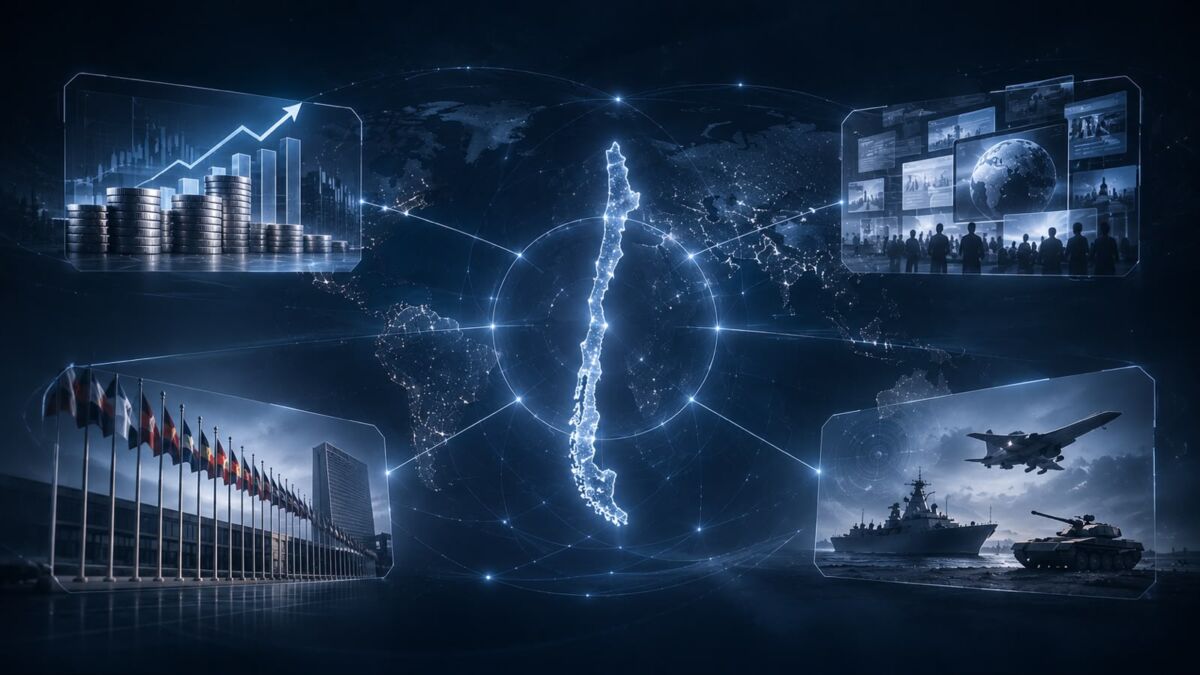
Artificial intelligence (AI) is transforming how states employ their instruments of national power. Its effects can be seen in how various international actors exert influence or enhance their capabilities through this new technological development. China uses its open AI models as a tool for economic and diplomatic influence, offering them as a basis for joint development to other countries[1]. In May 2024, Russian state media reportedly disseminated a fake video generated by AI in which the spokesperson for the U.S. Department of State justified Ukrainian attacks on Belgorod[2]. In the military realm, the North Atlantic Treaty Organization (NATO) acquired the Maven Smart System in 2025, based on AI models, to accelerate intelligence fusion, target selection, and decision-making, which will support the coordinated use of its resources[3]. These cases demonstrate that the incorporation of AI into national power instruments is already a reality among major powers, prompting countries like Chile to consider how and under what conditions to employ it in line with their national interests.
This article describes how AI enhances the instruments of national power and proposes options for Chile. First, it demonstrates how AI accelerates and amplifies the application of each instrument. Then, it outlines several proposals where this new technology can act as a force multiplier and assist in the protection and achievement of our national interests, considering that the state exercises control over the AI models it employs while also supporting the development of a national innovation ecosystem. Finally, it presents certain conclusions regarding the necessary conditions to integrate and promote the use of AI in national power instruments.
AI AND THE INSTRUMENTS OF NATIONAL POWER
The state employs various instruments to transform its resources into influence, and AI influences all of them across the board. In this regard, U.S. joint doctrine proposes four instruments of national power: diplomatic, informational, military, and economic[4], which, in the logic of ends, ways, and means articulated by Arthur Lykke, corresponds to the ways[5]. AI enhances the effectiveness and reach of these ways through three cross-cutting effects. First, the speed at which it allows the same tasks to be performed in a fraction of the time, as when a model analyzes and classifies documents in minutes that would take a team of analysts weeks, shortening the cycle between observation and decision. The second is scale, which allows actions to be multiplied without proportionately increasing personnel, as when a system produces thousands of messages tailored to different audiences or when a single operator coordinates multiple unmanned vehicles. Third, the integration of information enables the acquisition of new knowledge by relating sources that were previously analyzed separately; for example, when AI cross-references data to detect patterns and anomalies that no analyst would identify by examining each source in isolation.
Regarding the diplomatic instrument, AI models enhance the capacity to anticipate crises and enable the development of negotiations with better information. The German Foreign Office developed PREVIEW, an AI-based tool that identifies states with the highest potential for crises within a six to 18-month horizon, combining its results with inputs from its geographic and thematic units and its representations abroad[6]. Similarly, the VIEWS system, developed by the Peace Research Institute Oslo and Uppsala University, publishes monthly forecasts of combat deaths up to three years in advance[7]. In terms of negotiation preparation, the Futures Lab at the Center for Strategic and International Studies (CSIS) trained a model using hundreds of peace treaties and news articles to identify areas of agreement that could facilitate a ceasefire in Ukraine[8]. The same lab emphasized the importance of keeping the diplomat at the center of decision-making, with AI supporting their judgment[9].
In the information domain, the use of AI enhances both influence operations and states’ ability to detect and defend against them. In April 2025, Taiwan’s National Security Office informed Parliament that the Chinese Communist Party had used AI tools to disseminate over 500,000 controversial messages so far that year, synchronized with sensitive events, such as a presidential speech about China. This was identified as a cognitive warfare strategy aimed at dividing Taiwanese society[10]. In terms of response, VIGINUM, France’s service for protection against foreign digital interference, based on multilingual language models that identify copied, reformulated, or translated messages between accounts, documented 77 operations of the Russian operational mode Storm-1516 between late 2023 and March 2025. These procedures utilized AI-generated videos and audio and networks of sites fed by reformulated news articles using generative AI[11].
Regarding the preparation and use of the military instrument, AI significantly increases processing speed and enables the autonomy of weapon systems. A study by the Center for Security and Emerging Technology at Georgetown University documented that with support from Project Maven, the U.S. 18th Airborne Corps was able to execute target selection with 20 soldiers, a task that required over 2,000 personnel during the 2003 invasion of Iraq[12]. Furthermore, in Ukraine, the autonomous navigation of drones has raised the impact rate of these weapons from a range of 10% to 20% to one of 70% to 80%, reducing the number of drones needed per target from eight or nine to one or two[13]. Both cases support RAND’s analysis, which suggests that the combination of “precise mass” and “affordable mass” can provide cost-effectiveness advantages over expensive platforms[14].
Finally, a national economy enhanced by AI advancements allows states to influence external actors in line with their national interests. In the case of the United States, in July 2025, a program was created to export complete AI packages, from chips and cloud services to models and applications, aiming for its allies to adopt American technology and standards and reduce their dependence on adversarial AI[15]. China’s proposal, on the other hand, is based on the dissemination of open models that are free to use and low-cost to implement, which any country can adapt. As of September 2025, according to Hugging Face, 63% of new derivative models were built on Chinese foundations[16]. This strategy has been successful in countries with fewer computing resources and could create dependencies on the developer even when the models are open.
PROPOSALS FOR CHILE
Based on the international experience described, this section proposes how Chile could employ AI to strengthen each of its instruments of national power. The proposals consider the country’s current capabilities and the challenges it faces in terms of foreign policy, protection of its informational space, safeguarding its territory, and its international economic position.
Chile should use AI to provide its Foreign Ministry with greater anticipation and analytical capabilities. In terms of early warning, regional crises have direct effects on the country. A system similar to PREVIEW, which cross-references economic, political, and social media indicators from countries in the region, would allow for the anticipation of crises that generate migratory flows toward the north of the country months in advance and coordinate responses with the countries of origin and transit. Regarding negotiation preparation, Chile manages 33 economic-trade agreements with 65 economies that represent 88% of global GDP[17]. AI tools capable of comparing legal texts, modeling the positions of counterparts, and simulating scenarios would enable limited negotiation teams to prepare with better information for both the modernization of these agreements and potential negotiations.
In the information domain, Chile could employ AI both to protect its informational space and to project its national interests abroad. In terms of protection, the country faces disinformation and AI-assisted manipulation in a context of increasing exposure; this was evident in December 2025, when days before the presidential runoff, the government publicly warned about the circulation of AI-generated images and audio intended to misinform[18]. A specialized state capacity inspired by VIGINUM, employing language models to detect coordinated campaigns of foreign origin and synthetic content, would allow for early alerts to authorities and strengthen the cognitive resilience of society. Proactively, AI would enable Chile to continuously monitor how it is perceived in the press and social media of other countries, adapting messages that are open and attributable to those audiences in their languages and cultural codes to project its interests. This capability is particularly relevant in Asia, which accounted for 57.5% of Chile’s exports in 2025, where positioning the country as a reliable supplier of copper and lithium and as an investment destination in clean energy would strengthen our country’s economic influence[19].
Regarding the military instrument, AI would enable the Armed Forces to more effectively fulfill their mission of protecting sovereignty and safeguarding the territorial integrity of the country. The main contribution of this technology is to separate the search for action, as these systems analyze information from satellites and position sensors from a distance, identify irregular entries into protected areas, and automatically order satellite images that confirm them, so that ships and aircraft are deployed only against verified threats. The Uruguayan Navy employed this method along its maritime boundary with Brazil, where alerts triggered by vessels fishing after turning off their identification allowed them to capture images of a fishing boat heading toward their waters[20]. Applied to maritime, land, and air spaces, this logic would enable the Chilean Armed Forces to exert effective presence over a territory that exceeds the capacity of their platforms.
Moreover, AI would allow Chile to strengthen the command and control of its forces and increase its capacity to interoperate with allies. According to NATO’s Command and Control Excellence Centre, the distinctive feature of AI in these systems is that, in addition to displaying the situation, it can anticipate its evolution and propose courses of action, while merging large volumes of data to reduce the cognitive load on decision-makers[21]. This would enable smaller command structures to conduct joint operations more rapidly, maintaining the final decision with the commander, as the same study views AI as a force multiplier serving human judgment. The study also emphasizes that NATO and its allies are focusing their efforts on developing interoperable processes and procedures for these systems, so their adoption would facilitate the Chilean Armed Forces operating with partners advancing in that direction.
On the other hand, the agile and timely integration of drones and unmanned systems with AI would allow the Armed Forces to generate affordable mass for surveillance and deterrence. A RAND report from January 2026 states that the cost-effectiveness ratio of quantity could improve as these systems become cheaper and more capable, and that the combination of “precise mass” and “affordable mass” could give disposable unmanned systems an increasing cost advantage over sophisticated platforms and armaments in certain applications[22]. The country should promote initiatives to develop these capabilities, such as those led by INACAP and the National Aeronautics Company of Chile (ENAER), which presented a domestically developed vertical takeoff military drone in September that was developed in ten months[23].
Finally, regarding the economic instrument, AI can reinforce Chile’s capacity to influence other state actors as a reliable supplier of critical minerals and as a hub for digital infrastructure. In March 2026, Codelco signed an agreement with Microsoft to employ data, analytics, and AI in decision-making and automate critical processes at its operations[24]. Greater operational continuity strengthens the reliability of Chilean supply, a negotiating asset with the United States, the European Union, and Asia, which seek to secure their critical mineral supply chains. Additionally, Amazon Web Services, Microsoft, and Google have committed over $7.5 billion to data centers in the country as part of a National Data Centers Plan 2024-2030 aimed at tripling the size of the industry in five years[25]. If this infrastructure is conditioned on data sovereignty and capacity transfer, Chile could consolidate itself as a regional technological hub and strengthen its position in international economic relations.
CONCLUSIONS
The various advancements in AI enhance the instruments of national power, and Chile must leverage them through the development of its own capabilities that provide a degree of autonomy over the systems it employs. International experience demonstrates that this technology already enables the anticipation of crises, detection of influence operations, multiplication of military effectiveness, and transformation of a country’s technological base into a tool for economic influence. Chile possesses the conditions to apply these logics in its Foreign Ministry, in the protection of its informational space, in the surveillance and protection of its territory, and in its position as a supplier of critical minerals and exceptional conditions for the physical infrastructure that supports AI.
For these initiatives to become a reality, three actions are deemed necessary. A national security architecture that coordinates and controls the use of AI across the four instruments, as its main advantage depends on integrating them with the same speed that technology imposes. Secondly, an algorithmic sovereignty policy that defines which systems can process the state’s strategic information, to avoid dependence on foreign providers that could compromise the country’s autonomy. Lastly, a dual-use innovation ecosystem with multi-year funding that integrates the defense industry, academia, and private actors with the Armed Forces as primary customers.
Alongside these initiatives, the use of AI in national power instruments requires rigorous risk management. Models can generate erroneous or biased analyses that affect diplomatic decisions, produce inaccurate messages that damage the state’s credibility, make mistakes in target identification with severe humanitarian consequences, and accelerate decisions that may favor unintended escalations. Therefore, its incorporation should be governed by doctrines and protocols that ensure human control, verification of results, and coherence with international humanitarian law.
ALEJANDRO AMIGO
Senior Researcher, AthenaLab
[1] Caroline Meinhardt et al., Beyond DeepSeek: China’s Diverse Open-Weight AI Ecosystem and Its Policy Implications (Stanford: Stanford HAI and DigiChina, December 16, 2025), 14, https://hai.stanford.edu/policy/beyond-deepseek-chinas-diverse-open-weight-ai-ecosystem-and-its-policy-implications
[2] “The Matthew Miller deepfake has the attributes of Russia’s information warfare”, Voice of America, June 2024, https://www.voanews.com/a/7654403.html
[3] NATO Communications and Information Agency, “NATO acquires AI-enabled warfighting system”, April 14, 2025, https://www.ncia.nato.int/newsroom/news/nato-acquires-aienabled-warfighting-system
[4] Joint Chiefs of Staff, Joint Publication 1: Doctrine for the Armed Forces of the United States (Washington, DC: Joint Chiefs of Staff, 2013, updated in 2017).
[5] Arthur F. Lykke Jr., “Defining Military Strategy”, Military Review 69, no. 5 (1989): 2–8.
[6] Bundesministerium der Verteidigung, “Krisenfrüherkennung Bundeswehr: Verstetigt, vernetzt, verbessert”, April 13, 2022, https://www.bmvg.de/de/aktuelles/krisenfrueherkennung-bundeswehr-verstetigt-vernetzt-verbessert-5391892
[7] Peace Research Institute Oslo, “AI model warns of deadliest conflict zones in 2026”, December 10, 2025, https://www.prio.org/news/3670
[8] Scott Neuman, “Is AI the Future of America’s Foreign Policy? Some Experts Think So”, NPR, May 12, 2025.
[9] Neuman, “Is AI the Future of America’s Foreign Policy?”.
[10] “Taiwan Says China Using Generative AI to Ramp Up Disinformation and ‘Divide’ the Island”, Reuters, April 8, 2025.
[11] Manon Richard et al., “Unmasking Information Manipulation: A Quantitative Approach to Detecting Copy-Pasta, Rewording, and Translation on Social Media”, VIGINUM, SGDSN, arXiv:2312.17338, December 28, 2023, https://arxiv.org/abs/2312.17338; SGDSN and VIGINUM, Analyse du mode opératoire informationnel russe Storm-1516 (Paris: SGDSN, June 2025), 9 and 17, https://www.defense.gouv.fr/desinformation/aller-plus-loin/analyses-sgdsn/sgdsn-viginum-analyse-du-mode-operatoire-informationnel-russe-storm
[12] Emelia Probasco, Building the Tech Coalition: How Project Maven and the U.S. 18th Airborne Corps Operationalized Software and Artificial Intelligence for the Department of Defense (Washington, DC: Center for Security and Emerging Technology, August 2024).
[13] Kateryna Bondar, “Ukraine’s Future Vision and Current Capabilities for Waging AI-Enabled Autonomous Warfare”, Center for Strategic and International Studies, March 6, 2025, https://www.csis.org/analysis/ukraines-future-vision-and-current-capabilities-waging-ai-enabled-autonomous-warfare
[14] Zachary Burdette et al., How Artificial Intelligence Could Reshape Four Essential Competitions in Future Warfare (Santa Monica, CA: RAND Corporation, 2026), https://www.rand.org/pubs/research_reports/RRA4316-1.html
[15] The White House, “Promoting the Export of the American AI Technology Stack”, Executive Order 14320, July 23, 2025, https://www.whitehouse.gov/presidential-actions/2025/07/promoting-the-export-of-the-american-ai-technology-stack/
[16] Meinhardt et al., Beyond DeepSeek, 4.
[17] Equipo DF, “Chile possesses the trade agreement network with the greatest access to global GDP”, Diario Financiero, November 6, 2023, with data from the Undersecretariat of International Economic Relations, https://www.df.cl/aniversario/chile-posee-la-red-de-tlc-con-mayor-acceso-al-pib-mundial
[18] “Elections 2025: Government calls not to fall for deep fakes or images created with Artificial Intelligence”, 24 Horas, December 9, 2025, https://www.24horas.cl/elecciones/elecciones-2025-gobierno-llama-a-no-caer-en-deep-fake-
[19] “Chilean exports grew by 5.9% in 2024, 57.5% went to Asia”, Diario Estrategia, February 24, 2025, with data from the Central Bank of Chile, https://www.diarioestrategia.cl/texto-diario/mostrar/5193304/exportaciones-chilenas-crecieron-59-2024-575-fueron-asia
[20] Skylight, “Cross-Border Surveillance Exposes Illegal Fishing Threats in Uruguay’s Waters”, Allen Institute for AI, accessed October 21, 2026, https://www.skylight.global/case-studies/uruguay-tip-cue
[21] Max van Rijn, Rabia Saylam, Marcel Scherrenburg, and Mesut Dönmez, “AI in Military C2-Systems: An Introduction and Recent Advances”, Annals of C2, vol. 2 (The Hague: NATO Command and Control Centre of Excellence, July 2025), 90–92, https://c2coe.org/wp-content/uploads/Library%20Documents/Annals/Seperate%20Articles/20250701%20AI%20in%20Military%20C2%20Systems%20An%20Introduction%20and%20Recent%20Advances%20%28C2COE%29%20Annals%20of%20C2%20Vol2.pdf.
[22] Burdette et al., How Artificial Intelligence Could Reshape Four Essential Competitions.
[23] Araya, A. “This is the new military drone made in Chile: it took 10 months to develop and will soon make its first flight”, Meganoticias, September 14, 2026, https://www.meganoticias.cl/nacional/531621-nuevo-dron-militar-fabricado-en-chile-10-meses-desarrollo-primer-vuelo-14-09-2026.html
[24] InvestChile, “Codelco and Microsoft Sign Agreement to Develop AI at Work Sites”, March 9, 2026, https://blog.investchile.gob.cl/2026/codelco-and-microsoft-ai
[25] Buksdorf, M. “Amazon, Microsoft, and Google: Chile adds over $7.5 billion in committed investments in data centers”, CNN Chile, 2026, https://www.cnnchile.com/negocios/amazon-microsoft-google-chile-suma-mas-us7500-millones-inversiones-comprometidas-data-centers/