2023 Survey on Foreign Policy and National Security
This article was translated automatically and may contain differences from the original. For reference, read the original.
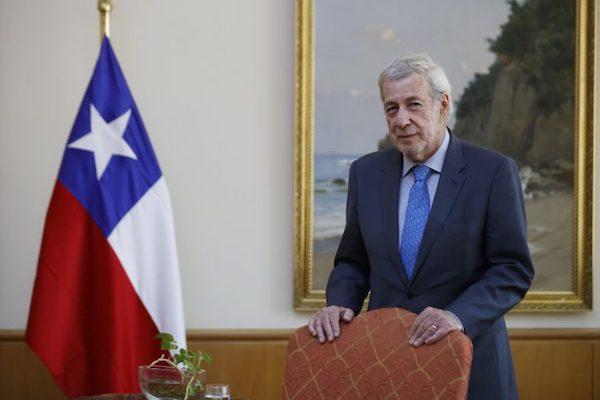
El Mostrador, June 5, 2023
When examining threats to national security, issues such as drug trafficking and organized crime, border porosity, and cyberattacks emerge prominently. Regarding permanent national interests, maintaining a level of security that allows for development, preserving territorial integrity, controlling Chile’s seas, and maintaining the political independence of the Chilean nation are prioritized.
Recently, the AthenaLab research center, dedicated to foreign relations, security, and national defense, published the fourth version of the Foreign Policy and National Security Survey conducted in collaboration with Ipsos. This year’s version is notable for not only conducting interviews in Chile but also in Argentina, Peru, and Bolivia. The survey retains its original design of interviewing the general population separately from experts, allowing for a visualization of the differences between the two groups. The survey can be viewed in detail here.
In general, regarding Chile’s foreign policy, there is a disconnection between the priorities and concerns of the Executive in this area compared to what matters to Chileans, whether they are experts or not. The Presidency, through the Ministry of Foreign Affairs, declared at the beginning of the government, in March 2022, that its priorities were regional integration, turquoise foreign policy, a focus on human rights, and a more feminine approach to international relations. To date, Foreign Minister Van Klaveren has not modified this stance, which contrasts sharply with the foreign policy objectives that both the general population and experts declare as priorities, namely combating drug trafficking, regulating migration, protecting borders, projecting towards the Asia-Pacific, combating climate change, and defending maritime interests.
Another noteworthy point is the recurring difference with the Government’s affection for UNASUR and anything South American, as both experts and non-experts focus on countries such as the United States, Canada, New Zealand, and Australia. Surprisingly, El Salvador has been added to the list of model countries to follow. A similar trend occurs when asked which countries should be Chile’s partners, with traditional trading partners at the top of the list and neighboring countries trailing far behind, making it difficult to understand the Government’s fixation on regional integration, given that the rest of Chile has a different understanding, suggesting different motivations on the part of the Executive.
When examining threats to national security, issues such as drug trafficking and organized crime, border porosity, and cyberattacks emerge prominently. Regarding permanent national interests, maintaining a level of security that allows for development, preserving territorial integrity, controlling Chile’s seas, and maintaining the political independence of the Chilean nation are prioritized.
Regarding the tasks of the Armed Forces, the general population prioritizes border surveillance and protection, combating drug trafficking, and defending sovereignty. These priorities shift when consulting experts, who have a more traditional view, placing the defense of sovereignty and the protection of national interests at the forefront, regardless of their location. Both groups continue to assign a priority role to defense institutions in natural disasters, while there is a rapidly growing need among the general population for the Armed Forces to support police in cases of serious public order disturbances.
Richard Kouyoumdjian
Vice President, AthenaLab
Source: El Mostrador