INTERVIEW | Chilean Government Delays Funding for the Strategic Capabilities Financing Law
This article was translated automatically and may contain differences from the original. For reference, read the original.

In the 2025 budget bill, the government of Gabriel Boric proposes to postpone the allocation of funds outlined in Law 21.174, creating uncertainty regarding the country's defense investment.
The 2025 budget bill for Chile, recently presented by the government of Gabriel Boric, proposes delaying the contribution of funds to the Strategic Contingency Fund, which, according to Law 21.174 on Financing Strategic Capabilities for National Defense, is intended for this purpose.
This Strategic Contingency Fund is “designed to finance military material and associated infrastructure and their maintenance costs to address situations of external war or international crises that severely affect the external security of the Republic” and may also “be used to finance military material and associated infrastructure that are destroyed or severely damaged as a result of catastrophic situations.”
This fund was initially established with 20% of the remaining balance from a similar fund under Law 13.196 (known as the Copper Law, repealed by the aforementioned Law 21.174 on September 26, 2019) plus contributions that the state of Chile should make in its defense budget once that balance is exhausted. These contributions were expected to be made at the beginning of 2025, but the government has indicated that they will be made throughout the year, which has raised alarms among the Armed Forces, opposition parties, and various sectors related to defense.
At the same time, Law 21.174 established the Multiannual Fund for Strategic Defense Capabilities, “which will finance investment in military material and associated infrastructure, and their corresponding maintenance costs, based on a four-year investment financing program that allows for the realization of the force development planning derived from the national defense policy established in the previous article,” which would be the main fund for purchasing equipment for the Armed Forces and was initially constituted with 55% of the balance of account 9154 of the Copper Law, to be transferred over four years, which concludes this year. This annual amount of 488 million dollars was considered the minimum point for the state to contribute annually, both in the initial transfers and in what must be contributed starting from year five, after having used the amount allocated for the first four years.

The Copper Law allocated 10% of the sales of the state-owned company Codelco for defense purchases, initially one-third for each force and then one-fourth to each, with the remaining quarter for a contingency fund managed by the Ministry of Defense. For example, this fund was used in 2010 to rebuild the Talcahuano Naval Base after the tsunami.
When copper prices were very high, part of those funds went unused, leaving a remainder that was distributed in payments between 2020 and 2024, as well as to cover all debts from purchases that had been made, including, among others, the construction of the Antarctic vessel Almirante Viel, which began under Michelle Bachelet’s second government and was completed under Boric.
Beyond the concern generated by the idea that the contribution from the Strategic Contingency Fund will not be made at the beginning of 2025 but throughout the year, there is also concern that the government aims for the Multiannual Fund for Strategic Defense Capabilities to only maintain the value of 488 million dollars, which should be a starting point. In this regard, the law establishes a minimum, which is the baseline contribution, that was also under the Copper Law, based on the average of the previous six years, which some calculations currently estimate at around 600 million dollars, significantly higher than the 488 million proposed by the government.

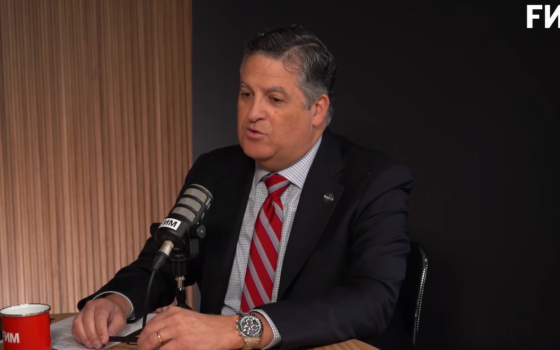
As Richard Kouyoumdjian, Vice President of AthenaLab, explains, it is essential to consider that the re-equipment of the Chilean Armed Forces will require far more resources than what was needed between the late 20th century and the early 21st century, as at that time much second-hand material in good condition could be acquired when European armed forces were downsizing after the end of the Cold War. However, today, in a more conflictual world, powers are retaining their existing material, and the market for used equipment has significantly diminished. “That fund of 488 million dollars is insufficient for the reality ahead, with the modernization required for the F-16s, in the case of armored material, the Leopards definitely need investment, and those capabilities must be maintained. There is also an ongoing investment plan for the Army, but the most expensive is that of the Navy. When you say, ‘I have to renew the fleet,’ which at this moment is a combination of platforms that are 20 years old or more, you have to face that reality. If I want to maintain eight frigates, I need to consider whether I will pursue a construction plan in Chile or buy them abroad. It is very difficult abroad because prices are high, and no one wants to sell their second-hand frigates. In countries like Chile, Argentina, or Peru, everyone prefers to build locally, even if it is a bit more expensive, because the investment is more socially acceptable” Kouyoumdjian explained.

In this regard, he pointed out the statement made by Ricardo Montero Allende, Undersecretary of Defense, when he said that the fund of 488 million is sufficient to develop the strategic defense planning. “He said nothing about the postponement of the strategic supplement” Kouyoumdjian noted, but also emphasized that while it is possible to advance with the four support vessels that will replace the Sargento Aldea, the Aquiles, and the two Batral-type barges, one must ask, “what will be done with the submarine force and the frigates. Argentina has already discovered that buying second-hand submarines is not so simple because there are not many available. You must either buy them or build them, and that will be a ten-year project. These are very long-term issues that require financing.”
Furthermore, looking ahead, where new equipment will likely need to be purchased, 488 million dollars per year will not be sufficient to fulfill almost any of the strategic programs that the forces have. “Just the complete renewal of the Navy costs 7 billion dollars, and that does not consider any other force. Therefore, we would be spending all those funds integrally for the next 15 years” Kouyoumdjian stated.
The proposal to delay the allocation of funds also generates reactions because this year the Multiannual Fund for Strategic Defense Capabilities was not contributed at the beginning of the year, as it should have been, but throughout the year, which creates uncertainty about when the forces will have access to those resources for making payments for their purchases.
“The main point is that there has always been a group of people who did not support the replacement of the Copper Law with this Strategic Capabilities Financing Law because they felt it was easier to take 10% of Codelco’s sales than to depend on the current government to finance you. And it is the fear of all the Armed Forces in general in Latin America, that they will not be able to renew their systems and platforms because they do not have guaranteed funding” Kouyoumdjian added, emphasizing that the important thing is the political signal “and there are people who start to say, ‘we told you so, you trusted the politicians, and look at what they are doing.”

“Another important aspect is that every time the issue of financing arises, there is a discussion about whether we frame ourselves within what we can finance or whether we establish what we need and see how much it costs. The current capabilities that are about to reach the end of their useful lives provided us with strategic tranquility in the first quarter of the 21st century. What we are deciding now is for the next 25 years, which if we do not face with the required capabilities, we will have to assume and understand the risk that this implies, which can clearly fall short and not generate the strategic discussion,” concludes the Vice President of AthenaLab.
In this regard, it is important to emphasize that the main problem does not lie in the text of the law, but in its incorrect implementation and the failure to consider the re-equipment needs of the country, as well as the reality of the international scenario, where more resources are required to maintain capabilities.