COLUMN | What is at Stake in Ukraine?
This article was translated automatically and may contain differences from the original. For reference, read the original.
- por Richard Kouyoumdjian
- Columnas
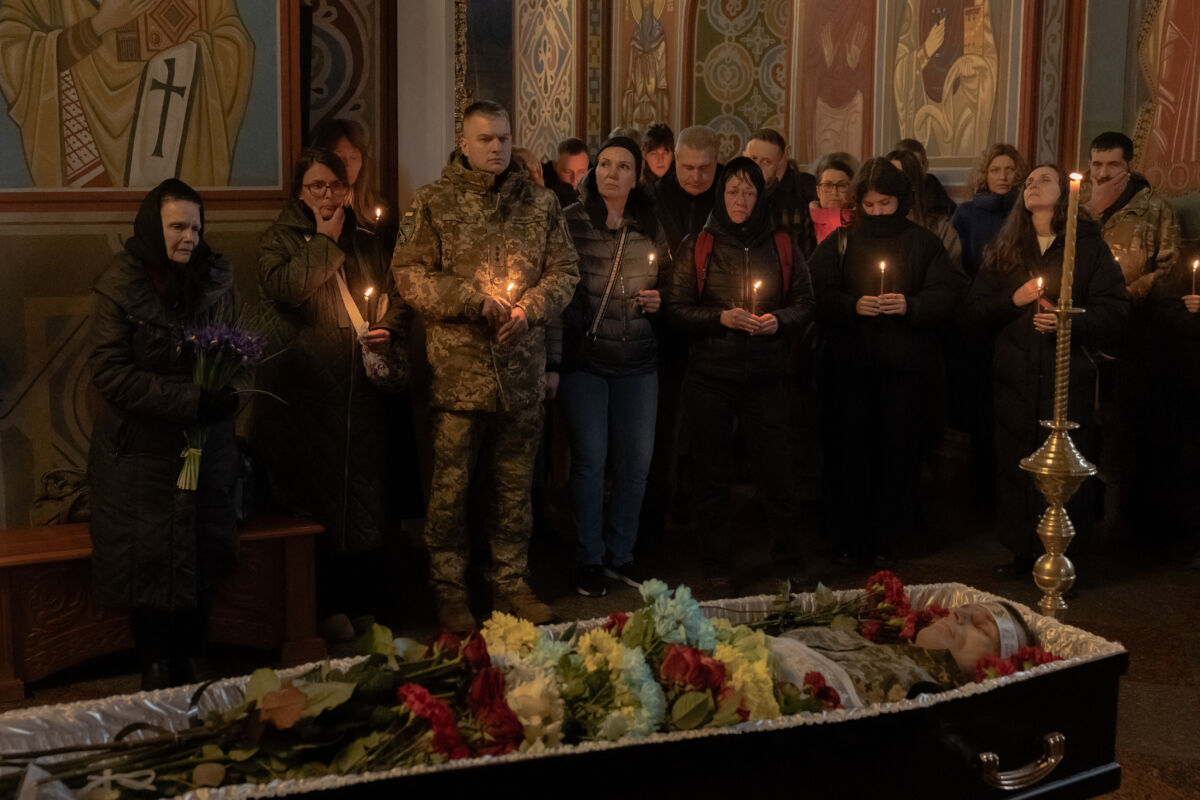
The British and Europeans know this, and they understand that peace in Ukraine requires the involvement of the U.S. because they currently lack the capacity to support Ukraine from a position of strength in the pursuit of peace, let alone sustain a military effort afterward.
Often, the way the press reports on events obscures what is important or what is truly at stake. The case of Ukraine is one such example, as it is difficult to understand the purpose of the current U.S. government at first glance.
President Trump’s administration is not only shaping its campaign program “Make America Great Again” (MAGA), but is also seeking to establish an international order that is favorable to it, or conversely, less dangerous to its interests, which are none other than MAGA itself.
The major issue for Americans is China, and it has been for some time. What the U.S. seeks is to separate Russia from China and to achieve this, it must undertake actions that range from reducing the intensity of sanctions programs to possibly conceding parts of Ukraine, among other necessary measures.
The pursuit of a rare earths agreement between Ukraine and the U.S. is not the main issue—regardless of the amount, and the fact that it allows Americans to recoup their contributions to support the Ukrainian war effort, surprising many—but that said, Franklin Delano Roosevelt did the same with the British at the beginning of World War II, when he pressured them in exchange for 50 old destroyers, which were still useful to the Royal Navy for their effort in the Battle of the Atlantic.
For the U.S., disarming the Russia-China alliance is far more important than the fate of Ukraine. I know this sounds terrible and inhumane, but for them, having a Russia that is closer and not a threat holds a value that far exceeds the potential consequences of a peace agreement regarding Ukraine, or that Russia may continue to be considered a threat by Europeans and the United Kingdom, because what matters here is what is relevant to the U.S. and the voters who placed Donald Trump in the presidency.
Separating the Chinese from the Russians is not simple. For the Russians to accept something of that nature, it is necessary not only to end the war in Ukraine on relatively favorable terms for them, which necessarily implies retaining the part they already control, and perhaps more, but also to accept that Crimea remains with them and that there will be no further discussion on the matter.
The Russians will also demand limits on NATO expansion, which obviously implies that Ukraine and everything further east cannot be part of the defensive alliance. It would not be surprising if they request some form of economic support and other things they can think of. They know they can charge dearly for being friendly with the U.S., and that the Chinese counteroffer is likely to be lucrative, creating a competition for who pays more for Russian loyalty, if it has any value or permanence over time.
The Chinese have not yet taken a very clear position in the Ukrainian conflict, but if there is a risk that Russia shifts to the American side we could see them either seeking peace or providing the Russians with resources to quickly defeat the Ukrainians, which would be possible if they do not have U.S. support, as European support is currently worth little.
Regardless of the restrictions imposed by NATO membership, Europe and the United Kingdom currently lack the military capabilities to intervene in Ukraine. They do not have the required troops or military equipment and will take several years to generate what is necessary. It is one thing to say they will increase their military spending, but another for that to translate into soldiers, tanks, ships, aircraft, drones, missiles, bombs, etc.
The British and Europeans know this, and they understand that peace in Ukraine requires the involvement of the U.S. because they currently lack the capacity to support Ukraine from a position of strength in the pursuit of peace, let alone sustain a military effort, whether directly or indirectly through armament and/or financing.
If I were the leader of a European country, I would focus on seeking peace in Ukraine, and then prepare for a possible scenario of a Russia that does not respect agreements and the fact that the United States will not be available to defend them. This implies that the United Kingdom and France must maintain their nuclear capabilities, all must raise their defense spending beyond 3%, and the European Union must seek to address the issue as such. With the U.S. unavailable, it must be assumed that NATO ceases to exist.
The United Kingdom will certainly seek to participate in a European defense agreement while maintaining its defensive alliance with the Americans, but there will also come a time when it will decide not to exhaust itself further financing the defense of Ukraine. Three years of war is a lot for any country, especially if it means that their own armed forces are diminished due to lack of investment and budget.
In all this, there is a strong message for countries in Asia. The United States is not available to defend others unless it is essential to its own national interest or its national security is at risk. Countries like Australia, Japan, South Korea, and the Philippines have already taken note of this and are significantly increasing their military budgets in response to the potential threat of Chinese actions in areas they have declared to be of their interest.
I believe that I do not see Americans coming out to defend Taiwan, and, moreover, I do not see them concerned about it becoming a dominant regional power in that part of the world. Anything larger than that that puts their own survival at risk is another matter and deserves a different kind of interest.
From Taiwan, they need their chips, but that is for a time. A significant portion of chip production is already moving to the U.S., including that of Taiwanese producers. The moment that ceases to be a concern, they will surely leave them alone and let the Chinese sort it out among themselves.
I deeply regret the hardships faced by Ukrainians and what they have suffered for centuries, but there is not much to be done in the face of the realities of a world dominated by the strongest. They made a strategic error in 1994 by accepting the Budapest Agreement, in which they ceded their nuclear arsenal from the former Soviet Union to Russia in exchange for security and independence guarantees from the U.S., Russia, and the United Kingdom. It is clear that they were mistaken.