COLUMN | Macrozona Sur after the commission
This article was translated automatically and may contain differences from the original. For reference, read the original.
- por Richard Kouyoumdjian
- Columnas
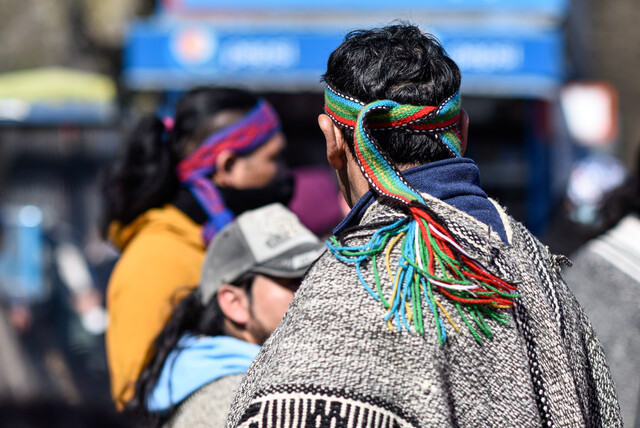
The commission does not address recommendations for controlling, neutralizing, or eliminating insurgents or terrorists, and seems to accept the existence of a Constitutional State of Exception that reduces the intensity of violence but does not eliminate it fundamentally.
The work carried out by the commissioners who participated in the Commission for Peace and Understanding is clearly positive, but there remains doubt, after reviewing the report, about whether the issue of land transfer or restitution to Chileans of Mapuche descent will have an effect on the activities of the insurgent or terrorist movements operating in what is known as the Macrozona Sur, which have recently reminded us of their existence through some violent attacks, actions that have even generated strong reactions from the Chinese ambassador, as they have affected investments from state-owned companies in that country.
I say “there remains doubt” upon seeing the initial reactions of some, which indicate that the transfer of land and other forms of compensation to Chileans of Mapuche descent would be the solution to all the problems they experience in that part of the country, including insurgent violence. Perhaps this is what many want to hear, but it is something that those of us who follow what happens in that part of Chile question, because one thing does not necessarily lead to the other.
If someone tells me that for something close to US$ 5 billion, plus other associated measures, we can solve the fundamental problem of Chileans of Mapuche descent, I would agree immediately, and with that, there would be one less problem in Chile, a problem that has entangled us for several years, allowing us to concentrate efforts on the crime and insecurity that affect us.
Regardless of what Republicans and national libertarians may opine and demand, in electoral terms, there is indeed a problem in that part of Chile related to the historical feeling of dispossession and neglect, which, if solved with a few billion dollars, would be a “cheap” solution to the problem, but I fear that, despite the positive opinion of Senator Huenchumilla and a good part of the commissioners, this is an oversimplification of the issue.
The region has faced for several years the existence of insurgent groups that employ various forms of violence, ranging from what is known as “rural violence” to terrorism, which they carry out in order to be sovereign in the territories they operate, seeking to expel the State of Chile and, more importantly, the existence of the Rule of Law.
I do not see how land restitutions and other interesting forms of compensation will diminish the desires and strength of those who want to be independent, who do not respect even their own, who murder police officers, destroy fields, machinery, and equipment, forestry operations, and now, the construction of power plants, as was the case with Rucalhue, a situation that casts doubt on the investments that private and foreign entities could make in an area that is in need of investment and job sources.
If the president of the commission and the commissioners manage to transform the agreement into one of peace that includes the insurgents, I would gladly pay the amounts rumored to be required for the agreement, but I fear that I do not see clearly that the insurgents, who already profit from the existence of illicit businesses in the territories they control, will join so easily. Just listen to the latest statements from Héctor Llaitul.
This Government joins those that preceded it in trying to find solutions to the Mapuche problem, leading all of Chile to think that a solution is coming, but like all previous efforts, they are good but incomplete and to a certain extent unrealistic, as they do not come with attached financing and, more importantly, the commission does not address the problem of the violence and destruction generated by the insurgents, or the fact that there are Mapuche individuals, like the lonco who claims to be the chief of Temucuicui, who do not recognize the authority of the State of Chile, or that there exists a Rule of Law that must be respected.
Whether because the mandate was not such, or because they could not address it, the commission does not make recommendations for controlling, neutralizing, or eliminating insurgents or terrorists, and seems to accept the existence of a Constitutional State of Exception that reduces the intensity of violence but does not eliminate it fundamentally.
In summary, for now, everything indicates that we will remain the same, pleased for a while with the report, perhaps seeking ways to implement the recommendations –many of which must go through Congress and be financed–, moving in the right direction, but still very much in debt regarding violence and insecurity in the area, which surely may require other types of solutions.
In summary, good for the commissioners, but lacking in terms of security. What they achieved was not easy, but now the most complex part remains: seeking peace.