COLUMN | What do Chileans think about international relations, national security, and defense?
This article was translated automatically and may contain differences from the original. For reference, read the original.
- por Richard Kouyoumdjian
- Columnas
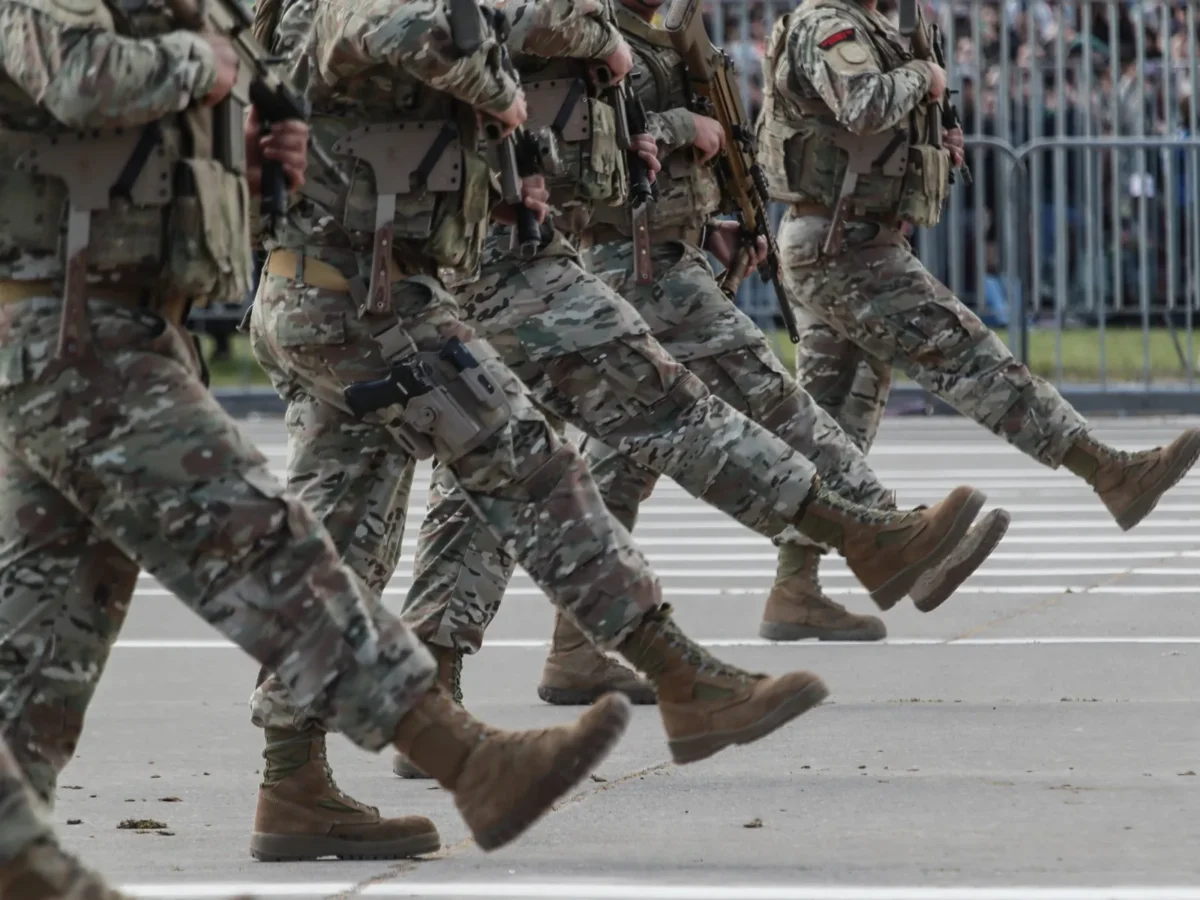
The general population indicates that the main threat to national security is drug trafficking and border porosity, a view shared by experts.
AthenaLab is a think tank established in early 2019. It focuses on international relations, national security, and defense. Over time, given the reality in Chile, it recognized the need to engage in public security, the primary national security issue affecting us, which clearly limits our freedom and well-being.
One of the first products developed was the annual survey on perceptions of foreign policy and national security conducted in collaboration with Ipsos. Now in its sixth iteration, it has become a reference point for the government, armed forces, police, embassies, as well as for researchers, students, scholars, and related academic activities.
Each iteration maintains questions that allow for tracking changes in perceptions over the years, while also adding new questions that focus on issues of current public interest. It is notable that it surveys both the general population and a broad panel of experts. The main conclusions of this year’s 2025 survey are:
- The top three priorities in foreign policy for the general population are combating drug trafficking, regulating migration, and protecting borders. The expert panel shares the same three priorities but places migration as the top concern. The years when the primary goal was free trade or the pursuit of Latin American integration favored by this government are now behind us.
- The general population indicates that Chile’s three main partners are China, the U.S., and Japan. In 2024, the northern country held the top position, a change that may align with public perception of shifts in U.S. foreign policy. This is not the case for the expert panel, for whom the U.S. remains the primary partner, followed by China, which made a significant leap from one year to the next, and Spain.
- The model country for Chileans remains the U.S., followed by El Salvador and China. El Salvador’s position is not surprising, given the perception of safety it conveys, but it is more striking that Americans now represent 19% of preferences. Among experts, the list is led by New Zealand, Australia, and Singapore, with New Zealand’s primacy remaining consistent regardless of the political color of its government.
- The general population indicates that the main threat to national security is drug trafficking and border porosity, a view shared by experts, who also add cyberattacks, all issues for which Chile must develop capabilities to neutralize or eliminate them as such.
- One question that always interests me is what Chileans identify as national interests. A concept that is not simple to understand, but apparently, this time they have captured it remarkably well. For the general population, these are the maintenance of national territorial integrity, a level of security that enables development, and control of Chile’s seas. Experts agree on the same three primary national interests. These priorities are consistent with the perception of feeling more threatened.
- Regarding the Armed Forces, Chileans want them at the borders, in support of natural disaster response, and in third priority, for the defense of sovereignty. The fight against drug trafficking comes in fourth place. Experts, on the other hand, see them in the defense of sovereignty, at the borders, and unlike the general population, their third priority is the protection of national interests wherever they may be. These differences are to be expected, as experts tend to have longer-term perspectives.
- The first of the new questions incorporated for 2025 is about the creation of a military or police organization focused on borders, something that 74% of the general population and 56% of experts agree on. This aligns with the priority given to border issues and what both groups want regarding the Armed Forces.
- Regarding the establishment of a permanent National Security Council supported by an improved intelligence system, responses from both the general population and experts are overwhelmingly in favor, with 77% and 85%, respectively. This is something that is not very costly to implement, and clearly much more effective than the recently launched Ministry of Public Security.
- In terms of Carabineros, Chileans want to see them focused on crime prevention and public order, and they place little value on musical activities, equestrian events, and participation in military parades, among others. Experts share a similar opinion. What is indicated here is not new, but it is supported by a survey. It is surprising that both the government and Carabineros are not seeking to focus their efforts on what is most relevant to them.
- The survey, which also includes interesting comments from experts in various fields, concludes with an important question: Do you agree with the implementation of a Mandatory Military Service that is effectively universal and equal for all? The general population agrees at 53%, a percentage that rises to 70% among experts. Security initiatives require material, technological, and primarily human resources. Wanting to solve the problem of insecurity but not being willing for our sons and daughters to be part of the Armed Forces, Carabineros, or a potential border protection force would be a total disconnect. The 53% support seems weak and not credible in light of the numbers showing Mandatory Military Service in recent years, so I do not rule out exploring alternatives for a 100% professional Armed Forces with larger personnel than currently, which would clearly have a different cost, but perhaps it is the cost we must pay for better and more security.